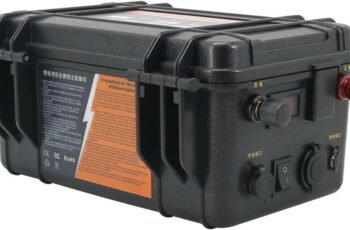
Have you been searching for a powerful, lightweight battery that can handle your trolling motor, RV, solar setup, and more without the headaches of traditional lead-acid batteries?

What You Get With the 24V 100Ah LiFePO4 Battery
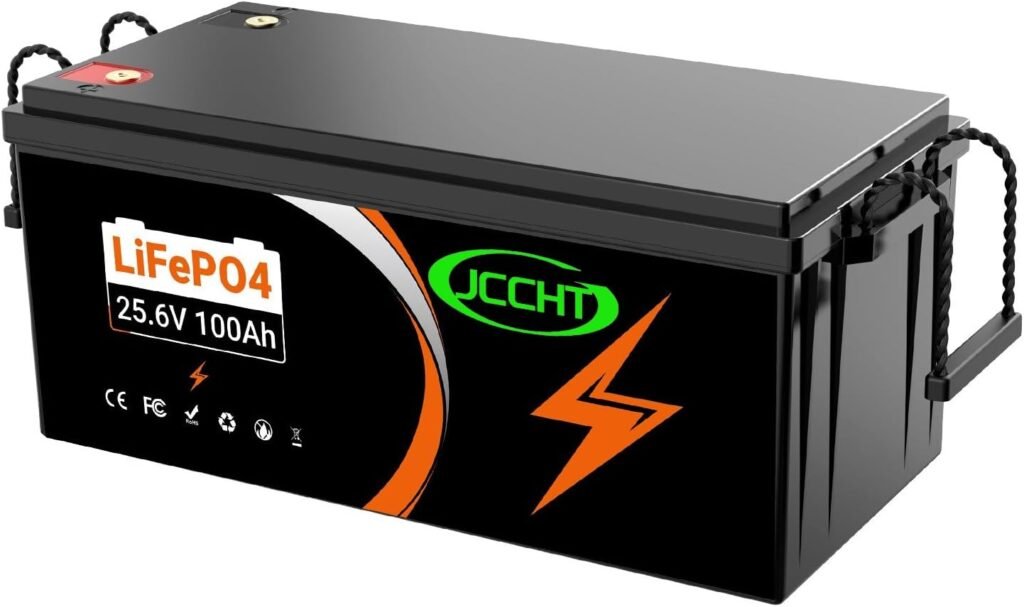
You’re looking at a 24V 100Ah LiFePO4 Lithium Battery with a built-in 100A BMS and a total capacity of 2560Wh. In simple terms, you get high power, long life, and reliable performance in a compact form. This battery is engineered to replace bulky lead-acid, AGM, or SLA batteries in your setup without complicated modifications.
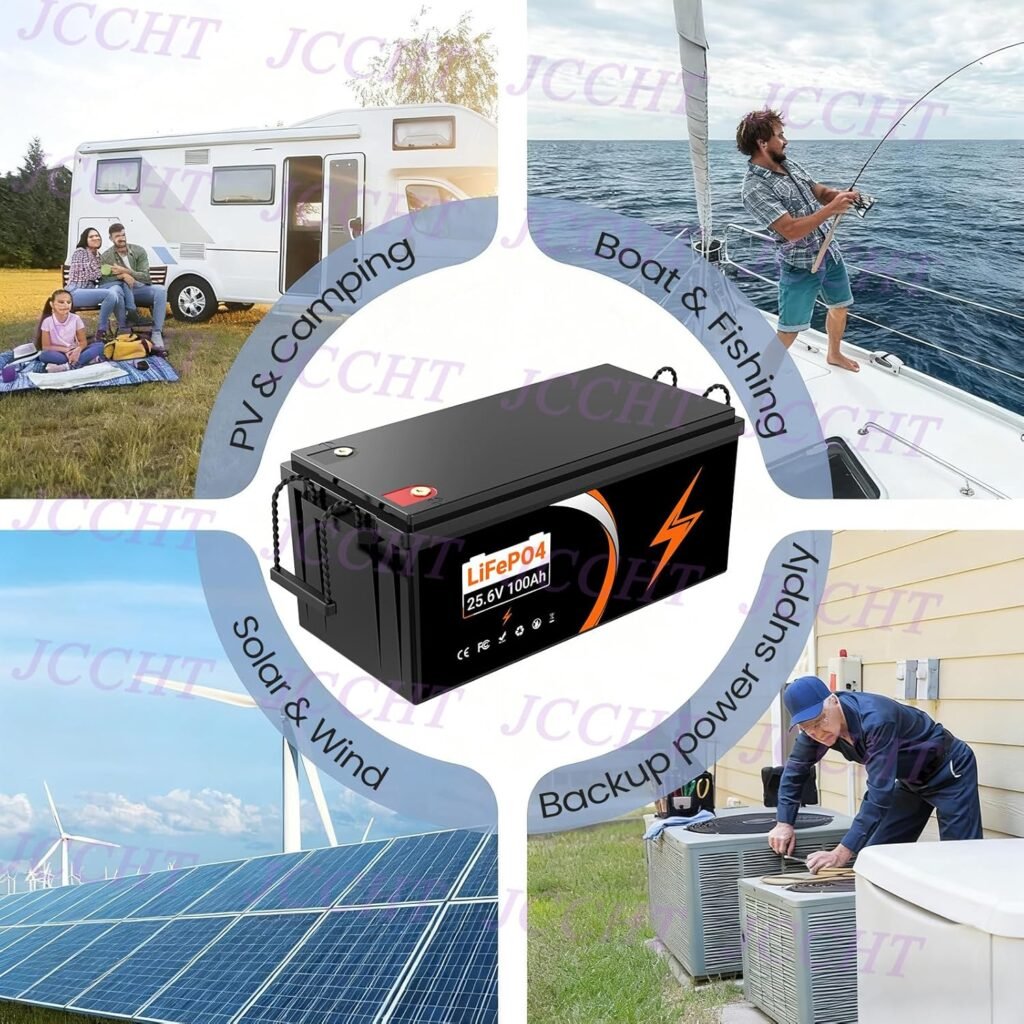
You can use it for trolling motors, trailers, boats, marine applications, RVs, and off-grid solar systems. It is especially suited to anyone who wants dependable, maintenance-free power with modern lithium technology.
Key Specifications at a Glance
You probably want the basic numbers first, so you can see if this fits your system. Here’s a quick breakdown of the core specs in an easy-to-scan format.
| Feature | Specification |
|---|---|
| Battery Type | LiFePO4 (Lithium Iron Phosphate) |
| Nominal Voltage | 25.6V (commonly referred to as 24V) |
| Capacity | 100Ah |
| Energy | 2560Wh (2.56 kWh) |
| Built-in BMS | 100A Battery Management System |
| Weight | Approx. 28 kg (about 61–62 lbs) |
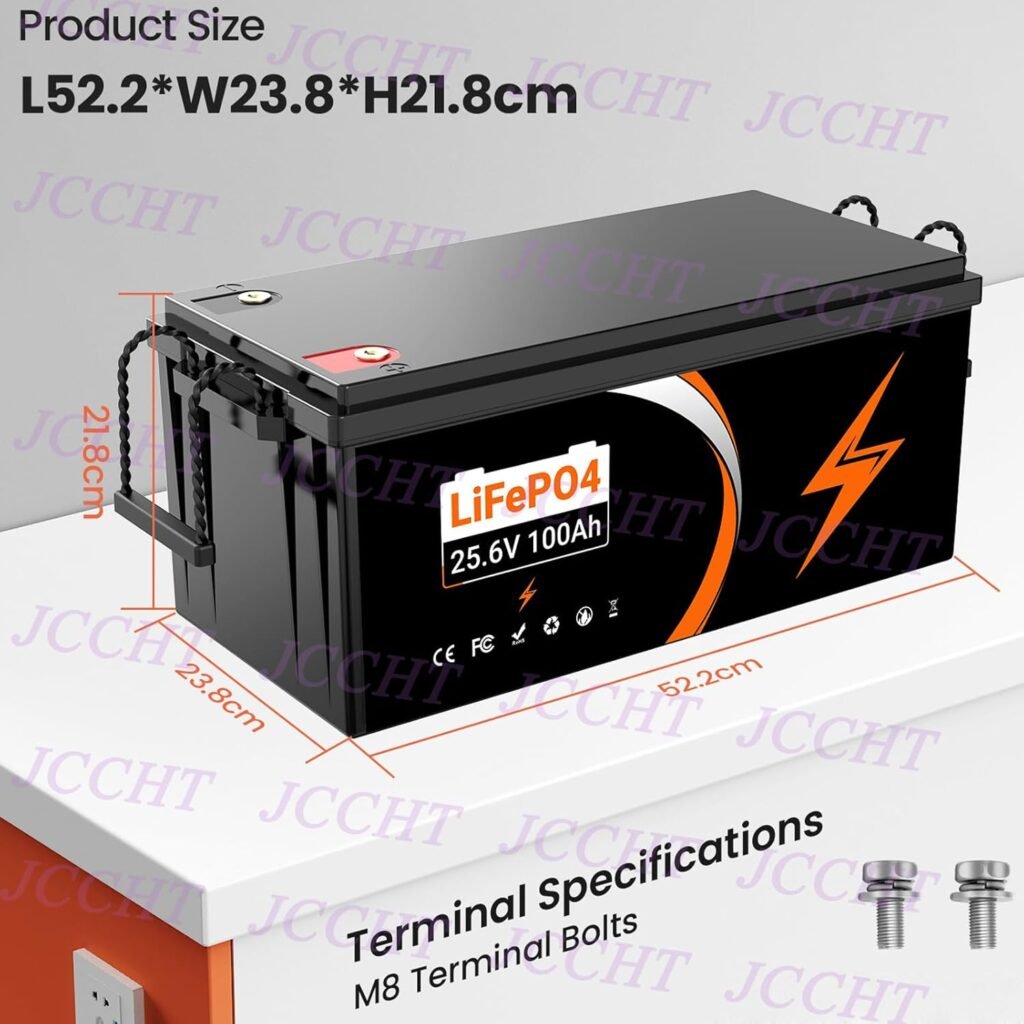
| Size (L × W × H) | 522 × 238 × 218 mm |
| Typical Cycle Life | > 5000 charge cycles |
| Expected Lifespan | Around 8–10 years (with proper use) |
| Recommended Charger Voltage | 29.2V–29.6V (dedicated LiFePO4 charger) |
| Suitable For | Trolling motor, trailer, boat, marine, RV, solar system, backup power |
| Not Suitable For | Engine starting (starter battery use) |
These specs show you that you’re dealing with a serious, long-term power source, not just another cheap battery that needs replacing in a couple of seasons.
Design and Build: Compact, Light, and Practical
You care about how the battery fits into your space, how heavy it is to move, and how rugged it feels in real-world use. This model is designed to be compact yet powerful, with a casing that works well in tight compartments commonly found in RVs, boats, and trailers.
At roughly 28 kg, you cut your weight nearly in half compared with similar-capacity lead-acid batteries. That means easier installation, less strain when moving it around, and less stress on your vehicle or trailer suspension.
Size and Weight Compared to Lead-Acid
One of the biggest advantages you gain is the combination of smaller size and lower weight. This matters for both convenience and performance.
A rough comparison helps you see what you’re gaining:
| Battery Type | Approx. Capacity | Approx. Weight | Approx. Physical Size |
|---|---|---|---|
| Traditional Lead-Acid | 24V 100Ah (series) | 50–60+ kg | Larger and bulkier |
| This 24V 100Ah LiFePO4 | 24V 100Ah | ~28 kg | About 30% smaller in volume |
You can drop this battery straight into systems that used to rely on lead-acid, and immediately benefit from a more compact, lighter setup. Less weight also contributes to better fuel efficiency for your RV or boat and can make battery compartment access less of a chore.
Performance: Energy Density and Usable Power
Your main reason for upgrading to LiFePO4 is probably performance: more usable energy, stronger voltage, and consistent output. This battery checks those boxes with ease.
With 2560Wh of energy, you get more usable capacity compared with similarly rated lead-acid batteries, because lithium batteries can safely use a much larger portion of their capacity without damage.
Usable Capacity Versus Lead-Acid
Lead-acid batteries typically only allow you to use around 50% of the rated capacity if you want them to last. With LiFePO4, you can often use 80–90% of the capacity consistently.
Here’s what that means for you:
| Battery Type | Rated Capacity | Safe Usable Capacity (Typical) | Real-World Usable Energy (24V 100Ah) |
|---|---|---|---|
| Lead-Acid/AGM/SLA | 100Ah | ~50% | ~1200Wh |
| This LiFePO4 Battery | 100Ah | ~80–90% | ~2000–2300Wh |
So even if the Ah rating looks the same on paper, you’re effectively getting almost double the usable energy with this LiFePO4 pack. That’s a big difference in how long your trolling motor runs, how many appliances you can power in your RV, and how robust your backup system is.
Voltage Stability and Power Output
You know how lead-acid batteries quickly sag in voltage under load, especially if they’re partially discharged? LiFePO4 batteries are well-known for keeping voltage steady through most of the discharge curve.
With this battery:
- You get more consistent motor speed for your trolling motor.
- Your inverters and DC appliances see a more stable input, which helps them run smoothly.
- Lights are less likely to dim as the battery discharges.
The use of Grade A+ cells means you’re getting high-quality internals that maintain voltage better and handle sustained loads without struggling.
Built-In 100A BMS: Your Safety and Battery Guardian
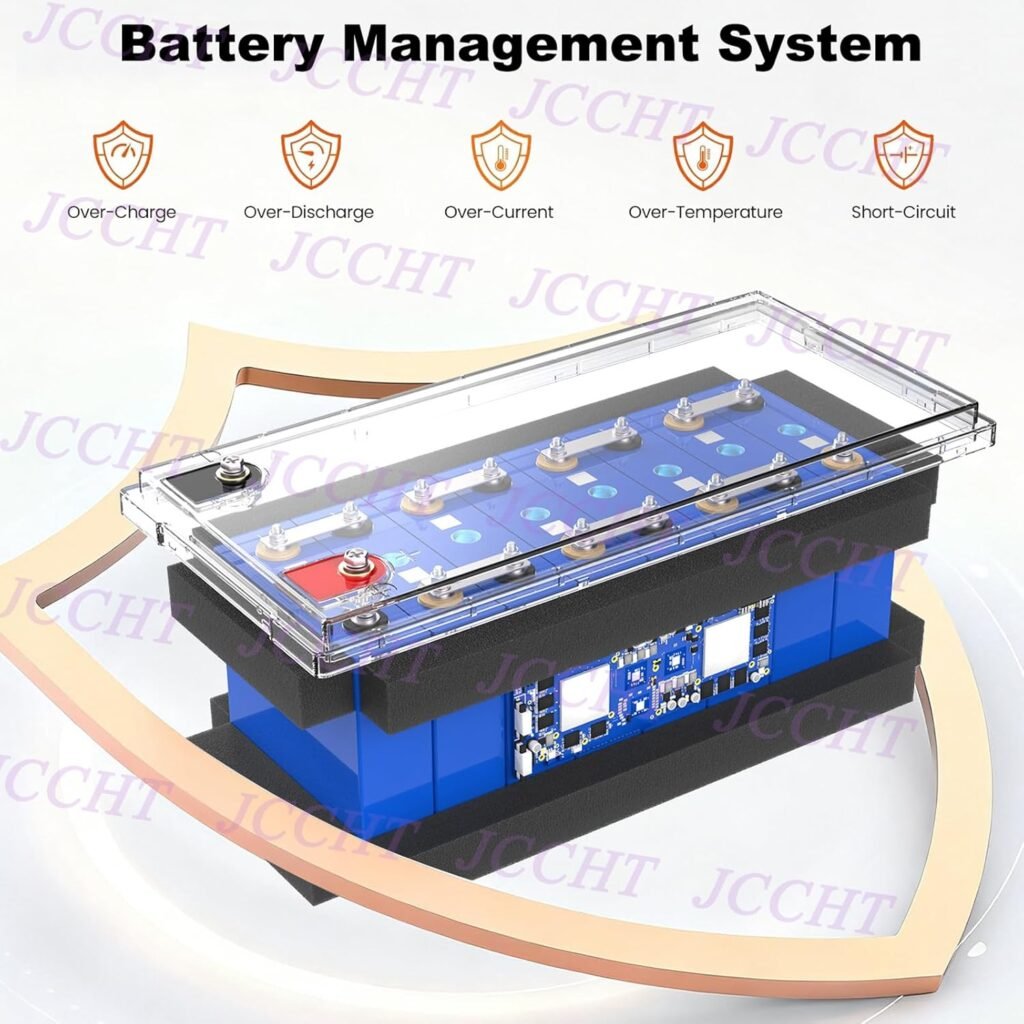
You want powerful output, but you also want your investment protected. That’s what the built-in 100A BMS (Battery Management System) handles behind the scenes.
The BMS constantly monitors and manages:
- Over-charge protection
- Over-discharge protection
- Over-current protection
- Short circuit protection
- High/low temperature protection
Why the BMS Matters for You
Without a good BMS, a lithium battery can be damaged by misuse, temperature extremes, or faulty charging. With the 100A BMS built in, you get several key benefits:
- The battery automatically shuts down or limits current in dangerous conditions.
- Cells are kept within safe voltage ranges, helping them last thousands of cycles.
- You can run relatively heavy loads (within the 100A continuous range) without stressing the pack.
For a 24V system, 100A of continuous current equals up to 2560W of power (24V × 100A ~ 2400–2560W depending on exact voltage). That’s plenty for trolling motors, inverters, and multiple DC loads, as long as you size things correctly.
Where You Can Use This Battery
You’ll appreciate how versatile this battery is. It’s designed for a wide range of applications where you need a 24V system and reliable, long-lasting power.
Trolling Motors and Marine Use
For trolling motors, this pack is a strong upgrade from heavy marine lead-acid batteries. You gain:
- Lighter total weight in your boat, which improves performance and fuel efficiency.
- Longer run times at a consistent speed due to more usable capacity and steady voltage.
- No acid leaks, no corrosion, and minimal maintenance.
Since it’s built with temperature protections, you can expect safer operation even when you’re out early on cold mornings or in warmer climates. Just remember, you still should stay within the motor’s recommended battery parameters.
RVs, Trailers, and Camping
For RV use, this battery helps you power things like:
- Lights, fans, and water pumps
- DC fridges or portable refrigerators
- Inverters for laptops, TVs, and small household devices
The long cycle life and low self-discharge mean you can leave your RV parked for a while without worrying that your house battery will be flat the next time you want to use it.
In trailers and camper conversions, the compact footprint and lighter weight give you more flexibility when designing your electrical system and placing your battery bank.
Off-Grid Solar and Cabins
If you have an off-grid cabin, hunting lodge, shed, or backup system, this 24V 100Ah LiFePO4 battery pairs nicely with a solar array:
- 24V systems are more efficient than 12V for longer cable runs and higher-power setups.
- More usable energy per cycle gives you better day-to-day autonomy.
- When matched with a proper LiFePO4-compatible solar charge controller, you get years of dependable storage capacity.
For backup power, you can use this battery with an inverter to keep essentials running during outages: lights, communication devices, small appliances, and low-power electronics.
Lifespan and Cycle Life: Long-Term Value
You want to know if this battery is truly an investment or just another short-lived purchase. With more than 5000 cycles rated and an 8–10 year expectancy, it’s clearly built with longevity in mind.
What 5000+ Cycles Means to You
A “cycle” is one full charge and discharge. So 5000 cycles could mean:
- Daily cycling for over 13 years (if you cycle once per day and conditions are ideal), or
- Cycling a few times per week over a decade or more.
Real-world conditions vary, but you’re still looking at many times the lifespan of a typical lead-acid battery, which often delivers 300–800 cycles under gentle use.
Cost Over Time Versus Lead-Acid
You might feel that lithium costs more upfront, but over time, cost per cycle is often far lower.
Imagine:
- A lead-acid bank that needs replacing every 2–3 years with fewer usable cycles.
- This LiFePO4 battery that keeps going year after year with steady performance.
Over the lifespan, you’re likely to spend less money and less time swapping out failed batteries and dealing with maintenance.
Charging Requirements and Compatibility
You do need to pay some attention to charging so you don’t shorten the battery’s life. This pack does not include a charger, and you’re recommended to use one rated for 29.2–29.6V specifically for LiFePO4 chemistry.
Charger Requirements
To keep your battery healthy and within warranty conditions, aim for:
- A dedicated 24V LiFePO4 charger with a final charge voltage of 29.2–29.6V.
- A charger current appropriate for a 100Ah battery (for example, 10–30A is a common safe range, depending on how fast you want to charge).
- Avoid automotive-style lead-acid chargers that use equalization modes, as these can overcharge or damage LiFePO4 batteries.
Using the right charger ensures cells are balanced correctly, the BMS stays happy, and you get the longest life from your pack.
Charging From Solar or Vehicle Systems
If you plan to charge from solar:
- Use an MPPT or PWM solar charge controller with a LiFePO4 profile or customizable settings.
- Set the absorption/boost voltage close to 29.2–29.6V and adjust float as recommended (often lower or near idle for LiFePO4).
If you want to charge from a vehicle alternator:
- Consider a DC-DC charger designed for LiFePO4 to avoid overloading your alternator and to give proper charge profiles.
- Do not connect directly to a high-output alternator without the right electronics, because LiFePO4 can draw heavy currents that may stress your charging system.
What This Battery Is Not Meant To Do
Even though it’s powerful, it’s not a universal solution. You should keep these limits in mind so you don’t misuse it or damage it.
Not For Engine Starting
The product description clearly states it is not suitable for engine starting. That means you should not use it as:
- A starter battery for cars, trucks, outboard motors, or other engines.
- A direct replacement for cranking batteries where cold cranking amps (CCA) are critical.
Starting batteries are designed to deliver a very short but intense surge of current. This LiFePO4 pack is designed more as a deep-cycle, steady-output energy source.
You can certainly use it for house loads, trolling motors, and inverters—but use a separate battery if you need engine cranking duty.
Temperature Considerations
The built-in BMS includes high and low temperature protections. That’s good protection, but you still should respect the operating range:
- Extremely low temperatures can temporarily reduce capacity and limit charging.
- Very high temperatures can shorten lifespan or trigger the BMS to shut down for safety.
Whenever possible:
- Install the battery in a space that avoids direct engine heat or direct sun baking it for long periods.
- Follow the manufacturer’s storage and operating temperature guidelines (often around 0–45°C for charging and wider for discharging, depending on model).
Ease of Installation and “Drop-In” Replacement
You might want a straightforward swap that doesn’t require you to rewire your whole system. This battery is designed as a “drop-in” replacement for many existing lead-acid setups.
Wiring and Setup
For most systems, you can:
- Remove your old 24V lead-acid bank (often two 12V batteries in series).
- Install this single 24V 100Ah LiFePO4 pack in the same location, adjusting mounting or strapping as needed due to size differences.
- Connect your positive and negative leads to the new battery, checking that cable sizes are appropriate for the loads you plan to run.
A couple of things for you to check:
- Confirm all your devices (inverter, trolling motor, DC equipment) are rated for 24V operation.
- Make sure any existing chargers or controllers are set to 24V and can be adjusted to a LiFePO4 profile, or replace them with compatible units.
Safety and Mounting Tips
Lithium batteries don’t require venting like lead-acid, since there’s no off-gassing with normal use. However, you still should:
- Mount it securely so it doesn’t move in rough conditions (especially in marine or off-road use).
- Keep cabling tidy and away from sharp edges or moving parts.
- Use proper fusing between the battery and your loads/inverters to protect wiring in case of a short.
If you’re upgrading from an old battery bank, it’s a great time to check cable conditions and make sure everything is tight and corrosion-free.
Real-World Use Cases You Might Relate To
You can probably imagine your own setup, but it helps to think through a few scenarios.
Example: Trolling Motor User
If you run a 24V trolling motor:
- You replace two heavy 12V lead-acid batteries with this single 24V LiFePO4 pack.
- Your boat instantly sheds significant weight, which makes transport and launching easier.
- You notice that motor performance holds steady for most of your day on the water, instead of slowly fading as the battery drains.
With more usable capacity, you spend more time fishing and less time worrying if you’ll have enough power to get back.
Example: RV Owner
If you have an RV:
- You swap a worn-out 12V bank (or a 24V system built from multiple batteries) with this single, compact unit and a suitable inverter/charger.
- Your lights, fans, fridge, and electronics keep running reliably through the night without dipping too deeply into the battery capacity.
- You can rely on solar and shore power to recharge it consistently, with much fewer concerns about sulfation, water levels, or battery maintenance.
You gain peace of mind that your battery isn’t going to die just when you’re in the middle of a remote camping trip.
Example: Off-Grid Cabin or Backup System
If you have a small off-grid cabin or want home backup:
- You install this battery as part of a 24V solar storage system.
- During the day, solar panels recharge the pack; at night, your lights, router, small devices, and maybe a low-wattage fridge keep running.
- During grid outages, an inverter can use this battery to keep essential circuits powered long enough to ride out shorter blackouts.
In all these cases, the long life and stable output reduce your stress and give you more freedom in how you use power.
Pros and Cons for Your Decision
To help you decide if this is right for you, it helps to see a balanced overview of strengths and limitations.
Main Advantages
You gain several key benefits:
- High energy density: 3–5 times the energy density of many lead-acid options.
- Lighter and smaller: About 50% lighter and 30% smaller for the same nominal capacity.
- High usable capacity: You can safely use a much larger portion of the 100Ah rating.
- Long cycle life: 5000+ cycles, with an 8–10 year lifespan when used properly.
- Built-in protection: 100A BMS for over-charge, over-discharge, current, short circuit, and temperature.
- Versatile applications: Suitable for trolling motors, RVs, boats, trailers, and off-grid solar.
- Maintenance-free: No water top-ups, no acid, no fumes, and no corrosion problems.
Potential Drawbacks to Consider
There are also some things you need to be aware of:
- Charger required: You need a proper LiFePO4 charger or adjustable controller (29.2–29.6V), which might be an additional purchase.
- Not for engine starting: You can’t use it as a cranking battery, so you may still need a separate starter battery in many setups.
- Upfront cost: Like most lithium batteries, the initial price is higher than equivalent lead-acid units, even though long-term value is better.
- System compatibility: If your existing chargers or equipment are not compatible with 24V or LiFePO4, you may need to upgrade some components.
If these trade-offs fit your situation, you’ll likely find the long-term benefits well worth it.
Tips for Getting the Most Out of Your Battery
To help your battery last as long as possible and perform at its best, you can follow some simple best practices.
Usage and Discharge Habits
You don’t have to baby LiFePO4 like lead-acid, but good habits still help:
- Try not to run it completely flat frequently if you can avoid it, even though the BMS will protect against over-discharge.
- Keep an eye on your loads so you’re not consistently pulling close to the 100A limit for long periods unless your wiring and system are sized correctly.
Using a battery monitor with shunt can give you a clear picture of how much energy you use each day, your state of charge, and your overall health trends.
Storage and Maintenance
Even though it’s low-maintenance, a few simple steps go a long way:
- Store it partially charged if you won’t use it for a while (often around 40–60% is ideal for longer storage).
- Disconnect heavy loads or chargers if the system will sit unused for extended periods.
- Avoid storing it in extremely hot or freezing environments for months at a time.
Because there’s no liquid electrolyte to top up and no vents, you don’t have to worry about periodic maintenance beyond checking cable tightness and visual inspections.
Who This Battery Is Best Suited For
This battery is a strong match for you if:
- You run a 24V trolling motor and want longer runtimes with fewer weight and maintenance issues.
- You have an RV, camper van, or trailer and want a robust house battery that can run appliances, lights, and inverters reliably.
- You’re building or upgrading an off-grid solar system for a cabin, shed, or backup use and want a long-term storage solution.
- You’re tired of replacing lead-acid batteries every few years and want to invest in something that lasts.
It might not be ideal for you if:
- You require a dedicated engine starter battery (this is not designed for that).
- You are using only 12V systems and don’t want to convert to 24V (you’d need either a different voltage battery or a different system setup).
- You don’t want to purchase or configure a LiFePO4-compatible charger or solar charge controller.
Final Thoughts: Is This 24V 100Ah LiFePO4 Battery Worth It for You?
If you value long-term reliability, higher usable capacity, and strong performance in a lighter, smaller package, this 24V 100Ah LiFePO4 Lithium Battery with a 100A BMS is a compelling choice for your power system. You get 2560Wh of clean, dependable energy suitable for trolling motors, RVs, boats, trailers, and solar-based backup systems.
You do need to pair it with the right charger, respect that it’s not a starter battery, and confirm your system matches a 24V LiFePO4 profile. But once you set it up correctly, you gain years of low-maintenance, high-performance power storage that outclasses traditional lead-acid in nearly every important way.
If you’re ready to reduce battery headaches, lighten your load, and upgrade your power system with modern lithium technology, this battery gives you a strong, future-proof foundation for your electrical needs.
Disclosure: As an Amazon Associate, I earn from qualifying purchases.