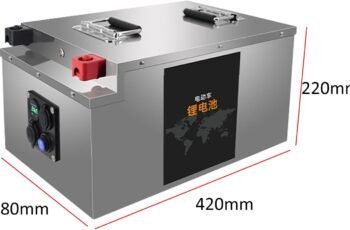
Have you been searching for a 24V battery that actually delivers high power, long life, and real reliability for your golf cart, trolling motor, RV, solar system, or home backup?
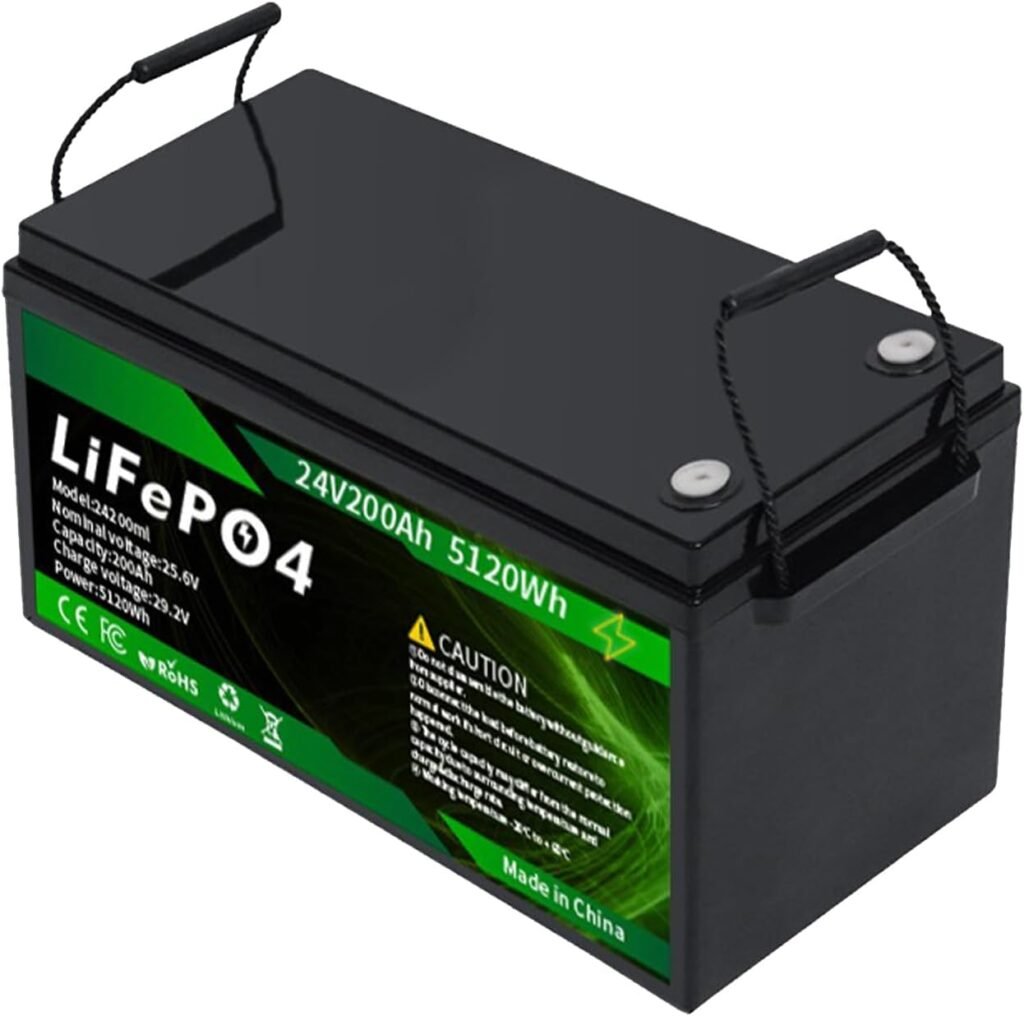

What You Get with the 25.6V 24V 200Ah LiFePO4 Battery
You get a 25.6V lithium iron phosphate battery (LiFePO4) with a 200Ah capacity, built-in 100A BMS, and over 5,000 deep charge cycles. In practical terms, this means you can run higher power loads up to 5,120W and expect the battery to last for years, not just a couple of seasons.
This battery is designed to replace heavy, short-lived lead-acid batteries and 12V setups. You’re getting higher voltage, better stability, and much better performance in cold and hot conditions.
Key Specifications at a Glance
You might find it easier to understand what you’re getting by seeing the core specs side by side. Here’s a quick breakdown of the main features and what they mean for you.
| Feature | Specification / Benefit |
|---|---|
| Chemistry | LiFePO4 (Lithium Iron Phosphate) – safer and more stable than many other lithium types |
| Nominal Voltage | 25.6V (commonly used as “24V” in systems) |
| Capacity | 200Ah |
| Energy | 5,120Wh (5.12kWh) – supports up to 5,120W max power |
| BMS (Battery Management) | Built-in 100A BMS – protects against overcharge, over-discharge, short circuit, etc. |
| Max Continuous Current | 100A charge/discharge |
| Cycle Life | 5,000+ cycles (far beyond typical lead-acid) |
| Lifetime Expectation | Around 10 years with proper use |
| Weight | About 1/3 the weight of similar-capacity lead-acid batteries |
| Low Temp Charge Cutoff | Charging cut off below -4°F (-20°C) |
| High Temp Charge Cutoff | Charging cut off above 158°F (70°C) |
| Usable Capacity at 0°C | About 90% capacity retained |
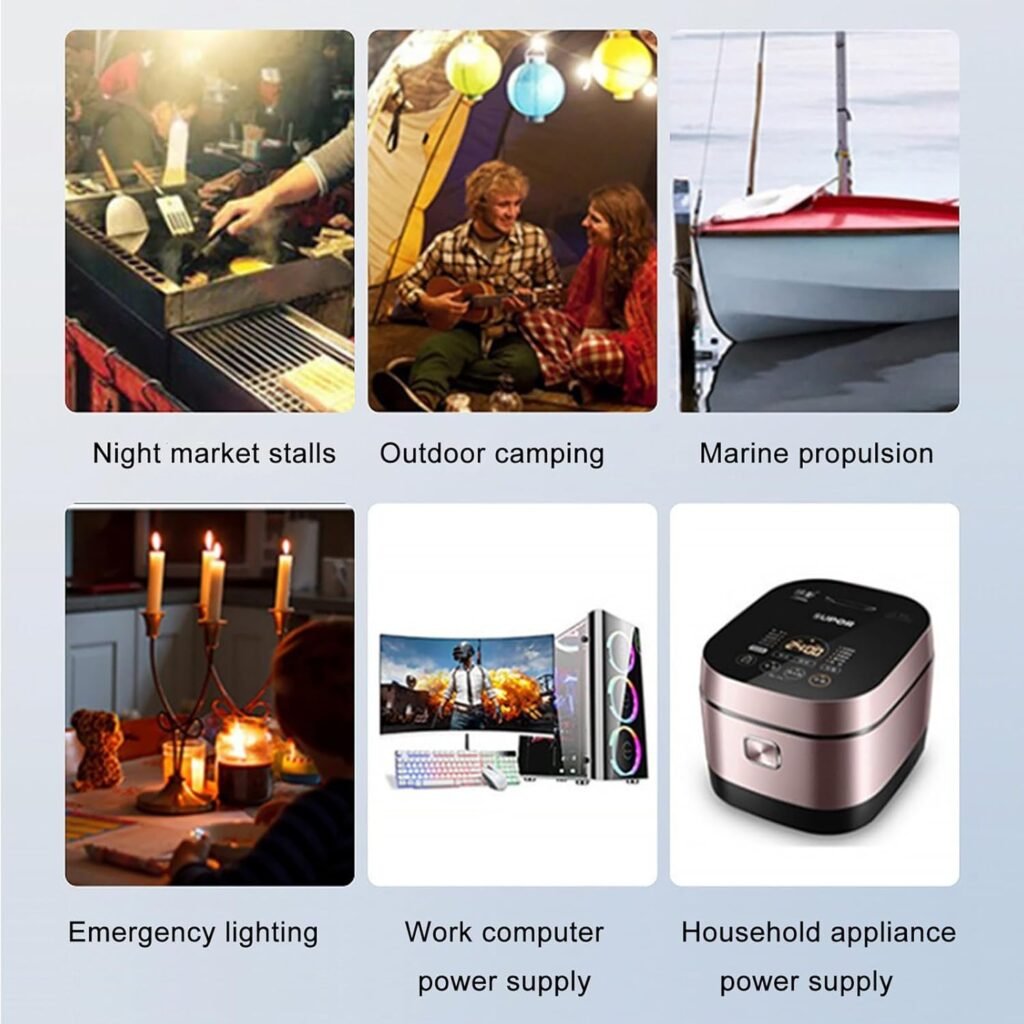
| Ideal Uses | Golf cart, trolling motor, RV, solar, off-grid, home backup/emergency power |
You can think of this as a “workhorse” battery: high energy density, solid protective features, and strong performance across a range of conditions.
Design and Build Quality
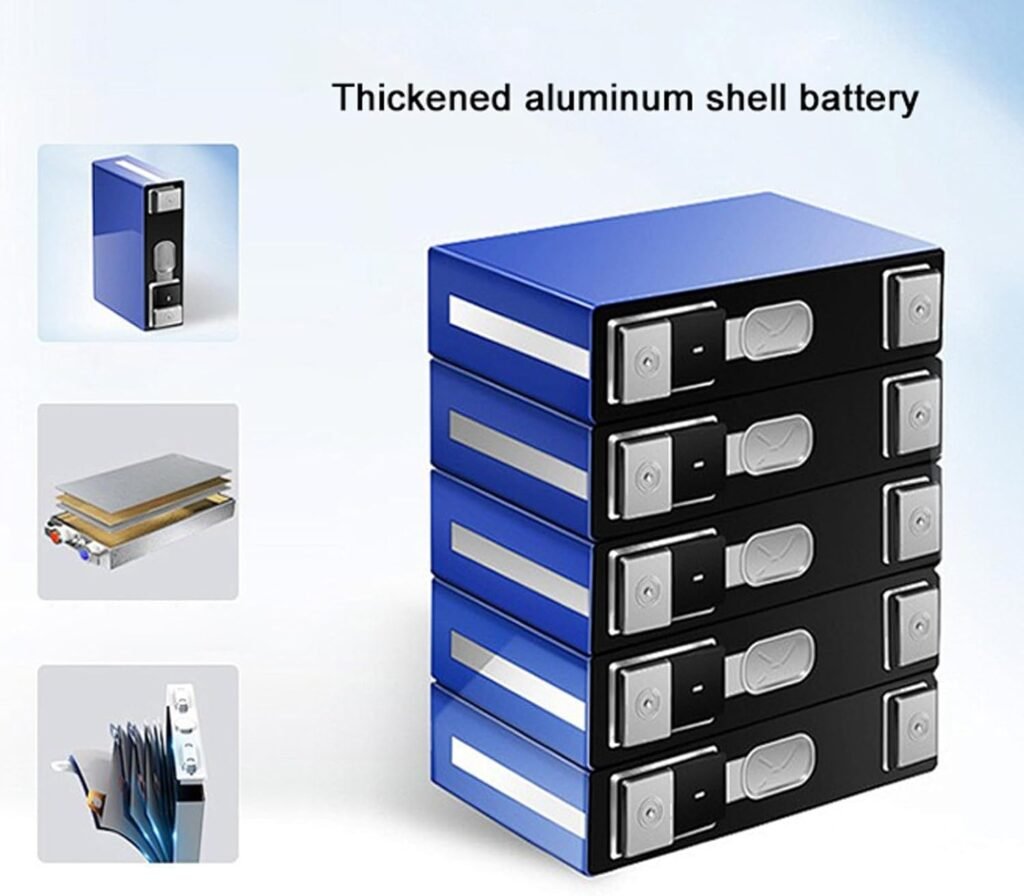
You want a battery that feels solid and reliable, especially if you’re installing it in a vehicle or an off-grid system. This LiFePO4 unit is built around high-grade cells and a robust BMS that keeps everything in check.
The 25.6V configuration itself is part of the design advantage. By using higher voltage than typical 12V systems, your current draw is lower for the same power, which reduces stress on wires, components, and the battery itself.
A-Grade LiFePO4 Cells for Reliability
The manufacturer uses A-Grade LiFePO4 cells, not recycled or low-tier cells. This matters because cell quality is one of the biggest factors in how long your battery will last and how consistently it performs.
You benefit from more stable voltage, fewer surprises with capacity, and a much lower risk of sudden failure. Over thousands of cycles, that consistency is what saves you money and frustration.
Built-In 100A BMS for Protection
Inside the battery is a 100A Battery Management System (BMS). You might not see it, but you will feel its impact in daily use and long-term safety. The BMS:
- Limits continuous charge and discharge current to 100A
- Protects against over-charging and over-discharging
- Helps prevent short circuits and potential damage
- Monitors cell performance and shuts things down when thresholds are exceeded
For you, this means you can run demanding loads without constantly worrying about overtaxing the battery, as long as you stay within the rated limits.
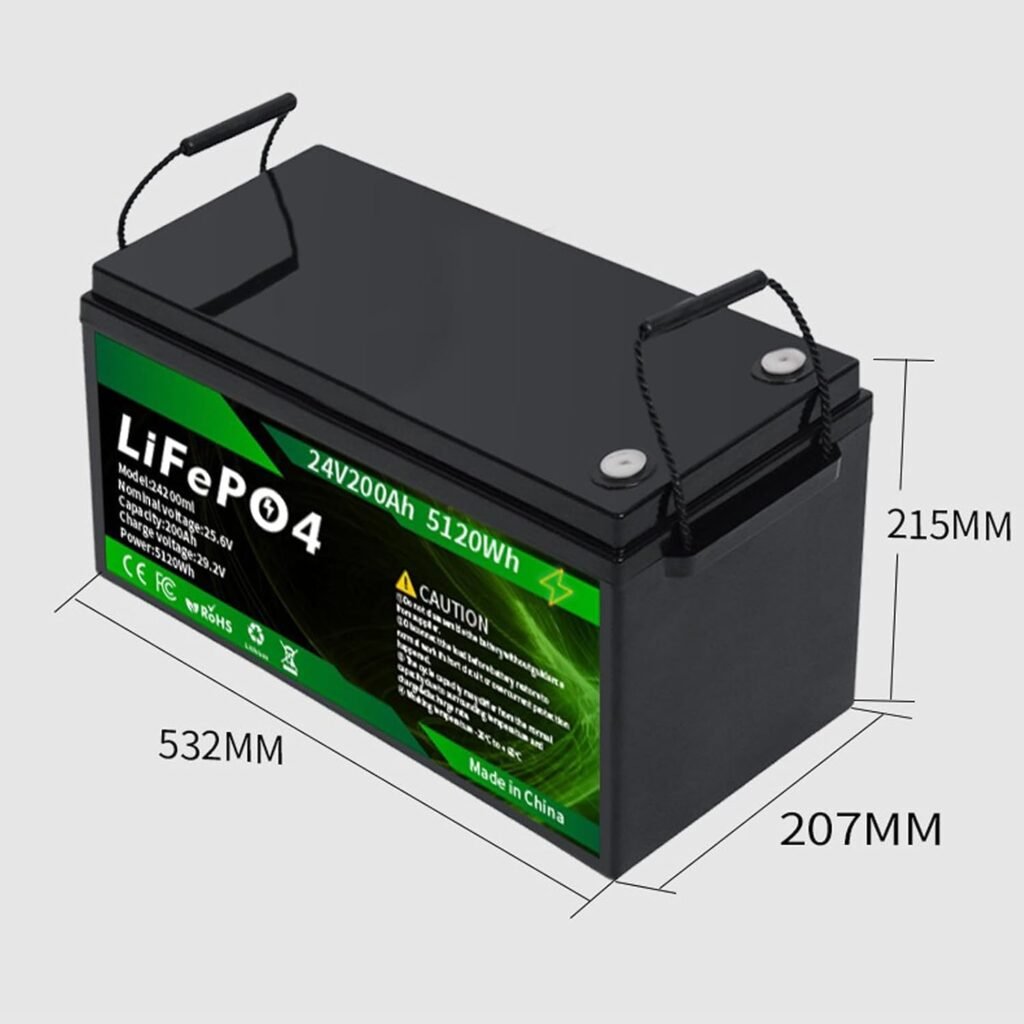
Capacity and Power: What 24V 200Ah Really Means
It can be tricky to visualize what “200Ah at 24V” actually gives you. In energy terms, 24V × 200Ah is around 4,800Wh, but with 25.6V nominal voltage, you get roughly 5,120Wh (5.12kWh).
You can imagine this like having a small power station that can comfortably run typical 24V systems and many household or recreational loads (with the right inverter).
Max 5,120W Output in Real Use
With 5,120W of max power, you can support higher wattage equipment through an inverter. For example:
- A 2,000W inverter for an RV or off-grid cabin
- A trolling motor that pulls heavy current under load
- A golf cart system that needs strong acceleration and hill-climbing performance
As long as your current stays within 100A continuous and your inverter or motor is sized appropriately, you can run fairly power-hungry setups without sagging voltage or rapid depletion.
Longevity: 5,000+ Deep Cycles and 10-Year Life
When you invest in a lithium battery, you care about how long it will last. This unit is rated for 5,000+ cycles, which is a huge step up from typical lead-acid batteries that might give you 300–800 cycles at best under deep discharge.
If you cycled this battery once per day:
- 5,000 cycles equals more than 13 years of daily use
- Even with less gentle use, you’re looking at around a decade of real-world service
You get a far better cost-per-cycle compared to lead-acid. Instead of buying new batteries every few years, you can rely on this one for long-term use in your cart, boat, RV, or solar system.
Deeper Discharge Without Killing the Battery
LiFePO4 chemistry tolerates deeper discharge levels much better than lead-acid. You can routinely use a large portion of the capacity without severely shortening the life.
With lead-acid, you often only get about 50% of the rated capacity if you want the battery to last. With LiFePO4, you can safely use 80–90% in many situations, which means you effectively get more usable energy out of the same rated Ah.
Weight and Portability: About One-Third of Lead-Acid
Weight matters when you’re lifting, installing, or carrying your battery, especially for boats, RVs, or portable power setups. This 25.6V LiFePO4 model is around one-third the weight of a comparable lead-acid battery bank.
You gain easier handling, less strain on mounting hardware and frames, and better efficiency in mobile applications like golf carts and trolling motors.
Why Less Weight Helps You
Lower weight does more than just make installation easier. You also get:
- Better fuel or energy efficiency in vehicles and boats
- Less wear and tear on suspension, trailers, and mounts
- Easier repositioning if you move batteries between projects or locations
If you’ve ever tried lifting a bank of lead-acid batteries into an RV compartment, you’ll appreciate the difference.
Temperature Performance: Cold and Heat Protection
Batteries and temperature have a complicated relationship. This LiFePO4 battery is designed to protect itself and maintain capacity, even when things get cold or hot.
The BMS includes temperature cutoffs that keep the battery safe, so you don’t accidentally damage it by charging under extreme conditions.
Low-Temperature Behavior and Cutoff
Charging is automatically cut off below -4°F (-20°C). That protection is important because lithium batteries can be permanently damaged if you attempt to charge them at very low temperatures.
You can still discharge in low temperatures, but charging will not occur until the battery warms up above the cutoff. Even at 0°C, you retain about 90% of the available capacity, which is far better than lead-acid, where you might drop below 60% at the same temperature.
High-Temperature Protection
At the other end of the scale, charging is cut off above 158°F (70°C). That’s a high threshold, but useful if your battery is in an enclosed compartment or hot environment.
You reduce the risk of overheating, swelling, or other thermal issues. For you, this means peace of mind if your RV is parked in the sun or your battery box warms up during the summer.
24V vs 12V: Why a 25.6V LiFePO4 Battery Is a Smarter Choice
You might be used to 12V systems, especially for RVs and boats, but a 24V (25.6V nominal) system offers several advantages. This single 24V 200Ah LiFePO4 can essentially do the work of a small 12V battery bank, but more efficiently.
By increasing voltage, you reduce current for the same power output. That leads to less heat, less voltage sag, and better overall system stability.
Longer Runtime Than Equivalent 12V Solutions
The manufacturer notes that this 24V 200Ah battery can run about twice as long as a typical 12V LiFePO4 battery in many scenarios. That benefit comes from:
- Higher system voltage
- Reduced current draw
- Better efficiency and lower losses
If you previously needed multiple 12V batteries in series or parallel, you can simplify your system with this single 24V unit and still get superior runtime.
Built-In BMS: What It Actually Does for You
You might see “BMS” tossed around a lot with lithium batteries. In this case, the built-in 100A BMS is the brain and guardrail of your battery pack.
It monitors voltage, current, and temperature to protect the cells and keep everything operating within a safe envelope.
Everyday Benefits of a Smart BMS
Here’s what you gain from having a solid BMS inside your 25.6V LiFePO4 battery:
- Protection from overcharging that could otherwise shorten life or damage cells
- Automatic cut-off for over-discharging, so you don’t accidentally drain the pack below safe levels
- Current limiting if you try to pull more than 100A, helping prevent overheating or damage
- Temperature-based charging control, so charging pauses in extreme cold or heat
From your perspective, it works quietly in the background and helps make the battery more “plug and play” with compatible systems.
Charge and Discharge: Using the 100A Continuous Rating
The 100A continuous charge/discharge rating is a key number to keep in mind when designing your setup. At 25.6V, 100A translates to about 2,560W of continuous power.
Because the battery is rated for a peak of around 5,120W, you can have short bursts of higher power, but you should design for 100A as your comfortable continuous limit.
Matching Chargers and Inverters
To get the best from this battery, you want chargers and inverters that respect its limits:
- Use a dedicated LiFePO4 charger or a programmable charger set to the proper 24V lithium profile
- Choose an inverter with an input range matching 24V nominal (often labeled 24VDC input)
- Size your loads so they don’t constantly exceed 100A at 24V
By respecting those guidelines, you protect your investment and avoid unnecessary shutdowns or BMS trips.
Usable Capacity at Different Temperatures
Temperature affects all battery chemistries, but this LiFePO4 design performs especially well in cooler conditions compared to traditional lead-acid.
At 0°C, you still have about 90% of your usable capacity available. That can be the difference between a dead system and a functioning one during winter camping or cold-weather boating.
Comparison with Lead-Acid in the Cold
Lead-acid batteries can lose a large portion of their usable capacity as temperature drops. At 0°C, you might only see less than 60% of the rated capacity.
With this 25.6V LiFePO4 battery:
- You have higher usable capacity in the cold
- You experience less voltage sag under load
- Your system remains more reliable for starting and running equipment
If you use your gear year-round, that cold-weather headroom makes your setup far more dependable.
Applications: Where This Battery Fits Best
This battery is very flexible, but it shines in certain use cases where you need robust power, deep cycling, and long life. If you use high-draw equipment or want reliable off-grid energy, you’ll find it a strong fit.
You can likely drop it into many existing 24V setups, as long as your charger and inverter are lithium-compatible or programmable.
For Golf Carts
In a golf cart, you want consistent power, decent speed, and strong hill performance without constant battery replacements. With this 24V 200Ah LiFePO4:
- You reduce weight compared to lead-acid, which can improve range and handling
- You get sustained voltage for better acceleration and less sluggish performance
- You extend operational life so you are not swapping batteries every few seasons
You can also pair multiple 24V batteries in parallel if your cart system is configured for larger capacity, as long as you follow manufacturer guidelines.
For Trolling Motors
Trolling motors can draw a lot of current, especially at higher thrust levels. This battery handles that well due to the 100A continuous rating and stable LiFePO4 chemistry.
You can fish longer, run your motor more confidently, and not worry as much about sudden voltage collapse. The lighter weight is also a bonus for your boat’s balance and fuel efficiency.
For RVs and Campers
In an RV or camper, you may use your battery for everything from lights and fans to fridges, inverters, and electronics. A 24V setup offers:
- More efficient inverter performance
- Less heat in cables and connectors due to lower current
- A large energy reservoir (5.12kWh) to get you through nights and cloudy days
You can build a compact but powerful off-grid system with this battery at its core, and expect it to last through years of road trips.
For Solar and Off-Grid Systems
Solar systems often benefit from higher battery voltage. With this 25.6V unit:
- You store more usable energy in a smaller footprint compared to lead-acid banks
- You reduce wiring losses between panels, controllers, and batteries
- You enjoy long cycle life, which is crucial for daily solar cycling
You can integrate it with a 24V MPPT charge controller set for LiFePO4 parameters, and create a robust energy storage system for cabins, sheds, or tiny homes.
For Home Emergency Backup
During power outages, you want a battery that just works when needed. Because LiFePO4 has a long shelf life and low self-discharge, this battery can remain ready for emergency use for extended periods.
You can connect it to an inverter to power essentials like:
- Routers and communication devices
- LED lights and fans
- Small fridges or medical equipment (within the power limit)
When the grid fails, you have a reliable backup that you can recharge with grid power or solar when available.
Installation and System Integration
Installation is straightforward if you’re familiar with DC systems, but even if you’re new, you can set yourself up for success by following a few basic principles.
You’ll be working with significant energy capacity, so it’s important to wire things correctly and respect safety guidelines.
Basic Wiring Considerations
To make the most of this 24V 200Ah battery, you should:
- Use appropriately sized cables that can safely carry up to 100A continuous
- Install fuses or breakers between the battery and your loads/inverters
- Ensure all connections are clean, tight, and mechanically secure
By doing this, you reduce voltage drop, prevent overheating, and help protect both your equipment and the battery itself.
Choosing a Suitable Charger
To charge this battery correctly:
- Use a 24V LiFePO4-compatible charger or an adjustable charger set to LiFePO4 charging curves
- Respect the recommended charging voltage (typically around 28.4–29.2V for LiFePO4, depending on the specific manufacturer guidance)
- Avoid generic automotive chargers that are not designed for LiFePO4 chemistry
Proper charging helps you reach full capacity without over-charge, which preserves cycle life and keeps you within safe operating limits.
Replacing Lead-Acid: What Changes for You
If you’re converting from lead-acid to this 25.6V lithium battery, you gain a lot more than just extra cycles. You get a full shift in how your system behaves and how often you need to think about maintenance.
You can also simplify your battery bank by using fewer units to reach your desired capacity, rather than stacking multiple lead-acid batteries in series and parallel.
Major Advantages Over Lead-Acid
You’ll notice several differences immediately:
- Much lower weight for comparable or greater usable capacity
- Far less voltage sag under load
- Minimal maintenance (no topping off water, no equalizing charges)
- Much higher cycle count, often five times or more than lead-acid
In practice, you end up with a “fit and forget” feeling. Once installed correctly, you mostly just use your system and recharge it.
Performance at Partial State of Charge
Lead-acid batteries do not like sitting at partial state of charge for long periods. They can sulfate and lose capacity. This LiFePO4 battery is far more tolerant:
- You can run frequent partial cycles without worrying about damage
- You can store the battery partially charged without major issues
- You maintain capacity much better over time
For off-grid and intermittent use, that flexibility is a major advantage.
Safety and Peace of Mind
Safety is always a top priority when you’re dealing with large energy storage. LiFePO4 chemistry is already known for strong thermal stability, and the built-in BMS adds another layer of protection.
You’re not dealing with the same thermal runaway risks as some other lithium chemistries, which is reassuring for use in homes and vehicles.
Features That Help Keep You Safe
Here’s how this battery helps protect both you and your equipment:
- Over-charge and over-discharge protection prevent extreme voltage conditions
- Short-circuit protection helps avoid catastrophic failures if wiring issues occur
- Temperature protection stops charging in dangerous conditions
- High-quality cell construction reduces internal fault risk
If you install it within spec and don’t exceed recommended limits, you can feel confident about long-term use in your setup.
Everyday Use: How It Feels in Real Life
On a practical level, you want to know what daily use looks like. With this 24V 200Ah LiFePO4 battery, your experience is likely to be smooth and fairly low-maintenance.
You’ll notice that you can run your devices longer and recharge faster compared to lead-acid systems of similar physical size.
Stable Voltage from Full to Almost Empty
One of the best aspects of LiFePO4 is the flat discharge curve. Instead of seeing your voltage gradually sag and performance degrade as you use energy, you get:
- Fairly consistent voltage through most of the discharge
- Strong performance until the battery is nearly depleted
- Less “weakening” of motors and inverters as the battery discharges
In real terms, you can keep your equipment running at full performance for longer, and you are less likely to be surprised by sudden drops in capability.
Pros and Cons Summary
To help you decide if this battery matches your needs, it’s useful to look at the main pros and a few possible drawbacks so you can weigh them clearly.
Main Advantages
You benefit from several standout strengths:
- High energy capacity: 5.12kWh at 24V in a relatively compact and lightweight form
- Long life: 5,000+ cycles and around 10 years of service with proper usage
- Strong BMS: 100A continuous rating with built-in protection features
- Excellent temperature behavior: 90% capacity at 0°C and charging control in extreme temperatures
- Lighter than lead-acid: Around one-third the weight for similar usable energy
- Versatile applications: Ideal for golf carts, trolling motors, RVs, solar systems, and home backup
If you’re upgrading from lead-acid, the improvement in capacity, reliability, and convenience is significant.
Potential Drawbacks to Consider
You also want to be aware of a few limits:
- Initial cost: Higher upfront cost compared to lead-acid, though lower cost per cycle over time
- Charging requirements: Needs a proper LiFePO4-compatible or programmable charger
- Low-temperature charging: Charging is blocked below -4°F (-20°C), which may affect extremely cold installations
- System compatibility: Existing equipment (chargers, controllers, inverters) must suit 24V lithium profiles
If you’re willing to set things up correctly, these are manageable, but they’re worth considering before you buy.
Who This Battery Is Best For
You’ll get the most value out of this 25.6V 24V 200Ah LiFePO4 battery if you:
- Want a long-term solution for a golf cart, trolling motor, RV, or off-grid solar system
- Need reliable home backup power during outages
- Are tired of replacing lead-acid batteries every few years
- Are comfortable setting up or updating your system to support 24V LiFePO4 charging curves
If you just need a simple, occasional-use 12V battery for a very small setup, this might be more than you require. But if you’re looking for a serious energy storage upgrade, the capacity and durability are hard to beat.
Final Thoughts on the 25.6V 24V 200Ah LiFePO4 Battery
You are getting a powerful, long-lasting, and advanced lithium battery that outperforms lead-acid alternatives in nearly every meaningful way. With 5.12kWh of energy, a 100A BMS, more than 5,000 cycles, and strong performance in both cold and hot environments, it’s built to serve you reliably for many years.
If you want to run a golf cart longer, keep your trolling motor steady all day, power your RV off-grid, build a solid solar storage system, or protect your home during blackouts, this battery gives you the capacity and durability to do it with confidence.
Disclosure: As an Amazon Associate, I earn from qualifying purchases.