Have we ever wished our 12V battery system could charge itself smarter, safer, and with far less effort from us?

What Is This Charger Really Designed to Do?
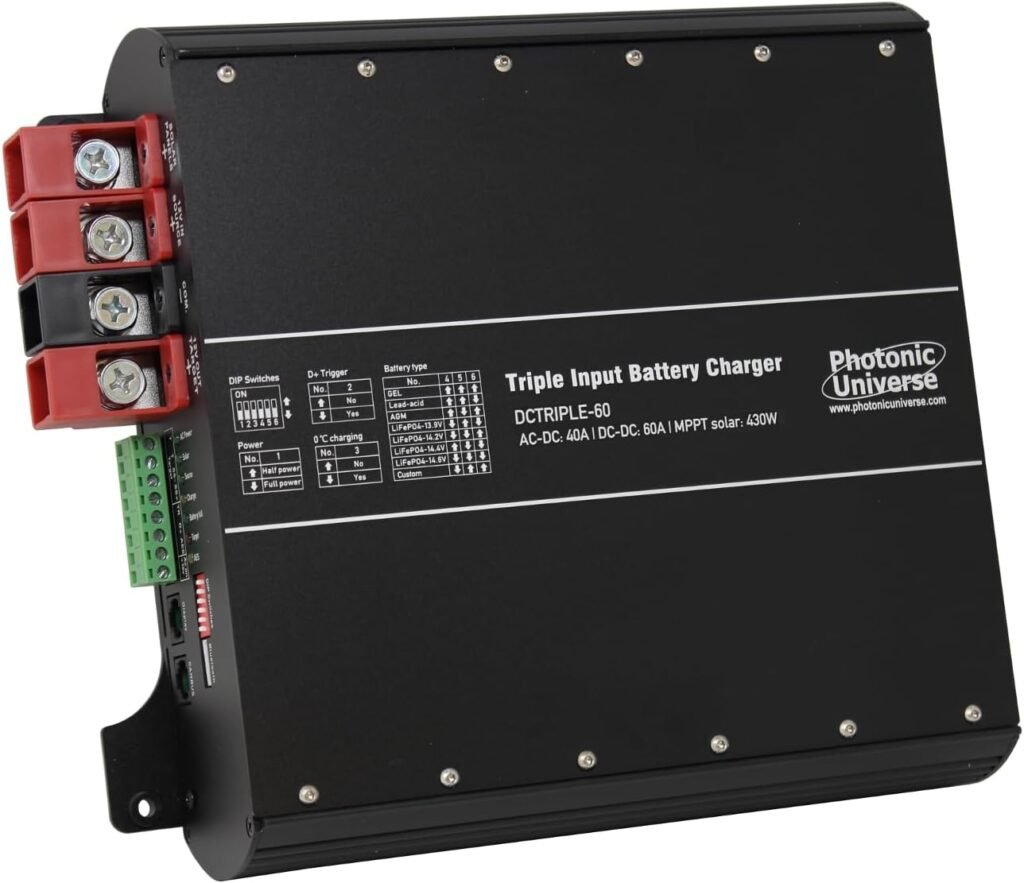
This 60A 12V DC to 12V DC Advanced Automatic Multi-Stage Triple Battery Charger with 30A MPPT solar input and 40A mains input for Lead Acid and Lithium Batteries is built to be the “brains” of our 12V charging setup. It sits between our power sources and our batteries, automatically deciding how and when to charge, so we can leave it running unattended with confidence.
We can think of it as three powerful chargers in one compact unit: a DC‑DC charger, a solar MPPT charger, and a mains/shore charger. Together, they cover nearly every situation we might encounter off‑grid, on the road, or at home.
Who Is This Charger Best Suited For?
This unit is clearly aimed at people running more serious 12V systems rather than tiny weekend setups. If we are upgrading a van conversion, motorhome, 4×4 overland rig, off‑grid cabin, boat, or work vehicle, it fits right in.
It is especially appealing if we:
- Run both starter and house batteries
- Want to mix sources: alternator, solar, and mains
- Use lithium (LiFePO4 or lithium‑ion) or advanced AGM/GEL lead acid
- Need something that can be left working unattended without baby‑sitting
For simple single‑battery setups with low loads, this might be overkill. For complex multi‑battery systems, it starts to feel almost essential.

Key Features at a Glance
To make things easy to digest, we can look at the main specs and features in a quick reference table.
Quick Specification Overview
This summary helps us see how everything fits together without getting lost in jargon.
| Feature | Details |
|---|---|
| DC‑DC Charging Current | Up to 60A at 12V |
| Input / Output Voltage | 12V DC to 12V DC |
| Supported Battery Chemistries | Lead Acid, AGM, GEL, LiFePO4, Lithium‑ion |
| Battery Type Selection | DIP switches (manual configuration) |
| Solar Charger Type | 30A MPPT (Maximum Power Point Tracking) |
| Solar Function | Charges target battery when DC‑DC is inactive (e.g., parked/storage) |
| Mains Charger | Built‑in 40A AC‑to‑DC charger |
| Intended Use | Unattended safe charging from another 12V battery with its own source |
| Ignition Control | D+ terminal trigger: starts/stops with vehicle ignition |
| Temperature Features | Optional external temperature sensor (sold separately) |
| Lithium Temperature Protection | Prevents charging below 0°C |
| Lead Acid Temp Compensation | Adjusts charge voltage based on temperature |
| Charging Stages | Advanced multi‑stage (bulk, absorption, float; suitable for lithium profiles) |
| Use Cases | RVs, camper vans, boats, off‑grid systems, service vehicles |
This combination makes it a very flexible piece of hardware for multi‑source, multi‑battery installations.
How the Triple Charging System Works in Practice
The main selling point is that we are getting three charging paths in one unit. Instead of juggling separate chargers, wiring, and settings, we let this device coordinate the heavy lifting.
DC‑DC Charging from Another 12V Battery
At its core, this is a 60A DC‑DC charger. That means it takes power from one 12V battery (usually our starter battery or a dedicated source) and intelligently charges our secondary or house battery.
We get a controlled, multi‑stage charge rather than a crude link that can overcharge or flatten our starter battery. This is especially important with modern alternators and lithium batteries, where direct connections can be risky.
30A MPPT Solar Charging When Parked or Stored
When our engine is off and the DC‑DC side is inactive, the built‑in 30A MPPT solar controller takes over. It uses connected solar panels to keep our target battery charged and maintained.
This is perfect for periods when our vehicle is parked, a cabin is left unattended, or a boat is moored. We are not wasting solar potential, and our batteries stay topped up rather than slowly discharging.
40A Mains Charging When Off‑Grid Power Is Limited
If we are at a campground, marina, workshop, or home with access to shore/mains power, the integrated 40A AC‑to‑DC charger kicks in. We can recharge our battery bank quickly from mains when solar is poor or our driving time has been short.
We do not need a separate bench charger. That reduces cost, wiring complexity, and space in our build.
Battery Chemistries and Compatibility
Being able to support different battery types is crucial, especially as many of us are upgrading to lithium while still using lead acid in some parts of the system.
Lead Acid, AGM, and GEL Support
For traditional lead acid batteries, including AGM and GEL, this charger follows appropriate multi‑stage profiles. That means bulk charging until a set voltage, then absorption, then float.
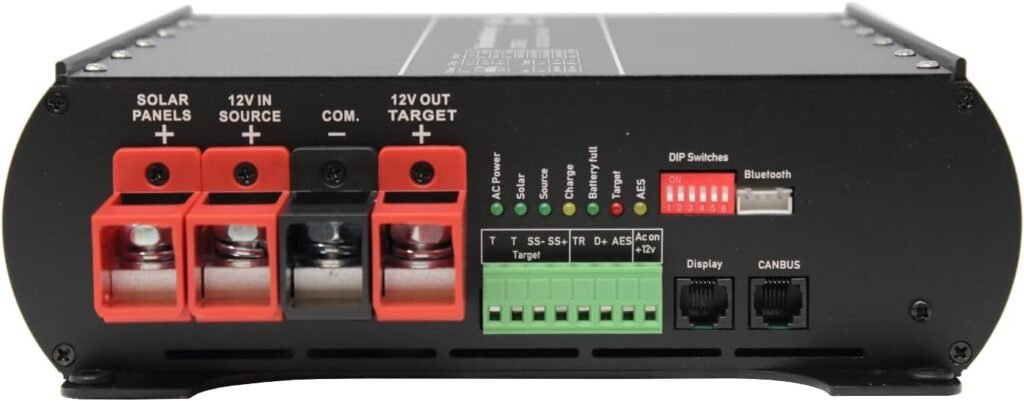
We can set the correct profile using dip switches. Once configured, the unit automatically manages the charging stages, so we do not have to fuss with it day to day.
LiFePO4 and Lithium‑ion Support
For lithium batteries, the charger can be set to LiFePO4 or lithium‑ion profiles. Lithium requires more precise voltage control and protection, particularly around temperature and the upper charge limits.
Because this charger is built with lithium in mind, we can confidently run a modern lithium house bank while still using a lead acid starter battery.
Battery Type Selection with DIP Switches
Battery type is chosen via physical dip switches on the unit. We do not need a software app or Bluetooth connection; the setup is old‑school but robust.
We configure it once to match our battery type and system design, then we largely forget about it—unless we change battery chemistry later, in which case we just re‑set the switches.
Multi‑Stage Charging: Why It Matters
Multi‑stage charging means the charger is not just pushing one static voltage at our battery. Instead, it moves through stages to maximize battery life and performance.
Bulk, Absorption, and Float (and Lithium Nuances)
For lead acid batteries, the process usually goes like this:
- Bulk – Push as much current as safely possible until the battery reaches a target voltage.
- Absorption – Hold that voltage while the current gradually tapers as the battery tops up.
- Float – Reduce the voltage slightly to maintain charge without overcharging.
For lithium, the profiles change a bit, generally avoiding long float phases and focusing on safe upper voltage limits and stable operation.
Benefits for Battery Life and Performance
Using proper multi‑stage charging helps:
- Extend overall battery lifespan
- Improve charge acceptance (faster useful recharging)
- Reduce sulfation in lead acid batteries
- Maintain safer operating conditions for lithium
That translates into fewer premature battery replacements and more reliable power.
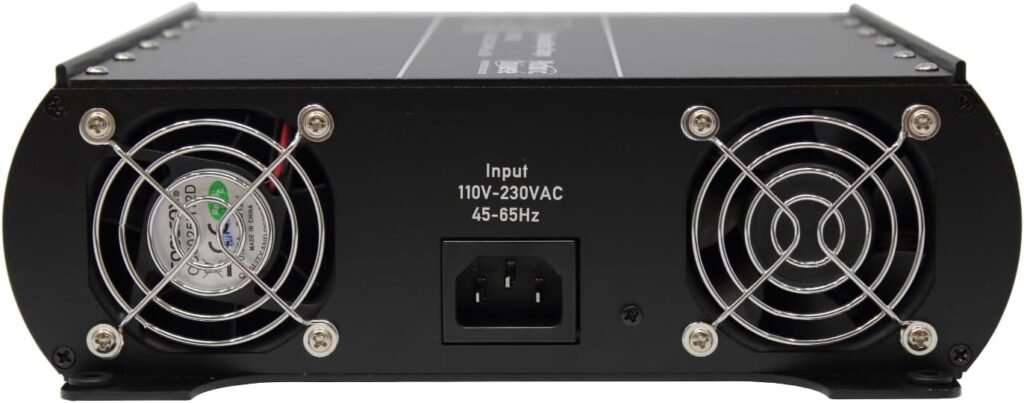
Alternator and Ignition Integration
This unit is clearly aimed at vehicle installations as well as stationary systems, and the ignition control feature is a strong plus.
Ignition On/Off via D+ Terminal
We can connect the charger to our vehicle’s ignition signal through the D+ terminal. Once wired:
- When ignition is turned on, the charger starts battery‑to‑battery DC‑DC charging.
- When ignition is turned off, it stops DC‑DC charging.
This means we are not accidentally drawing down the starter battery when the engine is not running, and we do not have to remember to flip manual switches.
Protecting the Starter Battery Automatically
By keying DC‑DC charging to engine runtime, we are effectively ensuring that our house battery only charges when there is a charging source (alternator) replenishing the starter. That protects us from the unhappy situation of waking up to a flat starting battery after a night of running the camper’s loads.
MPPT Solar Charging in More Detail
The integrated 30A solar controller uses MPPT (Maximum Power Point Tracking), which is now the gold standard for efficient solar harvesting.
Why MPPT Matters for Solar Efficiency
MPPT technology constantly adjusts to find the optimal voltage/current combination from our solar panels so that we get the most watts into the battery.
Compared to simpler PWM controllers, MPPT can significantly increase the actual usable energy from our panels, especially in:
- Cold conditions, where panel voltage is higher
- Mixed light conditions (clouds, partial shade)
- Larger or higher‑voltage panel arrays
That means more real‑world energy into our batteries from the same panel area.
Solar Operation When the Vehicle Is Parked
The smart part is that solar charging is prioritized when DC‑DC charging is not active. For example:
- We park the van at a campsite, turn the engine off, and walk away.
- DC‑DC charging stops, as it should, to protect the starter.
- Solar stays active, quietly topping up the house battery all day.
So even if we are not moving, our system continues to recover capacity from the sun.
40A Mains Charger: When We Have Shore Power
Not every day will be sunny, and not every trip will involve enough driving time to replenish our batteries. That is where the mains charger comes in.
Fast Recharging from Grid Power
With up to 40A available from an AC source, we can recharge a fairly substantial 12V battery bank in a reasonable time window. We simply connect the unit to mains/shore power, and it does the rest.
For example, if we come back from a cloudy weekend and our batteries are at 50%, plugging into shore for a night can bring us back close to full.
Ideal for Campgrounds, Marinas, and Workshops
This integrated 40A charger is great if:
- We regularly stay at powered sites with hook‑ups
- Our boat spends time in a marina with shore power
- Our work vehicle comes back to a depot or workshop where AC is available
We avoid the hassle and extra cost of separate bench chargers or clunky chargers that are not matched to our specific battery chemistry.
Temperature Protection and Compensation
Batteries and temperature have a complicated relationship. This unit takes that into account, especially for lithium.
External Temperature Sensor (Optional)
We can pair the charger with an external temperature sensor (sold separately). This sensor allows the unit to “know” the battery temperature and adjust behavior accordingly.
While this adds a little extra cost and wiring, it can be worth it, particularly in climates with extreme cold or heat.
Lithium Charging Cutoff Below 0°C
Lithium batteries can be permanently damaged if charged below freezing (0°C). With the temperature sensor connected, the charger protects lithium batteries from charging at or below that critical threshold.
In other words, if we are winter camping or operating in cold conditions, we are not unknowingly harming an expensive LiFePO4 pack.
Lead Acid Temperature Compensation
Lead acid batteries behave very differently with temperature. As they get colder or hotter, the ideal charging voltage shifts. With the sensor connected, the charger adjusts its voltage setpoints based on real temperature.
That helps avoid both undercharging and overcharging in unusual conditions and can extend the service life of our lead acid bank.
Safety and Unattended Operation
The manufacturer specifically calls out that this charger is designed for safe and efficient unattended charging of 12V batteries from another 12V battery.
Built for Long‑Term, Hands‑Off Use
Once installed and correctly configured, we can essentially leave this system running:
- It decides when to draw from DC‑DC, solar, or mains (depending on our installation).
- It shapes charging curves based on battery type.
- It reacts to ignition signals and temperature input.
That reduces day‑to‑day workload, especially for those of us who live or travel full‑time with our systems.
Protection Layers and Design Philosophy
Even though we do not have every internal spec here, the feature set implies:
- Overcharge protection through correct charging stages
- Temperature‑related protections with sensor
- Intelligent switching between inputs
- Starter battery protection via ignition‑controlled DC‑DC behavior
Those layers combine to make unattended operation realistic and safe for typical RV, marine, and off‑grid users.
Installation Considerations
While this is a very versatile unit, we do need to think about installation details to get the most out of it.
Wiring Complexity and Planning
Because this is a triple charger, wiring will involve:
- DC‑DC connections (starter battery to house battery)
- Solar input (panels to MPPT)
- Mains input (AC supply to charger)
- Output to target battery
- Optional ignition (D+ terminal)
- Optional temperature sensor
We will want to plan our cable runs, fuse sizes, and mounting location carefully. If we are not comfortable with electrical systems, professional installation can be a good investment.
Ventilation and Mounting Environment
High current charging means heat. We should mount this unit in a well‑ventilated spot, away from direct moisture and not in a sealed compartment with no airflow.
A stable, solid mounting surface helps ensure vibration and movement do not stress the wiring, especially in vehicles and boats.
Configuration Steps with DIP Switches
Before powering everything up, we should:
- Confirm our battery chemistry (Lead Acid, AGM, GEL, LiFePO4, Lithium‑ion).
- Check the manual for the correct dip switch configuration.
- Set the switches carefully, double‑checking each position.
- Only then connect the system fully and apply power.
That one‑time setup step is crucial; using the wrong profile can shorten battery life or lead to charging issues.
Everyday Use Cases and Scenarios
To see how this unit behaves in real life, we can walk through a few common scenarios.
Van Life and RV Travel
In a camper van or RV, we typically have:
- A starter battery
- A house battery bank
- Roof‑mounted solar
- Occasional shore power at campsites
With this charger installed:
- While driving: DC‑DC charging uses the alternator to charge the house bank at up to 60A.
- While parked in the sun: Solar MPPT keeps the house battery topped off.
- While on shore power: The 40A mains charger restores our house bank quickly.
We just go about our trip—no switching between multiple devices or constantly checking charge sources.
Overlanding and 4×4 Expeditions
For off‑road rigs or expedition vehicles:
- The alternator charges our house battery via DC‑DC while on the move.
- When camped remotely, the solar input keeps fridges, lights, and communications powered.
- If we occasionally return to a base with AC power, mains charging brings everything back to full before the next journey.
This is ideal for those of us who need reliable energy for fridges, radios, GPS, and lighting without running the engine constantly.
Boats and Marine Installations
On a boat, the system might integrate with:
- Engine alternator (starter battery)
- House battery bank
- Solar panels on deck or bimini
- Shore power at marinas
Here, the same triple functionality is a real benefit. We can be sailing, anchored, or docked, and the charger adjusts to whichever power source is available at the time.
Off‑Grid Cabins and Remote Sites
For stationary off‑grid setups:
- Solar MPPT is probably the main charging source.
- Mains charging can be used when a generator or occasional grid access is available.
- DC‑DC charging could come from a dedicated battery/alternator or other 12V supply.
Even though ignition control is more vehicle‑oriented, many of the other features still apply well in fixed installations.
Strengths of This Charger
There are a number of clearly strong aspects where this product stands out.
All‑in‑One Versatility
We are effectively getting:
- A powerful DC‑DC charger (60A)
- A 30A MPPT solar controller
- A 40A mains charger
in a single integrated system. That reduces clutter, mismatched devices, and multiple manuals.
Chemistry Flexibility and Future‑Proofing
Because it works with Lead Acid, AGM, GEL, LiFePO4, and Lithium‑ion, we are not boxed into one chemistry type. We can upgrade from lead acid to lithium later without replacing the charger, just by reconfiguring the switches.
Smart Behavior with Ignition and Temperature
The ignition‑linked control is a big convenience win for vehicle users, and temperature‑based protections are essential for modern lithium systems, particularly in cold climates.
We are not just getting amps; we are getting intelligence around when and how those amps are delivered.
Potential Limitations and Things to Keep in Mind
No product is perfect, and being aware of limitations helps us decide if it is right for our situation.
Not Ideal for Very Small Systems
If our setup is just a small battery for a single light and a phone charger, this unit is more than we need. The current capabilities and multi‑input design really shine in larger systems.
We should match the tool to the job; this charger is built for medium to large installations.
Requires Careful Installation
Because we are handling multiple inputs and relatively high currents, poor installation can lead to issues. We need:
- Correct cable gauges
- Proper fusing
- Sound grounding and secure connections
If that is outside our comfort zone, we may want help from a qualified installer.
External Temperature Sensor Is Extra
The temperature sensor is not included, so we will need to purchase it separately if we want full temperature protection and compensation. For lithium use in variable climates, we would strongly consider adding that sensor.
How This Charger Compares to Using Separate Units
Some of us might already have:
- A separate DC‑DC charger
- A standalone solar controller
- An independent mains charger
So how does this integrated unit compare?
Benefits of Integration
Compared to three separate devices, we gain:
- Fewer boxes, less wiring, less space used
- A unified charging strategy, rather than mix‑and‑match profiles
- A cleaner, more maintainable system layout
- Simpler troubleshooting, since all key charging paths run through one brain
That can be especially nice in tight van builds or compact boats where every centimeter counts.
Potential Downsides Versus Modular Systems
With everything integrated, if the unit fails, we lose all three charging paths until it is replaced. With modular systems, one device can fail while the others keep working.
We are trading some modularity and redundancy for simplicity and cleaner integration. For most users, that trade will feel well worth it, but it is good to be aware of.
Ideal Buyer Profiles
We can narrow down who is most likely to get full value from this product.
Great Fit For
- RV and camper van owners with alternators, solar, and occasional shore power
- Overlanders and expedition travelers needing robust DC‑DC and solar integration
- Boaters who use a mix of engine charging, solar, and marina shore power
- Off‑grid cabin owners who want an integrated solar and mains charging solution
- Anyone planning to move from lead acid to lithium in the future
In all these cases, the unit’s flexibility, multiple inputs, and unattended‑safe design are compelling.
Less Suited For
- Very small weekend setups with a tiny battery and no solar or mains
- Applications where we already have a full, working multi‑device system we are happy with
- Scenarios where extreme modular redundancy is more important than integration
For basic needs, simpler and cheaper chargers may be enough.
Practical Tips for Getting the Most from This Charger
Once we decide this unit matches our needs, a few practical steps can help us squeeze maximum value out of it.
Match Cable Sizes and Fusing to Current Levels
With up to 60A DC‑DC, 30A solar, and 40A mains output, using undersized cables or incorrect fuses is risky. We should:
- Follow manufacturer guidelines on cable gauge
- Keep cables as short as reasonably possible
- Fuse at both ends where appropriate, close to the power source
This keeps the system both safe and efficient.
Take Time with Battery Type Configuration
We should double‑check the dip switch settings for our battery type before running the charger in earnest. If our batteries have recommended charge voltages from the manufacturer, we can compare them to the profiles in the charger manual and pick the best match.
Add the Temperature Sensor if We Use Lithium
For lithium users, the optional external temperature sensor is highly recommended. It gives us:
- Protection from charging below 0°C
- Greater confidence in harsh conditions
The sensor is a relatively small investment compared to the cost of a lithium battery bank.
Keep Ventilation and Access in Mind
We should mount the charger where air can circulate and where we can access the dip switches and terminals if needed. Hiding it inside a sealed box may cause overheating and make future adjustments or troubleshooting painful.
Our Overall Verdict
After looking closely at its design, features, and use cases, we see this 60A 12V DC to 12V DC Advanced Automatic Multi-Stage Triple Battery Charger with 30A MPPT solar input and 40A mains input for Lead Acid and Lithium Batteries as a very capable central hub for serious 12V systems.
We are getting:
- High‑current DC‑DC charging from another 12V battery
- Efficient 30A MPPT solar support when the engine is off
- A strong 40A mains charger built right in
- Support for multiple chemistries, including LiFePO4 and lithium‑ion
- Ignition‑based automation and solid temperature protections (with optional sensor)
For those of us running RVs, camper vans, boats, off‑grid cabins, or work vehicles with multiple power sources, this unit can meaningfully simplify the system while improving safety and efficiency. The all‑in‑one design reduces clutter and configuration headaches, especially if we prefer a single brain to manage everything.
We would not choose it for tiny or extremely simple systems, and we would budget for professional installation if we are not comfortable with higher‑current DC wiring. We would also strongly consider adding the external temperature sensor, particularly with lithium batteries.
Overall, for medium‑to‑large 12V setups where we want reliable, unattended charging from alternator, solar, and mains, this charger offers a smart, flexible, and future‑ready solution that can grow with our system and our needs.
Disclosure: As an Amazon Associate, I earn from qualifying purchases.