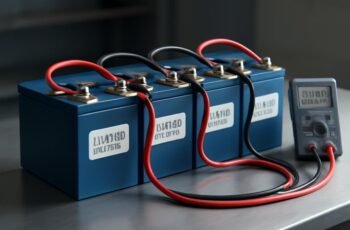
Imagine you’ve just invested in a high-quality LiFePO4 charger, but neglecting proper usage habits can substantially shorten its lifespan. Proper operation—such as maintaining correct voltage and current settings, avoiding overcharging, and ensuring adequate cooling—is essential for maximizing durability. These technical details directly impact performance and warranty protection, making it critical to understand how disciplined habits can prevent premature failure. Let’s explore the specific practices that safeguard your investment over the long term.
Key Takeaways
- Use recommended voltage and current settings to prevent overcharging and reduce internal stress on the charger.
- Regularly inspect and clean connections, vents, and cooling pathways to maintain optimal performance.
- Store chargers in a cool, dry environment and disconnect from power during long-term storage.
- Keep chargers and cables well-ventilated, avoiding enclosed spaces to prevent overheating.
- Follow manufacturer guidelines for maintenance intervals and performance verification to ensure longevity.
Why Proper Usage Habits Are Crucial for LiFePO4 Charger Longevity
Why do proper usage habits markedly impact the lifespan of LiFePO4 chargers? Proper usage directly influences both battery safety and warranty terms. Overloading or using incorrect charging parameters can lead to thermal stress, risking safety hazards like overheating or fires. Such mishandling often voids warranty coverage, leaving users vulnerable to costly repairs. Consistent adherence to recommended charging practices minimizes wear on internal components and prevents voltage spikes that degrade the charger’s efficiency over time. Maintaining correct operational habits ensures the charger operates within designed parameters, optimizing longevity. Ultimately, disciplined usage preserves the integrity of the device, safeguards user safety, and sustains warranty validity—making proper habits essential for maximizing the lifespan of LiFePO4 chargers.
Understanding the Right Charging Voltage and Current Settings
To optimize the lifespan of our LiFePO4 chargers, we need to focus on setting the correct charging voltage and current. Maintaining voltage within the recommended range prevents overcharging and degradation, while appropriate current levels ensure safe, efficient charging without stressing components. Understanding these parameters allows us to maximize charger durability and performance.
Optimal Voltage Range
Have you ever wondered how the charging voltage and current settings directly influence the lifespan of a LiFePO4 battery? Maintaining the ideal voltage range is essential for an efficient workflow and prolonging battery health. Typically, LiFePO4 cells are best charged between 3.6V and 3.65V per cell, avoiding overvoltage that accelerates degradation. Precise voltage control reduces stress on the chemistry, minimizing capacity fade over time. Additionally, firmware updates in chargers help fine-tune voltage limits, ensuring consistent performance. Adhering to this voltage window prevents unnecessary wear, extending overall lifespan. A thorough understanding of the ideal voltage range is foundational for effective, long-term battery management, aligning charging practices with technical specifications and hardware capabilities.
Correct Charging Current
How do we determine the appropriate charging current for LiFePO4 batteries to ensure longevity? It begins with understanding manufacturer specifications and avoiding misleading marketing claims that suggest higher currents always mean faster charging. Optimal charging currents typically range from 0.2C to 0.5C, depending on battery design, balancing charge time and cell health. Charging at excessively high currents can accelerate degradation, void warranties, and create warranty pitfalls if damage occurs. Conversely, too low currents prolong charging time without added benefit. Precise current settings help minimize thermal stress and mechanical wear, extending the battery’s lifespan. Therefore, adhering to recommended current levels, verified through datasheets and quality chargers, ensures safe operation, preserves warranty coverage, and ultimately enhances the longevity of LiFePO4 batteries.
Avoiding Overcharging and Deep Discharges
Why does avoiding overcharging and deep discharges matter so much for LiFePO4 batteries? These practices directly influence battery lifespan and performance, countering durability myths that overstress the importance of aggressive cycling. Overcharging causes electrolyte degradation and structural stress, reducing capacity over time, while deep discharges push the battery beyond its optimal voltage window, risking irreversible damage. Proper charging etiquette emphasizes maintaining voltage levels within recommended limits, preserving cell integrity. By avoiding these extremes, we mitigate the risk of capacity fade and extend overall lifespan. This disciplined approach ensures that the battery’s chemistry remains stable, supporting long-term durability. In essence, responsible usage aligns with the technical realities of LiFePO4 chemistry, emphasizing that careful charge management is key to maximizing charger lifespan and battery reliability.
Keeping Your Charger and Battery Cool During Operation
Maintaining optimal temperatures during charging and discharging is essential for preserving the longevity and efficiency of LiFePO4 batteries. Excess heat buildup accelerates degradation, so ensuring effective cooling airflow around the charger and battery is critical. Adequate ventilation prevents localized heat accumulation, which can compromise component integrity and reduce overall lifespan. We recommend positioning chargers and batteries in well-ventilated environments, avoiding enclosed spaces that trap heat. Regularly inspecting cooling pathways and removing dust or obstructions enhances airflow efficiency. Monitoring temperature levels during operation allows timely intervention before heat-related issues develop. Ultimately, controlling heat buildup through proper airflow management minimizes thermal stress, preserves battery capacity, and extends operational life, ensuring reliable performance over the long term.
Using Compatible and Quality Charging Equipment
Using certified chargers ensures compatibility with LiFePO4 batteries and maintains optimal performance, reducing the risk of damage or premature wear. Conversely, low-quality accessories often lack proper safety features and can introduce electrical faults. Prioritizing high-quality, compatible equipment is essential for maximizing charger lifespan and maintaining battery health.
Choose Certified Chargers
Selecting certified chargers guarantees compatibility and safety, which are critical factors in maximizing LiFePO4 battery lifespan. Certified chargers adhere to cooperative standards and possess necessary safety certifications, ensuring reliable operation and preventing damage. When choosing a charger, consider these key points:
- Verify compliance with relevant cooperative standards to ensure interoperability and consistent performance.
- Confirm safety certifications, such as UL or IEC, to guarantee adherence to safety protocols.
- Ensure the charger’s specifications match the battery’s voltage and current requirements to avoid overcharging or undercharging.
Using certified, high-quality equipment reduces risks of electrical faults and thermal issues, ultimately extending battery longevity. Prioritizing these criteria safeguards your investment and maintains optimal battery health over time.
Avoid Low-Quality Accessories
Choosing the right charger is only the first step; ensuring all accessories and cables are compatible and of high quality is equally critical. Low-quality accessories can introduce voltage fluctuations, increase resistance, and cause overheating, which accelerates battery degradation. To mitigate this, select accessories with certified standards and reliable materials, ensuring consistent current flow and minimal energy loss. The table below highlights key aspects to consider:
| Aspect | Impact | Recommendation |
|---|---|---|
| Accessories Quality | Ensures durability and safety | Use certified, high-grade cables |
| Compatibility | Prevents improper charging | Match connector types and ratings |
| Material Integrity | Reduces risk of failure | Opt for heat-resistant, durable materials |
| Resistance Levels | Affects charging efficiency | Choose low-resistance cables |
High-quality accessories optimize lifespan, safety, and performance of LiFePO4 batteries.
Regular Maintenance and Inspection Tips for LiFePO4 Chargers
How often should we perform maintenance and inspections on LiFePO4 chargers to ensure optimal performance? Regular checks are essential for effective battery maintenance, preventing unexpected failures. We recommend inspections every 3 to 6 months, depending on usage intensity. Key steps include:
Perform maintenance every 3 to 6 months to ensure LiFePO4 charger performance and longevity.
- Visual Inspection: Examine for dust, corrosion, or loose connections that could impair function.
- Performance Testing: Measure output voltage and current to detect deviations from manufacturer specifications.
- Cleaning and Tightening: Remove debris and ensure all terminals and connectors are secure, avoiding electrical resistance issues.
Consistent maintenance preserves charger efficiency and prolongs lifespan. Incorporating these routine steps into your battery maintenance regimen helps identify potential problems early, ensuring reliable operation and safeguarding your investment over time.
How Proper Storage Practices Extend Charger Lifespan
Proper storage practices are essential for maintaining the integrity and extending the lifespan of LiFePO4 chargers. Adhering to storage guidelines minimizes exposure to environmental stressors like temperature fluctuations, humidity, and dust, which can degrade internal components. Consistent battery conditioning before storage ensures optimal voltage levels, preventing over-discharge or overcharge conditions that accelerate wear. We recommend storing chargers in a cool, dry environment, ideally between 10°C and 25°C, to prevent thermal stress. Additionally, disconnecting chargers from power sources and avoiding prolonged storage at full charge or complete discharge helps preserve battery health. By implementing these precise storage practices, we reduce internal component degradation, maintain performance, and extend the overall lifespan of LiFePO4 chargers, ensuring reliable operation when needed.
Troubleshooting Common Issues to Prevent Damage
Addressing common issues promptly is critical to preventing damage and ensuring the longevity of LiFePO4 chargers. Failure to do so can compromise battery safety and lead to costly repairs. To troubleshoot effectively:
- Verify all connections—incorrect connections can cause short circuits and degrade charger components.
- Inspect for signs of overheating or physical damage, which threaten battery safety and may indicate internal faults.
- Ensure the charger’s firmware is up to date, as outdated software can cause malfunction or incorrect operation.
Frequently Asked Questions
How Often Should I Calibrate My Lifepo4 Charger?
We recommend calibration every six to twelve months, depending on your usage patterns. Regular calibration ensures accurate voltage readings, optimizing charger performance and extending lifespan. Adjust frequency if you notice inconsistencies or changes in battery behavior.
Can Using a Lower Current Improve Charger Lifespan?
Think of a lower current like a gentle stream nourishing a river; it reduces stress on your battery, improving health and charger lifespan. Using lower current minimizes heat and wear, supporting long-term reliability and optimal performance in your LiFePO4 system.
What Environmental Factors Most Affect Charger Durability?
Environmental temperature and humidity levels substantially impact charger durability; high temperatures accelerate component degradation, while excessive humidity leads to corrosion and electrical faults, requiring us to ensure optimal environmental conditions for maximum lifespan and reliable performance.
Are There Specific Brands Known for Longer-Lasting Chargers?
Certainly, in the realm of charger longevity, we find brands like Battle Born and Renogy stand out for their reliability and comprehensive warranties, offering the kind of assurance that suggests they’ve mastered the art of technical durability—an investment, not just a purchase.
How Does Daily Usage Frequency Impact Charger Longevity?
Daily usage impact greatly influences charger longevity, as frequent cycles accelerate wear. Charger longevity factors include thermal stress and voltage fluctuations; minimizing unnecessary charging cycles and maintaining optimal operating conditions helps preserve charger performance over time.
Conclusion
By adhering to disciplined usage habits, we safeguard our LiFePO4 chargers against thermal stress, voltage fluctuations, and unnecessary wear. Picture our chargers as precision instruments—delicate yet resilient when properly maintained. Regular inspections, correct settings, and thoughtful storage create a protective shield, ensuring consistent performance over time. Ultimately, meticulous care transforms routine charging into a technical safeguard, extending lifespan and preserving efficiency, much like tending a finely tuned engine that runs smoothly for miles to come.