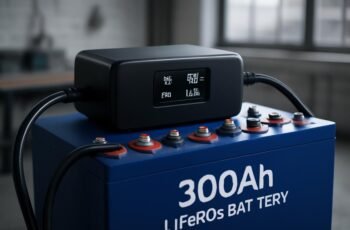
We often assume that basic chargers suffice for LiFePO4 batteries, but this may overlook critical factors influencing longevity and safety. Programmable multi-stage chargers challenge that notion by offering precise control over charging profiles, which can substantially extend battery life. Understanding the complexities and benefits of these advanced systems prompts us to examine how they optimize performance and prevent issues like thermal stress. Exploring these technologies reveals insights that could reshape how we approach battery management.
Key Takeaways
- Programmable multi-stage LiFePO4 chargers precisely control voltage and current during bulk, absorption, float, and equalization phases for optimal battery health.
- Adaptive algorithms monitor real-time conditions, adjusting charging parameters to prevent overvoltage, overheating, and capacity fade.
- Customizable profiles enable tailoring charge parameters based on application needs, enhancing lifespan and performance.
- Accurate voltage regulation and temperature compensation ensure safe, efficient charging and minimize degradation of LiFePO4 batteries.
- User interfaces and diagnostics simplify troubleshooting, configuration, and maintenance of advanced multi-stage programmable chargers.
Understanding the Basics of LiFePO4 Batteries and Their Charging Needs
LiFePO4 batteries, also known as lithium iron phosphate batteries, are a popular choice for energy storage due to their high stability, long cycle life, and safety profile. Their unique lifepo4 chemistry ensures thermal stability and resistance to overcharging, which enhances overall safety. Understanding their charging needs is essential to maximize performance; they require a precise charging protocol to optimize charging efficiency. Unlike other lithium-ion chemistries, LiFePO4 batteries have a flat charge curve, making voltage-based regulation critical. Proper charging minimizes capacity loss and prolongs cycle life. A well-designed charger must provide accurate voltage regulation and controlled current flow to maintain battery health. This foundation ensures efficient energy transfer, safety, and longevity, highlighting the importance of tailored charging strategies for LiFePO4 chemistry.
Why Multi-Stage Charging Matters for LiFePO4 Batteries
Why does multi-stage charging play such a critical role in maintaining the health and performance of LiFePO4 batteries? Multi-stage charging ensures optimal battery chemistry management, preventing overcharge and reducing degradation. It precisely controls current and voltage at each phase, which is essential for longevity.
Key benefits include:
- Enhanced lifespan by minimizing capacity fade and cell imbalance.
- Improved efficiency through tailored charge profiles that match battery state.
- Consistent performance by avoiding stress-induced failures, which are irrelevant topic in casual conversations but vital here.
A random thought: some might see multi-stage charging as overly complex, but it’s a technical necessity. Properly programmed chargers are essential to harness the full potential of LiFePO4 chemistry, ensuring reliability over time.
How Programmable Chargers Optimize Battery Performance and Longevity
Programmable chargers enhance battery performance by providing precise control over charging parameters, ensuring optimal voltage and current delivery. They also extend battery lifespan through adaptive algorithms that adjust charging profiles based on real-time conditions. This combination minimizes stress on the cells, maintaining efficiency and durability over prolonged use.
Precise Charging Control
Charging systems serve as the backbone of battery management, and programmable chargers excel by offering precise control over this process. This precision enables us to fine-tune parameters such as voltage thresholds, current limits, and timing sequences, directly impacting battery health.
- Accurate voltage regulation prevents overcharging, addressing common battery myths about safety concerns.
- Customizable current profiles optimize charge rates, reducing stress on cells and extending lifespan.
- Real-time monitoring and adjustments ensure optimal performance, avoiding the pitfalls of generic chargers that lack such finesse.
This level of control enhances charger aesthetics by providing straightforward interfaces for complex configurations, making precise charging accessible without sacrificing usability. Ultimately, this meticulous approach maximizes battery efficiency and longevity.
Extended Battery Lifespan
Have you ever considered how precise control over charging parameters can substantially extend a battery’s lifespan? An introductory guide reveals that programmable chargers optimize cycle management, reduce stress, and prevent overcharging. By tailoring voltage, current, and temperature limits, we enhance battery health and safety considerations. This precision minimizes degradation mechanisms like capacity fade and internal resistance growth. The table below illustrates key parameters monitored during multi-stage charging:
| Parameter | Range / Setting | Purpose |
|---|---|---|
| Absorption Voltage | 3.65 – 3.75 V per cell | Complete cell balancing |
| Float Voltage | 3.20 – 3.30 V per cell | Maintain full charge safely |
| Temperature Limit | 0 – 45°C | Prevent thermal runaway |
| Charging Current | Adjustable, based on stage | Optimize lifespan and performance |
| Cut-off Voltage | 3.65 V per cell | Avoid overvoltage damage |
This approach, emphasizing safety considerations, prolongs battery life through precise, customizable control.
Adaptive Charging Algorithms
How do adaptive charging algorithms enhance battery performance and longevity? They dynamically adjust charging parameters based on real-time data, optimizing cell health. Specifically, these algorithms utilize adaptive buffering to prevent overcharging and reduce stress, extending cycle life. Additionally, thermal throttling mechanisms are activated when temperature thresholds are approached, mitigating heat-related damage. This process ensures that charging rates are modified to maintain optimal operating conditions.
In summary:
- Adaptive buffering fine-tunes voltage and current to reduce stress.
- Thermal throttling prevents overheating during high current phases.
- The algorithms continuously monitor cell health, adapting charging stages accordingly.
Together, these features maximize lifespan while maintaining efficient charge times, ensuring battery reliability over extended periods.
Key Features to Look for in a Programmable Multi-Stage LiFePO4 Charger
When selecting a programmable LiFePO4 charger, precise voltage control is essential to prevent overcharging and ensure optimal performance. Adjustable charging stages allow us to tailor the charging profile to specific battery requirements, enhancing longevity. These features are critical for maintaining battery health and achieving efficient, reliable operation.
Precise Voltage Control
Precise voltage control is critical in a programmable LiFePO4 charger to guarantee optimal battery health and longevity. Accurate voltage regulation prevents overcharging and undercharging, which can damage cells or reduce lifespan. When evaluating chargers, consider the following:
- Fine Voltage Adjustment: The ability to set voltage levels with high precision minimizes risks associated with minor casing differences and ensures compatibility across various battery configurations.
- Consistent Voltage Monitoring: Real-time feedback maintains stable charge cycles, reducing wear and tear, and supporting long-term performance.
- Cost Considerations: While advanced voltage control often incurs higher initial costs, it can significantly extend battery life, offsetting expenses through improved durability and reduced maintenance needs.
Ultimately, precise voltage control safeguards your investment and enhances overall system reliability.
Adjustable Charging Stages
Have you considered the importance of flexible charging algorithms in optimizing LiFePO4 battery performance? Adjustable charging stages enable precise control over each phase, improving efficiency and longevity. Key stages include bulk, absorption, and float, which can be tailored to specific application needs. This flexibility supports a strategic marketing approach, highlighting customization as a competitive advantage. Additionally, adaptable stages streamline the supply chain by reducing battery degradation and replacement costs.
| Stage | Function | Customization Options |
|---|---|---|
| Bulk | Rapid charge | Current limits, timing |
| Absorption | Voltage balancing | Voltage thresholds |
| Float | Maintenance charge | Voltage stabilization |
| Equalization | Cell balancing | Frequency, duration |
Setting Up Your Charger: Customizing Charging Profiles for Different Applications
How can we ensure our LiFePO4 batteries perform optimally across various applications? The key lies in customizing charging profiles tailored to specific needs while maintaining battery chemistry integrity and charging safety.
To do this effectively:
- Adjust voltage and current limits based on application requirements to optimize capacity and cycle life.
- Incorporate temperature compensation to prevent overheating, ensuring charging safety and preserving battery health.
- Select appropriate charge termination criteria to avoid overcharging or undercharging, which could compromise battery performance.
Troubleshooting Common Issues With Programmable Lifepo4 Chargers
What are the most common issues encountered when using programmable LiFePO4 chargers, and how can they be effectively diagnosed and resolved? Frequently, problems stem from incorrect settings or communication failures within the user interface, leading to incomplete or unsafe charging cycles. Faulty connections or damaged wiring can also impair performance, risking battery safety. To diagnose issues, verify all wiring and ensure settings match the battery specifications, especially voltage and current limits. Use the charger’s diagnostic features to identify error codes or abnormal readings. Resetting the device or updating firmware can resolve software glitches. Maintaining an intuitive user interface simplifies troubleshooting, reducing user error. Ensuring proper configuration and regular system checks uphold battery safety and optimize charging efficiency.
Comparing Different Models: Which Charger Fits Your Battery System?
Choosing the right programmable LiFePO4 charger requires careful consideration of your battery system’s specifications and operational needs. To select the best model, evaluate:
- Battery capacity—ensure the charger’s current output matches your system’s size for optimal battery efficiency.
- Warranty nuances—understand warranty coverage, especially regarding compatibility with specific models and potential costs for repairs.
- Cost considerations—balance upfront investment against long-term benefits, factoring in charger durability and features that improve efficiency.
Matching a charger with your system’s voltage, current, and operational profile minimizes inefficiencies and extends battery life. Comparing these aspects helps identify models that optimize performance while aligning with your budget.
Safety Tips for Using Programmable LiFePO4 Chargers Effectively
Have we prioritized safety protocols when operating programmable LiFePO4 chargers to prevent damage and ensure reliable performance? Implementing proper battery safety measures is essential, particularly in managing thermal conditions during charging cycles. Effective thermal management prevents overheating, which can compromise cell integrity and reduce battery lifespan. Programmable chargers should include safeguards such as temperature sensors and automatic cutoffs to respond to thermal anomalies. Additionally, it’s crucial to verify correct voltage and current settings to avoid overcharging, which poses safety risks. Regular inspection of wiring, connectors, and cooling systems ensures consistent thermal regulation and prevents potential short circuits. Adhering to these safety tips enhances operational reliability, prolongs battery life, and mitigates hazards associated with improper charging practices.
Future Trends in LiFePO4 Charging Technology and Smart Charging Solutions
Are emerging advancements in LiFePO4 charging technology shaping the future of battery management? We believe they are, particularly through innovations in smart charging solutions. Future trends include:
- Enhanced algorithms enabling adaptive, multi-stage charging profiles that optimize battery lifespan and efficiency.
- Integration of real-time data analytics for predictive maintenance and dynamic current regulation.
- Increased adoption of IoT-enabled chargers facilitating remote monitoring and automated adjustments.
These developments emphasize precision control and system interoperability, ensuring safer, more reliable, and efficient charging processes. As smart charging becomes more sophisticated, it will allow for better energy management, reduced human intervention, and extended battery longevity. Staying ahead involves embracing these future trends, which are transforming LiFePO4 battery management into a highly intelligent, responsive system.
Frequently Asked Questions
Can Programmable Chargers Adapt to Different Lifepo4 Battery Chemistries?
Programmable chargers offer adaptability, but their ability to adjust for battery chemistry variations depends on advanced programming features. While some can accommodate different Lifepo4 chemistries, precise settings are essential for optimal performance and safety.
What Are the Energy Efficiency Benefits of Multi-Stage Lifepo4 Chargers?
We find that multi-stage Lifepo4 chargers substantially boost energy efficiency by optimizing charge and discharge cycles, reducing energy loss, and preventing overcharging, which enhances overall system performance and prolongs battery lifespan through precise, stage-specific regulation.
How Do Programmable Chargers Handle Battery Aging and Capacity Loss?
We program our chargers to monitor aging mechanisms like capacity fade, adjusting charge parameters accordingly. This proactive approach helps mitigate capacity loss, extends battery lifespan, and maintains optimal performance despite ongoing capacity degradation.
Are There Compatibility Concerns With Integrating Programmable Chargers Into Existing Systems?
We verify that integration challenges are minimal when compatibility is confirmed, but safety considerations remain essential; proper configuration and system assessment guarantee seamless operation, preventing potential issues and maintaining system integrity during the integration process.
What Are the Cost Implications of Upgrading to a Programmable Multi-Stage Charger?
Upgrading to a programmable multi-stage charger entails higher initial costs, but improves user experience through precise charge control, reduces long-term maintenance, and enhances system efficiency, leading to favorable cost impacts over the lifespan of the battery system.
Conclusion
As we’ve explored, programmable multi-stage LiFePO4 chargers release unprecedented control over battery health and lifespan. With advanced features and customizable profiles, they promise enhanced safety and efficiency. But the true potential lies ahead—emerging smart charging innovations and adaptive algorithms are poised to revolutionize battery management even further. Are you ready to harness these future-ready solutions and guarantee your LiFePO4 system reaches its maximum performance? The next breakthrough may be just around the corner.