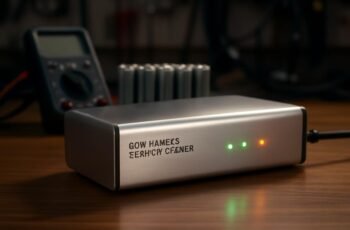
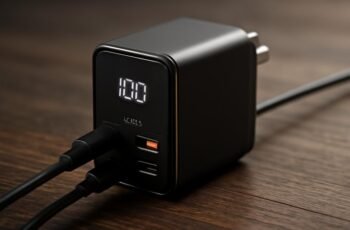
Many believe that all 12V LiFePO4 chargers are essentially the same, but a closer look reveals that true performance depends on factors like build quality, compatibility, and protection features. We need to scrutinize how well these chargers regulate voltage, control current, and maintain efficiency under real-world conditions. Understanding these details is crucial for selecting a unit that maximizes battery lifespan and safety—yet, the nuances often go overlooked. So, what truly distinguishes a reliable charger from an inadequate one?
Key Takeaways
- Assess build quality, compatibility with specific LiFePO4 battery models, and durability for reliable performance.
- Review safety features like overvoltage, undervoltage, short-circuit, and reverse-polarity protections.
- Compare charging speed, regulation accuracy, and energy efficiency for optimal value.
- Consider additional features such as balancing, temperature compensation, and Bluetooth monitoring.
- Evaluate user feedback on real-world performance, consistency, and suitability for intended applications.
What to Look for in a 12V LiFePO4 Charger?
What should we prioritize when selecting a 12V LiFePO4 charger? First, focus on unboxing tips that reveal build quality and compatibility, ensuring the charger matches our battery specifications. We should evaluate the charger’s technical features, such as voltage regulation, current control, and protection mechanisms, to optimize performance and safeguard the battery. Cost effectiveness is also crucial; a higher price doesn’t always guarantee better quality, so we compare features relative to price to find the best value. Reliability and efficiency in charging algorithms minimize battery stress and extend lifespan. By analyzing these factors, we make informed decisions that balance performance and affordability, ultimately selecting a charger that offers long-term benefits rather than just initial savings.
Top Features of Reliable LiFePO4 Chargers
Reliable LiFePO4 chargers prioritize safety features like overvoltage and short-circuit protection to prevent damage and guarantee user safety. Compatibility with various battery chemistries and high efficiency in energy transfer are essential for peak performance. Together, these features form the foundation of a dependable charging system that enhances longevity and operational reliability.
Safety and Protection Features
Have you ever wondered how LiFePO4 chargers ensure safety during operation? From unboxing impressions, it’s clear that well-designed safety features are integral to their reliability. Critical protection mechanisms include:
- Overvoltage and undervoltage protection prevent damage to the battery and charger.
- Short-circuit and reverse-polarity safeguards avoid electrical hazards.
- Temperature control systems monitor and manage heat, ensuring safe charging conditions.
These features not only enhance safety but also influence the price vs value consideration. A charger with comprehensive protection may cost more upfront, but it reduces the risk of costly failures or battery damage. Reliable safety features are essential for long-term investment, providing peace of mind and operational integrity in various environments.
Compatibility and Efficiency
Are compatibility and efficiency truly the cornerstones of a high-quality LiFePO4 charger? Absolutely. Compatibility mismatches can cause significant issues like improper voltage regulation or incomplete charging cycles, risking battery lifespan and performance. A reliable charger must precisely match the battery’s voltage and chemistry specifications to prevent these issues. Efficiency is equally critical; a highly efficient charger minimizes energy loss, reduces heat generation, and ensures faster, more consistent charging. Additionally, effective design reduces charging noise, which can indicate internal inefficiencies or incompatibilities. When selecting a charger, it’s essential to verify its compatibility with your specific battery model and ensure it maintains optimal efficiency throughout the charging process. Both factors are vital for safe, reliable, and long-term operation.
Comparing Popular 12V LiFePO4 Chargers: Pros and Cons
When evaluating 12V LiFePO4 chargers, understanding their respective strengths and weaknesses is essential for making an informed choice. Comparison pitfalls often arise from inconsistent testing conditions and overlooked features, skewing perceived value. Market pricing can also be misleading; higher costs don’t always equate to better performance. Here are key points to contemplate:
- Charging speed and regulation – Some chargers offer rapid charging but may lack precise voltage control, risking battery health.
- Build quality and durability – Cheaper models might cut corners, affecting long-term reliability.
- Feature set versus cost – Extra features like Bluetooth monitoring may inflate prices without substantial performance benefits.
Being aware of these aspects helps avoid pitfalls and makes market pricing comparisons more meaningful.
How to Choose the Best Charger for Your Needs?
We need to guarantee compatibility with the specific battery chemistry to prevent damage or underperformance. We also evaluate charging speed and additional features like temperature regulation or monitoring capabilities to optimize efficiency and safety. By analyzing these technical aspects, we can identify the most suitable charger for our application.
Compatibility With Battery Type
Selecting the right charger hinges on understanding its compatibility with your specific battery type. Different batteries, like Lifepo4, lead-acid, or lithium-ion, require tailored charging profiles to ensure safety and longevity. Misaligning the charger with your battery type can lead to issues such as overcharging or reduced capacity, making compatibility crucial. To assess compatibility effectively, consider:
- Battery chemistry specifications—ensure the charger supports Lifepo4 chemistry.
- Voltage and current ratings—match the charger’s output to your battery’s requirements.
- Manufacturer guidelines—avoid irrelevant topics or unnecessary debate by following recommended compatibility standards.
This analytical approach prevents potential damage and guarantees optimal performance, avoiding the pitfalls of incompatible chargers and ensuring your investment’s longevity.
Charging Speed and Features
Choosing the right charger involves carefully evaluating its charging speed and feature set to meet your specific needs. Essential charging speed ensures efficient battery replenishment without risking damage, especially with Lifepo4 cells. Look for chargers that incorporate feature integration like load balancing, which distributes current evenly across multiple batteries, preventing overheating and extending lifespan. Safety alarms are vital, alerting you to issues such as overvoltage or temperature anomalies, thereby enhancing overall safety. The speed at which a charger delivers power directly impacts operational efficiency, but must be balanced with safety features. A well-designed charger combines rapid charging capabilities with comprehensive safety mechanisms, ensuring reliable performance while safeguarding your battery investment.
Common Issues and Troubleshooting Tips for LiFePO4 Chargers
Have you ever encountered issues with your LiFePO4 charger that disrupt your power management? Common problems include charger noise issues, inaccurate voltage readings, and charging inefficiencies. To troubleshoot, consider these steps:
- Check connections and wiring for loose or corroded contacts, which can cause noise and voltage fluctuations.
- Inspect the charger’s firmware and settings, especially if using DIY battery hacks, to ensure compatibility and proper calibration.
- Test for external interference or environmental factors that may induce noise or disrupt operation.
Addressing charger noise issues often involves shielding or grounding adjustments. Regular diagnostics can preempt failures, ensuring safety and optimal performance—key factors when managing LiFePO4 systems.
User Reviews and Real-World Performance Insights
How do real users perceive the performance and reliability of 12V LiFePO4 chargers in practical applications? Feedback varies, but many highlight consistent charging efficiency and stable operation under different loads. Users report that chargers with advanced voltage regulation maintain battery health effectively over time, reducing maintenance needs. However, some note that certain models falter due to irrelevant discussions about unrelated topics, which can distract from core functionality. Performance insights suggest that chargers with robust build quality outperform cheaper alternatives, especially in demanding environments. While reviews are generally positive, a few installations reveal issues tied to installation errors rather than charger flaws. Overall, real-world performance aligns well with technical specifications, but users emphasize the importance of selecting models suited for their specific application to avoid irrelevant discussions that can cloud performance expectations.
Final Recommendations: Which 12V LiFePO4 Charger Is Right for You?
Determining the right 12V LiFePO4 charger depends on carefully evaluating your specific application requirements and environmental conditions. An irrelevant topic or stray discussion can distract from this focus. To select the suitable charger, consider these factors:
- Compatibility with your battery capacity and chemistry to ensure proper charging profiles.
- Environmental durability, including weatherproofing for outdoor use.
- Advanced features like balancing, temperature compensation, and safety protections.
Prioritizing these aspects prevents irrelevant topics from clouding your decision. A stray discussion about brand reputation without technical merit should be secondary. Ultimately, your choice should align with your operational needs, rather than extraneous considerations. This analytical approach guarantees an informed, precise selection tailored to your application.
Frequently Asked Questions
How Long Do 12V Lifepo4 Chargers Typically Last?
Typically, 12V Lifepo4 chargers last around 3-5 years, depending on usage, maintenance, and compatibility. Durability can be affected by pitfalls like overcharging; regular maintenance and choosing portable options from multiple brands enhance lifespan and reliability.
Are 12V Lifepo4 Chargers Safe for All Battery Types?
We believe 12V Lifepo4 chargers are generally safe for various battery types when adhering to strict safety standards and optimizing charging efficiency, ensuring proper compatibility, preventing overcharging, and maintaining battery health through precise voltage regulation and temperature management.
Can I Use One Charger for Multiple Battery Brands?
We can’t recommend using a single charger for multiple battery brands due to differing specifications, unrelated topic ideas, and safety concerns. Our analytical approach emphasizes following manufacturer guidelines to avoid potential damage, emphasizing precision over off-topic ideas.
What Maintenance Is Required for a 12V Lifepo4 Charger?
Maintenance questions for a 12V Lifepo4 charger are crucial; we regularly inspect connections, keep it clean, and monitor charging efficiency to ensure optimal performance and longevity, much like tending a delicate yet resilient machine.
Are There Portable 12V Lifepo4 Chargers Available?
Yes, portable 12V Lifepo4 chargers are available, designed with compact form factors for ease of transport. They guarantee battery compatibility across various applications, allowing us to efficiently manage power needs in diverse environments.
Conclusion
In our analysis, selecting the right 12V LiFePO4 charger is like fine-tuning a precision instrument—each component must work harmoniously to ensure longevity and safety. By prioritizing build quality, accurate voltage regulation, and robust protection features, you can safeguard your investment against environmental stressors and operational stresses. With the right choice, your battery will perform reliably, maintaining optimal efficiency and lifespan, much like a well-calibrated engine running smoothly through every mile.