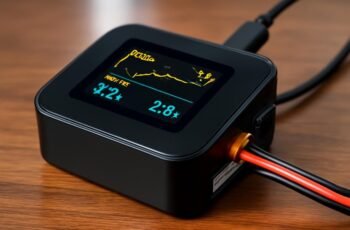
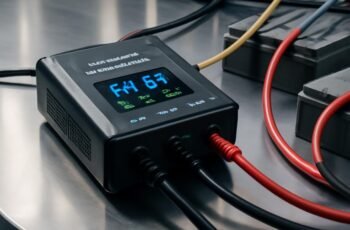
Imagine connecting a LiFePO4 battery to a charger that constantly monitors its voltage, current, and temperature, adjusting outputs in real-time for optimal performance. These smart chargers utilize microprocessor control to prevent overcharging, deep discharges, and thermal runaway, ensuring safety and longevity. Understanding how they operate and their key features can significantly impact your battery management approach — but what exactly makes these chargers so effective and reliable?
Key Takeaways
- Smart LiFePO4 chargers use microprocessor-controlled algorithms to optimize charging and prevent overcharging or deep discharging.
- They feature real-time monitoring of voltage, current, and temperature for safe, efficient battery management.
- Compatibility with LiFePO4 chemistry and matching voltage/current ratings are essential for proper charger selection.
- Advanced safety features include overcharge protection, thermal management, and automated shut-off systems.
- Future trends involve AI-driven optimization, wireless charging, and enhanced communication protocols for better integration.
What Are Smart LiFePO4 Battery Chargers and How Do They Work?
Have you ever wondered what makes smart LiFePO4 battery chargers different from standard chargers? Smart LiFePO4 chargers utilize advanced microprocessor control to optimize battery charging processes. They monitor voltage, current, and temperature in real-time, adjusting output to ensure efficient, safe, and complete charging cycles. These chargers employ algorithms specifically designed for LiFePO4 chemistry, preventing overcharging and deep discharging, which prolongs battery lifespan. The intelligence embedded in smart LiFePO4 units enables features like multi-stage charging, balancing cells, and adaptive current regulation. This precise control results in faster, more reliable battery charging while maintaining peak performance. Overall, smart LiFePO4 chargers are engineered to enhance battery health and safety, making them a superior choice for modern energy storage systems.
Key Features That Make These Chargers Stand Out
Smart LiFePO4 chargers distinguish themselves through a suite of advanced features that optimize performance and safety. These chargers incorporate precise voltage regulation, temperature compensation, and adaptive charging algorithms to ensure optimal battery health. Their intelligent design enhances charger safety by preventing overcharge, thermal runaway, and voltage spikes, aligning with rigorous safety standards beyond marketing claims. Additionally, they offer real-time diagnostics and automated shut-off functions to protect both the battery and user. Robust communication interfaces, such as Bluetooth or Ethernet, enable seamless system monitoring and data logging. These features collectively improve efficiency and reliability, making them superior choices for maintaining LiFePO4 batteries in demanding applications. The combination of safety mechanisms and advanced control systems clearly sets these chargers apart from conventional models.
How to Choose the Right Smart Charger for Your LiFePO4 Batteries
Determining the appropriate smart charger for your LiFePO4 batteries requires a careful assessment of several critical factors. First, ensure the charger’s voltage and current ratings match your battery pack specifications to optimize battery safety and efficiency. Compatibility with LiFePO4 chemistry is essential to prevent overcharging or damage. Consider features like temperature regulation and state-of-charge monitoring, which enhance safety and longevity. Cost considerations also play a significant role; select a charger that balances advanced safety features with affordability. A high-quality smart charger reduces risks such as thermal runaway or capacity loss, making it a prudent investment. Ultimately, choosing a charger tailored to your battery’s technical requirements and safety needs ensures reliable performance and long-term durability.
Benefits of Using a Smart Charger With Lithium Iron Phosphate Batteries
Using a smart charger with LiFePO4 batteries optimizes charging efficiency by precisely controlling current and voltage levels, reducing energy waste. It also minimizes the risk of overcharging, which substantially extends battery lifespan. These benefits collectively assure more reliable performance and lower long-term maintenance costs.
Enhanced Charging Efficiency
How does integrating a smart charger enhance the charging efficiency of Lithium Iron Phosphate (LiFePO4) batteries? Smart charging optimizes the process by dynamically adjusting current and voltage, reducing energy waste. It leverages battery caching to store charge temporarily, ensuring rapid delivery during peak demand. This precise control minimizes overcharging and prevents thermal stress, maintaining optimal battery health. Additionally, smart chargers use real-time data to tailor charging profiles, improving overall efficiency.
- Precise current regulation reduces energy loss during charge cycles
- Battery caching accelerates power delivery and reduces idle time
- Adaptive algorithms optimize charging phases for maximum efficiency
- Voltage management prevents overvoltage, conserving energy
Improved Battery Longevity
By employing a smart charger, we can markedly enhance the longevity of Lithium Iron Phosphate (LiFePO4) batteries. These chargers optimize charge cycles, reducing stress on energy storage components and preventing overcharging. This precise control extends battery lifespan, ensuring consistent performance during portable charging applications. The intelligent management system adjusts current and voltage parameters based on real-time data, minimizing degradation mechanisms. The following table illustrates key factors influencing battery longevity:
| Parameter | Impact on Longevity |
|---|---|
| Charge Rate | Prevents thermal stress and degradation |
| State of Charge (SoC) | Avoids deep discharge cycles |
| Temperature Management | Maintains optimal operating conditions |
Implementing smart chargers thus maximizes battery life, particularly in applications demanding reliable energy storage.
Common Troubleshooting Tips for Smart LiFePO4 Chargers
Have you encountered issues with your Smart LiFePO4 charger not functioning as expected? Troubleshooting tips and fault diagnosis are essential for efficient repair and maintenance. Common problems include communication errors, improper charging cycles, or system resets. To identify faults, check connections for corrosion or looseness, verify power source stability, and ensure firmware updates are current. Additionally, examine the charger’s display for error codes, which can pinpoint specific issues. If the charger fails to meet formatting request, consider two discussion ideas: first, how to interpret diagnostic indicators effectively; second, methods for isolating hardware versus software faults. Addressing these common troubleshooting steps allows for precise fault diagnosis, minimizing downtime and optimizing battery performance.
Future Trends and Innovations in Smart Battery Charging Technology
Advancements in smart battery charging technology are rapidly shaping the future landscape of energy management systems. We anticipate future trends that emphasize increased integration of AI and machine learning algorithms to optimize charging cycles, extend battery lifespan, and enhance efficiency. Innovations in charging will likely focus on adaptive algorithms capable of real-time monitoring and dynamic adjustment of charge parameters, reducing energy waste and improving safety. Wireless and contactless charging methods are expected to become more prevalent, offering greater convenience and flexibility. Additionally, the development of more sophisticated communication protocols will facilitate seamless interoperability among diverse energy devices. These innovations in charging will drive smarter, more sustainable energy solutions, ensuring batteries operate at peak performance while minimizing environmental impact.
Frequently Asked Questions
Are Smart Lifepo4 Chargers Compatible With Other Lithium Battery Types?
Smart LiFePO4 chargers are generally not compatible with other lithium battery types due to differences in voltage profiles and chemistry. Effective smart charging requires tailored battery management systems specific to each lithium chemistry for optimal safety and performance.
How Long Is the Typical Lifespan of a Smart Lifepo4 Charger?
We find that the lifespan of a smart LiFePO4 charger typically varies with usage and maintenance schedules, generally lasting 5 to 10 years, but this lifespan can fluctuate due to factors like environmental conditions and adherence to recommended maintenance.
Can Smart Chargers Be Used for Both Charging and Discharging Lifepo4 Batteries?
Absolutely, smart chargers can both charge and discharge LiFePO4 batteries, but they must respect charging limits and avoid discharging risks. We guarantee sophisticated control systems prevent damage, making dual functionality precise, safe, and reliable in advanced energy management.
Do Smart Chargers Require Regular Maintenance or Updates?
We find that smart chargers do require regular maintenance checks and firmware updates to ensure optimal performance, safety, and compatibility with LiFePO4 batteries. Consistent updates help address bugs and improve charging precision.
Are There Any Safety Certifications for These Smart Lifepo4 Chargers?
We confirm that these smart LiFePO4 chargers meet rigorous safety standards, holding recognized safe certifications such as UL and CE, ensuring reliable operation and user safety. These certifications validate compliance with essential safety and quality benchmarks.
Conclusion
In conclusion, smart LiFePO4 chargers enhance safety, optimize performance, and extend battery lifespan through precise control, real-time diagnostics, and remote monitoring. They adapt to changing conditions, prevent failures, and ensure reliable operation. By selecting the right charger, understanding key features, and applying proper troubleshooting, we can maximize our batteries’ efficiency and longevity. Ultimately, embracing these advanced chargers leads to safer, smarter, and more dependable energy management for our systems.