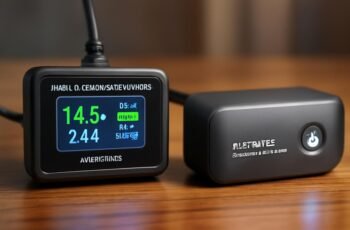
While fully automatic LiFePO4 chargers offer straightforward, preset charging cycles, smart chargers employ adaptive algorithms that respond dynamically to battery conditions. This contrast highlights a fundamental question: which approach better balances safety, efficiency, and long-term performance? Understanding their differences is essential for optimizing your battery system, yet the decision isn’t always clear-cut. Exploring the nuances can help determine the best fit for your specific application.
Key Takeaways
- Fully automatic chargers operate based on preset parameters, while smart chargers adapt dynamically using real-time data and advanced algorithms.
- Smart chargers offer enhanced safety, longevity, and customization through features like temperature feedback and adaptive charging profiles.
- Fully automatic chargers provide simple, maintenance-free operation suitable for fixed installations with minimal user intervention.
- Smart chargers are ideal for mobile or complex systems requiring remote monitoring, data logging, and adaptive charge management.
- Market trends show increasing adoption of smart chargers due to improved performance, safety, and ability to optimize battery lifespan.
What Are Fully Automatic LiFePO4 Chargers and How Do They Work?
Have you ever wondered how fully automatic LiFePO4 chargers optimize the charging process? These chargers utilize advanced control algorithms to monitor voltage, current, and temperature in real-time, adjusting output parameters accordingly. During lifepo4 charging, they automatically transition through charging stages—bulk, absorption, and float—without user intervention, ensuring optimal battery health. The fully automatic system employs microprocessors to detect battery state and prevent overcharging or deep discharging, enhancing safety and longevity. This seamless regulation maximizes efficiency, minimizes manual oversight, and reduces the risk of damage caused by incorrect settings. In essence, fully automatic LiFePO4 chargers deliver precise, adaptive control, making the charging process safer and more reliable, especially in applications demanding consistent and maintenance-free power management.
Key Benefits and Drawbacks of Fully Automatic Chargers for LiFePO4 Batteries
What makes fully automatic LiFePO4 chargers advantageous for battery management is their ability to precisely regulate charging cycles without user intervention, ensuring optimal battery health and longevity. They automatically adjust voltage and current based on real-time feedback, reducing risks of overcharging or undercharging. However, a drawback is that their simplicity can sometimes overlook unrelated topics, such as environmental factors, which might influence battery performance. This irrelevant angle highlights that fully automatic chargers are designed for straightforward operation, but may lack advanced adaptability needed in complex scenarios. While their ease of use is a clear benefit, their limited customization can be a drawback in applications requiring tailored charging profiles. Overall, they offer reliable, maintenance-free charging, but may not address every nuanced battery management challenge.
What Makes Smart Lifepo4 Chargers Different From Fully Automatic Ones?
How do smart LiFePO4 chargers differ from fully automatic ones in their approach to battery management? Through interviews with technicians and analysis of market trends, we observe that smart chargers utilize advanced algorithms and real-time data to optimize charging cycles, balancing efficiency and battery health. Unlike fully automatic chargers, which rely on preset parameters, smart chargers adapt their operation based on voltage, temperature, and state of charge, providing more precise control. This dynamic management helps prevent overcharging and enhances lifespan. Market trends show increasing adoption of smart chargers driven by demand for enhanced performance and longevity. The key distinction lies in their ability to learn and adjust, making smart chargers more sophisticated, versatile, and aligned with evolving battery technology needs.
How Do Smart Chargers Enhance Battery Safety and Longevity?
Smart chargers substantially improve battery safety and longevity by employing real-time monitoring and adaptive control algorithms. By continuously evaluating parameters like voltage, current, temperature, and battery chemistry, these chargers optimize charging profiles to prevent overcharging, thermal runaway, and internal damage. This precise control ensures charging safety, minimizing risks associated with improper charging methods. Additionally, smart chargers adapt to the specific chemistry of LiFePO4 batteries, maintaining ideal voltage levels and preventing stress that can degrade cells over time. Their ability to dynamically adjust charging stages reduces wear and extends battery lifespan. Overall, this intelligent approach not only safeguards the battery but also enhances overall performance, making smart chargers a critical tool for maximizing battery health through precise, chemistry-aware management.
Which Factors Should You Consider When Choosing Between Fully Automatic and Smart Chargers?
When evaluating battery chargers, it’s essential to consider specific factors that influence performance, safety, and compatibility. Lithium safety is paramount, as improper charging can lead to thermal runaway or reduced battery life. Fully automatic chargers excel in maintaining optimal charge levels without user intervention, reducing risks associated with overcharging. Smart chargers, however, offer advanced features such as adaptive algorithms that enhance battery longevity and monitor real-time conditions, which is especially valuable in car charging applications. Compatibility with your battery type and vehicle system is critical, ensuring the charger’s algorithms align with lithium battery requirements. Additionally, consider user interface complexity and integration with existing systems. These factors help determine whether a fully automatic or smart charger best suits your specific needs, balancing safety and operational efficiency.
Are Fully Automatic Chargers More Cost-Effective for Your LiFePO4 Setup?
Are fully automatic chargers truly more cost-effective for your LiFePO4 setup? The answer depends on initial investment versus long-term benefits. Fully automatic chargers typically have higher upfront costs but can reduce maintenance and operational expenses through precise, adaptive charging. A clear cost comparison reveals that while the device price is higher, savings accrue through extended battery lifespan and fewer manual interventions. Proper installation tips, such as secure connections and correct settings, maximize these advantages. Consider this table for clarity:
| Aspect | Fully Automatic Charger | Smart Charger | Cost Implication |
|---|---|---|---|
| Initial Cost | Higher | Moderate | Higher upfront |
| Long-term Savings | Potentially lower | Moderate to high | Depends on usage and settings |
| Maintenance | Less | Variable | Generally lower with automation |
Optimizing your setup hinges on understanding these factors.
Can You Use a Fully Automatic Charger With Advanced Smart Features?
Using a fully automatic charger with advanced smart features depends on its compatibility with modern communication protocols and sensor integrations. We need to consider how effectively it manages charging efficiency, user interface options, and alert systems. Analyzing these factors helps determine if the simplicity of automatic chargers can meet the control and monitoring capabilities of smart chargers.
Compatibility With Smart Features
Can a fully automatic charger truly support advanced smart features? Generally, they lack the integrated microprocessors and connectivity protocols necessary for sophisticated smart functions like real-time monitoring or remote control. While some models offer durable warranties and reliable factory service, these features often focus on hardware longevity rather than software adaptability. Fully automatic chargers excel at basic automation, such as switching to maintenance mode, but they typically don’t support the data exchange or programmability that smart chargers provide. This limits compatibility with advanced features like battery health diagnostics or adaptive charging profiles. Consequently, while they’re dependable for straightforward charging, integrating fully automatic chargers with cutting-edge smart features remains limited without additional hardware or firmware upgrades.
Charging Efficiency and Control
Given the increasing demand for optimized charging processes, the compatibility of fully automatic chargers with advanced smart features warrants careful examination. While both aim to enhance efficiency, key factors like charging latency and temperature drift influence control precision. Fully automatic chargers excel at maintaining consistent charge cycles but may lack the real-time adjustments found in smart chargers. Specifically:
- Charging latency can introduce delays in adapting to battery state changes, potentially reducing efficiency.
- Temperature drift impacts voltage regulation, which smart chargers mitigate through sensor feedback, improving control.
- Advanced smart features enable dynamic adjustments, optimizing charge rates and reducing energy loss, which fully automatic chargers may not fully support.
Thus, integrating smart features with fully automatic chargers requires careful assessment of these control mechanisms.
User Interface and Alerts
While control mechanisms like charging latency and temperature drift influence a charger’s precision, the user interface and alert systems directly impact operational awareness and safety. Advanced smart Lifepo4 chargers typically feature digital displays, intuitive controls, and real-time monitoring, enabling precise feedback during charging cycles. These interfaces facilitate quick diagnosis of issues like overvoltage, undervoltage, or temperature anomalies. Alert systems—visual, auditory, or app-based notifications—enhance safety by promptly informing users of critical events, allowing immediate corrective actions. Discussion ideas include evaluating the clarity of information presented, integration with mobile apps, and how alert customization improves usability. Ultimately, the user interface and alert systems determine the effectiveness of fully automatic chargers with smart features, ensuring reliable operation and informed decision-making.
Best Use Cases for Fully Automatic vs Smart LiFePO4 Chargers
Determining the optimal charging solution depends heavily on specific application requirements and operational conditions. Fully automatic chargers excel in straightforward environments, such as fixed installations where minimal user intervention is necessary. They are ideal for:
- Continuous, unattended operation in industrial settings.
- Situations demanding consistent, reliable charging cycles.
- Systems where simplicity outweighs advanced customization.
In contrast, smart LiFePO4 chargers suit complex, variable applications, including mobile setups or systems needing adaptive charge profiles. They enable:
- Fine-tuned charging tailored to battery health and usage patterns.
- Data logging and remote monitoring capabilities.
- Off topic comparison to irrelevant topic discussions, smart chargers provide versatility that fully automatic models lack.
Choosing between these depends on whether operational simplicity or adaptability is the priority.
How to Properly Maintain and Troubleshoot Your LiFePO4 Charger System
Ever wondered how to keep your LiFePO4 charger system operating at peak performance? Proper maintenance hinges on monitoring universal compatibility and precise voltage regulation. Regularly inspect connections for corrosion or looseness, ensuring consistent voltage delivery. Troubleshooting often involves verifying charger settings and output voltages, especially if the system exhibits irregular charging cycles. Use the following table to guide diagnosis:
| Symptom | Solution |
|---|---|
| Overcharging or undercharging | Check voltage regulation settings; recalibrate if needed |
| Inconsistent charging cycles | Inspect wiring and connections for faults |
| Compatibility issues | Confirm universal compatibility with your battery system |
Maintaining optimal voltage regulation guarantees efficient operation, while understanding compatibility ensures system longevity.
Frequently Asked Questions
Do Fully Automatic Chargers Support Multiple Battery Chemistries Besides Lifepo4?
Yes, Fully Automatic chargers typically support multiple battery chemistries, adjusting charging parameters automatically for each, ensuring optimal performance and safety across diverse Battery Chemistry types like AGM, Gel, and Lifepo4, streamlining maintenance and reducing user error.
Can Smart Chargers Update Their Firmware for Improved Performance?
Absolutely, smart chargers often let us update their firmware for enhanced charging optimization, turning tech into a wizard that stays ahead of battery needs. It’s like giving your charger a brain upgrade for smarter, more efficient performance.
Are There Specific Brands Known for Reliable Fully Automatic Lifepo4 Chargers?
We find brands like Victron, Renogy, and NOCO highly reliable for fully automatic Lifepo4 chargers, considering reliability comparisons and cost considerations. These brands offer consistent performance, robust build quality, and good value, making them preferred choices for demanding applications.
How Do Environmental Conditions Affect Charger Performance and Safety?
Environmental conditions critically impact fully automatic chargers, affecting battery protection and performance; extreme temperatures or moisture can cause malfunctions or safety hazards, emphasizing the need for proper environmental controls to ensure optimal, safe charger operation.
What Are the Warranty Differences Between Fully Automatic and Smart Chargers?
We find that warranty coverage for fully automatic chargers tends to be more straightforward, often limited to manufacturing defects, whereas smart chargers include extended service expectations due to advanced features, demanding more comprehensive warranty terms to address software and hardware issues.
Conclusion
In our journey through the charging landscape, choosing between fully automatic and smart LiFePO4 chargers is like selecting a steady compass versus a sophisticated GPS—each guides us differently. Fully automatic chargers provide reliable, straightforward navigation, while smart chargers adapt dynamically, steering us toward optimal performance and longevity. By understanding their distinct capabilities, we can chart a course that aligns with our system’s complexity and our safety priorities, ensuring our batteries remain resilient and efficient explorers for years to come.