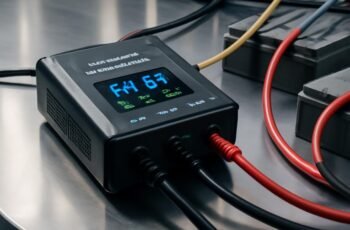
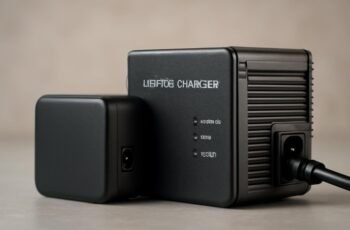
When evaluating LiFePO4 chargers, understanding the differences between auto shut off and standard models is essential for peak battery management. Auto shut off chargers automatically halt charging at full capacity, minimizing risks like overcharge and thermal stress, whereas standard chargers depend on fixed settings and manual intervention. These distinctions can notably impact performance, safety, and lifespan in various applications, prompting us to contemplate which approach best aligns with specific operational needs and safety standards.
Key Takeaways
- Auto shut off chargers automatically stop charging at optimal levels, preventing overcharging and extending battery life.
- Standard chargers rely on fixed time or voltage thresholds, requiring manual disconnection.
- Auto shut off chargers enhance safety, reduce thermal stress, and minimize manual oversight.
- Standard chargers are simpler and more cost-effective but carry higher overcharge risks.
- Choice depends on operational needs: auto shut off for safety and automation, standard for controlled environments.
How Do Auto Shut Off and Standard LiFePO4 Chargers Work Differently?
How do auto shut off and standard LiFePO4 chargers operate differently in managing the charging process? Auto shutoff chargers incorporate a built-in sensor that detects when the battery reaches its optimal charge level, automatically terminating the charging cycle to prevent overcharging. This mechanism ensures precise control, reducing the risk of damage and extending battery lifespan. In contrast, standard LiFePO4 chargers typically rely on fixed time settings or voltage thresholds without continuous monitoring, often requiring manual intervention to disconnect once charging is complete. The key difference lies in automation: auto shutoff chargers dynamically respond to battery conditions, enhancing safety and efficiency. Meanwhile, standard LiFePO4 chargers follow predefined parameters, which can lead to overcharge risks if not manually managed.
What Are the Key Benefits of Using an Auto Shut Off Charger?
What are the key advantages of using an auto shut off charger for LiFePO4 batteries? Primarily, auto shutoff enhances charging efficiency by preventing overcharging, ensuring the battery reaches optimal capacity without waste. It also provides critical battery protection by halting charging once full, reducing risks of thermal stress and prolonging battery lifespan. This automated process minimizes the need for constant monitoring, streamlining maintenance. From a cost perspective, auto shutoff chargers can lower long-term expenses by reducing battery replacement frequency and avoiding damage-related repairs. Additionally, the precision of auto shutoff technology promotes consistent performance, making it a more reliable and economical choice for safeguarding LiFePO4 batteries over time.
What Drawbacks Should You Consider With Standard Lifepo4 Chargers?
Standard LiFePO4 chargers often lack advanced safety features, which can lead to several operational drawbacks. Without automated shutoff or protective mechanisms, there’s an increased risk of overcharging, thermal runaway, or damage to the battery cells. These drawbacks compromise the longevity and reliability of the battery system, especially if the charger isn’t compatible with specific battery configurations. Compatibility issues may arise when standard chargers aren’t designed for certain voltage or capacity ranges, leading to inefficient or incomplete charging cycles. Additionally, the absence of intelligent regulation can result in inconsistent charging, reducing overall battery life. Ultimately, these drawbacks highlight the importance of selecting chargers with proper safety and compatibility features to ensure optimal performance and safety.
Which Charger Type Is Better for Different Usage Scenarios?
Determining the most suitable charger type depends heavily on the specific application and operational environment. For continuous, automated operations where battery safety and longevity are priorities, auto shutoff chargers excel by preventing overcharging and reducing manual oversight. However, auto shutoff drawbacks, such as potential premature termination or incomplete charging cycles, can be problematic in tailored or sensitive scenarios. Conversely, standard LiFePO4 chargers offer consistent current delivery and prolonged charging routines, making them suitable for controlled environments where precise regulation is less critical. In high-demand or industrial settings, their simplicity and reliability outweigh potential safety concerns. Ultimately, selecting between auto shutoff and standard chargers hinges on balancing operational safety, efficiency, and the specific needs of each usage scenario.
How to Choose the Right LiFePO4 Charger for Your Needs
Choosing the right LiFePO4 charger requires a careful assessment of your specific application, operational environment, and performance needs. Auto shutoff chargers prevent overcharging by stopping power once the battery reaches full capacity, reducing risk and extending lifespan. Conversely, standard chargers typically operate continuously until manually disconnected, increasing the risk of overvoltage or thermal issues if not monitored.
| Feature | Auto Shutoff Charger | Standard Charger |
|---|---|---|
| Overcharge Protection | Yes | No |
| Power Monitoring | Automated | Manual |
| Suitability | Sensitive applications | Basic, less critical |
| Battery Longevity | Extended | Shorter |
| Cost | Generally higher | Usually lower |
Selecting the appropriate charger hinges on safety, precision, and operational demands.
Frequently Asked Questions
Are Auto Shut off Chargers Compatible With All Lifepo4 Battery Brands?
Auto shut-off chargers aren’t universally compatible with all LiFePO4 brands, as incompatibility notes can affect performance and warranty implications. We recommend verifying manufacturer specifications to ensure the charger aligns with your specific battery model, avoiding potential issues.
How Does Temperature Impact the Performance of Auto Shut off Versus Standard Chargers?
Temperature effects significantly influence performance; auto shutoff chargers adapt better to temperature variations, preventing overcharging or damage, while standard chargers may struggle with temperature fluctuations, risking inefficiency or battery harm, especially in extreme conditions.
Can Auto Shut off Chargers Prevent Overcharging in All Charging Conditions?
Auto shutoff chargers greatly enhance charging accuracy, preventing overcharging under most conditions. While they’re highly effective, extreme temperature fluctuations or faulty sensors might occasionally compromise their ability, making it essential to take environmental factors into account for optimal performance.
What Is the Typical Lifespan Difference Between Auto Shut off and Standard Chargers?
We find that auto shut off chargers typically have a longer lifespan than standard chargers due to reduced wear from overcharging, improving charging efficiency and preventing damage. This lifespan comparison reflects their enhanced durability and consistent performance over time.
Do Auto Shut off Chargers Require More Maintenance Than Standard Chargers?
Auto shut off chargers generally require similar or less auto maintenance because they monitor battery compatibility and prevent overcharging. Their automatic features reduce manual oversight, ensuring efficient operation without substantially increasing maintenance needs compared to standard chargers.
Conclusion
Ultimately, selecting between auto shut off and standard LiFePO4 chargers depends on our specific application needs. Auto shut off chargers offer automated protection and extended battery life, making them ideal for high-demand or continuous use. Standard chargers may suffice in controlled environments but pose risks of overcharging. Don’t we want the safest, most reliable charging solution? By carefully analyzing our operational requirements, we can make an informed choice that maximizes battery performance and longevity.