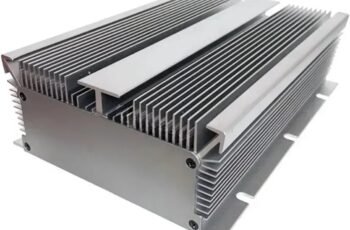
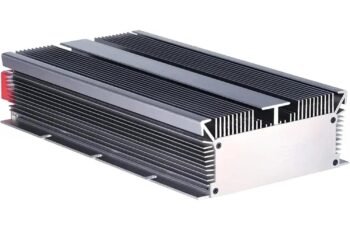
Have you been searching for a reliable way to charge your 48V lithium battery bank from a 12V or 24V system in your RV, boat, or off‑grid setup?

Understanding What This 12V/24V to 58V 10A Step-Up DC DC Charger Actually Does
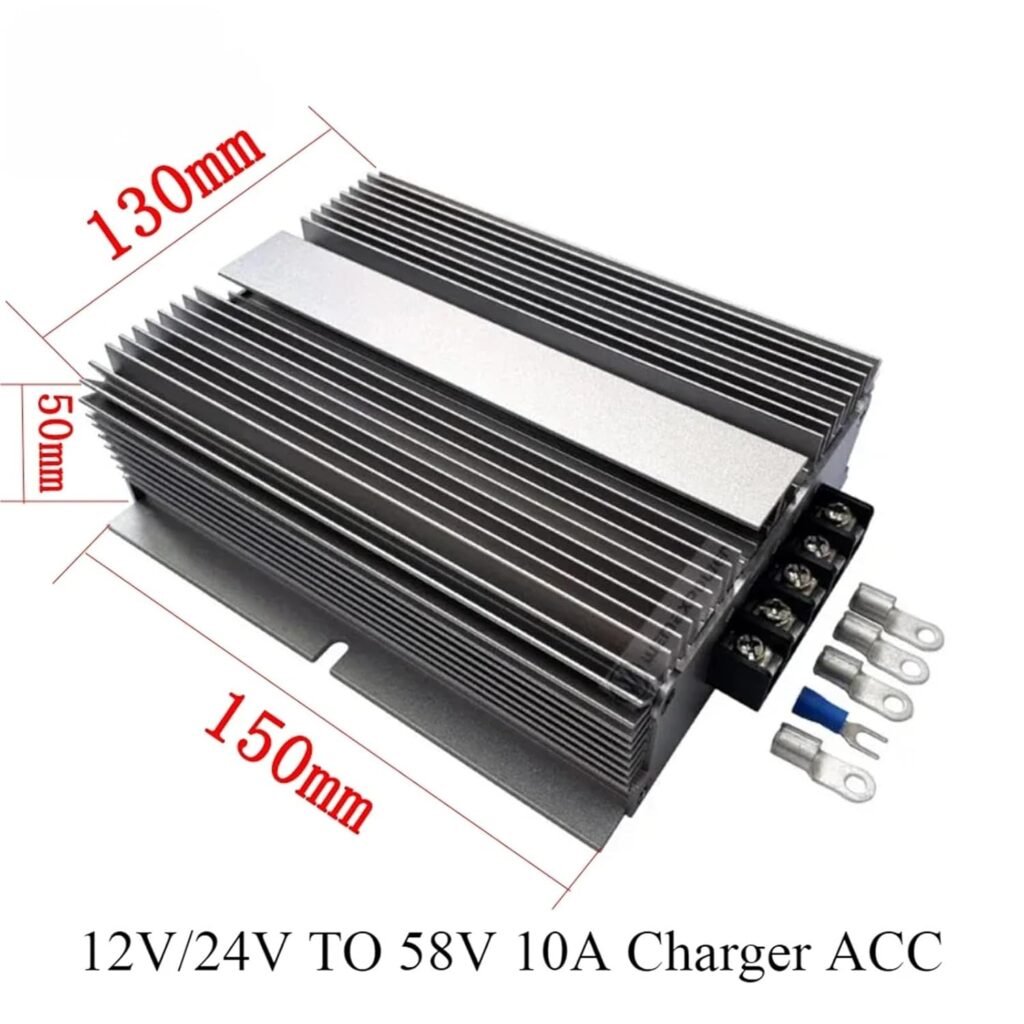
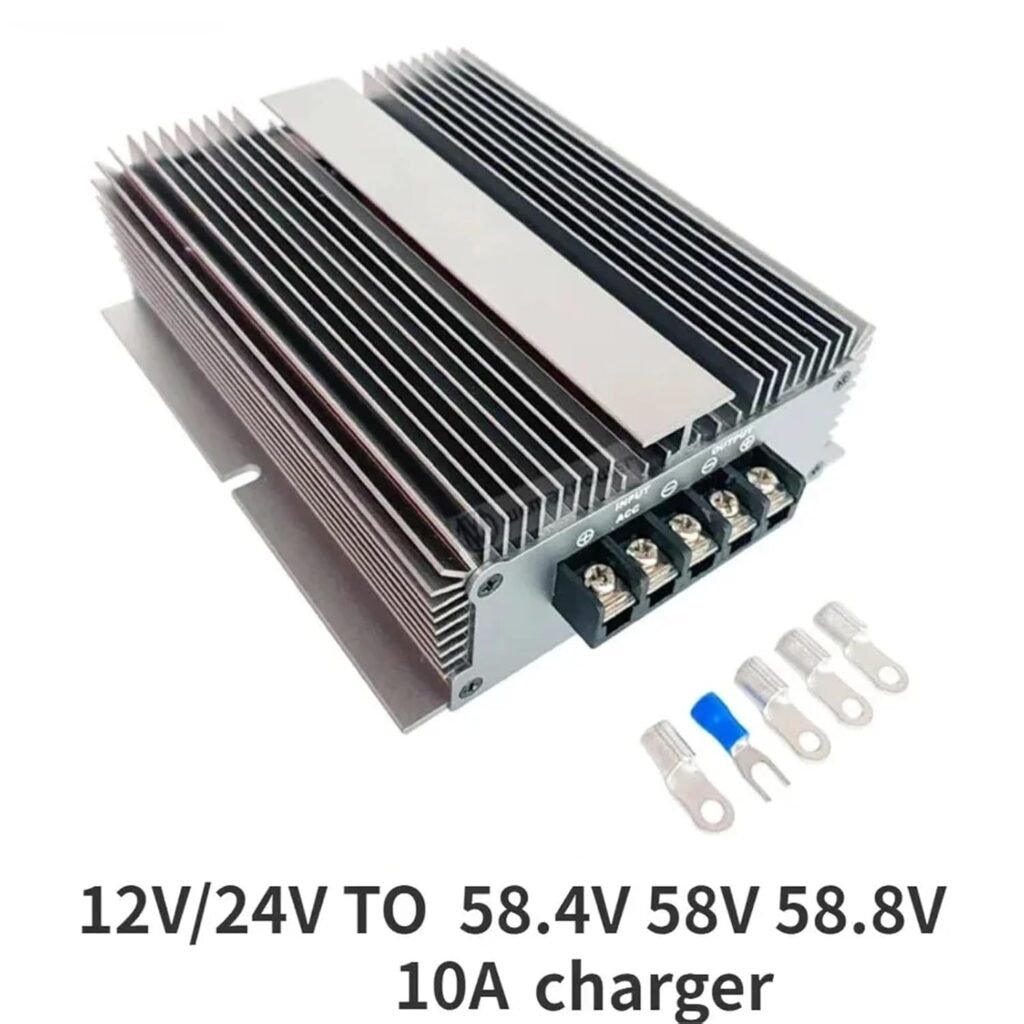
You are looking at a DC-DC step-up charger that takes a lower DC voltage (12V or 24V) and boosts it up to around 58V to charge 48V battery systems. This kind of charger is incredibly useful if you run a 48V lithium iron phosphate (LiFePO₄), Li-ion, or LiPo battery bank but your power source is only 12V or 24V.
In other words, you can charge a 48V battery bank from sources like vehicle alternators, 12V house batteries, 24V systems, or low-voltage solar setups, without needing a dedicated 48V charger.
Key Use Cases: When You Would Actually Need This Charger
You benefit from this product most when your power system has a mismatch between your supply voltage and your storage voltage. If your batteries are 48V but your power sources are not, this charger fills that gap.
Ideal Situations for Using This Charger
You gain real value from this charger in setups where mobility and flexibility matter. It is especially practical in mobile and marine environments where recharging options are limited or varied.
-
RVs and camper vans:
You may have a 12V or 24V system powered by an alternator or solar, but you want a 48V lithium battery bank for higher efficiency and lower cable losses. -
Boats and ships:
Many marine systems run 12V or 24V, yet a 48V bank can run powerful inverters and motors. This charger lets you charge that 48V bank directly from your existing low-voltage system. -
Off-grid cabins and sheds:
Maybe you started with a 12V or 24V setup but upgraded to a 48V LiFePO₄ bank. Instead of rewiring everything, you can use this charger as a bridge. -
Backup systems and hybrids:
You might have a separate 48V battery as a backup for critical loads while your main system is 12V or 24V. This charger keeps the backup bank topped up.
Why Step-Up Charging Matters in Real-World Use
You may already know that 48V systems are more efficient for larger loads, but not all your charging sources match that voltage. With a step-up charger like this, you can:
- Use your vehicle alternator to charge your 48V batteries.
- Use existing 12V or 24V solar charge controllers feeding a lower-voltage bank that then charges the 48V bank.
- Avoid running heavy, expensive cables at low voltage for long distances because the final storage is at 48V.
This product essentially lets your 48V system coexist and cooperate with your old 12V/24V world.
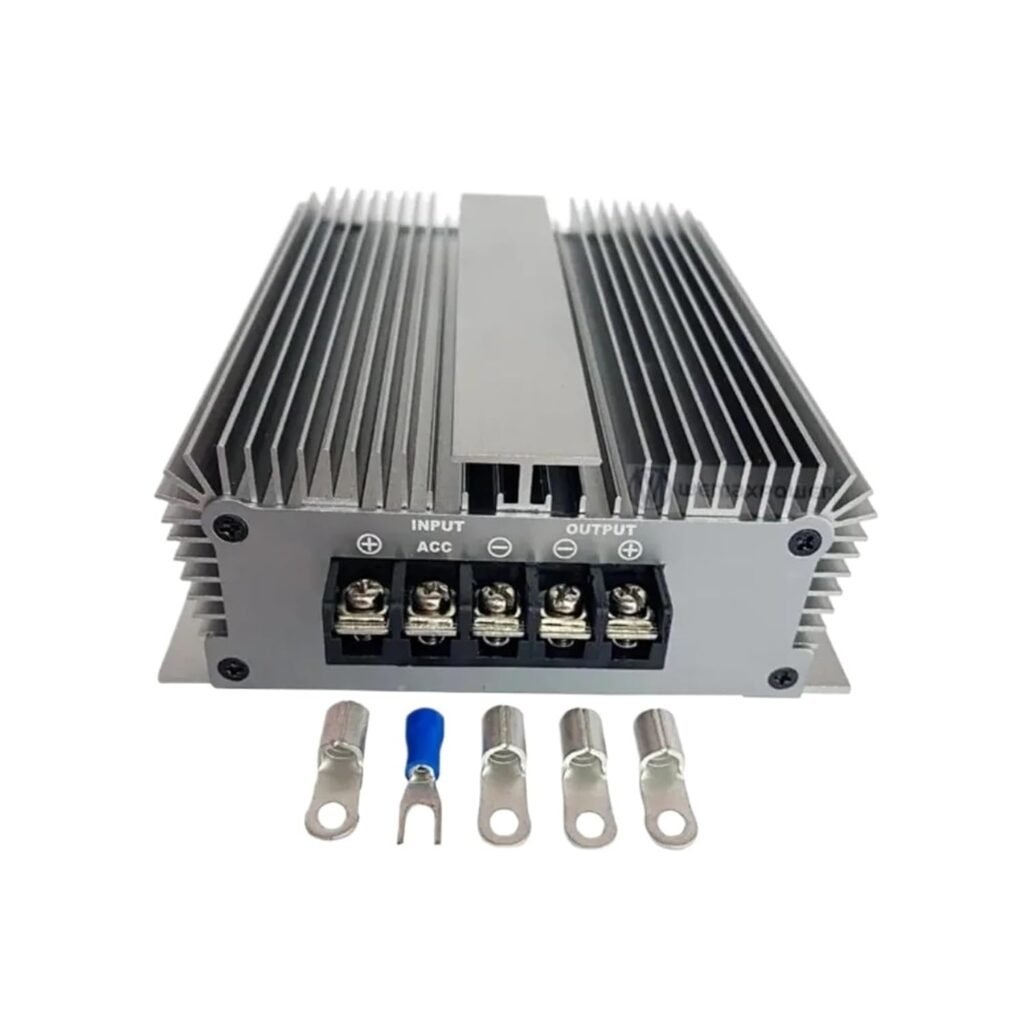
Core Specifications and What They Mean for You
Even if the product listing is brief, you can still infer a lot about how it works. You get a maximum output of 58V at up to 10A, designed specifically for 48V lithium-based batteries.
Main Technical Details in Simple Terms
Here is a breakdown of the most important aspects, translated into practical terms you can understand at a glance:
| Feature | What It Means for You |
|---|---|
| Input Voltage: 12V / 24V DC | You can feed it from common vehicle, RV, and marine systems, or small DC power setups. |
| Output Voltage: ~58V DC | Suitable for charging 48V lithium batteries (typical full-charge voltage range). |
| Output Current: 10A max | Up to about 580W of charging power if input can supply it. |
| Supported Batteries | LiFePO₄, Li-ion, LiPo 48V packs (within correct voltage specs). |
| Use Cases | Ship, RV, off-grid, backup power, and mobile applications. |
| Certification: CE | Meets basic European safety and EMC compliance standards. |
You get a charger that is not insanely powerful but is efficient enough for medium-size 48V battery banks, especially in mobile environments.
Why 58V Output Is Important for a 48V Battery
You might wonder why you see “58V” when your system is labeled “48V.” This is normal. A “48V” lithium bank typically charges in the range of about 54–58V depending on its chemistry and BMS settings.
Targeting about 58V output allows the charger to bring your 48V pack up near a full state of charge, assuming the BMS and cell configuration are tuned for that voltage.
Compatibility with Lithium Iron Phosphate, Li-Ion, and LiPo Batteries
You care about whether this charger will actually treat your battery right. It is advertised for LiFePO₄, Li-ion, and LiPo batteries, but each chemistry has slightly different charging profiles.
Using It with LiFePO₄ (Lithium Iron Phosphate)
LiFePO₄ is very popular for RVs, boats, and off-grid systems because it is safer and more stable. A 48V LiFePO₄ pack is typically made up of 16 cells in series (16S), with a recommended maximum charge voltage of around 56–58V.
You should confirm that:
- Your battery’s BMS allows up to about 58V.
- Your manufacturer recommends a full-charge voltage near that range.
If both are true, this charger is a good fit for your LiFePO₄ bank, and your BMS will provide a safety net in case of any slight variation in final voltage.
Using It with Li-Ion and LiPo Batteries
Li-ion and LiPo chemistries can have higher full-charge voltages per cell. For a 13S or 14S Li-ion pack, for example, the charge voltage varies and could reach around 54–59V depending on the pack design.
You should:
- Check your battery pack’s rated full-charge voltage.
- Make sure 58V does not exceed that recommended max.
If your pack is designed for a full-charge voltage at or below 58V, this unit will be usable. Always rely on your BMS specifications and the datasheet of your battery pack.
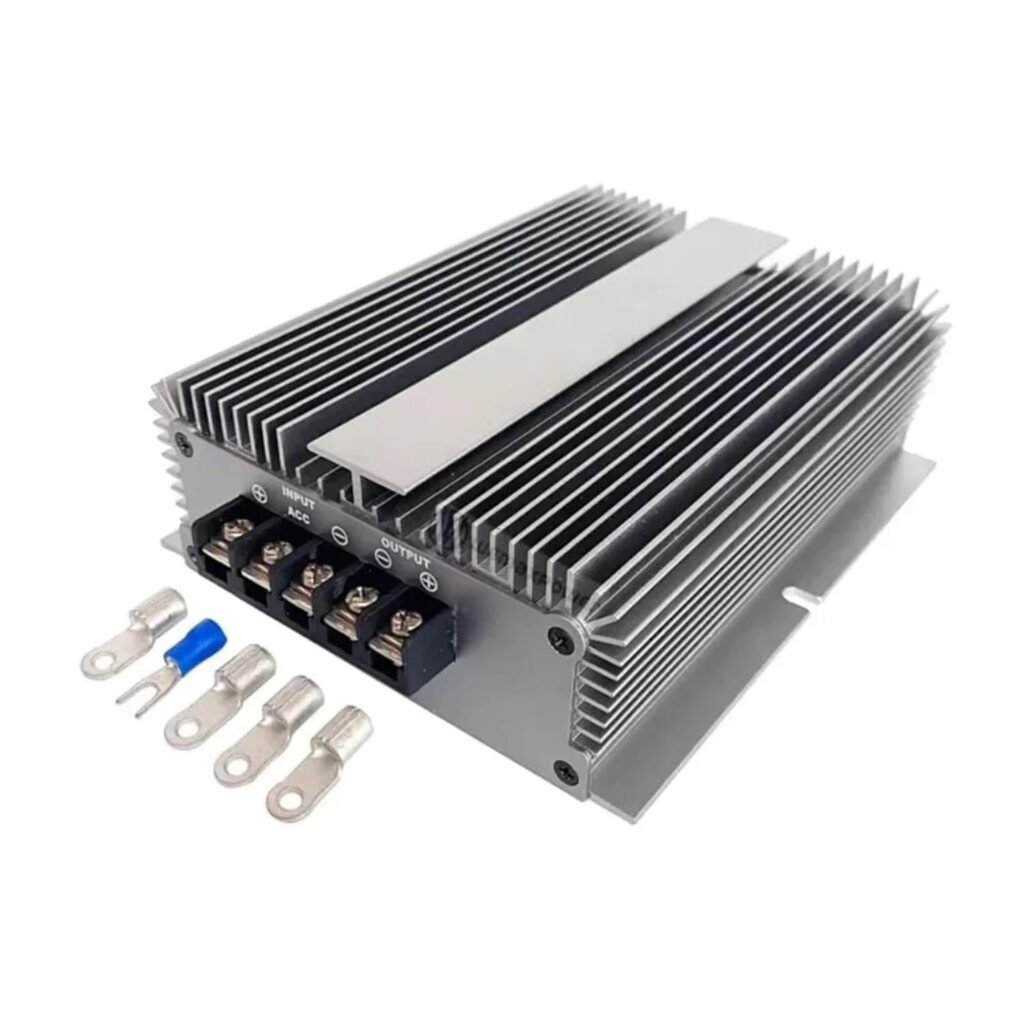
How the Charger Fits into a Real System
You might wonder what this actually looks like in practice. It is not just a stand-alone gadget; it is part of a bigger system that includes your battery bank, alternator or solar, and loads.
Typical RV or Camper Van Scenario
You could have:
- A 12V starter battery connected to your vehicle’s alternator.
- A 12V house battery for lights and smaller devices.
- A 48V lithium bank dedicated to a large inverter for running AC appliances.
With this charger, you route 12V from either your alternator or house battery into the DC-DC charger. Then you take the 58V output to your 48V battery bank. As you drive, your alternator indirectly charges your 48V system.
This lets you:
- Keep your starter battery separate and safe.
- Charge your high-voltage bank without adding a 48V alternator.
- Use your driving time as a consistent charging window.
Marine or Boat Configuration
On a boat, you may have:
- A 12V or 24V system powering navigation, lights, radios, and pumps.
- A separate 48V bank running a powerful inverter, thruster, or other high-demand gear.
You feed your existing 12V or 24V system output into the charger and send 58V to the 48V pack. While your engine is running or your 12V/24V bank is supported by solar, your 48V system can stay topped up.
This setup gives you:
- Reduced wiring losses by operating heavy loads at 48V.
- The ability to maintain your battery bank without changing your alternator or rewiring everything.
- Better separation between critical navigation systems and heavy-load systems.
Charging Performance: How Fast You Can Expect to Charge
Performance is all about power. This charger delivers up to 10A at about 58V, so you are looking at an output power of roughly 580W, assuming adequate input power.
Rough Charging Time Estimates
Your actual charging time depends on:
- Battery capacity.
- Starting state of charge (SoC).
- Input voltage and current available.
- Charger efficiency.
Here is a rough idea of how long it might take to bring a deeply discharged battery up to a high state of charge, assuming near full 580W output:
| 48V Battery Capacity | Approx. Usable Capacity (80%) | Approx. Charge Time (from ~20% to ~90%) |
|---|---|---|
| 20Ah (≈1 kWh) | ~0.8 kWh | About 1–1.5 hours |
| 50Ah (≈2.4 kWh) | ~1.9 kWh | About 3–3.5 hours |
| 100Ah (≈4.8 kWh) | ~3.8 kWh | About 6–7 hours |
These are only estimates. In real life, you may not always reach full 10A, and the last part of charging may slow down depending on your battery’s profile and BMS behavior.
Input Power Considerations
To output 580W, your input side must be capable of supplying at least that much power plus losses. For example:
-
On a 12V system, 580W / 12V ≈ 48A (plus efficiency losses).
You need thick wiring and a solid source, like a strong alternator or high-current DC bus. -
On a 24V system, 580W / 24V ≈ 24A (plus losses).
Current is lower here, which is easier on wiring and connections.
You need to size your cables, fuses, and power source properly so the charger can operate efficiently and safely.
Key Advantages You Get from Using This Charger
You do not buy a unit like this just for fun; you buy it because it solves specific problems. This step-up DC-DC charger offers several clear benefits once integrated into your system.
Flexibility Across Multiple Battery Chemistries and Systems
You gain flexibility by being able to run LiFePO₄, Li-ion, or LiPo 48V various packs. This gives you the freedom to:
- Upgrade your batteries later without replacing the charger, as long as the voltage remains in range.
- Reuse this charger in different projects: one year in an RV, later in a small off-grid cabin.
- Keep your system modular and adaptable as your energy needs change.
This is particularly useful when you do not want to lock into a single battery brand or chemistry forever.
Efficient Power Transfer for Medium-Sized 48V Banks
With up to 580W of charging power, you are not dealing with a tiny trickle. This is strong enough to meaningfully charge mid-size packs while still being manageable in a mobile environment.
You benefit from:
- Reduced generator run time if you pair it with engine operation.
- Real, usable daily recharge amounts if you drive or run your engine regularly.
- Enough power to support everyday AC loads on an inverter when paired with solar or alternator.
Better System Segregation and Protection
You might want to keep your 12V/24V system separate from your 48V system for safety and reliability reasons. A DC-DC charger acts as a controlled bridge:
- It prevents your 48V system from directly loading your starter battery.
- It reduces the risk of voltage backfeeding and damaging sensitive components.
- It allows each part of your system to have its own fuse protection and wiring.
This separation increases resilience: one system can fail without taking the other down.
Considerations and Possible Limitations You Should Know
No product is perfect, and knowing the limitations ahead of time helps you decide if this unit meets your needs or if you need something more powerful or more sophisticated.
Power Level May Be Low for Very Large Battery Banks
If you are running a large 48V system, such as:
- 48V 200Ah (≈ 9.6kWh) or larger,
- Multiple parallel banks for heavy off-grid use,
then 580W of charging might feel slow. You need to consider your daily energy usage and how often your alternator or 12V/24V source will be active.
You might:
- Accept slower charging for a simple, budget-friendly solution.
- Add multiple chargers in parallel if allowed by the manufacturer.
- Use this unit only as a secondary charger alongside solar or another 48V charger.
Heat, Cooling, and Mounting Space
Boost converters working at several hundred watts generate heat. You need to:
- Mount the charger where it can dissipate heat.
- Avoid enclosed, unventilated spaces unless you can provide airflow.
- Keep it away from flammable materials and cramped cable nests.
If your environment is very hot (like an engine bay or enclosed locker), thermal throttling could reduce performance.
Safety and Protection Considerations
You are working with moderate to high DC voltages and currents, so safety is not optional. While the charger is CE-certified, you still need to wire and configure it properly.
Wiring Safety: Cables, Fuses, and Connections
Your wiring choices matter more than you might think. Poor connections at 48A (for 12V input) or 24A (for 24V input) are a recipe for heat and potential failure.
You should:
- Use appropriately sized cables for both input and output.
- Install fuses or DC breakers on both sides of the charger.
- Secure all terminals tightly and crimp connectors properly.
- Route cables away from sharp edges, moving parts, and heat sources.
This protects not only the charger, but also your batteries and your entire electrical system.
Battery Protection and BMS Integration
Your battery’s BMS is the final authority on what is safe. The charger simply pushes energy at a set voltage and current; the BMS protects the individual cells.
You must:
- Confirm that the output voltage (about 58V) is within the BMS’s allowed range.
- Ensure the charger’s maximum current of 10A is acceptable for your pack size.
- Check that the BMS can safely interrupt the charge if needed (overvoltage, temperature, etc.).
When your BMS and charger work together, your battery is much less likely to be overcharged or damaged.
Ease of Use and Installation Experience
You probably care about how straightforward it is to add this charger to your system without feeling overwhelmed or needing a fully professional installation.
Basic Installation Flow
While precise steps depend on your setup, you generally:
-
Plan the location
Choose a dry, ventilated area, away from combustible materials and direct water spray. -
Wire the input side
Connect to your 12V or 24V source using appropriately rated cables and fuses. Respect polarity at all times. -
Wire the output side
Run cables to the 48V battery bank or bus, again with proper fusing and correct polarity. -
Check settings (if any)
If the unit offers adjustable settings (voltage/current), set them as per your battery specifications. If it is pre-set, confirm compatibility before powering on. -
Power up and monitor
Turn on the source, watch for correct charging voltage and current, and check for heat buildup or abnormal behavior.
You should take your time, double-check your connections, and if unsure, consult a professional or a friend knowledgeable in DC systems.
Ongoing Use and Monitoring
Once installed, the charger is typically a “set it and forget it” device. You just need to:
- Occasionally feel the unit to check for excessive heat under heavy use.
- Monitor your battery’s state of charge and health.
- Make sure fans (if present) are not blocked and vents remain clear.
This gives you peace of mind that your 48V system is being charged consistently and safely.
Real-World Benefits You Are Likely to Notice
The true value shows up in your daily routine on the road, at sea, or off the grid. Your experience improves in several practical ways.
Less Worry About Running Out of 48V Power
With a reliable step-up charger, you can rely on:
- Driving time to refill your 48V bank instead of depending solely on solar.
- Engine run time on a boat to recharge both low-voltage and high-voltage systems.
- Redundancy in case one charging source fails.
You feel more confident running your inverter for laptops, fridges, tools, or even small air conditioners, knowing you have a way to refill the batteries.
Cleaner, More Efficient Power Architecture
Using 48V for significant loads while keeping 12V/24V for traditional equipment means you:
- Reduce current for the same power, which lowers cable size and losses on the 48V side.
- Maintain compatibility with standard 12V or 24V devices while still enjoying high-power capability.
- Build a system that scales better if you add more loads later.
This dual-voltage architecture is increasingly common in modern RV and marine systems, and this charger acts as a bridge between the two realms.
Pros and Cons Summary for Quick Decision-Making
You may appreciate a simple summary before deciding if this charger matches your needs. Here is a realistic pros and cons comparison.
What You Will Probably Like
-
Supports 12V and 24V input
You can connect to most common automotive, RV, and marine electrical systems. -
Outputs about 58V for 48V lithium batteries
Suitable for LiFePO₄, Li-ion, and LiPo within correct voltage ranges. -
Offers up to 10A (≈580W) charging power
Strong enough for serious daily recharging on medium-sized banks. -
CE certification
Indicates a basic level of safety and EMC compliance. -
Versatile applications
Ships, RVs, off-grid cabins, and backup battery systems. -
Helps segment and protect different voltage systems
Improves reliability and safety when used correctly.
What Might Be Less Ideal
-
Charging current may be modest for very large banks
Huge 48V packs will charge slower if this is your only charger. -
Requires careful wiring and fusing
You must account for high input currents on a 12V system. -
Thermal management needed
Heat is inevitable at this power level; mounting and airflow matter. -
Limited details in basic listings
You should confirm exact settings and adjustability before full deployment.
Who This Charger Is Best Suited For
You get the most from this product if your situation matches certain patterns. It is not a universal solution, but when it fits, it fits very well.
You Will Benefit the Most If You:
- Already run or plan to run a 48V lithium battery bank for your high-power loads.
- Have an existing 12V or 24V system (alternator, house batteries, solar, or DC bus).
- Need a simple, robust way to charge 48V without completely redesigning your system.
- Use your RV, boat, or off-grid system regularly enough that alternator or engine run time can provide meaningful energy.
- Appreciate modularity, where each system (12V/24V and 48V) has its own protection and wiring.
If that sounds like your setup, this charger can become a key part of your energy flow.
You Might Want to Look Elsewhere If:
- Your 48V battery bank is extremely large and you need fast, high-amp charging from DC.
- You require highly configurable multi-stage charge profiles and detailed communication with a smart BMS.
- You prefer a fully integrated all-in-one system over modular pieces.
In those cases, a higher-capacity or more advanced charger might be a better fit, or you may consider integration directly with 48V solar charge controllers and inverters.
Practical Tips Before You Buy and Install
You can avoid headaches by running through a few checks before committing to this charger and building it into your system.
Double-Check Voltage and Current Requirements
You should verify:
- Your 48V battery’s recommended absorption or full-charge voltage and ensure 58V is within that spec.
- Your BMS current limits and make sure 10A is safe and allowed.
- Your alternator or DC source capacity, especially on 12V systems. You do not want to max it out unintentionally.
If your alternator is small, you may need to limit other loads while charging your 48V bank to prevent overtaxing it.
Plan Cable Runs and Protection Carefully
Before installing, map out:
- Cable lengths and gauge on both input and output sides.
- Locations for fuses or DC breakers.
- Safe routing paths to avoid abrasion, heat, and moisture.
This planning step is what turns a working system into a reliable, long-term system.
Final Thoughts: Is This 12V/24V to 58V 10A Step-Up DC DC Charger Right for You?
You are looking at a practical, mid-power DC-DC charger designed to solve a real-world problem: how to charge a 48V lithium battery bank using 12V or 24V sources in ships, RVs, and other mobile or off-grid setups.
You get:
- Compatibility with LiFePO₄, Li-ion, and LiPo 48V packs within proper voltage limits.
- A reasonable 580W of charging power at up to 10A.
- CE certification and design tuned for ship and RV applications.
- A flexible, modular way to bridge low-voltage systems with a 48V bank.
You need to:
- Respect wiring and fusing requirements due to the high currents involved.
- Confirm your battery’s BMS and voltage specs match the charger’s output.
- Accept that for huge 48V banks, this will be more of a steady charger than a rapid one.
If you want a dependable tool to connect your 12V/24V world to a 48V lithium bank, especially in mobile or marine environments, this charger provides a functional, sensible, and adaptable solution that can simplify your electrical system while giving you more energy freedom wherever you travel.
Disclosure: As an Amazon Associate, I earn from qualifying purchases.