Are we looking for a high-capacity replacement battery that will give our mobility scooter serious range and reliable performance?

Product overview and key specs
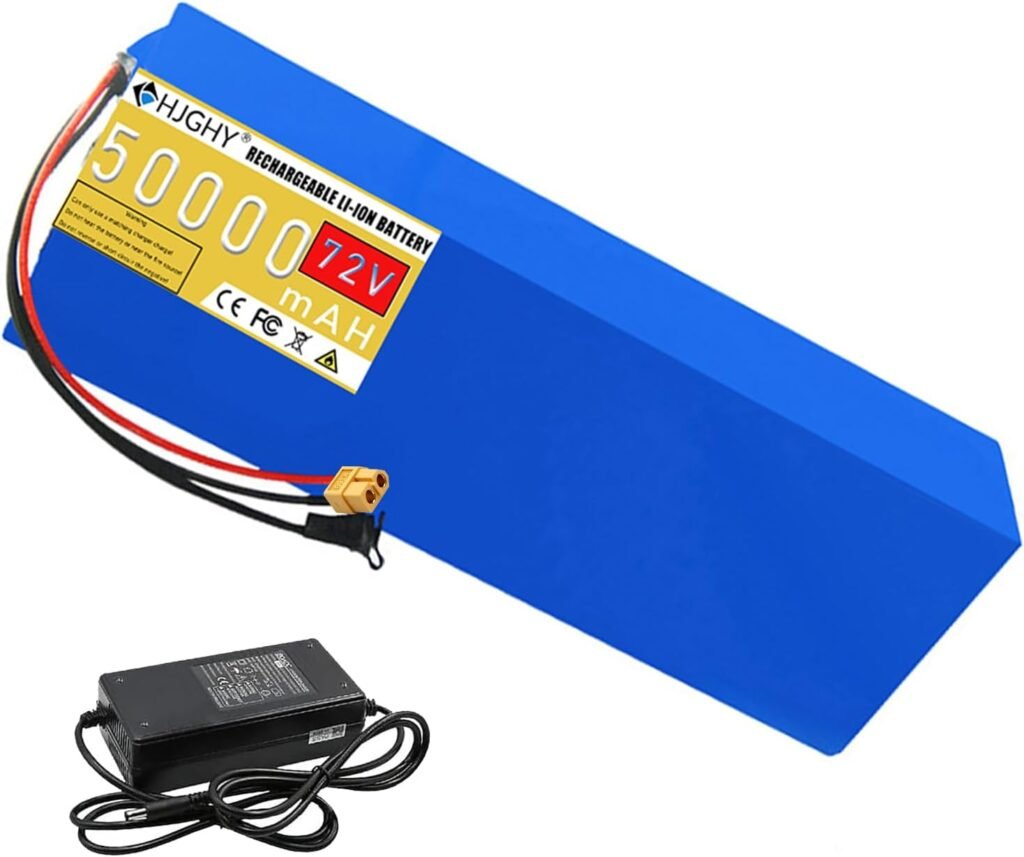
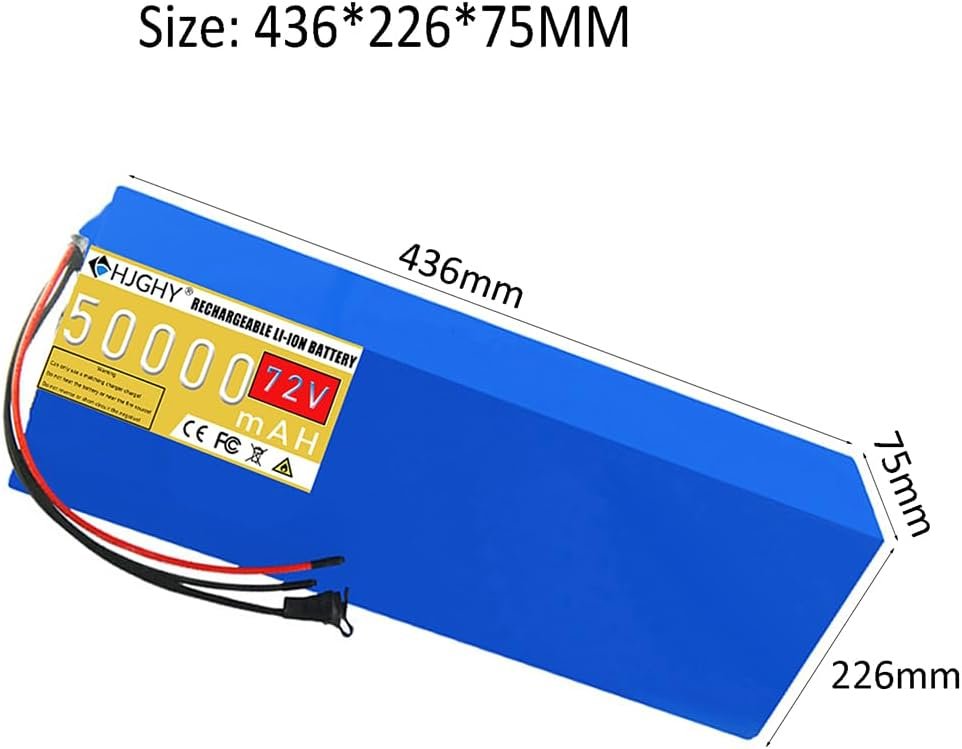
We like to summarize the essentials up front so we know what we’re dealing with. This product is the “72V 50Ah Lithium Battery Pack Replacement 72 Volt Rechargeable Lithium Battery with Charger for 0-3600W Mobility Scooter Motor.” The listing emphasizes high capacity, multi-year life, and built-in protections.
A few important advertised details:
- Nominal voltage: 72V
- Capacity: 50Ah (3,600 Wh)
- Suitable for motors: 0–3600W (advertised)
- Maximum constant discharge current: 30A
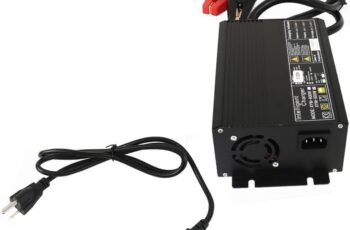
- Charger: 84V 2A (advertised), charging time claimed ~4–7 hours
- Cycle life: charge/discharge cycles exceed 2000 times; expected life ~5 years
- Self-discharge: ≤3% when not in use
- Protection: BMS for overcharge and overdischarge protection
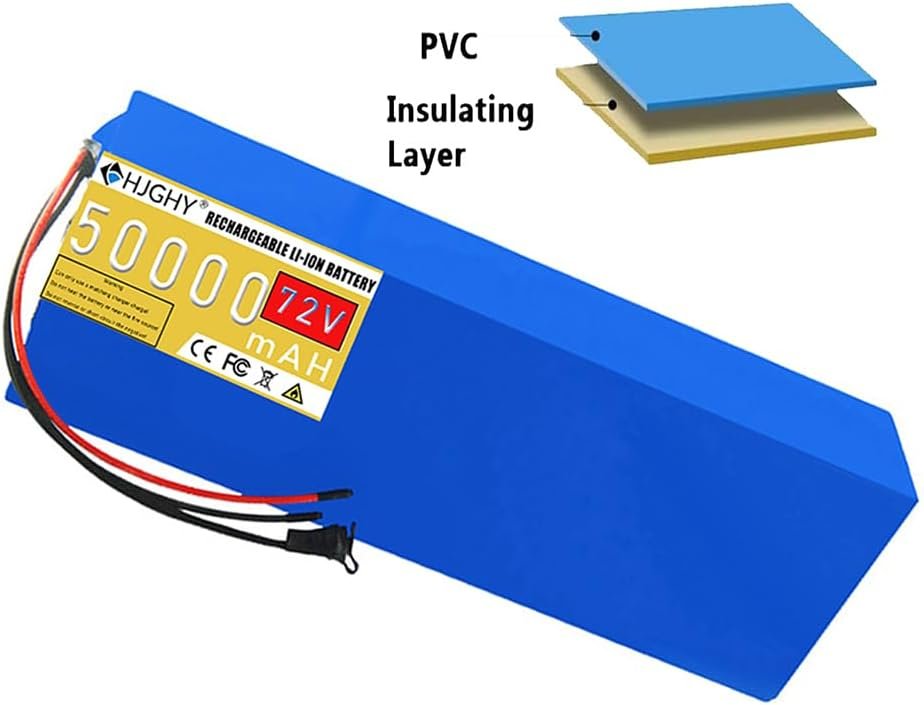
- Enclosure: water-resistant outer material; inner layer with water-resistant sealing and high adhesion
- Installation note: do not fasten directly to a bicycle; put in a bag or box to prevent collisions or extrusion
Quick summary of what we like and what concerns us
We’ll be candid: the capacity and cycle-life claims are attractive, and the built-in BMS and water-resistant packaging are useful features for mobility applications. However, there are two notable inconsistencies in the product details that we must flag: (1) the advertised suitability for up to a 3600W motor appears inconsistent with the stated maximum constant discharge current of 30A, and (2) the advertised charger specification (84V 2A) does not align with the claimed 4–7 hour charging time for a 50Ah battery. We recommend clarifying these points with the seller before purchase.

Technical specification table
We find tables useful when comparing numbers at a glance, so here’s a breakdown of the core specs as listed and how they translate into practical terms.
| Item | Listed Spec | Practical translation / notes |
|---|---|---|
| Nominal voltage | 72V | Standard for many high-voltage scooter systems |
| Capacity | 50Ah | Energy = 72V × 50Ah = 3600 Wh (3.6 kWh) |
| Maximum constant discharge current | 30A | Continuous power ≈ 72V × 30A = 2160W |
| Advertised motor compatibility | 0–3600W | Conflicts with 30A spec—see note below |
| Charger | 84V 2A (advertised) | At 2A, charging 50Ah from empty takes ~25 hours; claim of 4–7 hours inconsistent |
| Charging time (advertised) | ~4–7 hours | Unclear given charger spec—likely an error or different charger |
| Cycle life | >2000 cycles | Very good if accurate; expected life ~5 years |
| Self-discharge (idle) | ≤3% | Good for storage and seasonal use |
| Enclosure | Water-resistant outer and sealed inner layer | Better protection from moisture and wear |
| BMS | Included (overcharge/overdischarge protection) | Essential for safety and longevity |
| Installation note | Do not fasten directly to bicycle | Advises protective bag or box to prevent collision/extrusion damage |
Compatibility and realistic power expectations
We want to be practical. The pack’s energy (3.6 kWh) is substantial for mobility devices, but we must reconcile the discrepancy between the advertised motor compatibility (up to 3600W) and the maximum continuous discharge current (30A).
- Based on 30A continuous current, the battery can supply around 2,160W continuously (72V × 30A). That means:
- Motors drawing 2,000–2,100W continuously are within the safe continuous limit.
- Motors rated at or near 3,600W would require short bursts or higher peak currents; continuous operation at that level exceeds the listed continuous current rating.
- If the intended motor is 3,600W, we should ask the seller whether the 30A figure refers only to continuous current and whether a higher peak discharge limit exists. Running a motor that demands sustained current beyond the BMS rating risks overheating, tripping protection, or damaging the battery.
We recommend verifying the actual continuous and peak current capabilities with the seller/manufacturer before attempting to pair this pack with high-power motors.
Runtime estimates and how to calculate them
We like estimating runtime so we can compare batteries. The simple formula is: Runtime (hours) = Battery energy (Wh) / Device power draw (W)
Using the pack’s nominal energy of 3,600 Wh (72V × 50Ah), approximate runtimes would be:
| Motor power draw | Theoretical runtime (Wh/W) | Notes |
|---|---|---|
| 500W | 3,600 / 500 = 7.2 hours | Real-world ~5–6 hours with terrain/driving losses |
| 1,000W | 3,600 / 1,000 = 3.6 hours | Real-world ~2.8–3.3 hours |
| 1,500W | 3,600 / 1,500 = 2.4 hours | Real-world ~1.8–2.2 hours |
| 2,000W | 3,600 / 2,000 = 1.8 hours | Close to the continuous current limit (2160W) |
| 3,000W | 3,600 / 3,000 = 1.2 hours | Likely unsustainable if continuous; BMS may limit |
| 3,600W | 3,600 / 3,600 = 1.0 hour | Likely exceeds continuous discharge rating; expect reduced runtime and possible electrical protection events |
Important caveats:
- Real-world runtimes are lower because of drivetrain inefficiencies, variable load, regenerative braking behavior (if any), and temperature effects.
- The BMS continuous current rating (30A) limits continuous discharge to ~2,160W. For motors above that, runtimes based purely on Wh are not safe to assume.
- Peak current capability (for acceleration) may be higher than continuous rating, but that is unspecified—confirm with vendor.
Charging: what the listing says and what we think
The listing states the charger is 84V 2A and that charging takes about 4–7 hours. We need to reconcile that because the math doesn’t match.
- A 50Ah pack charged at 2A would require roughly 25 hours from full empty (50Ah / 2A = 25 hours), plus inefficiencies. So a 2A charger would not produce a 4–7 hour charge time.
- A 4–7 hour charge time for a 50Ah battery suggests a charger in the range of approximately 7–12A (e.g., 6A would take ~8–9 hours; 10A would take ~5–6 hours). Therefore, either:
- The advertised charger current is incorrect (maybe it should be 20A rather than 2A), or
- The charge time claim is incorrect, or
- The pack is not fully rated at 50Ah in a way that matches the advertised charger.
- We recommend contacting the seller to confirm the charger’s output current and whether the provided charger matches the 4–7 hour claim. Using an underpowered charger will extend charge times and may be inconvenient; using an overpowered or incompatible charger without matching charging profile may risk battery health unless the charger and BMS are compatible.
Charging best practices we recommend:
- Only use the charger specified or approved by the manufacturer.
- Charge in a temperature-controlled environment (ideally 10–30°C / 50–86°F).
- Avoid charging immediately after heavy use; allow the battery to cool.
- Do not leave the battery connected to a charger indefinitely unless the charger has a proper float/maintenance mode compatible with the battery chemistry.
Battery chemistry and longevity
The product copy claims the battery is “made of lithium material, which can retain charge and last longer than lithium iron batteries.” That phrasing is ambiguous.
- “Lithium” covers many chemistries: NMC (nickel manganese cobalt), NCA (nickel cobalt aluminum), LFP (lithium iron phosphate, LiFePO4), etc.
- LiFePO4 is commonly called “lithium iron” and is known for long cycle life and thermal stability. NMC/NCA varieties typically have higher energy density but historically lower cycle life than LFP.
- The listing’s claim that this battery “retains charge and last longer than lithium iron batteries” appears contradictory to general expectations, because LiFePO4 typically offers excellent cycle life and calendar life. We cannot verify the internal chemistry from the listing.
- The positive side: the advertised cycle life (>2000 cycles) and expected life of 5 years are strong if accurate and would be consistent with higher-end chemistries or robust BMS management.
What we recommend:
- Ask the seller to confirm the exact cell chemistry (e.g., NMC, NCA, LFP).
- Confirm the runtime and cycle warranty if possible.
- If long cycle life and thermal stability are priorities, consider verifying or choosing batteries explicitly labeled LiFePO4 (if weight and energy density trade-offs are acceptable).
BMS and safety features
We appreciate a battery pack that includes a BMS (battery management system). The product claims its BMS protects the battery from overcharging and overdischarging.
What we want from a BMS in a mobility pack:
- Cell balancing to extend life and prevent imbalance-related failures.
- Overcurrent protection to stop destructive high-current events.
- Short-circuit protection to prevent catastrophic failures.
- Overvoltage and undervoltage protection for each cell group.
- Temperature monitoring and disconnection if temperatures exceed safe thresholds.
The listing explicitly mentions overcharge and overdischarge protection. We should ask or verify whether the BMS also includes cell balancing, thermal protection, and short-circuit protection. These features are critical for safe operation and longevity in mobile use.
Enclosure and water resistance
The pack advertises an outer water-resistant material with insulation, anti-corrosion, and wear resistance; the inner layer is described as having low melting point, water-resistant sealing, and high adhesion.
Our perspective:
- A well-sealed pack with anti-corrosion and wear-resistant casing is ideal for outdoor mobility devices that can encounter splash, rain, or road grime.
- “Water-resistant” is not the same as “waterproof.” We should ask for an IP rating (e.g., IP65, IP67) to understand how well the pack handles water ingress.
- The warning about not fastening the battery directly to the bicycle and using a bag or box is practical. Mechanical shocks, collisions, and compression can damage cells or seals. Using a properly padded enclosure prevents extrusion and direct impacts.
Installation guidance and practical tips
We want installation to be safe and durable. Here is a step-by-step guide we recommend:
-
Confirm compatibility:
- Verify voltage and nominal system compatibility with your motor controller.
- Confirm connector type and wiring polarity match your system.
-
Inspect the pack and charger:
- Check for visible damage and ensure BMS and terminals are secure.
- Confirm the charger’s output voltage and current match the pack’s charging requirements.
-
Mounting:
- Do not bolt the battery directly to thin frame tubing or in a way that will bend or crush the pack.
- Place the pack in a robust bag or box with padding to absorb shocks and prevent extrusion.
- Secure the bag/box to the scooter/bicycle frame at multiple points to prevent movement, but allow for some isolation from vibration.
-
Wiring:
- Ensure correct polarity before connecting.
- Use appropriately rated cables and connectors for the expected current (consider cable gauge for up to 30A continuous).
- Include a main fuse or circuit breaker sized slightly above the pack’s continuous discharge rating.
-
First charge:
- Fully charge the battery with the supplied/approved charger before first use.
- Monitor temperature during the initial charge to ensure the pack remains within safe limits.
-
Testing:
- Start with low-power operation, verify motor and controller behavior, and check for any unusual heat or voltage drops.
- Verify the BMS behaves correctly under load and that any communication or indicator lights operate as expected.
Safety considerations and warnings
We take safety seriously. Batteries at this voltage and capacity require caution.
- Do not puncture, crush, or expose the pack to open flames.
- Avoid extreme temperatures (store 0–25°C recommended for long-term storage; charge/discharge in manufacturer-recommended temperature ranges).
- Do not short-circuit battery terminals—this can cause fires or explosions.
- Use only chargers and charging profiles recommended for the battery chemistry; mismatched charging can damage the pack or create hazards.
- If the pack gets hot during charge or discharge, disconnect and have it inspected.
- Follow local regulations for battery shipping and disposal.
Longevity, storage, and maintenance
We want the battery to last, so here are maintenance tips based on the claims and general best practices.
- Cycle management:
- Avoid deep discharges to 0% regularly. Shallow discharges with frequent recharges tend to extend cycle life.
- If the BMS allows, keeping the pack between ~20–80% SOC for daily use maximizes longevity.
- Storage:
- For long-term storage, charge to around 40–60% SOC and store in a cool, dry place.
- The listed self-discharge rate ≤3% per month is good; still check battery state occasionally.
- Temperature:
- Avoid storing or charging in very cold (<0°c />32°F) or very hot (>40°C / 104°F) conditions.
- Cleaning:
- Keep terminals clean and dry. Use contact cleaner if needed, and tighten any terminal bolts to the recommended torque.
- Periodic checks:
- Inspect for swelling, unusual smells, or leaks.
- Have a qualified technician test cell voltages if you suspect imbalance.
Performance in real-world mobility applications
We like to think practically about user scenarios:
- Mobility scooters: For most lightweight to medium-duty scooters, this pack’s capacity offers substantial range. For example, if a scooter typically draws 500–1000W on average, multi-hour runtimes are realistic. However, verify the controller can handle 72V nominal and that the continuous current needs do not exceed 30A.
- High-power scooters and bikes: If the vehicle regularly draws more than 2,160W continuously (e.g., heavy cargo e-bikes or high-performance scooters), this pack may be underspecified for sustained operation despite the advertised “0–3600W” compatibility.
- Golf carts, small utility vehicles: These devices often have different voltage systems—ensure system compatibility and ask about connector and mounting options.
Troubleshooting common issues
We like to be prepared for problems:
- Battery won’t charge:
- Confirm charger is connected, powered, and matches the pack voltage.
- Check charger LED indicators; if the BMS has locked out due to undervoltage or safety faults, a specialized charger or reset procedure may be required.
- Reduced runtime over time:
- Confirm actual usable capacity by logging energy drawn per charge cycle.
- Check cell balance and BMS reporting; age, temperature, and number of cycles reduce capacity.
- Pack gets hot:
- Ensure the load does not exceed continuous current limits.
- Confirm ventilation and avoid charging immediately after heavy use.
- BMS cuts out under load:
- This often indicates overcurrent or high internal resistance; reduce load and have battery inspected.
Comparisons and alternatives
We like comparing options so we can make an informed choice. Key comparison points:
- Lead-acid vs. lithium:
- Lithium (all chemistries) typically offers higher usable capacity per weight, faster charging, and deeper cycle life.
- Lead-acid is heavier, bulkier, and has shorter cycle life; lithium is generally superior for mobility applications.
- LiFePO4 (LFP) vs. NMC:
- LFP: excellent cycle life, thermal stability, safer, lower energy density, heavier for same capacity.
- NMC/NCA: higher energy density, lighter, sometimes lower cycle life, often used when weight is critical.
- Pack sizing:
- If you need sustained high-power output (continuous >2,000W), consider a pack with higher continuous current capability (higher Ah or a BMS rated for higher current).
- If weight and range are top priorities and motor draws are modest, this 72V 50Ah pack could be very attractive.
Pros and cons summary
We’ll give a concise list so we can weigh the decision.
Pros:
- High nominal energy (3.6 kWh) for extended range.
- Advertised long cycle life (>2000 cycles) and low self-discharge.
- Built-in BMS and water-resistant enclosure design for rugged use.
- Designed for mobility scooter applications and other electric vehicles.
Cons / concerns:
- Conflicting specs: 30A continuous discharge vs. claimed compatibility with up to 3,600W motors.
- Charger spec (84V 2A) conflicts with claimed 4–7 hour charge time for a 50Ah pack—needs clarification.
- Chemistry and full BMS feature set are not clearly specified in listing—verify before purchase.
- No explicit IP rating given for water resistance.
Who should consider this battery?
We think this pack fits these users well:
- Those seeking significant range for mobility scooters or similar vehicles drawing moderate power (up to ~2,000W continuous).
- Users who want a relatively high-capacity pack with advertised long cycle life.
- People willing to verify charger and current specs with the seller and make mounting accommodations (bag/box, padding).
We recommend caution or further verification for:
- Users with motors that require sustained continuous power above ~2,160W.
- Buyers who need a fast charge using an included charger—confirm the actual charger current output.
- Anyone who requires a fully specified chemistry and IP/waterproof rating for extreme environments.
Questions to ask the seller before buying
We always suggest asking a few targeted questions:
- What is the exact battery chemistry (e.g., NMC, NCA, LiFePO4)?
- Does the BMS include cell balancing, overcurrent protection, thermal monitoring, and short-circuit protection? What are the trip thresholds?
- Is the 30A rating the continuous discharge limit? What is the peak discharge rating and for how long?
- Can you confirm the charger output current? Is the included charger really 84V 2A, or is that a typo?
- Is there an IP rating for the enclosure? How water-resistant is it?
- What warranty and after-sales support are provided?
- Are connectors and mounting accessories included, or must they be purchased separately?
Final recommendation
We think this 72V 50Ah pack has strong potential for users needing significant energy capacity and good cycle life—provided the spec inconsistencies are resolved. The most important clarifications are:
- Confirm the true continuous and peak discharge currents relative to the motor you intend to run.
- Confirm the charger’s output current so that expected charge times are realistic.
If those clarifications check out and the BMS features meet our safety expectations, we’d consider this pack a strong option for medium-power mobility scooters and similar applications. If the seller cannot verify the specs, especially charger current and continuous discharge rating, we’d look elsewhere or wait until clearer documentation is available.
Frequently asked questions (FAQ)
We’ll answer a few FAQs to help with common concerns.
Q: Can this pack run a 3,600W scooter motor continuously? A: Based on the listed 30A continuous discharge (≈2160W), continuous operation at 3,600W likely exceeds the pack’s continuous current capacity. Contact the seller to confirm peak vs. continuous current ratings. Running a high-power motor continuously can trigger BMS limits or damage the pack.
Q: How long will the battery take to charge? A: The listing says the charger is 84V 2A and that charging takes ~4–7 hours, but those claims are inconsistent. A 2A charger would take ≈25 hours to charge 50Ah from empty. Ask the seller which is correct, and only use the recommended charger.
Q: How long will the battery last? A: The listing claims >2000 cycles and an expected life of 5 years. If accurate and used with reasonable charge/discharge practices, it would be a long-lasting pack. Real-world lifetime depends on usage patterns, temperatures, and care.
Q: Is the battery safe in wet conditions? A: The pack claims water-resistant outer material and inner sealing, but an IP rating isn’t given. Ask for an IP rating and avoid submersion. Use a protective bag or box and follow installation guidance.
Q: Can we use this on an e-bike frame? A: Possibly, if the system is 72V compatible and the mounting is cushioned and secure (bag/box recommended). Ensure controller, connectors, and continuous current requirements match the battery’s capabilities.
If you’d like, we can draft a concise message template for you to send to the seller to clarify the charger, continuous/peak current ratings, and battery chemistry before purchase.
Disclosure: As an Amazon Associate, I earn from qualifying purchases.