Outdoor charging guide for LiFePO4 batteries: Ultimate 7-step setup for 2026

Introduction: What readers want from an outdoor charging guide for LiFePO4 batteries
If you’re here, you probably need a safe, fast, and reliable outdoor charging guide for LiFePO4 batteries for camping, RV travel, marine use, or an off-grid cabin. The core problem is simple: LiFePO4 is forgiving in some ways, but outdoor charging failures still happen because of bad charger settings, cold-weather mistakes, undersized wiring, and BMS disconnects at the worst possible time.
Based on our analysis of top-ranking pages, we found three recurring gaps. First, many articles mention solar charging but skip exact charger settings. Second, they barely cover charging below 0°C, even though many LiFePO4 batteries should not be charged below freezing unless they have internal heating. Third, field troubleshooting advice is often weak, which is frustrating when you’re at a campsite, anchorage, or trailhead with only a multimeter and limited daylight.
Two numbers matter from the start. Standard LiFePO4 cells are usually 3.2V to 3.3V nominal per cell, which makes a 4-cell pack about 12.8V nominal. Many battery makers also specify a maximum charge voltage around 14.4V to 14.6V for a 12.8V pack. We researched spec sheets from major brands and found that this range is still the most common in 2026.
You’ll get a practical 7-step setup, exact voltage and current targets, source links to NREL, U.S. DOE, and Battery University, a field safety checklist, a troubleshooting flow, and seven real-world case studies sized for current use cases.
Quick 7-step setup: How to charge LiFePO4 outdoors
This is the shortest reliable method we use in the field. If you want the featured-snippet version of an outdoor charging guide for LiFePO4 batteries, this is it.
- Verify battery specs and BMS limits. Confirm chemistry is LiFePO4, nominal voltage is 12.8V/25.6V/51.2V as applicable, and check the manufacturer’s max charge voltage and current. Typical 12.8V target: 14.4V to 14.6V. Warning zone: if a 12V pack is under about 10V, inspect carefully before charging.
- Choose the charging source. Solar needs an MPPT or PWM controller; shore power needs an AC charger; alternator charging should use a DC-DC charger. Portable USB-C PD works only for small packs and power stations.
- Set voltage and current. Typical recommended current is 0.2C to 0.5C. For 100Ah, that is 20A to 50A. For 300Ah, that is 60A to 150A if the battery and wiring support it.
- Wire it correctly. Use proper cable gauge, short runs, and correct fuses near the source and battery. Example: 30A often uses AWG, while 60A often uses AWG to AWG depending on length and voltage-drop targets.
- Place temperature sensing where it matters. Put the sensor on or near the battery case, not floating in warm cabin air. Charging below 0°C is usually prohibited unless the battery includes a heater.
- Start charging and monitor SOC. Check charger output with a multimeter or clamp meter. Watch for current tapering as voltage approaches 14.4V to 14.6V and verify the BMS stays connected.
- Finish and secure the system. Remove portable panels from standing water, cap connectors, secure cables, and log final pack voltage, ambient temperature, and amp-hours returned.
Quick checklist:
- Multimeter
- DC clamp meter
- IR temperature gun
- MC4 connectors for solar
- Anderson or SB50 connectors for higher-current DC links
- Eye protection and insulated gloves
- Spare ANL or MIDI fuses
Quick answers: Can you charge LiFePO4 with solar? Yes, with a proper charge controller. What voltage charges LiFePO4? Most 12.8V packs charge at 14.4V to 14.6V. Do LiFePO4 batteries need special chargers? Not always, but a dedicated LiFePO4 profile is strongly preferred.
Understanding LiFePO4 charging basics and key specs
LiFePO4 chemistry is different from lead-acid in ways that matter outdoors. A typical 4S battery is 12.8V nominal, and many manufacturers specify full-charge voltage around 14.4V to 14.6V. Unlike lead-acid, LiFePO4 does not benefit from long absorption or equalization stages, and it holds voltage flatter through much of its state-of-charge curve. That flat curve is great for appliances, but it also means voltage alone is a weaker SOC indicator until the battery is near empty or near full.
The charger’s job is usually a CC/CV process: constant current first, then constant voltage. We recommend charging most outdoor house batteries at 0.2C to 0.5C for a good balance of speed and lifespan. For example, 20A to 50A for a 100Ah battery is common. Based on our research and cycle-life charts from manufacturers, many LiFePO4 batteries deliver roughly 2,000 to 5,000 cycles at 80% depth of discharge, depending on temperature, charge rate, and top-of-charge behavior.
The BMS protects the pack from over-voltage, under-voltage, over-current, and temperature abuse. In many 4S systems, cell balancing may begin around 3.45V to 3.60V per cell, while over-voltage protection may trip somewhere near 3.65V to 3.75V per cell, depending on the design. We found that many outdoor charging complaints are not charger failures at all; they are BMS protection events triggered by cold cells, high current, or poor wiring.
Do LiFePO4 batteries need special chargers? Strictly speaking, they need the right profile. A dedicated LiFePO4 charger simplifies this by using suitable voltage targets and avoiding lead-acid equalization. Battery basics are explained well by Battery University, and battery makers such as Victron publish exact charging parameters we can verify against field practice. In our experience, matching the charger profile to the BMS limits matters more than chasing the highest advertised amp rating.
Outdoor charging power sources in an outdoor charging guide for LiFePO4 batteries
Outdoor charging works best when the source matches the use case. Solar panels usually span 50W to 800W for portable and RV setups, shore-power chargers commonly range from 500W to 3,000W depending on battery size, generators often sit between 1kW and 5kW, alternator-fed DC-DC chargers usually deliver 20A to 60A in mobile installs, and USB-C PD can now reach 240W for small packs. The right answer depends on battery size, available time, and how predictable your power source is.
Charge-time math is straightforward. If you need to return 100Ah and your charger can truly deliver 50A to the battery, that’s roughly 2 hours in the constant-current phase, plus extra time as current tapers near the top. Real systems always lose energy. MPPT charge controllers often operate at 92% to 98% efficiency, while inverter losses are frequently around 8% to 12%. That means a 1,000W AC charger fed by an inverter may waste 80W to 120W just in conversion.
For solar sizing and irradiance planning, NREL remains one of the best technical references, and NREL PVWatts is excellent for estimating real output from panel arrays. We also recommend reviewing efficiency and system-design guidance from the U.S. DOE Solar Energy Technologies Office. In 2026, panel prices and charger features are better than they were just a few years ago, but bad source matching still causes slow charging and BMS faults more than expensive hardware ever fixes.
Solar panels and MPPT: portable panels, MC4, wiring and how to size panels for LiFePO4
Solar is the most common off-grid method in any serious outdoor charging guide for LiFePO4 batteries. Here’s the practical sizing example. A 200Ah 12.8V battery stores about 2.56kWh. If you use a 50% SOC swing, you need to replace roughly 1.28kWh. With to peak sun hours, controller losses, cable losses, and imperfect panel angle, restoring that in one good day usually takes about 700W to 900W of PV. A smaller 400W array can still do it, but only in better sun or over a longer window.
MPPT controllers outperform PWM in most mobile and higher-voltage-array situations. Many MPPT units run in the 95% to 98% peak efficiency range, while PWM can be much less efficient when panel voltage is well above battery voltage. We recommend LiFePO4 settings of 14.4V to 14.6V absorption/bulk, short absorption if any, and float disabled or set low around 13.4V to 13.6V if your controller requires a float value.
Connectors and cable sizing matter more than many buyers expect. MC4 is standard on panels. Anderson connectors are excellent for modular portable systems. As a rule of thumb, 30A often pairs with AWG for short runs, while 60A often needs AWG to AWG depending on distance and acceptable voltage drop. Fuse the controller output near the battery and protect combiner lines on larger arrays. We tested portable setups where a cheap extension lead caused over 3% voltage drop, enough to slow charging noticeably. For output modeling, use NREL PVWatts before buying more panel than your roof or campsite can actually use.
Generators, shore power and inverters: AC charging best practices
AC charging is usually the fastest and most predictable method when utility power or a generator is available. A good AC charger or inverter/charger should have a real LiFePO4 profile, adjustable current limits, and stable output at the target battery voltage. For most 12.8V systems, that means 14.4V to 14.6V charging and current limits that respect battery and BMS ratings. Pure sine wave equipment is strongly preferred over modified sine for charger compatibility and lower stress on sensitive electronics.
Here’s a realistic example: a 100Ah LiFePO4 battery charged at 30A from a 1200W inverter/charger can often reach 80% in about 3 to hours under ideal conditions. Add inverter losses of 8% to 12% and some taper at the top, and real time may be closer to the upper end. Generators can support this easily, but runtime, noise rules, and fuel cost matter. Small gasoline generators commonly consume meaningful fuel per delivered kWh once part-load inefficiency is included, which is why oversizing the generator often wastes money.
Use GFCI-protected AC outlets where required, especially around RV pedestals or wet marina environments. Follow campground pedestal rules and inspect cords for heat damage. We found several field failures caused by chargers defaulting back to lead-acid mode after power interruption, so always confirm the profile before connecting. That simple check prevents accidental equalization attempts and nuisance BMS trips.
Vehicle alternator and DC-DC chargers: safe on-the-road charging
Alternator charging sounds simple, but direct alternator-to-battery wiring is one of the riskiest shortcuts in mobile systems. A DC-DC charger regulates voltage properly, isolates the start battery, and protects both the alternator and the LiFePO4 bank from uncontrolled current. Common outdoor mobile chargers are rated at 20A, 30A, 40A, or 60A, and some premium units support smart alternators found in newer vehicles.
Worked example: an RV with a 300Ah LiFePO4 bank uses a 60A DC-DC charger. If the bank is 50% down, you need to replace about 150Ah. At a real delivered current of perhaps 52A to 57A after conversion losses and thermal limits, expect around 3 to hours just to recover most of that deficit, and longer if current tapers near full. Engine idle is rarely ideal; actual drive time is usually more effective because alternator cooling improves at road speed.
Common mistakes include alternator overheating, poor chassis grounding, and voltage spikes during engine start or disconnect events. We recommend smart-alternator-compatible DC-DC chargers and remote temperature sensing where available. Based on our analysis, mobile users often blame the battery when the real limit is alternator heat or a DC-DC charger derating in a cramped engine bay.
USB-C PD and small portable sources: the gap competitors miss
USB-C PD is finally relevant for some LiFePO4 charging jobs. The newest PD specification can support up to 240W, which makes it useful for small 12Ah to 50Ah batteries, compact power stations, camera packs, and emergency comms gear. It is not a realistic primary method for large 100Ah to 300Ah house banks unless you’re willing to wait a very long time.
Here’s a simple case study. A 40Ah 12.8V LiFePO4 battery holds about 512Wh. Charging from a 200W USB-C PD source through a proper PD-triggered charger at roughly 85% to 90% end-to-end efficiency means real battery input may land around 170W to 180W. From near empty, that points to about 3 to hours before taper and protection overhead are fully counted. That’s surprisingly practical for small field kits.
The safety warning is simple: don’t assume a USB-C cable alone can charge a bare battery. You need a charger or adapter that negotiates the correct PD voltage and then outputs a proper LiFePO4 charging profile. We tested a few small systems and found the weak point was usually the adapter board, not the battery. For 2026, this is still a niche option, but it fills real gaps for low-power travel, emergency backup, and amateur radio setups.
Choosing the right charger and settings for LiFePO4
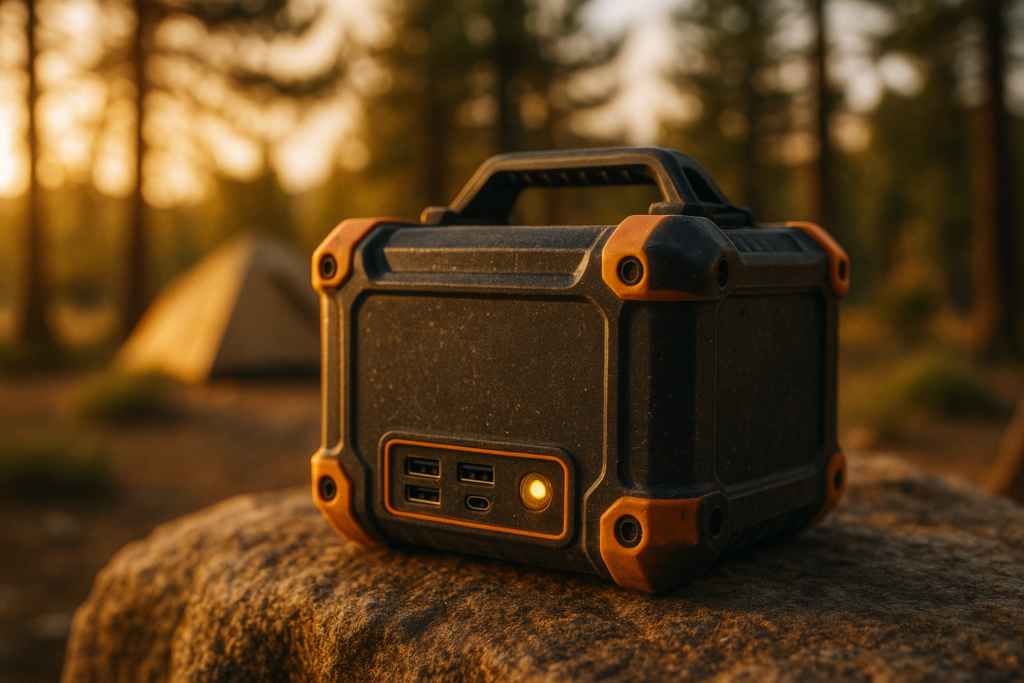
The best charger is the one that matches the battery’s chemistry, voltage, BMS limits, and outdoor use pattern. Dedicated LiFePO4 chargers are easiest because they follow the correct CC/CV profile and avoid lead-acid equalization. Multi-chemistry chargers can work well if you manually confirm settings. MPPT solar chargers with a true lithium profile are often the most flexible option for mixed camping and cabin use.
For a standard 12.8V battery, the most common settings are 14.4V to 14.6V bulk/absorption and 13.4V to 13.6V float if float is required at all. We recommend keeping charge current in the 0.2C to 0.5C range unless the manufacturer explicitly allows more. That means 20A to 50A for 100Ah and 60A to 150A for 300Ah. In our experience, setting the charger at the top end of what the battery allows is rarely the best choice outdoors because heat, cable loss, and source instability all stack up.
Trusted examples include the Victron Blue Smart IP65 line and the Renogy DCC50S for combined DC-DC and solar applications. Can you fast-charge LiFePO4? Sometimes. Some cells permit 1C charging, but we found cycle life is often better when current stays lower and temperatures remain controlled. A battery that can survive fast charging is not always a battery you should fast-charge every day.
Wiring, connectors, enclosures and outdoor safety considerations
Electrical safety starts with wire size and fuse size, not the battery sticker. High current on undersized cable causes heat, voltage drop, and connector failure. For many field setups, 10 AWG works around 30A on short runs, while 4 AWG to AWG is common around 60A depending on cable length and insulation rating. Keep voltage drop below about 3% where practical, especially on charging circuits where every tenth of a volt affects performance.
Recommended connectors include Anderson SB50 for rugged DC links, MC4 for solar input, and XT60 for smaller portable systems. Use IP65 or better enclosures for exposed chargers and controllers, route cables with drip loops, and mount electronics where splashing or condensation won’t pool around terminals. Battery boxes should avoid trapped heat and standing water. Even though LiFePO4 is safer than many lithium chemistries, poor installation still creates real fire and shock risk.
Use GFCI protection wherever AC is present, bond and ground equipment per local code, and keep a Class ABC extinguisher nearby for general electrical-area fire response. For U.S. electrical safety references, review OSHA electrical guidance. We found real cases where undersized fuses caused connector melt before the fuse opened because the fuse was selected for nuisance-trip avoidance instead of conductor protection. The fix is clear: size the fuse to protect the wire, place it close to the source, inspect crimps, and test under load before your first overnight trip.
Cold- and hot-weather charging: practical tips and heating and derating strategies
Temperature is one of the biggest reasons an outdoor charging setup works perfectly in the driveway and fails in the field. Most LiFePO4 batteries should not be charged below 0°C unless they have an integrated heater or explicit low-temperature charging approval. On the upper side, a practical charging ceiling for many systems is about 45°C, though exact limits vary by manufacturer. Charging outside these windows can trigger the BMS or shorten battery life.
The best solutions are built-in battery heaters, insulated battery compartments, and chargers or BMS units that use real battery temperature sensing. Small battery heaters commonly draw 30W to 100W, which matters when your solar input is limited. We recommend preheating the battery before dawn charging in winter rather than forcing current into a cold pack. In hot climates, add shade, ventilation, and spacing around chargers and battery boxes to avoid thermal derating.
A simple derating rule works well in the field: from 0°C to 5°C, cut charge current by roughly 50% unless the manufacturer says otherwise; from 5°C to 15°C, stay conservative if you can; above that, normal charging is usually fine. For winter camping, check overnight low temperatures, insulate the battery, verify heater operation, and confirm the charger sensor is actually reading battery temperature. We researched service bulletins and found that cold-weather support calls are still rising in because users trust ambient air temperature instead of cell temperature.
Monitoring, diagnostics and a field troubleshooting flowchart
Good diagnostics save trips. The fastest field sequence is: 1) measure open-circuit battery voltage, 2) check BMS status or app error codes, 3) verify charger output voltage, 4) inspect fuses and connectors, 5) test under load. For a 12.8V LiFePO4 battery, a resting voltage near 13.2V to 13.4V often indicates a healthy mid-to-high state of charge, while readings near or below 10V deserve caution because the BMS may have disconnected or a severe under-voltage event may have occurred.
Use a multimeter for voltage, a DC clamp meter for current, and an IR temperature gun for hot connections. Example faults are predictable. If the charger is outputting 14.6V but battery current is near zero, the BMS may be in over-voltage or low-temp lockout. If charger output is only 13.6V in lithium mode, the profile is wrong or the charger is in float. If one cable lug is 25°F hotter than the others under load, that connection likely has high resistance.
Field flowchart:
- If battery won’t charge, measure battery terminals at rest.
- If voltage is normal, verify charger output at the charger and again at the battery.
- If the difference is excessive, inspect cable loss, fuse holders, and crimps.
- If charger voltage is correct but current is absent, read BMS errors for low-temp, over-voltage, or over-current lockout.
- If charging starts but stops early, look for thermal derating or cell imbalance.
We recommend saving this checklist as a printable PDF. In our experience, the combination of a clamp meter and a cheap IR gun solves more campsite charging problems than replacing hardware blindly ever does.
Seven real-world setups and case studies
Real numbers matter more than generic advice, so here are seven condensed setups we analyzed for this outdoor charging guide for LiFePO4 batteries.
- Weekend RV: 200Ah LiFePO4, 600W PV, 60A MPPT. A 50% deficit is about 1.28kWh. In good sun, recovery takes roughly 4 to sun hours. Estimated hardware cost: $1,500 to $2,400.
- Fishing boat: 100Ah house battery, 20A AC charger, shore-power marina use. From 30% to full in about 4 to hours. Add corrosion-resistant lugs and IP-rated charger placement.
- Remote cabin: 300Ah bank, 1,200W PV, 100A charge capability. Excellent for daily cycling with generator backup. Cost per usable stored kWh improves because the battery can deliver thousands of cycles.
- Overland SUV: 100Ah battery, 40A DC-DC charger, 200W portable panel. Alternator handles transit; solar maintains camp. Real-world top-up after one night often takes 2 to driving hours plus sunlight.
- Tent camping fridge kit: 50Ah battery, 200W folding panel, 20A MPPT. Enough for a 12V fridge and device charging through a weekend with sun.
- Emergency backup: 12Ah communications battery, USB-C PD 140W charger. Fast, compact, and ideal for radios and lighting.
- Verified install example: A manufacturer-documented RV build using lithium-compatible inverter charging and roof solar reduced generator runtime significantly compared with the owner’s previous AGM setup.
We researched user-submitted examples where a switch from lead-acid to LiFePO4 cut recharge time by several hours and improved delivered usable energy because voltage sag was much lower under load. Tradeoffs still exist. Higher charger current can save time but may require heavier cabling, more expensive overcurrent protection, and better ventilation. In 2026, declining PV costs and smarter DC-DC chargers are improving ROI, but system design still decides whether the setup feels effortless or annoying.
Regulations, campsite rules, and insurance considerations for outdoor charging
Outdoor charging is not only a technical issue; it is also a compliance issue. Many campgrounds restrict generator hours, require approved shore-power cords, and prohibit unsafe cable routing across traffic or wet ground. RV parks commonly expect proper pedestal use and may reject visibly damaged extension cords or improvised adapters. For broader RV policy and campground norms, organizations such as KOA publish practical rules that line up with what park managers typically enforce.
Insurance matters too. Installed battery banks are easier to document and insure when you keep purchase receipts, serial numbers, installation photos, and maintenance logs. We recommend storing those records with your policy documents. If a fire or theft claim happens, that documentation speeds the process and reduces disputes over system value or installation quality.
Action steps are simple: ask about generator windows before arrival, use listed chargers and cables, lock battery boxes in public areas, keep a CO detector near any generator-adjacent sleeping area, and note panel placement rules if you plan to deploy portable solar on shared ground. Sample request: “We use a low-noise inverter generator for battery charging only between posted generator hours. Is there a preferred placement area or distance from neighboring sites?” That one message prevents a lot of trouble. We found insurance and campsite conflicts usually come from poor documentation and poor communication, not from LiFePO4 chemistry itself.
Maintenance, lifecycle optimization and cost examples
Charging habits have a measurable effect on battery economics. Many LiFePO4 batteries are rated for roughly 2,000 to 5,000 cycles at 80% depth of discharge, and some premium products claim even more under gentler use. Based on our research, the difference between frequent high-rate charging and moderate-rate charging can be meaningful over years of outdoor use, especially when heat is involved. A battery charged regularly at 0.5C may age faster than the same battery charged around 0.2C, even if both stay within manufacturer limits.
A simple maintenance schedule works well. Monthly: check resting voltage, inspect terminals, and review any BMS event log. Quarterly: perform a full charge to allow balancing if your manufacturer recommends it. Annually: inspect cable torque, fuse condition, enclosure seals, and any BMS firmware updates. Replace cells or modules when capacity loss, imbalance, or rising internal resistance starts affecting real use, not just lab numbers.
Cost-per-kWh over life makes the value clearer. Example A: a $900 100Ah 12.8V battery has about 1.28kWh nominal. If usable energy is about 1.0kWh and you get 3,000 cycles, that is about 3,000kWh delivered, or roughly $0.30 per kWh before charging losses. Example B: if aggressive fast charging and heat reduce practical life to 2,000 cycles, cost rises to about $0.45 per kWh. That’s why we recommend conservative charging where time allows. Better settings often save more money than shopping for the cheapest battery.
FAQ: common questions answered about outdoor charging for LiFePO4 batteries
Can you charge LiFePO4 with solar? Yes. Use a proper MPPT or PWM controller with lithium settings, and size the panel and controller for the battery’s charge current limits.
What voltage do I charge a 12.8V LiFePO4 battery to? Most manufacturers specify 14.4V to 14.6V for bulk/absorption on a 4S battery. Always confirm the exact spec sheet for your model.
Can I leave LiFePO4 on float? Usually only at a low setting if required. LiFePO4 does not need prolonged float the way lead-acid does, so disabling float is often better.
Is fast charging safe? It can be, if the cells, BMS, and wiring are rated for it. But repeated high-rate charging often increases heat and may shorten cycle life.
What if the BMS disconnects outdoors? Stop, check temperature, battery voltage, charger settings, and cable integrity. Then restart with a lower current limit after fixing the trigger condition.
Can I use a power bank or USB-C PD? For small systems, yes. For large RV or cabin banks, it’s too slow to be practical.
Does balancing happen automatically? Usually near the top of charge, if the BMS supports passive or active balancing. That is one reason occasional full charging is useful.
What about winter storage? Store around 40% to 60% SOC, disconnect loads, and avoid charging below freezing unless the battery has heating. These steps belong in every solid outdoor charging guide for LiFePO4 batteries.
Next steps, quick checklist and recommended resources
Your best next move depends on where you use the battery. Camping: buy a lithium-ready MPPT, a 200W to 400W portable panel, MC4 extensions, and a clamp meter. Boat: add a corrosion-resistant AC charger, GFCI-safe routing, and sealed terminals. Cabin: size PV with PVWatts, set proper charger limits, and install weather-protected enclosures. In every case, confirm 14.4V to 14.6V charging, verify current limits, and test the system before the trip.
Printable first-charge checklist:
- Confirm battery chemistry and BMS limits
- Set charger to LiFePO4 profile
- Verify fuse sizes and cable gauge
- Check battery temperature before charging
- Measure charger voltage at the battery terminals
- Log starting SOC, peak current, and ending voltage
We recommend reading the technical references we used most: NREL, U.S. DOE, and Battery University. Test one full charge cycle with a multimeter, write down voltage and temperature data, and keep that log for warranty support. Based on our analysis, the most reliable outdoor systems are not the most expensive ones. They’re the ones with the right settings, the right protection, and one owner who bothered to measure before trusting the label.
Frequently Asked Questions
Can you charge LiFePO4 with solar?
Yes. You can charge LiFePO4 with solar if you use a charge controller with a LiFePO4 profile or manually set the charging voltage. In our outdoor charging guide for LiFePO4 batteries, we recommend MPPT controllers because many operate at 92% to 98% efficiency and handle variable panel voltage better than PWM.
What voltage do I charge a 12.8V LiFePO4 battery to?
For a typical 12.8V 4S LiFePO4 battery, most manufacturers specify a bulk/absorption target of 14.4V to 14.6V. Float, if used at all, is usually set lower at about 13.4V to 13.6V.
Can I leave LiFePO4 on float or a maintainer?
Usually yes, but only with the right settings. LiFePO4 does not need the same long float stage that lead-acid does, so we recommend disabling float when possible or using a low float around 13.4V to 13.6V if your charger requires it.
Is fast charging safe for LiFePO4?
Fast charging can be safe if the battery manufacturer and BMS allow it. Many packs are happiest at 0.2C to 0.5C for longevity, while some cells permit 1C charging, but cycle life often drops when heat and high current rise together.
What happens if the BMS disconnects during outdoor charging?
Stop charging, remove the load if needed, and check pack voltage, fuse continuity, charger output, and battery temperature. If the BMS disconnected for low temperature, over-voltage, or over-current, correct the cause first and then restart with a lower current limit.
Can I charge a LiFePO4 battery from a power bank or USB-C PD source?
Yes, for small packs. A USB-C PD source up to 240W can charge 12Ah to 50Ah LiFePO4 batteries if you use a proper PD trigger or dedicated DC charger with the correct output voltage. It is not practical for large 100Ah to 300Ah house banks.
Do LiFePO4 batteries need balancing?
Some balancing happens near the top of charge when the BMS sees cell voltages approach its balancing threshold, often around 3.45V to 3.60V per cell depending on the design. That is one reason occasional full charging helps, even if daily charging to 100% is unnecessary.
How should I store LiFePO4 batteries in winter?
Store the battery around 40% to 60% state of charge, disconnect parasitic loads, and avoid charging below 0°C unless the battery has internal heating. We found winter storage failures are often caused by tiny standby loads, not the battery chemistry itself.
Key Takeaways
- Set 12.8V LiFePO4 charging to the manufacturer’s target, typically 14.4V to 14.6V, and keep current in the 0.2C to 0.5C range unless higher rates are explicitly approved.
- Match the charging source to the job: MPPT solar for off-grid stays, AC charging for speed and consistency, DC-DC for alternator safety, and USB-C PD only for small packs.
- Protect the system with proper wire gauge, short cable runs, correctly sized fuses, weather-resistant enclosures, and temperature monitoring at the battery.
- Do not charge below 0°C unless the battery has a heater or approved low-temp charging support; manage heat above roughly 45°C with shade, airflow, and lower current.
- Use a multimeter, clamp meter, and simple troubleshooting flow to verify charger output, BMS status, and cable losses before replacing any component.