Have you been searching for a reliable way to charge a 24V or 28V auxiliary battery from your 12V system without stressing your alternator or wiring?
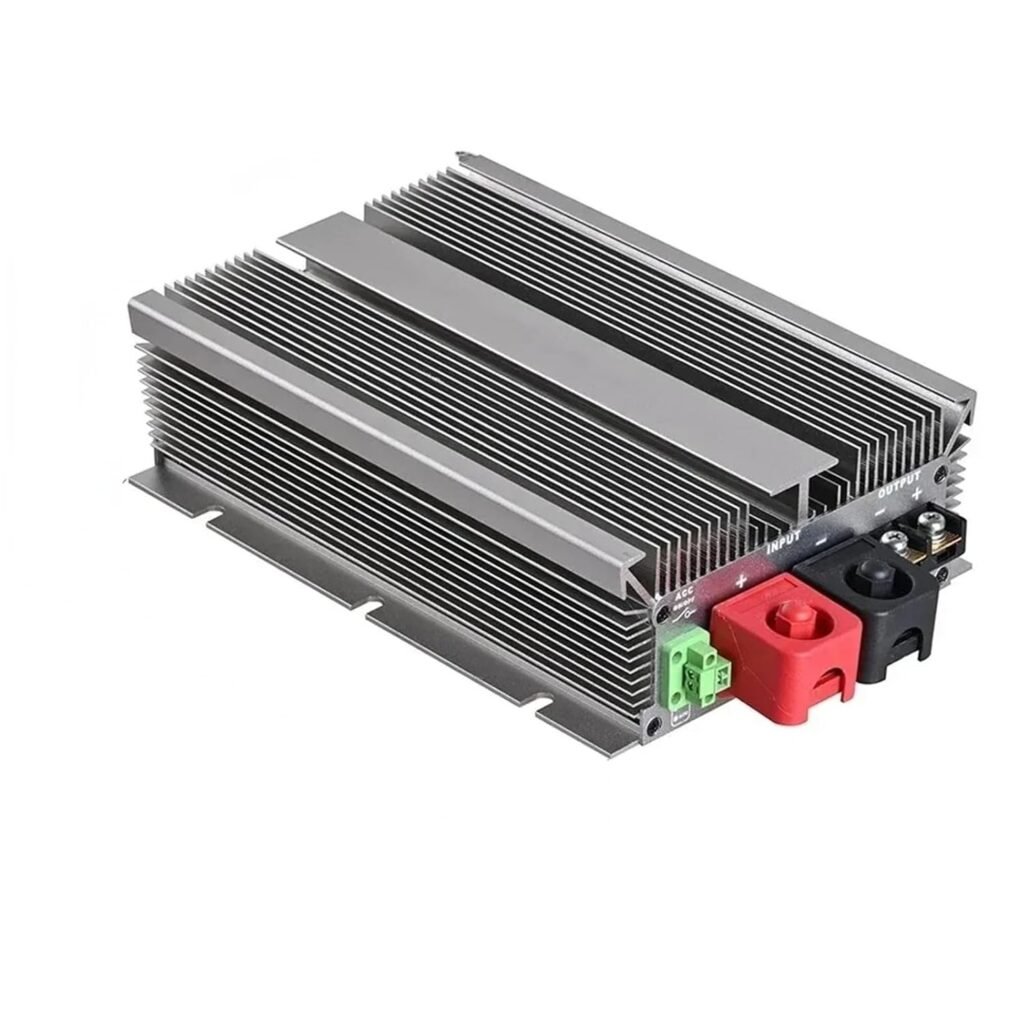

What You’re Getting With This DC‑DC Battery Charger
This Battery Charger DC DC 12V to 24V Step Up Converter 3A-100A For 28V Lead Acid Battery and 29.2V LiFePO4 Auxiliary Battery (12V-29.2V 20A Charger) is designed to let you charge a higher-voltage auxiliary battery from a standard 12V source. You use it mainly in vehicles, off‑grid setups, and backup power systems where you want a dedicated secondary battery.
You connect it to your 12V supply (like a car battery, campervan battery, or 12V solar bank), and it boosts that 12V up to around 28–29.2V, suitable for 28V lead‑acid or 29.2V LiFePO4 batteries. This means you can safely run a 24–28V system from a 12V source, with properly regulated charging.
Core Purpose: Why You Would Use This DC‑DC Charger
This unit acts as a step‑up converter and smart charger in one. Rather than simply pushing raw voltage through, it delivers controlled, stable voltage and current for your higher‑voltage battery.
You’d typically use it when you already have a 12V system (like in a car, RV, boat, or small off‑grid setup) but want to add a 24–29V auxiliary battery to power heavier loads or separate circuits without modifying your entire primary system.
When This Charger Makes Sense for You
You’re a good match for this product if you:
- Have a 12V starter battery and want a 24V or 28V house/aux battery
- Want to power 24V inverters, pumps, or tools from a vehicle that only has a 12V alternator
- Use LiFePO4 batteries and need a controlled 29.2V charging profile
- Want to protect your main battery and avoid overloading your alternator
Instead of rewiring your vehicle for 24V, you can keep your main system at 12V and let this charger handle the job of feeding the higher‑voltage auxiliary battery.
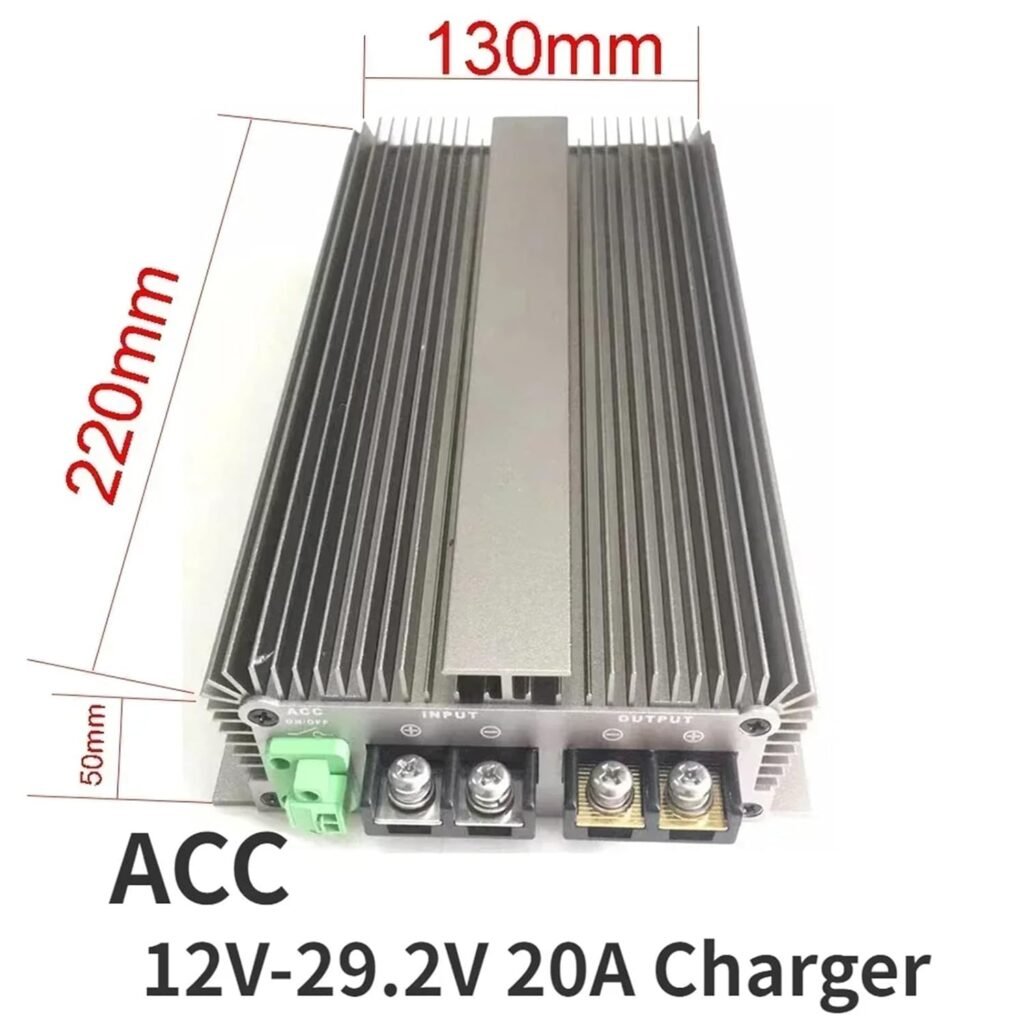
Key Technical Points You Should Know
The naming is a bit long, but the important parts tell you most of what you need:
- Input: 12V DC (typically from a car, truck, RV, boat, or 12V battery bank)
- Output: Step‑up to around 28V for lead acid or 29.2V for LiFePO4
- Rated current: This version is described as a 20A charger (though the series covers 3A to 100A)
- Target batteries: 28V lead‑acid and 29.2V LiFePO4 auxiliary batteries
You get a regulated DC‑DC boost converter that behaves as a charger: it doesn’t just dump voltage; it aims to follow a suitable charging profile for the type of battery you’re using.
Basic Specs at a Glance
Here’s a simplified table to help you quickly understand what you can expect.
| Feature | What It Means for You |
|---|---|
| Input Voltage | 12V DC (from battery, alternator, or 12V system) |
| Output Voltage | 28V for lead acid, ~29.2V for LiFePO4 (fixed step‑up) |
| Output Current (this model) | 20A charger (series range from 3A to 100A) |
| Battery Types Supported | 28V lead‑acid, 29.2V LiFePO4 auxiliary batteries |
| Conversion Type | DC‑DC boost (step‑up) converter with charging function |
| Use Case | Vehicle, RV, off‑grid, marine, backup power |
| Main Benefit | Charge higher‑voltage bank from 12V without rewiring system |
These specs define what loads you can run, how fast your battery will charge, and what size of battery bank makes sense.
Build Quality and Design Impressions
You can think of this charger as a functional, workmanlike piece of gear rather than a flashy gadget. It’s designed for practical installations, where reliability matters more than appearance.
Construction and Materials
The unit typically uses:
- A metal or aluminum shell for durability and heat dissipation
- Internal components built for high‑current DC transfer and voltage boosting
- Terminals or pigtail wires sized for the rated current (you should match your wiring gauge accordingly)
You’re not getting a cosmetic showpiece; you’re getting a block of power electronics built to live in a vehicle or off‑grid enclosure and handle real‑world conditions.
Cooling and Heat Management
High‑current DC‑DC conversion generates heat. This charger is usually heatsinked and may rely on:
- Passive cooling (fins, metal casing, open airflow)
- In some versions, active cooling (fans) for higher current ranges
In your setup, you should mount it somewhere with reasonable ventilation. Avoid stuffing it into a sealed box with other hot electronics; that will shorten its life and reduce performance.
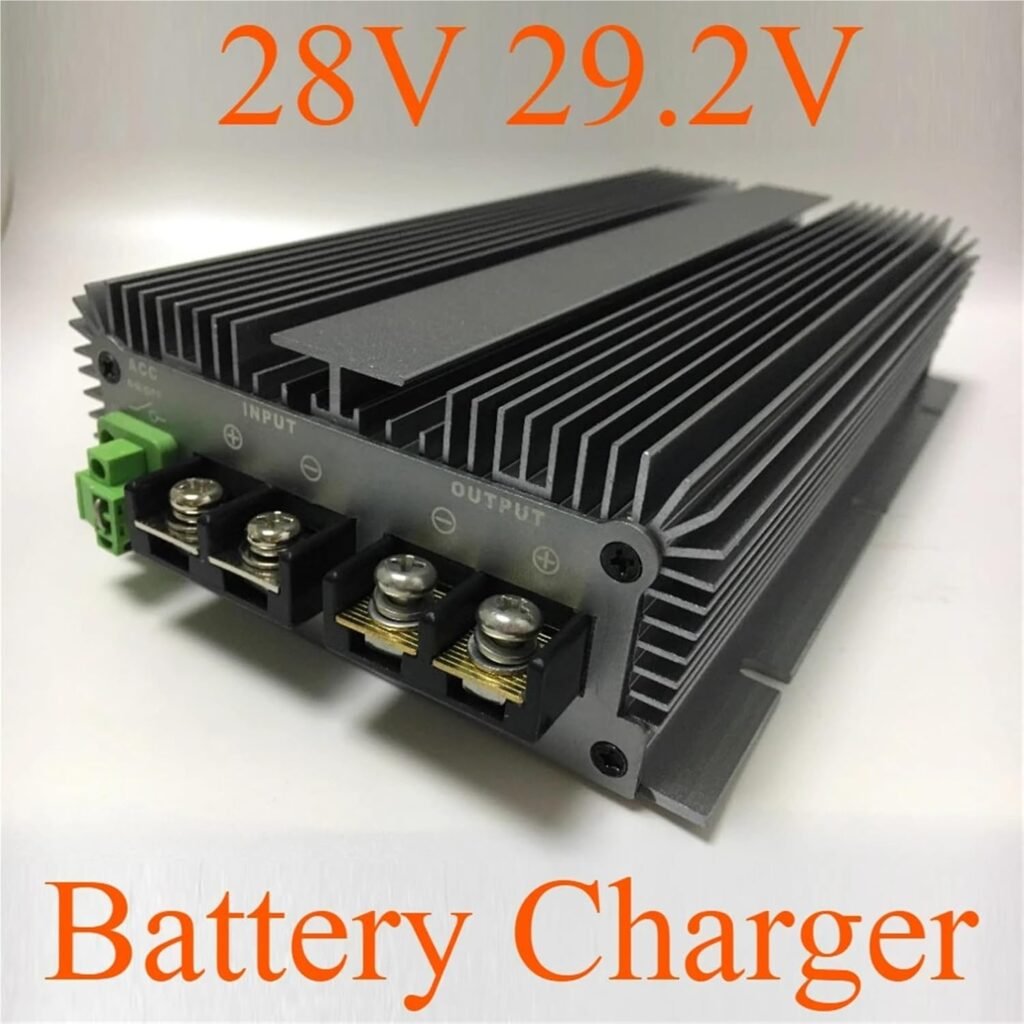
Performance: How It Actually Charges Your Auxiliary Battery
Performance boils down to two main questions:
- Can it hold stable voltage and current during charging?
- Does it match the needs of your battery chemistry and capacity?
Charging a 28V Lead‑Acid Auxiliary Battery
For 28V lead‑acid batteries (which are usually two 12V batteries in series, or a dedicated 24V/28V pack), the charger provides a higher voltage than your 12V source and maintains it in a suitable range.
You benefit from:
- More controlled charging than simply wiring batteries in parallel and hoping for the best
- Reduced risk of overcharging your aux battery
- The ability to keep your starter battery independent from the aux bank
Depending on the fraction of your battery’s capacity, 20A can be a gentle, battery‑friendly rate or a reasonably fast rate; more on that when we cover sizing.
Charging a 29.2V LiFePO4 Auxiliary Battery
For LiFePO4 batteries, 29.2V is a typical full‑charge voltage for a 24V nominal pack (which is usually 8 cells in series at 3.65V each, total around 29.2V).
With LiFePO4, this charger lets you:
- Reach the proper full‑charge voltage for your 24V LiFePO4 battery
- Get consistent charging from your 12V source without needing a full 24V inverter‑charger
- Use your vehicle or 12V system as a reliable charging backbone
You still rely on your LiFePO4 battery’s internal BMS for cell balancing and protection, but this charger delivers the correct top‑end voltage for the pack.
Power Output and Charging Speed
To understand how fast this charger can top up your battery, you look at amps and battery capacity.
Matching Charging Current to Battery Size
Charging rate is often described using “C‑rate,” which is the fraction of a battery’s capacity you charge at. For example:
- A 100Ah battery at 20A is being charged at 0.2C
- A 200Ah battery at 20A is being charged at 0.1C
Both of these are generally safe and gentle charging rates for lead‑acid and LiFePO4, provided the battery manufacturer agrees.
Here’s a simple guide if you use this 20A version:
| Auxiliary Battery Capacity | Approximate Charge Rate | Suitability |
|---|---|---|
| 50Ah | 0.4C | On the higher side, ok for LiFePO4; cautious for LA |
| 100Ah | 0.2C | Very reasonable for both chemistries |
| 150Ah | ~0.13C | Gentle and battery‑friendly |
| 200Ah | 0.1C | Slow but very safe and long‑life friendly |
If you plan to use a much larger bank, you might consider a higher‑amp version in the same series (e.g., 40A, 60A), as long as your wiring and alternator can handle it.
Real‑World Charging Expectations
If your 24V or 28V battery is around:
- 50% discharged and rated at 100Ah (24V), you might need a few hours at 20A to reach near‑full charge
- Heavily discharged, expect a longer absorption period, especially with lead‑acid; LiFePO4 typically charges more linearly until near full
Actual times vary with temperature, state of health, and your battery’s internal management, but this gives you a ballpark expectation.
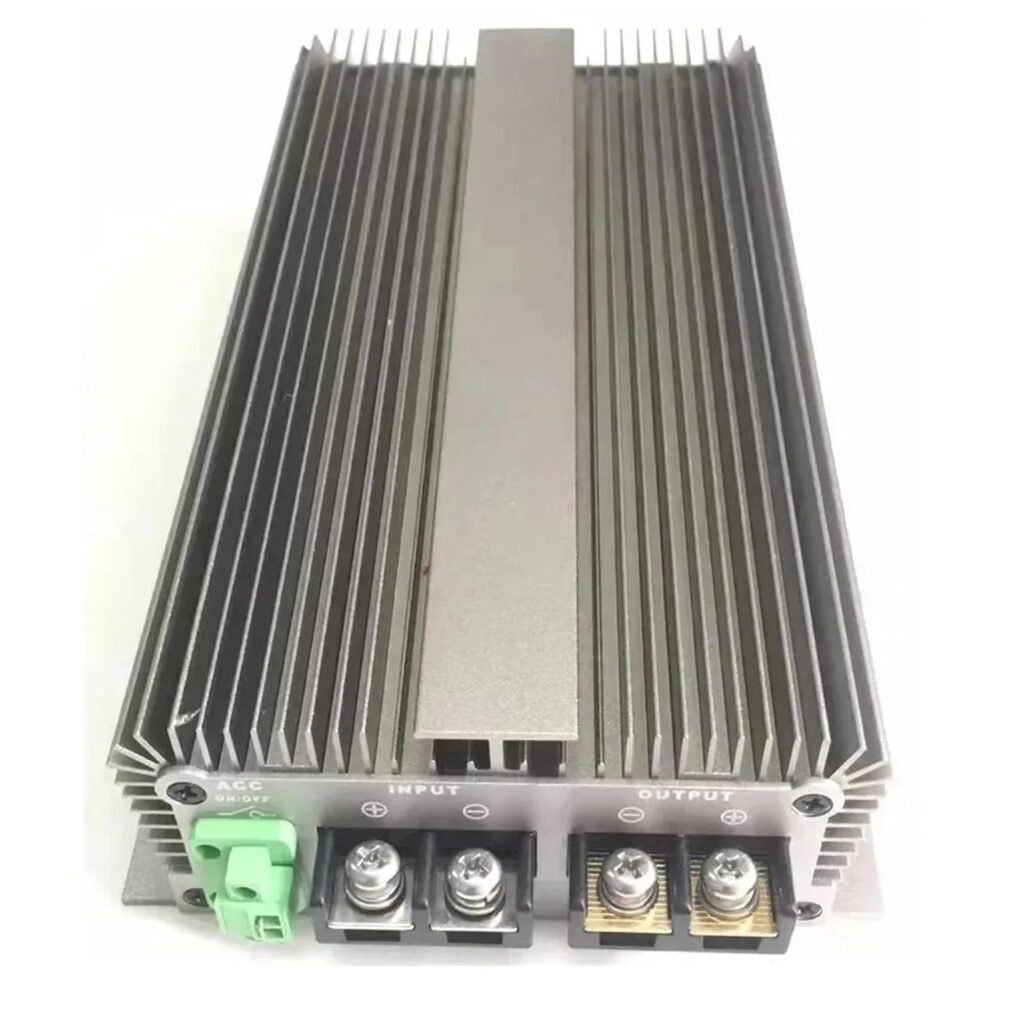
Efficiency and What It Means for Your System
With any DC‑DC converter, efficiency determines how much input power turns into useful output power instead of heat.
Understanding Losses in Step‑Up Conversion
Because you’re boosting 12V up to around 28–29V, the input current will be higher than the output current, multiplied by losses. For example:
- 20A at ~29V is about 580W output
- At, say, 90% efficiency, you’d need about 644W input
- At 12V, that’s roughly 53–54A input
This is a simplified calculation, but it shows you why you must treat your 12V wiring and alternator capacity seriously. Thin wires or a weak alternator will struggle.
How Efficiency Affects You Day‑to‑Day
Higher efficiency means:
- Less heat, which improves longevity
- Less strain on your 12V source
- Better performance under high loads or in hot environments
Even without an exact efficiency spec here, you should plan as though the charger pulls significant current on the 12V side, especially if you’re using the upper end of its output range.
Installation Considerations: How You Should Set It Up
Where and how you install this charger matters as much as the spec sheet. Poor installation can lead to voltage drops, overheating, or nuisance shutdowns.
Choosing the Right Location
You want a spot that:
- Stays dry and reasonably cool
- Has some airflow for the casing to shed heat
- Is close enough to the 12V source to minimize cable length and voltage drop
- Is accessible enough for maintenance or inspection
Common options are under a seat, in an equipment bay, or near the house battery bank in an RV or van conversion. Just avoid areas with standing water or direct engine heat if you can.
Wiring and Cable Sizing
Given that this is a step‑up converter, always remember: input current can be very high if you charge near full output.
You should:
- Use appropriately thick cables on both input and output, but especially between the 12V source and this charger
- Use short runs wherever possible
- Secure cables to avoid chafing or vibration damage
- Follow conservative guidelines or an online voltage‑drop calculator when in doubt
You’ll also want fuses or breakers on both sides to protect the wiring:
- On the 12V input side, size your fuse slightly above the maximum expected current, not the charger’s output
- On the 24–29V output side, fuse for the output amps (20A for this unit)
Compatibility With Different Battery Types
This charger is described for use with 28V lead‑acid and 29.2V LiFePO4. You need to be sure your actual batteries match what the charger can provide.
Using It With Lead‑Acid Auxiliary Batteries
With lead‑acid (AGM, GEL, flooded) at 28V:
- Your nominal system is often referred to as 24V
- Full charge for a 24V lead‑acid bank is usually around 28.2–29.0V
- This charger aims at a 28V range, which is within typical specs
You’ll want to verify:
- The exact float and absorption voltage recommended by your battery manufacturer
- Whether you’re okay with a single fixed output or whether you’d prefer a fully programmable charger
For most practical applications, the provided 28V range is fine for a workhorse 24–28V lead‑acid auxiliary battery.
Using It With LiFePO4 Auxiliary Batteries
For LiFePO4:
- A 24V LiFePO4 battery is usually a series string of 8 cells
- Full charge is typically 29.2V (3.65V per cell)
- This charger delivering 29.2V is right on target for most such packs
However, you should ensure:
- Your battery has a BMS that manages balancing and protection
- The BMS allows 29.2V as a charge limit (most do, but it’s worth confirming)
- You stay within the BMS’s recommended charging current
Because LiFePO4 is more tolerant of partial charging, you could also run at slightly shorter charge windows without harming the battery, which is handy if your drive times are short.
Use Cases: Where This Charger Really Shines
This type of DC‑DC charger is especially useful when you want a higher‑voltage auxiliary system without redesigning your entire electrical architecture.
In RVs and Campervans
If your rig has a 12V chassis system but you want:
- A 24V inverter for more efficient AC power
- A 24V battery bank for air conditioners, electric tools, or heavy DC loads
You can let your alternator charge the 24V bank by feeding it through this converter, avoiding the need for a 24V alternator swap.
You keep:
- A 12V starter battery for vehicle systems
- A 24–29V house battery for living and working power
The charger sits in between, managing charging on your behalf.
In Boats and Marine Setups
Boats often run on 12V systems but might need higher voltage for:
- Bow thrusters or winches
- Large inverters
- Dedicated navigation or communication gear
Using this DC‑DC charger, you can integrate a 24V house or equipment bank with your existing 12V alternator system while keeping things isolated and stable.
In Off‑Grid and Backup Power Systems
If you already have 12V solar installed but want to upgrade to a 24V or 28V battery bank for better inverter efficiency, this charger can bridge your existing 12V battery or DC bus to the new higher‑voltage bank.
You can:
- Keep legacy 12V loads
- Add a new 24V inverter and battery bank
- Use this DC‑DC charger to move power between the two worlds
It’s a flexible way to transition your system without ripping everything out at once.
Pros and Cons: What You’ll Like and What to Watch For
Like any piece of power electronics, this charger comes with strong advantages and a few caveats. Knowing both helps you make a more confident decision.
What You’re Likely to Appreciate
You stand to gain several clear benefits:
- True isolation of systems: Your 12V starter battery and 24–29V house battery stay electrically distinct, which improves reliability and safety.
- Correct charging voltage: Especially important for LiFePO4 at 29.2V and for lead‑acid at about 28V.
- Compact solution: Instead of installing a 24V alternator and rewiring, you add this charger to your existing setup.
- Scalable options: The series spans from 3A up to 100A, so you can choose a current rating that fits your battery bank size and alternator capability.
For many vehicle and off‑grid owners, it provides a simple path to multi‑voltage systems.
Limitations and Potential Drawbacks
There are also a few limitations you should plan around:
- High input current demand: To get 20A at around 29V, your 12V side will see a very high current draw. You must size cables and fuses properly.
- Fixed voltage profile: You do not have infinitely flexible voltage programming; you’re tied to the 28V and 29.2V ranges. That’s fine for supported chemistries but not ideal for unusual battery types.
- Heat generation: At high load, the unit can get warm. Poor ventilation shortens lifespan and may trigger thermal protection.
- Requires careful integration: This is not a simple plug‑and‑play phone charger; you are integrating a significant power device into your electrical system.
If you’re comfortable with DC wiring and system design, these aren’t deal‑breakers. You just need to treat the charger as a serious piece of hardware.
Safety Considerations You Should Keep in Mind
Any time you work with high‑current DC systems and batteries, safety should be front and center.
Overcurrent and Short‑Circuit Protection
You should always:
- Use appropriate fuses or circuit breakers close to the battery terminals on both sides of the charger
- Route cables cleanly and securely to avoid chafing and accidental shorts
- Verify polarity before making final connections; a reversed connection can damage equipment quickly
If the charger includes built‑in protection (overcurrent, over‑temperature), treat that as a backup, not your main protection layer.
Battery Protection and Manufacturer Guidelines
Each battery type has specific charging rules:
- Lead‑acid: Sensitive to overvoltage and long‑term overcharging; can vent gas if abused
- LiFePO4: More tolerant in some ways but dependent on a reliable BMS for safety
You should:
- Check your battery manufacturer’s recommended maximum charge current and voltage
- Confirm that 28V or 29.2V is within limits for your particular model
- Ensure that venting, enclosure space, and cabling meet or exceed recommendations
Following those guidelines improves performance and safety, and it usually protects your warranty as well.
Everyday Use: What It Feels Like to Live With This Charger
Once installed, your interaction with the charger is minimal. It’s designed to work quietly in the background while you use your vehicle or system normally.
Typical Operating Behavior
In day‑to‑day use, you can expect:
- The charger to kick in when your 12V source is active and above a certain threshold
- Stable output to your 24–29V auxiliary battery as long as your 12V side stays within acceptable limits
- Reduced or no charging when your primary battery is low, depending on how it’s wired and controlled
You might add:
- A manual switch or ignition‑controlled relay for when the charger is allowed to operate
- Monitoring equipment (voltmeters, shunts, or system displays) to keep track of charge status
Maintenance and Longevity
The charger itself is largely maintenance‑free, but you should periodically:
- Check that cables are still tight and free from corrosion
- Inspect for signs of overheating, discoloration, or physical damage
- Keep dust and debris away from cooling fins or any ventilation openings
Proper installation and periodic checks can keep this unit running for many years in a typical vehicle or off‑grid environment.
Is This Charger a Good Fit for Your Specific Setup?
Your situation is unique, so you want to match this product to your needs as precisely as possible.
Questions to Ask Yourself
You can quickly evaluate fit by asking a few practical questions:
- Do you have a solid 12V source (alternator, solar, or battery bank) that can spare the current this charger will draw?
- Are your auxiliary batteries 24–28V lead‑acid or 24V LiFePO4 designed to be fully charged at around 28–29.2V?
- What capacity are you charging? If it’s very large and you’re in a hurry, you might need a higher‑amp model of the same series.
- Are you comfortable with DC wiring? If not, you may want professional help with the installation.
If you can confidently answer yes to most of these, this 12V‑to‑28/29.2V DC‑DC charger can be a strong addition to your system.
When You Might Prefer a Different Option
You might want to consider alternatives if:
- Your auxiliary battery is not 28V lead‑acid or 29.2V LiFePO4 (for example, a 36V system or non‑standard voltage)
- You want a charger with fully programmable charging curves, data logging, or integrated displays
- Your alternator or 12V source is too weak to support the input current this charger will demand
- You have very limited space and need an ultra‑compact, combined inverter‑charger solution instead
In those cases, a different style of DC‑DC charger or a full inverter‑charger might serve you better.
Practical Tips for Getting the Best Results
To make this charger work smoothly in your system, you can follow some battle‑tested best practices.
Plan Your System as a Whole
Instead of treating the charger as an isolated box, think of it as one piece of a larger puzzle. Consider:
- Alternator size and total load (vehicle systems + charger + accessories)
- Cable runs, fuse locations, and how you’ll troubleshoot if something fails
- Future plans: Will you upgrade your battery bank or inverter later?
Designing with a bit of headroom (extra capacity in cables, fuses, and alternator output) makes your system more robust and less stressful to use.
Test and Monitor After Installation
Once everything is wired:
- Start with short, supervised test runs
- Monitor voltage and current on both the 12V side and the 24–29V side
- Feel the charger casing after an extended charge; it should be warm but not dangerously hot
- Confirm that your auxiliary battery reaches the expected full‑charge voltage and that your main battery is not being dragged too low
A bit of early testing helps you iron out issues before they become headaches on the road or at sea.
Overall Verdict: Who This Charger Is Really For
If you want a practical, system‑integrating DC‑DC charger that boosts 12V up to 28V for lead‑acid or 29.2V for LiFePO4, this product fits a very specific but important niche.
You’ll benefit the most if you:
- Already have a 12V vehicle, RV, boat, or off‑grid system
- Want to add a 24–28V auxiliary battery bank without converting everything to 24V
- Need a stable, controlled charging solution rather than makeshift voltage hacks
- Are comfortable with (or willing to hire help for) proper DC wiring and installation
You get a focused, functional DC‑DC charger designed to keep your auxiliary 28V lead‑acid or 29.2V LiFePO4 battery healthy while your 12V system keeps doing what it does best. If that’s the gap in your setup, this unit can be the missing link that finally lets your multi‑voltage system work the way you want it to.
Disclosure: As an Amazon Associate, I earn from qualifying purchases.