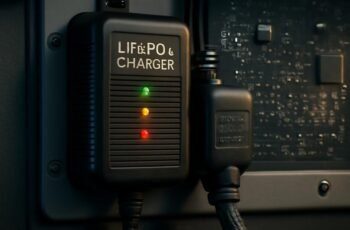
Imagine a LiFePO4 charger operating in a dusty, humid environment, with dust clogging vents and moisture seeping into internal components. Such conditions can subtly undermine its electrical and thermal stability over time. Understanding how dust, moisture, and corrosion interact with internal parts reveals the potential risks to reliability and efficiency. This insight underscores the importance of proper protection measures, prompting us to examine their specific impacts more closely.
Key Takeaways
- Dust accumulation obstructs vents and cooling fins, leading to higher temperatures and reduced charger efficiency.
- Moisture ingress causes short circuits and corrosion, degrading internal components and compromising electrical reliability.
- Corrosion on solder joints and contacts increases resistance, causing intermittent failures and decreased performance.
- Poor ventilation and environmental controls accelerate dust, moisture, and corrosion buildup, shortening charger lifespan.
- Regular cleaning and sealed environments help maintain thermal management and electrical integrity for safe operation.
How Dust Accumulates and Impacts Charger Performance
How does dust accumulation influence the performance of LiFePO4 chargers? Dust accumulation directly affects charger efficiency by obstructing critical components such as vents, cooling fins, and electronic interfaces. This buildup hinders heat dissipation, leading to higher operating temperatures that can degrade internal circuitry and reduce overall performance. Dust particles can also cause electrical insulation issues, increasing resistance and risking short circuits or component failure. The performance impact becomes more pronounced over time as dust layers thickens, impairing sensor accuracy and power regulation. Regular cleaning mitigates these effects, maintaining optimal thermal management and electrical integrity. In essence, dust accumulation compromises the reliability and lifespan of LiFePO4 chargers, emphasizing the importance of effective environmental controls and maintenance routines.
The Effects of Moisture Exposure on LiFePO4 Chargers
Moisture exposure substantially impacts the integrity and performance of LiFePO4 chargers by compromising their electronic components and thermal management systems. Moisture ingress can lead to short circuits, corrosion of circuit pathways, and degradation of sensitive electronics, reducing overall reliability. Elevated humidity levels accelerate moisture absorption, making humidity control essential in design and operation. Excess moisture can also impair thermal interfaces, causing inefficient heat dissipation and risking thermal runaway. Without proper sealing and environmental controls, even minor leaks allow moisture to penetrate critical areas, accelerating deterioration. Therefore, maintaining optimal humidity control and preventing moisture ingress are crucial for preserving charger functionality, extending lifespan, and ensuring safe operation under varying environmental conditions.
How Corrosion Develops and Deteriorates Internal Components
Ever wonder why corrosion poses such a severe threat to LiFePO4 charger components? It primarily results from corrosion chemistry interactions, where moisture and oxygen react with metals, forming corrosive compounds. This process weakens internal solder stress by compromising solder joints and connections. Specifically, corrosion accelerates through:
- Electrochemical reactions at vulnerable points, like solder joints and contact surfaces.
- Increased internal resistance due to corrosion buildup, reducing efficiency.
- Physical deterioration of conductive pathways, causing intermittent failures.
- Propagation of corrosion into adjacent components, exacerbating damage.
These processes deteriorate internal components’ structural integrity and electrical performance, potentially leading to complete failure. Understanding corrosion chemistry and solder stress is essential for designing more resilient LiFePO4 chargers and implementing effective preventative measures.
Practical Signs That Dust, Moisture, or Corrosion Are Causing Problems
Corrosion and contamination issues often manifest through tangible, observable indicators that can signal underlying damage within LiFePO4 chargers. Signs include visible dust accumulation, which can obscure contacts and increase resistance, and corrosion spots on terminals or circuit boards, indicating moisture intrusion. Additionally, irregularities such as short circuits or intermittent operation often correlate with moisture-related corrosion.
| Indicator | Cause | Effect |
|---|---|---|
| Dust buildup | Dust accumulation | Reduced airflow, heat retention |
| Corrosion spots | Moisture intrusion | Increased electrical resistance |
| Operational glitches | Dust/moisture | Intermittent connection issues |
Recognizing these signs early allows for targeted inspection and maintenance, preventing further deterioration caused by dust, moisture, or corrosion.
Effective Strategies to Protect Your Charger From Dust and Moisture
What are the most effective strategies to shield your LiFePO4 charger from dust and moisture? First, use sealed enclosures designed for electronic components, preventing dust accumulation and moisture ingress. Second, install desiccant packs inside the enclosure to absorb residual moisture and maintain optimal humidity levels. Third, position the charger in a controlled environment, away from high humidity or dusty areas, to minimize exposure. Fourth, implement regular inspections and cleaning protocols; sealing gaps and removing dust before it accumulates reduces long-term risk. These measures create barriers against environmental contaminants, ensuring the charger remains dry and dust-free. By addressing dust accumulation and moisture ingress proactively, we can extend the operational lifespan and maintain consistent performance of LiFePO4 chargers.
Maintenance Tips to Prevent Corrosion and Extend Charger Lifespan
Implementing consistent cleaning practices, such as removing dust and moisture, is essential to prevent corrosion. Proper storage, including controlled environments and protective coverings, further minimizes exposure risks. Applying protective coatings offers an additional barrier, prolonging the charger’s operational lifespan and maintaining optimal performance.
Regular Cleaning Practices
Have you considered how regular cleaning can markedly extend the lifespan of your LiFePO4 charger? Effective maintenance involves systematic dust control and moisture barrier management. To optimize charger longevity, we recommend:
- Regularly removing dust buildup with a soft brush or compressed air to prevent conductive dust accumulation.
- Inspecting and maintaining moisture barriers to ensure they remain intact, preventing moisture ingress.
- Wiping surfaces with a damp, lint-free cloth to eliminate residual dust while avoiding water contact with internal components.
- Applying dielectric or protective sprays where applicable to inhibit corrosion on exposed metal parts.
Adhering to these practices reduces corrosion risk and ensures optimal electrical contact, maintaining charger efficiency. Consistent cleaning is a proactive step against environmental damage, reinforcing the importance of meticulous preventive maintenance.
Proper Storage Methods
Proper storage methods play a crucial role in preserving the integrity of LiFePO4 chargers and preventing long-term damage. To minimize dust accumulation, we recommend storing chargers in sealed, dust-resistant containers or enclosures, reducing particulate buildup that can interfere with internal components. Moisture exposure is a primary contributor to corrosion, so chargers should be kept in dry environments with controlled humidity levels. Using desiccants within storage containers further mitigates moisture risks. Additionally, avoiding high humidity areas like basements or unventilated spaces is essential. Proper ventilation and climate control reduce the likelihood of condensation, which accelerates corrosion processes. Implementing these storage practices not only extends charger lifespan but also maintains optimal performance by protecting sensitive electronic parts from environmental stressors.
Protective Coating Applications
Could applying protective coatings substantially enhance the durability of LiFePO4 chargers? Yes, effective coating selection can mitigate dust control issues and prevent moisture ingress, reducing corrosion risks. Proper coatings form a barrier that shields critical components from environmental exposure. When choosing a coating, consider these factors:
- Compatibility with the charger’s materials and operating conditions
- Resistance to humidity and dust accumulation
- Ease of application and adhesion properties
- Longevity and maintenance requirements
Choosing the Right Environment for Safe and Efficient Charging
Creating an optimal charging environment requires ensuring proper ventilation to prevent heat buildup and moisture accumulation. Maintaining a clean space minimizes dust and debris that can compromise electrical connections and promote corrosion. By controlling these factors, we can enhance charger safety, efficiency, and longevity.
Ensuring Proper Ventilation
Have you considered how the environment impacts the safety and efficiency of LiFePO4 charging? Proper ventilation is essential to prevent heat buildup and moisture accumulation, which can accelerate dust buildup and corrosion. To optimize airflow, we recommend:
- Positioning chargers in well-ventilated areas with unobstructed airflow paths.
- Using vents or exhaust fans to enhance airflow and dissipate heat.
- Maintaining a consistent temperature range to avoid thermal stress.
- Avoiding enclosed spaces where dust and moisture can stagnate, reducing the risk of corrosion.
Effective airflow optimization minimizes dust accumulation on critical components, ensures consistent operating temperatures, and prolongs charger lifespan. Adequate ventilation is a technical necessity for maintaining safe, reliable, and efficient LiFePO4 charging conditions.
Maintaining Clean Environment
Maintaining a clean environment is essential for ensuring the safety and efficiency of LiFePO4 charging systems. Effective dust management minimizes particulate contamination that can cause electrical faults or overheating. Environment control involves regulating humidity levels to prevent moisture infiltration, which can accelerate corrosion and compromise connections. We must prioritize a sealed, well-ventilated space that reduces airborne dust and maintains stable temperature and humidity conditions. Proper filtration and regular cleaning prevent dust accumulation on critical components, while humidity controls inhibit moisture-related corrosion. By implementing strict environment control measures, we reduce risks of electrical malfunctions and extend the lifespan of charging equipment. A clean, controlled environment is fundamental for optimal operation, safety, and reliable performance of LiFePO4 chargers.
Frequently Asked Questions
Can Dust or Moisture Void the Charger’s Warranty?
Dust exposure and moisture ingress typically void the charger’s warranty, as they can cause internal damage. We recommend keeping chargers in dry, dust-free environments to maintain warranty validity and ensure optimal performance over time.
Are There Specific Materials That Resist Corrosion Better?
Corrosion-resistant materials act like armor for chargers, especially when used in protective enclosures, effectively shielding against environmental damage. We recommend materials like stainless steel or specialized polymers for optimum resistance, ensuring longevity and reliable performance in harsh conditions.
How Often Should I Inspect My Charger for Damage?
We recommend inspecting your charger monthly for dust damage and moisture ingress, as these factors can compromise internal components and accelerate corrosion, reducing efficiency. Regular checks help ensure optimal performance and extend your charger’s lifespan.
Do Outdoor Chargers Require Special Protective Enclosures?
Outdoor chargers require special protective enclosures to prevent dust exposure and moisture ingress, which can lead to corrosion and compromised performance. Proper enclosures ensure operational reliability by safeguarding critical components from environmental elements.
Can Improper Storage Increase the Risk of Internal Corrosion?
Improper storage increases the risk of internal corrosion by allowing dust accumulation and moisture ingress, which can create conductive paths, accelerate chemical reactions, and compromise charger integrity, ultimately reducing performance and lifespan of LiFePO4 chargers.
Conclusion
In conclusion, safeguarding our LiFePO4 chargers from dust, moisture, and corrosion isn’t just important—it’s vital to prevent catastrophic failures that could rival the end of the world. By implementing proper environmental controls, regular maintenance, and vigilant inspection, we can guarantee optimal performance and longevity. Staying proactive allows us to avoid the silent, destructive forces that threaten to undermine our systems, keeping our charging infrastructure resilient and reliable for years to come.