Have you been searching for a smart, reliable battery management system that lets you really trust your DIY battery setup?
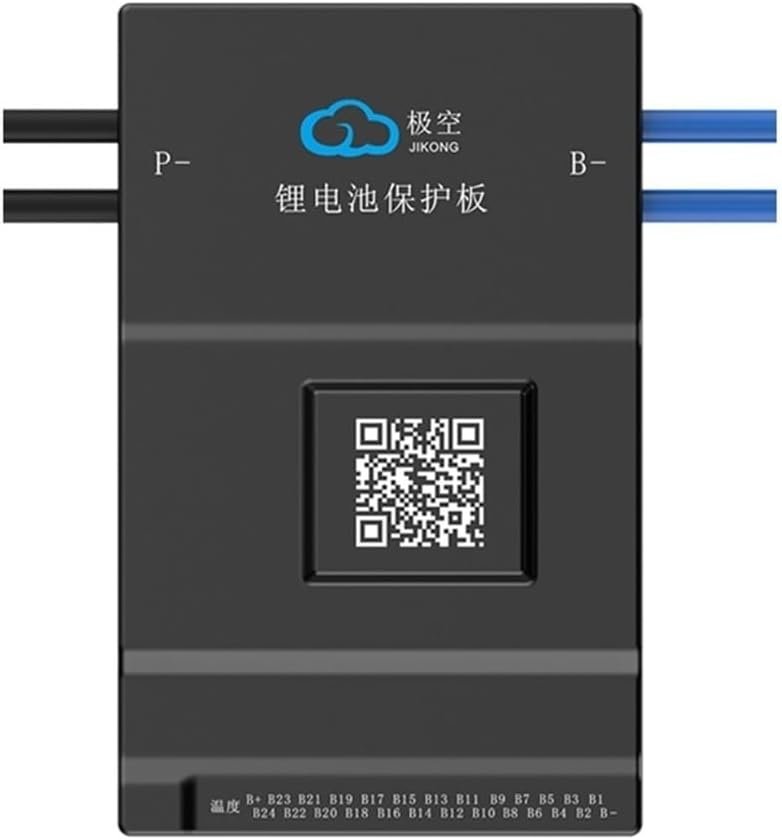

What You Need to Know About the JK Active Balance BMS
You care about performance, safety, and longevity when you build or upgrade a battery pack. The JK Active Balance BMS 8S 10S 12S 16S 17S 20S 24S (JK-B1A20S15P) is designed for users like you who want more than just basic protection. You get active balancing, an intelligent app, and flexible configuration for a wide range of voltages and chemistries.
Instead of just protecting your battery from obvious failures, this BMS helps you use more of your battery’s capacity, extend its lifespan, and monitor it in real time.
Key Features at a Glance
You want a clear overview before deciding if this BMS fits your project. Here is a breakdown of the main features in a simple table so you can quickly compare what matters to you.
| Feature Category | What You Get |
|---|---|
| Supported Series (S) | 8S / 10S / 12S / 16S / 17S / 20S / 24S |
| Max Current Options | 60A, 100A, 150A, 200A (model-dependent) |
| Battery Chemistries | LiFePO4, Li-ion, LTO |
| Balancing Type | Smart active balancing (0.6–2A active balance current) |
| Efficiency | Up to 99% usage efficiency through active voltage equalization |
| Communication | Bluetooth (BT) with dedicated JK smartphone APP |
| Protections | Over-charge, over-discharge, over-current, short circuit, low-temp charge cut-off |
| Application Range | Typical systems: 12V (4S), 24V (8S), 48V (16S), 72V (24S) |
| Intended Use | DIY battery systems, off-grid, solar, energy storage, e-mobility, etc. |
This BMS gives you the building blocks for a professional-grade battery pack, while still being approachable for a hands-on DIY user.
Understanding Active Balancing and Why It Matters
You might already know that cell balancing is important, but the type of balancing makes a big difference in how efficient and reliable your battery pack becomes.
Passive vs Active Balancing
Most low-cost BMS units use passive balancing, which simply burns excess energy from higher-voltage cells as heat. That keeps cells fairly equal, but you waste energy and balancing can be slow, especially with large packs.
The JK Active Balance BMS uses smart active balancing, which transfers energy from higher-voltage cells to lower-voltage cells. This has a few important advantages for you:
- You keep more usable capacity in your pack instead of turning it into heat.
- Balancing is more efficient (up to 99% usage efficiency claimed).
- Your cells age more evenly and more slowly.
If you have invested in quality cells, active balancing helps you protect that investment and use as much of it as possible.
What 0.6–2A Active Balance Current Means for You
The BMS supports an active balancing current from 0.6A up to 2A (depending on conditions and model). That current level is strong enough to be practical for medium to large packs, not just tiny battery banks.
For you, this means:
- Faster equalization after a deep discharge or a heavy load event.
- Less time near the voltage extremes where cells are more stressed.
- Better consistency between cells over the life of the pack.
In real terms, you get a more stable battery that stays balanced even when you use it hard.
Supported Configurations: 8S to 24S in One System Family
Battery projects are seldom “one size fits all.” You may want a simple 12V system now, but later decide to build a 48V or 72V bank. One of the strengths of this product line is its broad range of series configurations.
Series Counts and Typical System Voltages
The JK Active Balance BMS family supports 8S, 10S, 12S, 16S, 17S, 20S, and 24S configurations. That gives you a lot of flexibility for different system voltages and chemistries.
Here is how those series counts typically line up:
| Series Count | Common System Voltage* | Typical Use Cases |
|---|---|---|
| 4S (related product range) | ~12.8V LiFePO4 / ~14.8V Li-ion | Small 12V systems, backup, camping, marine |
| 8S | ~24V LiFePO4 / ~29.6V Li-ion | 24V solar, small inverters, mobility |
| 10S | ~36V Li-ion | E-bikes, small EVs, portable tools |
| 12S | ~38.4V LiFePO4 / ~44.4V Li-ion | Medium e-mobility, mid-size packs |
| 16S | ~51.2V LiFePO4 / ~59.2V Li-ion | 48V solar systems, home storage, inverters |
| 17S | ~62.9V Li-ion | High-voltage packs, certain EV setups |
| 20S | ~64V LiFePO4 / ~74V Li-ion / LTO variants | High-power projects, larger EV, tools |
| 24S | ~76.8V LiFePO4 / ~88.8V Li-ion / LTO variants | 72V-class systems, large e-mobility, storage |
*Exact voltages vary by chemistry and charge profile.
You can match the BMS version to your specific pack design rather than compromising on cell count.
Chemistry Compatibility: LiFePO4, Li-ion, and LTO
This BMS supports three main chemistries:
- LiFePO4 (LFP) – Most common for stationary storage, RVs, and off-grid.
- Li-ion (NMC/NCA and similar) – Common in e-bikes, EVs, and tools.
- LTO (Lithium Titanate) – Less common but prized for cycle life and safety.
Each chemistry has different voltage ranges and charging requirements. The benefit for you is that the BMS is not locked into a single battery type. You can tune it to your cells (within the supported range) rather than forcing your cells to fit a fixed setting.
Protection Features That Keep Your System Safe
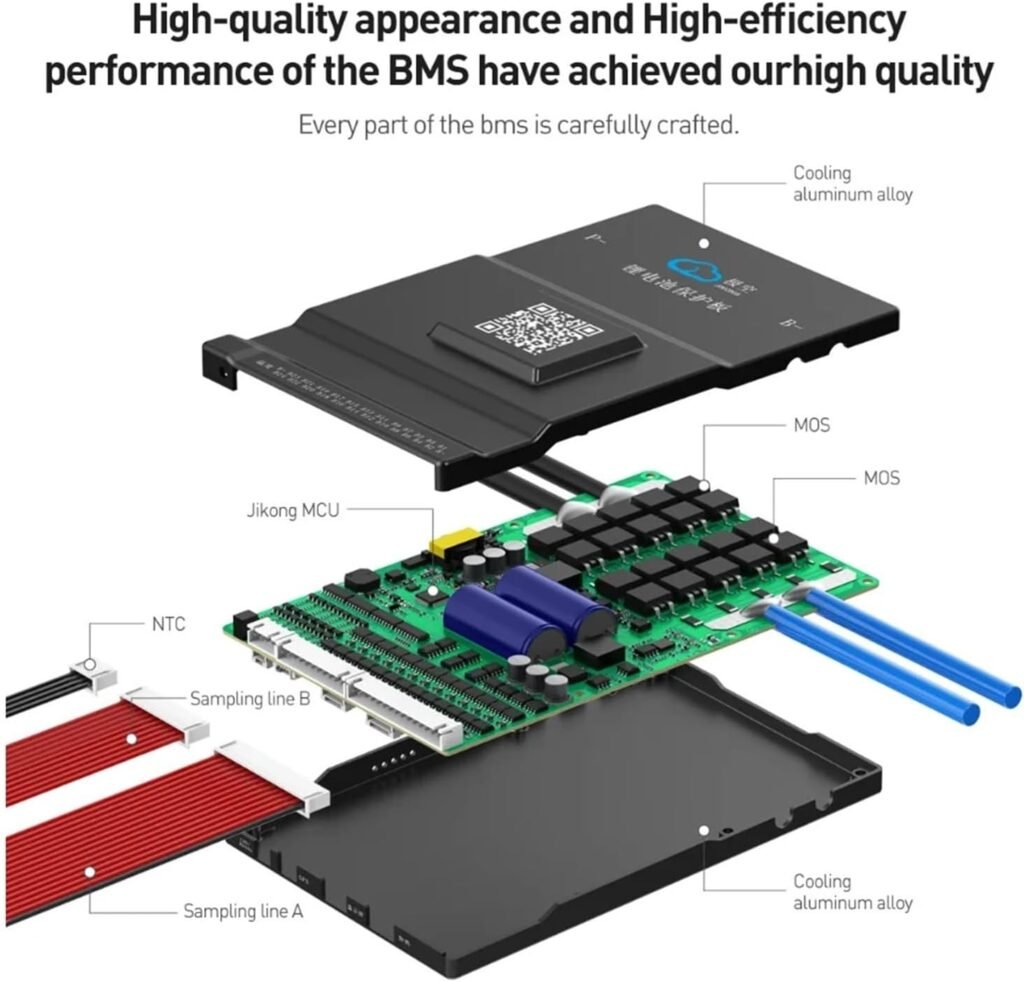
You build batteries to use them, but you also need peace of mind. This BMS goes beyond balancing to add multiple layers of protection.
Over-Charge and Over-Discharge Protection
Over-charging and over-discharging are two of the main ways to ruin lithium cells. The JK Active Balance BMS tackles both:
- Over-charge protection shuts off charging when a cell’s voltage exceeds the safe limit you set (or the default limit).
- Over-discharge protection disconnects the load when any cell drops too far.
This protects you from:
- Swelling or permanent damage to cells.
- Capacity loss from repeated deep discharges.
- Dangerous voltage conditions under load or charge.
By stopping charging and discharging at the right times, your BMS guards the health of your pack over thousands of cycles.
Over-Current and Short-Circuit Protection
High current is great when it is intentional and under control. But unexpected surges or short circuits can destroy cells and electronics in an instant.
The JK BMS provides:
- Over-current protection – Limits sustained current to the rated value (60A, 100A, 150A, or 200A, depending on your model).
- Short-circuit protection – Rapid shutoff if it detects a severe, sudden fault.
For you, this means:
- Less risk of melted wiring, connector damage, or fire if something goes wrong.
- An additional safety layer if a device on your system fails or is wired incorrectly.
Low Temperature Charging Cut-Off
Charging lithium batteries when they are too cold can damage them permanently. Many cheaper BMS units ignore this, leaving the responsibility fully on you.
This JK BMS includes low temperature charging cut-off, which:
- Prevents charging when the pack is below a defined temperature.
- Helps you protect LiFePO4 or Li-ion packs in cold climates or unheated locations.
Your cells get an extra safeguard against silent, slow damage in winter conditions.
JK’s Own Smartphone APP and Bluetooth Connectivity
When you are building a modern battery system, you should not be blind to what is happening inside your pack. A dedicated app can make a huge difference in how confident you feel.
Real-Time Monitoring in the Palm of Your Hand
The JK Active Balance BMS includes Bluetooth (BT) communication and works with the JK own development APP. This means you can see:
- Per-cell voltages
- Pack voltage and current
- State of charge (SOC) estimates
- Temperature readings
- Protection status (which protections triggered, if any)
- Balancing activity
Instead of guessing, you can check your phone and know exactly what is happening.
Configurable Settings and Fine-Tuning
Through the JK APP, you also get more BMS settings and adjustment options. While details can vary by firmware and model, typically you can adjust or view:
- Charge and discharge cut-off voltages
- Over-current thresholds
- Temperature thresholds for charge and discharge
- Balancing parameters
- Communication or display options
You are not stuck with fixed, generic limits. You can tune the BMS to better match your specific cells, wiring, and application.
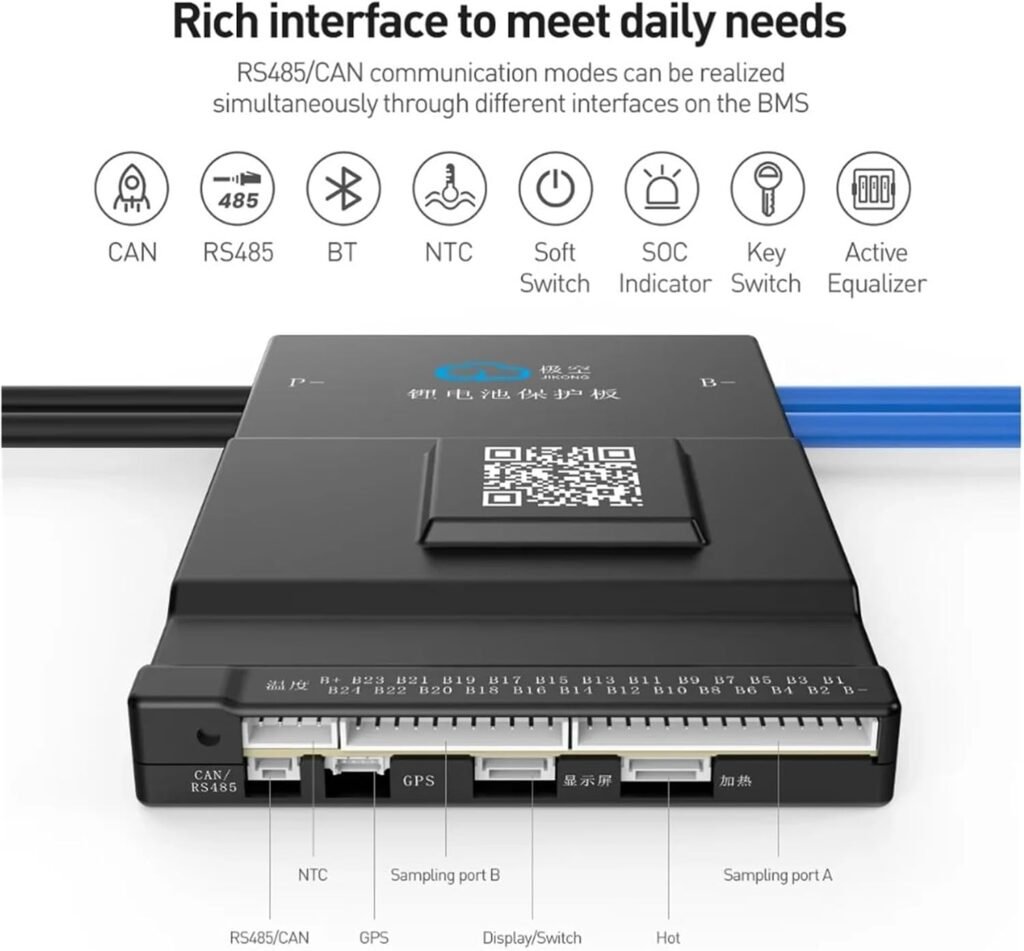
Current Ratings: 60A, 100A, 150A, 200A Options
Not every battery system needs the same current capacity. The JK BMS line covers a range of max current ratings so you can choose one that matches your actual needs.
Matching the BMS to Your Load and Charger
You will find models rated around 60A, 100A, 150A, and 200A. To pick the right one, you should consider:
- Your maximum continuous load (inverter, motor controller, etc.).
- Your peak surge currents during startup or acceleration.
- Your charging current from solar, charger, or generator.
As a rule of thumb:
- 60A – Small systems: lighting, small inverters, light RV loads.
- 100A – Typical 12V or 24V off-grid systems, moderate inverters.
- 150A – Larger inverters or mid-size EV or cart projects.
- 200A – High demand setups, larger inverters, heavier e-mobility.
Choosing a model with a suitable margin above your expected continuous current protects the BMS from running at its limit all the time.
Why Proper Sizing Protects Your Investment
If you undersize the BMS, you can trigger over-current cutoffs under heavy load, or even overheat components. If you oversize massively, you may spend more than you need and still have wiring or cell limitations.
By selecting a BMS rating that matches your real-world usage, you get:
- Reliable protection without nuisance shutdowns.
- Reasonable thermal performance.
- Longer life for both the BMS and cells.
Think of the BMS as the “traffic controller” for your battery current. You want it to be strong enough to handle the flow without constantly sitting at 100% capacity.
Where You Can Use the JK Active Balance BMS
The product description highlights wide use and a wide range of models. That flexibility lets you apply this BMS to many types of projects.
Off-Grid Solar and Home Energy Storage
For 12V, 24V, 48V, and 72V systems, this BMS is a strong candidate:
- 12V / 4S range – Small solar setups, camping power, backup lights.
- 24V / 8S – More efficient wiring for modest off-grid cabins or vans.
- 48V / 16S – Common for larger solar arrays and home storage.
- 72V / 24S – Higher voltage for efficient power transfer and big inverters.
You get:
- Active balancing to keep your pack healthy even through daily cycling.
- Protection features that work with inverters and chargers.
- Real-time monitoring through the APP so you can track performance and catch issues early.
RV, Van, and Marine Power Systems
If you live in an RV, van, or use a boat, you know how important reliable power is. A JK Active Balance BMS used with LiFePO4 or Li-ion cells gives you:
- Strong protection against over-discharge when loads run longer than expected.
- Better capacity utilization thanks to active balancing.
- Bluetooth access so you do not have to open compartments just to see what is going on.
You can build a custom pack that beats most off-the-shelf batteries in flexibility and visibility.
E-Bikes, Scooters, Carts, and Small EV Projects
For 10S, 12S, 16S, 17S, 20S, or 24S Li-ion packs, you can apply this BMS in e-mobility or small EV projects (as long as currents and voltages match your design):
- E-bikes or scooters with non-standard voltages.
- Golf carts and utility carts using LiFePO4 packs instead of lead-acid.
- Small custom EV conversions.
You gain the ability to watch your pack in real time and keep cells well balanced despite frequent charge and discharge cycles.
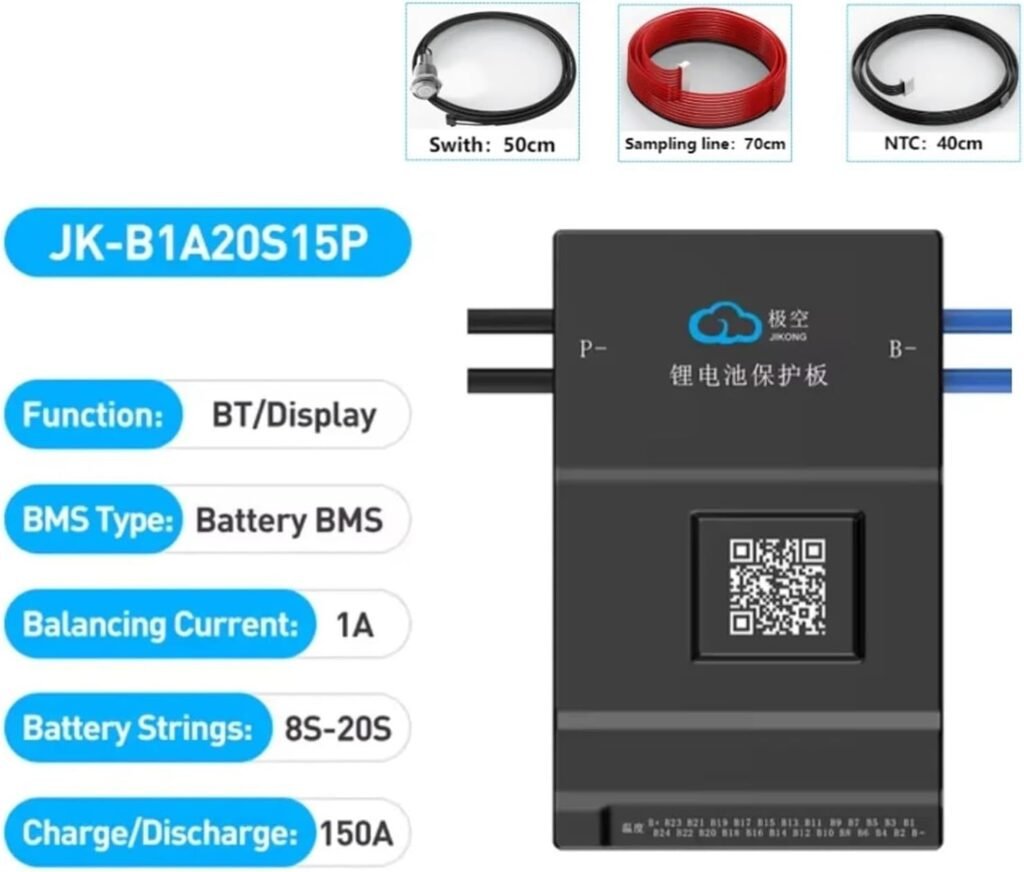
Unique Design for Safer Use
The description calls out a “UNIQUE DESIGN” that focuses on safe use. You know that even a good BMS cannot save a bad build, but a well-designed BMS can significantly reduce risk.
The Importance of Choosing the Correct Protection Board
You are explicitly reminded that choosing the correct protection board and applying it appropriately is vital to the longevity of your batteries. This is where your planning really matters:
- Match the series count (S) to your cell configuration.
- Match the current rating (A) to your maximum loads.
- Select the chemistry configuration that matches your cells (LiFePO4, Li-ion, LTO).
- Install according to the wiring diagram and manual; do not guess.
When you take these steps, the BMS can do its job properly and your cells can last many years.
Safe Wiring and System Design
A unique or thoughtful design usually includes:
- Clear connection points for each series cell group.
- Logical layout for high-current paths.
- Built-in protections that trigger cleanly and predictably.
You still need:
- Proper wire gauges for the rated current.
- Quality connectors and fuses where appropriate.
- Good mechanical mounting to avoid vibration damage.
The BMS is a critical component, but your overall build quality determines how safe and reliable your system truly becomes.
How the JK Active Balance BMS Extends Battery Life
The promise of “raising the battery usage efficiency to 99%, providing the battery a longer life” might sound ambitious, but there are real mechanisms behind that claim.
Maximizing Usable Capacity
Cell imbalance is one of the main reasons you lose capacity over time. Without active balancing:
- The weakest or highest-voltage cell hits the limit first.
- The BMS must cut charge or discharge early.
- You leave energy unused in the rest of the pack.
With smart active balancing, the BMS keeps cells closer together in voltage. As a result:
- You can charge to a higher overall pack level safely.
- You can discharge deeper without over-stressing individual cells.
- Your effective usable capacity gets closer to what you paid for.
Reducing Stress on Individual Cells
When some cells are consistently higher or lower than others, they are under more stress. Over time, those cells:
- Lose capacity faster.
- Build up internal resistance.
- Become the limiting factor for the whole pack.
By actively moving charge from stronger cells to weaker ones, this BMS helps:
- Equalize wear across the pack.
- Reduce the number of “problem cells” you see over time.
- Slow down the rate at which capacity fades.
You end up with a pack that stays more evenly matched and performs better for longer.
Real-World Usability and Day-to-Day Experience
You want to know how it actually feels to use this BMS once your pack is built and running. While each installation is different, certain strengths and patterns stand out.
Monitoring Gives You Confidence
The ability to check your phone and immediately see:
- Cell voltages
- Pack current
- Charge/discharge status
- Alerts or faults
gives you peace of mind that a “black box” system cannot match. Instead of guessing why your inverter cut out, you can look at the app and see whether:
- A low-voltage cut-off triggered.
- An over-current event happened.
- A temperature limit was reached.
That saves you time, protects your hardware, and helps you diagnose issues quickly.
Active Balancing Reduces Maintenance
Without active balancing, many DIY users eventually need:
- Manual re-balancing with external chargers or resistors.
- Cell replacement or reconfiguration.
- Frequent monitoring to catch drift early.
With the JK Active Balance BMS, the system does a lot of that work for you. You still need to keep an eye on things, but you no longer have to intervene as often for balancing issues.
Pros and Cons of the JK Active Balance BMS
No product is perfect, and you want a balanced view before deciding.
Advantages You Benefit From
Here are some clear strengths:
- Smart active balancing – Energy is transferred between cells instead of wasted as heat.
- High efficiency – Better usage of your pack’s capacity (up to 99% usage efficiency claimed).
- Wide configuration range – 8S to 24S support across the product family.
- Supports multiple chemistries – LiFePO4, Li-ion, and LTO.
- Strong protection feature set – Over-charge, over-discharge, over-current, short-circuit, low-temp charging cut-off.
- Bluetooth and dedicated APP – You can see and adjust battery parameters easily.
- Suitable for DIY systems – Ideal for custom packs at 12V, 24V, 48V, and 72V levels.
These strengths make it a very attractive choice if you are serious about building a dependable pack rather than just a quick test setup.
Limitations and Considerations
There are also considerations you should keep in mind:
- Complexity – With more functionality comes a steeper learning curve; you must understand configuration and wiring.
- Model selection – You must carefully choose the version (series count and current rating) that matches your specific project.
- Dependence on APP and BT – While convenient, you rely on the app being supported and compatible with your device.
- Installation quality matters – A great BMS cannot make up for poor wiring or mismatched cells.
If you are willing to spend some time understanding the system and planning your build, these limitations are manageable.
Tips for Choosing and Using This BMS Successfully
To get the most out of the JK Active Balance BMS, you should follow a few practical guidelines.
Choose the Right Variant for Your Project
Before ordering, clearly define:
- Cell count – How many series cells (S) are in your pack?
- Chemistry – Are your cells LiFePO4, Li-ion, or LTO?
- Current needs – What is your maximum continuous current, and what are your peak surges?
- System voltage – 12V, 24V, 48V, 72V-class, or something more custom?
Matching those answers to the correct BMS model (for example, 16S/48V LiFePO4 at 150A) is critical. If you are unsure, give yourself some current headroom without going wildly beyond what your cables and hardware can safely handle.
Wire and Configure Carefully
When you install the BMS:
- Follow the official wiring diagram for your exact model and series count.
- Connect all cell sense wires in the correct order and polarity.
- Use appropriate fuses, disconnects, and wire gauges for your current levels.
- Double-check your work before applying power.
Once wired, use the JK APP to:
- Verify that all cell voltages read correctly.
- Set appropriate charge and discharge limits for your chemistry.
- Confirm that protection thresholds match your needs and device ratings.
A careful first setup prevents many headaches later.
Is the JK Active Balance BMS a Good Fit for You?
If you want a BMS that simply cuts off at high or low voltages, there are cheaper, more basic options. This product stands out when you want:
- Active balancing to preserve capacity and extend cell life.
- Smart monitoring and configuration via Bluetooth and a dedicated app.
- Flexible support for many series counts and chemistries.
- Robust protections for both everyday use and fault conditions.
You do need to be comfortable with:
- Reading wiring diagrams.
- Planning system voltages and currents carefully.
- Taking responsibility for safe DIY battery construction.
If that describes you, the JK Active Balance BMS 8S 10S 12S 16S 17S 20S 24S (JK-B1A20S15P) can be a powerful and friendly tool in your battery-building toolkit. It lets you see what is happening in your pack, protect it, and make the most of your investment in quality cells, whether you are powering a home, a vehicle, or an off-grid adventure.
Disclosure: As an Amazon Associate, I earn from qualifying purchases.