Have we ever wished our lithium battery packs could stay perfectly balanced with almost no effort from us?
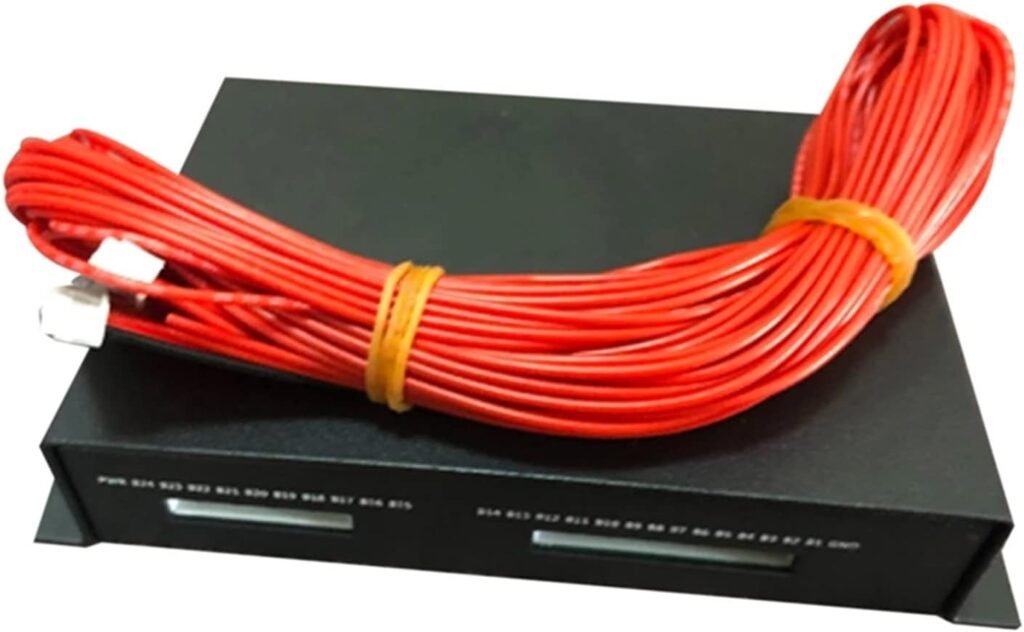

What Is the JK Battery Equalizer Active Lithium Battery Equalizer?
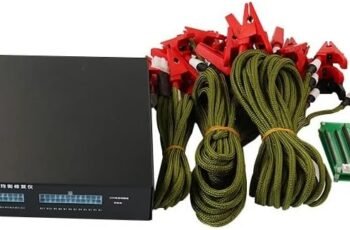
This product is an active balancer and BMS companion designed to keep our lithium battery cells in sync and protected. Instead of letting some cells overwork while others coast, this unit continually moves energy between cells to even things out.
We use it alongside lithium packs like Li-ion, LiFePO₄, and LTO, in configurations from 2S up to 24S. For those of us building DIY battery systems, this kind of tool can turn a basic pack into a smart, efficient, and longer-lasting energy system.
Key Features at a Glance
Before we get deeper into performance and practicality, it helps to have a quick snapshot of what this unit offers. This overview gives us a simple way to compare it with other balancers or BMS setups we might be considering.
| Feature | Description |
|---|---|
| Product Name | JK Battery Equalizer Active Lithium Battery Equalizer JK Balance BT 2S–24S BMS |
| Supported Chemistries | Li-ion, LiFePO₄, LTO |
| Supported Cell Count | 2S to 24S (2–24 series cells) |
| Current Rating (System) | 100A–350A (compatible with high-current systems) |
| Balancing Type | Active balancing with DC transfer |
| Balancing Current | Approx. 0.6–2A active DC current |
| App Support | JK own-developed mobile app with Bluetooth communication |
| Battery Protections | Overcharge, over-discharge, over-current, short circuit, low-temperature charge cut-off |
| Typical System Voltages | 12V (4S), 24V (8S), 48V (16S), 72V (24S) |
| Intended Use | DIY battery builds, energy storage, off-grid, and high-demand lithium applications |
| Color / Version | 1A variant (as specified in the listing) |
This table gives us a solid foundation. Now we can look at how these features actually feel in day-to-day use with real DIY systems.

Design and Build Quality
The overall design focuses on functionality and reliability more than flashy aesthetics. When we hold it in our hands, it feels like a device intended to be hidden in a battery cabinet and forgotten—until we open the app.
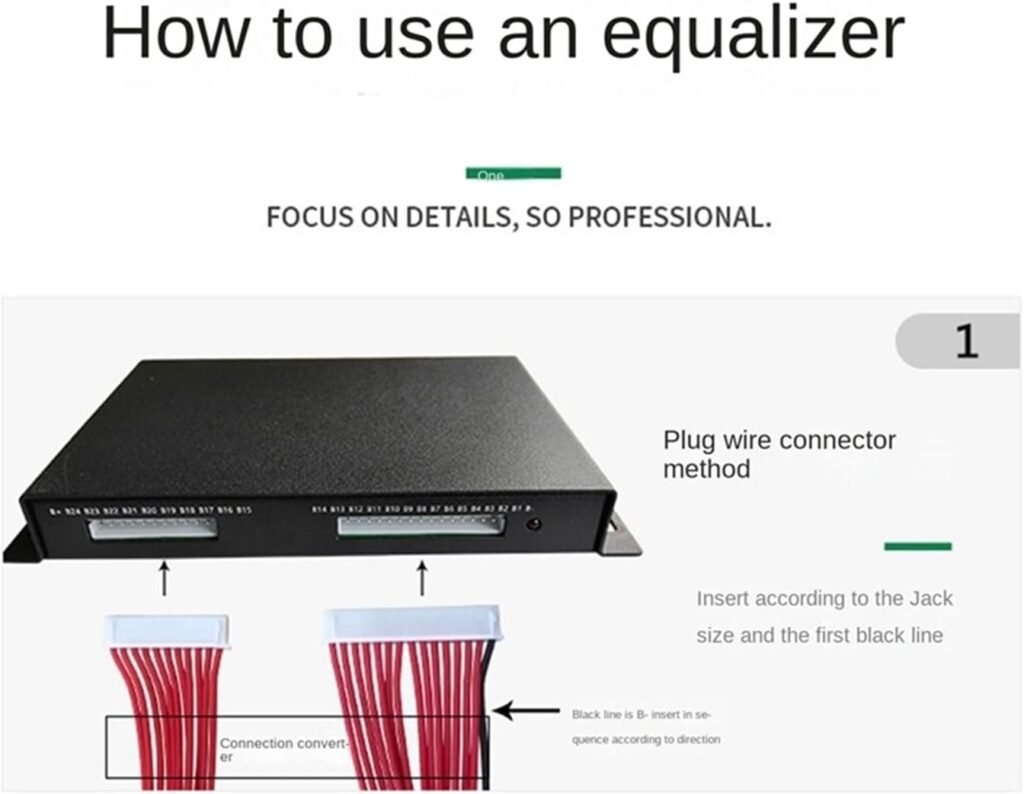
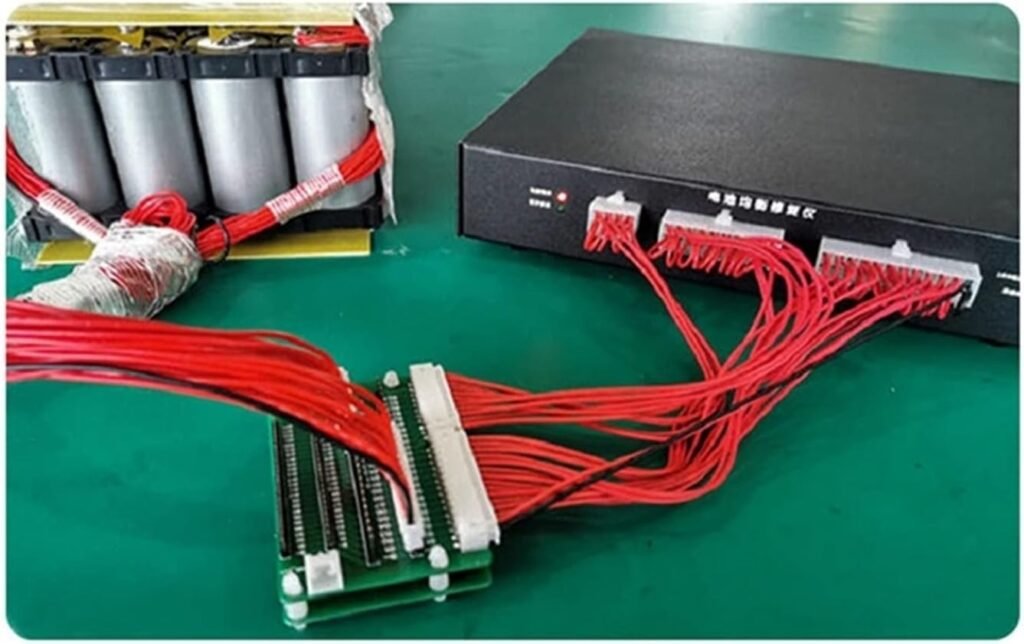
Connections are clearly labeled, which helps reduce wiring mistakes. The layout supports up to 24 cells in series, so we see a neat row of terminals or connectors that correspond directly to our cell sequence. For anyone who has dealt with confusing BMS wiring diagrams, a clear and logical layout is a relief.
Materials and Construction
The unit is built with durability in mind, using electronic components appropriate for handling high current and frequent balancing. The housing is generally solid enough for indoor use in typical battery enclosures or racks.
We still want to protect it from dust, moisture, and mechanical stress, but for a device living inside a battery box or power cabinet, its robustness feels suitable. We are not dealing with a rough field tool; this is more of a precise, always-on control device.
Physical Footprint and Installation Flexibility
In practical terms, the size is compact enough to fit into most DIY battery builds without forcing us to redesign everything. We can mount it near our cells, inside a battery cabinet, or on a backplane with our inverter and breakers.
Its footprint works nicely alongside JK BMS hardware, so if we already have JK gear, the integration feels tidy. Cable runs stay manageable, and we can keep our sense wiring organized without a spaghetti disaster.
Supported Battery Chemistries and Systems
One of the strongest reasons we might choose this product is its flexibility with different lithium chemistries and system sizes. It does not lock us into one specific type of pack.
LiFePO₄, Li-ion, and LTO Compatibility
We can use this equalizer with:
- LiFePO₄ (LFP) packs, which are very popular for off-grid and home energy storage.
- Standard Li-ion packs, found in many portable and high-energy-density applications.
- LTO (Lithium Titanate Oxide), which some of us use for extreme cycle life and fast charging.
Each chemistry has its own cell voltage range, and the JK system is designed to accommodate that through configuration. This means one tool can serve multiple projects as our needs evolve.
System Voltage Ranges (12V, 24V, 48V, 72V)
We are not limited to a single voltage standard. The equalizer supports:
- 12V systems (typical 4S LiFePO₄)
- 24V systems (8S)
- 48V systems (16S)
- 72V systems (24S)
This is especially appealing if we are planning to expand in the future. Maybe we start with a 12V setup for a small van or cabin and later move to a 48V home system. Keeping the same brand and similar tools helps reduce our learning curve over time.
Active Balancing vs Passive Balancing
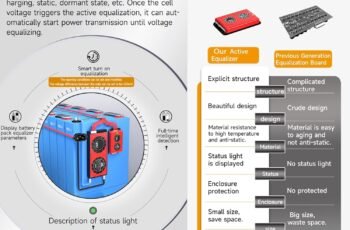
Balancing is where this product really stands out. Many entry-level BMS units only do passive balancing: they bleed excess energy off high cells as heat. This active equalizer works differently.
How JK Active Balancing Works
Instead of wasting energy as heat, the JK active equalizer uses an active DC transfer method. It takes energy from higher-voltage cells and moves it to lower-voltage cells. This process:
- Reduces energy loss.
- Keeps cells closer in voltage during charge and discharge.
- Supports higher usable capacity from the same battery pack.
We are essentially reusing our own energy internally, rather than throwing it away through resistors.
Why Active Equalization Matters
Active balancing has several benefits that we appreciate more as our battery systems age:
- Better capacity utilization: When all cells are closely matched, we can use more of the total stored energy safely.
- Reduced stress on individual cells: We avoid situations where one weak cell hits low-voltage cut-off too early and limits the entire pack.
- Improved longevity: By keeping cells synchronized, we reduce imbalances that can accelerate degradation.
The manufacturer claims efficiency around 99% for balancing energy transfer. While real-world conditions may vary slightly, the principle still holds: far less waste and smoother cell behavior.
Balancing Current and Performance
The advertised active DC current of around 0.6–2A might not sound huge at first, but in balancing terms, it is actually quite robust.
0.6–2A Active DC Current in Real Use
With up to roughly 2A per active balancing path, the equalizer can correct meaningful deviations in cell voltage, even on fairly large packs. Passive balancers often operate at only a few hundred milliamps or less.
With this current range, we can:
- Recover from moderate imbalance over a reasonable number of cycles.
- Maintain near-perfect balance during regular charge/discharge use.
- Improve consistency across parallel strings when used thoughtfully.
This is one of the reasons many DIY builders gravitate toward JK active balancers when they step up from cheap BMS boards.
Effect on Pack Stability and Capacity
In practical operation, we tend to notice:
- Tighter voltage differences between cells at top of charge and under load.
- More consistent state-of-charge estimation, since the pack behaves more uniformly.
- A sense of trust that no single cell is being over-pushed in the background.
Especially with larger systems (48V, 72V) or high-current setups (inverters pulling hundreds of amps), good balancing helps maintain both safety and performance over time.
JK BMS Integration and Ecosystem
This equalizer is part of a broader JK ecosystem, which is a big advantage if we like having devices designed to work together.
Working Hand-in-Hand with JK BMS Units
The equalizer is meant to pair nicely with JK BMS hardware. That means shared settings philosophy, compatible sensing, and coordinated protection logic. When our BMS and balancing system understand each other, we reduce the chance of weird conflicts.
We can:
- Use the same app to manage multiple JK devices.
- Align protections and thresholds across our system.
- Maintain a unified interface even if our pack configuration changes.
One Brand, Fewer Headaches
Using mixed brands can work, but often involves adapter boxes, protocol mismatches, or feature gaps. The JK ecosystem approach gives us a more seamless path:
- Simple wiring documentation.
- More predictable firmware updates.
- Common terminology across tools and manuals.
For those of us who do not want to become protocol translators on top of being battery builders, this consistency is very appealing.
JK Own Development App and Bluetooth
One of the standout aspects of this product is the official JK app with built-in Bluetooth support. Monitoring used to mean digging through terminals and hoping our cheap BMS reported accurate data; now we pull out our phone.
Real-Time Monitoring on Our Phone
Through Bluetooth communication, the app can show:
- Individual cell voltages.
- Overall pack voltage and status.
- Balancing activity and patterns.
- Alerts or protection events triggered by the BMS.
Real-time data on our phone changes the way we manage batteries. Instead of guessing what is happening under the hood, we see clear numbers.
Configuration and Fine-Tuning
The app is not just a viewer; we can adjust settings (within safe limits) for:
- Voltage thresholds (charge, discharge).
- Temperature limits and low-temperature charge cut-off.
- Current protections and max allowed currents.
- Balancing options, depending on model integration.
This degree of control lets us tune the system for different chemistries and use cases. For instance, we might set more conservative limits to maximize longevity on an expensive LiFePO₄ bank, or loosen them slightly for a short-term high-power application.
Protection Features and Safety
Battery protection is not optional when dealing with high-energy lithium packs. This product’s feature set includes the key safeguards many of us consider mandatory.
Core Electronic Protections
The equalizer and its JK BMS pairing support:
- Overcharge protection: Prevents cells from exceeding their maximum safe voltage.
- Over-discharge protection: Stops the pack from being drained too deeply.
- Over-current protection: Guards against excessive current that can cause heating or damage.
- Short-circuit protection: Reacts quickly to severe faults.
- Low-temperature charging cut-off: Avoids charging cells at temperatures that could cause plating and long-term damage.
With these in place, we gain a more robust foundation for safety, especially when charging from solar, alternators, or powerful AC chargers.
Unique Design for Extended Longevity
Choosing the right protection and balance strategy directly influences how long our pack will last. By combining active balancing with careful threshold control, this JK setup is designed to contribute to long service life.
We are not only protecting against catastrophic failure. We are also reducing subtle, repeated stresses that gradually shorten our battery’s usable years.
Use Cases and Practical Applications
Since the equalizer works across several voltage levels and chemistries, it fits into a wide set of real-world scenarios. Many of us use setups like this in different contexts as our projects expand.
DIY Solar and Home Energy Storage
For a home off-grid or hybrid system, we might run:
- 48V (16S) LiFePO₄ packs with large inverters.
- 24V or 72V arrays for special setups.
In these contexts, cell count is high and current can be heavy. Active balancing and robust protections help maintain reliable power during daily cycles.
We can watch our pack’s health through the app, adjust settings seasonally, and trust that we are keeping our investment protected.
RVs, Vans, and Marine Systems
For mobile applications, 12V and 24V systems are typical. Here, the JK equalizer supports:
- 4S LiFePO₄ packs (12V nominal).
- 8S packs (24V nominal) for more efficient inverter operation.
Mobile power systems often face:
- Vibration and mechanical stress.
- Variable charge sources (solar, alternator, shore).
- Periods of disuse, which can lead to cell imbalances.
An active balancer with good remote monitoring helps us ensure everything remains stable even when conditions are far from ideal.
High-Current and Performance Builds
The compatibility with systems rated 100A–350A suggests it is aimed at serious current levels. We may run:
- High-power inverters for workshops or events.
- Motor controllers in some custom projects.
- Heavy DC loads for tools or equipment.
In such cases, any single weak cell can cause trouble quickly. Having strong balancing and protection in place gives us more confidence to run these loads without babysitting the pack constantly.
Installation Experience and Setup Considerations
Bringing a device like this into our system is not plug-and-play in the consumer electronics sense, but it is manageable if we are comfortable with basic wiring and safety practices.
Wiring and Configuration Basics
When installing, we typically:
- Plan our series cell count and pack layout (2S up to 24S).
- Wire balance leads or sense connections from each cell tap to the equalizer, carefully following the manufacturer’s diagram.
- Confirm polarity and sequence thoroughly before powering on.
- Link the device with the JK app via Bluetooth.
- Configure cell type, voltage thresholds, and any custom settings.
We should take our time with wiring. Mistakes in order or polarity can damage the device or cells, so careful labeling, double-checking, and even using a multimeter to verify each point is good practice.
Safety Best Practices During Install
We owe it to ourselves (and our batteries) to follow some key safety guidelines:
- Work with packs that are as low in state of charge as possible while still functional.
- Use insulated tools and protective eyewear.
- Keep metal objects far from exposed bus bars.
- Fuse the system appropriately, particularly on high-current paths.
- Disconnect main loads and chargers during installation and initial setup.
Once installed, the equalizer largely runs autonomously, but safe wiring and fusing are crucial first steps.
Day-to-Day Use and User Experience
Living with this product over time, our focus shifts from installation to how it behaves daily and how often we need to interact with it.
Monitoring Patterns and Data
With the app, we can check in casually:
- During a charge cycle to see how cells settle at the top.
- Under heavy load to see if any cell sags significantly more than the others.
- After long idle periods to ensure no cell has drifted out of line.
Over weeks and months, we start to recognize patterns: which cells are slightly stronger, how quickly balancing currents taper off, and how different seasons affect pack behavior.
Maintenance and Adjustments
There is very little “maintenance” in the traditional sense. Most of our effort goes into:
- Updating settings if we change our usage pattern or modify our pack.
- Occasionally updating app or firmware if the manufacturer releases improvements.
- Inspecting physical connections during routine battery checks.
Active balancing and robust protections reduce our need for manual intervention. The main task is to pay attention to warnings or anomalies flagged in the app and address them early.
Performance, Efficiency, and Real-World Behavior
In the field, a good equalizer/BMS should be something we mostly forget about because it behaves predictably and efficiently.
Efficiency Claims and Energy Use
With the balancing system using active DC transfer, the claim of up to 99% energy efficiency for the balancing process suggests that only a tiny fraction is lost as heat. In contrast, passive systems essentially burn off the imbalance.
For us, this means:
- Slightly more usable capacity each cycle.
- Less thermal stress inside a confined battery enclosure.
- A more elegant use of our stored energy.
Even small improvements per cycle add up over thousands of cycles across years of use.
Stability Over Time
One of the real indicators of a good balancing system is how cell voltage spread behaves after months or years. Consistently, we would expect:
- Cells staying within a tight voltage range at full charge.
- No drift toward chronic over- or under-voltage on specific cells.
- Predictable performance under repeated heavy loads.
If we see any long-term trend suggesting one cell is struggling, the app makes it easier to spot problems early rather than after a failure event.
Pros and Cons of the JK Battery Equalizer
No product is perfect, and it helps to weigh the advantages against limitations so we know if it suits our particular project.
Advantages
Some key strengths stand out:
- Wide compatibility across LiFePO₄, Li-ion, and LTO chemistries.
- Flexible series support from 2S up to 24S, covering 12V to 72V systems.
- Active balancing with 0.6–2A current for efficient, fast equalization.
- High system current compatibility (100A–350A), making it viable for demanding applications.
- Robust protections, including overcharge, over-discharge, over-current, short circuit, and low-temperature charge cut-off.
- JK app support with Bluetooth for real-time monitoring and configuration.
- Integrated ecosystem with JK BMS units for smoother setup and management.
For many DIY builders and small integrators, this combination of features is exactly what we have been looking for.
Possible Limitations
We should also keep in mind some considerations:
- Installation complexity: Not ideal for complete beginners without any wiring or electrical experience.
- App dependency: To use the full potential, we need a compatible smartphone and occasional software familiarity.
- System-specific design: It is best used with other JK components, so if we are locked into another brand’s ecosystem, integration might be less straightforward.
- Indoor-oriented design: It expects a proper battery enclosure; it is not meant to be mounted in exposed, harsh outdoor locations without protection.
For most DIY power users, these are reasonable tradeoffs, but they are worth noting if we plan a very unusual installation or prefer extremely plug-and-play hardware.
Who Is This Product Best For?
Matching the tool to the user is key. We want to be sure this equalizer fits our skill level and project scope.
Ideal Users and Projects
This product is a strong fit for:
- DIY off-grid and home storage builders who want a smarter, more protective battery system.
- Van, RV, and boat owners upgrading from lead-acid to lithium and seeking a professional-grade balancing solution.
- Hobbyists and tinkerers who are comfortable wiring and configuring BMS units.
- Small installers and integrators who want a reliable, active-balancing system at a reasonable cost.
If we are technically inclined and value data visibility and control, the JK ecosystem offers a compelling toolbox.
Less Suitable Scenarios
It may not be the ideal choice if:
- We need an entirely hands-off, consumer-level power box with built-in everything and minimal configuration.
- We have no interest in apps, monitoring, or tinkering and just want a sealed, factory-built battery with no user-serviceable parts.
- Our project uses chemistries or voltage levels outside of the typical LiFePO₄/Li-ion/LTO and 2S–24S range.
In those cases, an integrated all-in-one battery with a pre-configured BMS might be a better match.
Tips for Getting the Most from the JK Equalizer
With a little care and planning, we can stretch both performance and longevity from this product and our battery pack.
Plan the Pack Before We Connect
We should take time to:
- Decide on our target system voltage (12V, 24V, 48V, or 72V).
- Choose our cell type and verify voltage ranges.
- Determine parallel groups (e.g., 16S4P) and how sense wires will be run.
- Verify that our busbars, fusing, and cable sizes match our target current.
Good planning reduces rework and accidental miswiring that can cause damage or frustration.
Use Conservative Settings for Longevity
If our priority is pack lifespan, we can:
- Reduce the maximum charge voltage slightly below absolute maximum specs.
- Set more cautious low-voltage cut-offs.
- Ensure low-temperature charge cut-off is active and correctly configured.
- Keep high current discharges within our cells’ comfort zone rather than pushing every last amp.
The JK app makes this easier, so we are not locked into factory defaults that might prioritize capacity over life.
Final Thoughts on the JK Battery Equalizer Active Lithium Battery Equalizer JK Balance BT 2S–24S BMS
This equalizer brings together active balancing, robust protections, wide chemistry support, and a capable Bluetooth app into a single solution that suits many modern DIY lithium projects.
We gain:
- An efficient way to keep cells tightly balanced across 2S–24S packs.
- Safety features that address the major risk points of lithium batteries.
- A clear view of what our pack is doing, rather than flying blind.
- Flexibility to use Li-ion, LiFePO₄, or LTO across 12V–72V systems.
For those of us building or upgrading our own energy storage, especially when paired with a JK BMS, the “JK Battery Equalizer Active Lithium Battery Equalizer JK Balance BT 2S-24S BMS Li-ion Lifepo4 LTO for JK Balancer (Color : 1A)” stands out as a strong, well-rounded choice that balances power, protection, and practicality.
Disclosure: As an Amazon Associate, I earn from qualifying purchases.