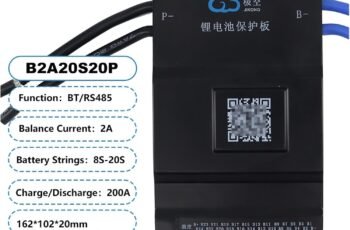
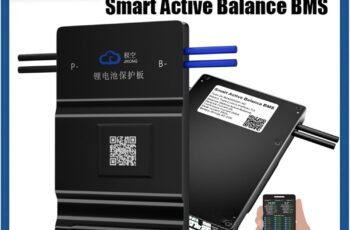
Looking for a smart way to protect and manage our LiFePO4 or Li-ion battery pack?
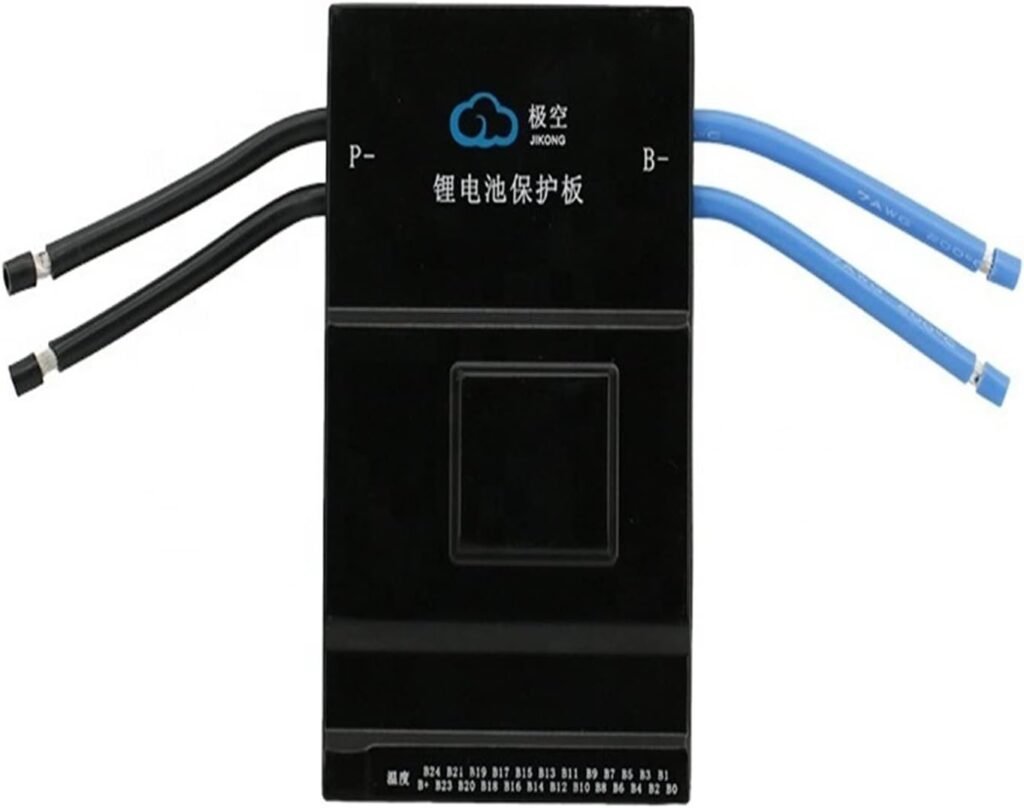

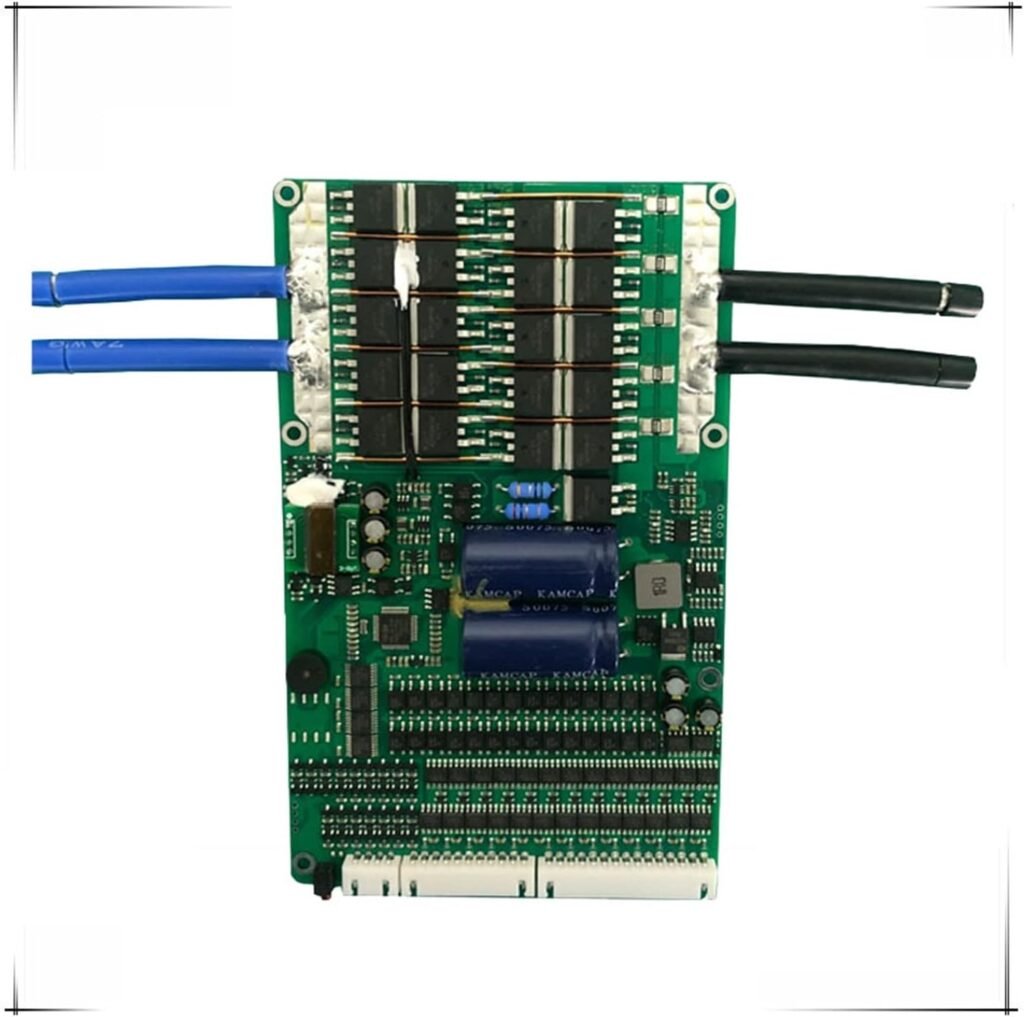
What Is the JK BMS Battery Protection Module B2A24S20?
The JK BMS Battery Protection Module JK BMS B2A24S20 is a smart battery management system designed for medium to large battery packs. It handles 8S, 12S, 13S, 14S, 16S, 17S, 20S, and 24S configurations with a continuous current rating of up to 200A. We can use it with both LiFePO4 and Li-ion cells, which makes it versatile for many DIY and professional projects.
This module is not just a simple protection board. It combines active balancing, app-based monitoring, and full safety protections to help us get the most life, performance, and safety out of our pack.
Key Features at a Glance
The best way to understand what this JK BMS really offers is to summarize its main features. Then we can decide if it suits our specific build or upgrade.
Main Specifications Summary
We find it useful to see the most important specs in a quick table format, so we can compare it with other BMS options we might be considering.
| Feature | Details |
|---|---|
| Product Name | JK BMS Battery Protection Module JK BMS B2A24S20 |
| Model Variant | B2A24S20P (Size: JK) |
| Battery Chemistry | LiFePO4 and Li-ion |
| Series Cell Support | 8S / 12S / 13S / 14S / 16S / 17S / 20S / 24S |
| Continuous Current | Up to 200A (model-dependent, suitable for high-power use) |
| Balancing Type | Active balancing |
| Balance Current | Up to 2A per cell |
| Protections | Over-charge, over-discharge, over-current, short circuit, low-temp charge cutoff |
| Connectivity | Built-in Bluetooth |
| Mobile App | JK BMS dedicated app for configuration and monitoring |
| Usage | DIY battery packs, solar storage, e-bikes, e-scooters, RV systems, backup power, more |
| Focus on Safety | Enhanced design aimed at correct matching and safe operation |
This overview shows us that we are dealing with a high-end BMS rather than a basic protection board. The 2A active balance current and smart app control stand out among typical hobby-grade BMS options.

Active Balancing: Why the 2A Balance Current Matters
Active balancing is one of the main reasons many of us look at JK BMS in the first place. When we invest in a decent pack of LiFePO4 or Li-ion cells, we want every cell to work as evenly as possible.
How Active Balancing Improves Battery Health
Active balancing does more than just burn off excess energy as heat. Instead, it transfers energy from higher-voltage cells to lower-voltage cells in the pack. This means we waste less energy and maintain more usable capacity.
With up to 2A of balance current, this BMS can correct cell imbalances much faster than typical passive balancers that often sit around 30–100 mA. That makes a real-world difference in large packs that may develop slight differences between cells over time.
99% Usage Efficiency: What That Really Means
The product description mentions up to 99% efficiency in battery usage. In practical terms, this refers to how effectively the BMS helps us access most of the battery’s stored energy, rather than shutting us down early because one cell hits a limit before the others.
By keeping cells tightly balanced, the pack can charge closer to its full capacity and discharge more evenly. Over the long term, this can mean more cycles, more consistent performance, and less frustration with packs that feel like they are “shrinking” too quickly.
Comprehensive Protection Features
A good BMS must do more than balance cells; safety is the core reason we install one. This JK BMS module offers a wide range of protection features to keep our battery bank safer and more reliable.
Over-Charge and Over-Discharge Protection
Each cell in our pack has a safe voltage range. Over-charging can lead to damage or dangerous conditions, while over-discharging can permanently degrade cell capacity.
This JK BMS continuously monitors each cell and the overall pack voltage:
- It cuts off charging when cells reach the configured upper voltage limit.
- It cuts off discharge when cells drop below the safe lower voltage threshold.
We can usually adjust these thresholds in the JK app, which helps us tune the system for LiFePO4 versus standard Li-ion chemistries.
Over-Current and Short Circuit Protection
If we accidentally connect a load that pulls too much current, or if something goes wrong in our wiring, over-current or short circuits can cause rapid overheating and damage.
The BMS measures current and reacts quickly to:
- Over-current situations (both charge and discharge, depending on the configuration).
- Short-circuit events that could otherwise be catastrophic.
For a 200A-capable system, this kind of intelligent cut-off protection is critical. It gives us an additional safety barrier beyond fuses and breakers.
Low-Temperature Charging Cutoff
Charging lithium-based batteries at low temperatures can cause internal damage and plating on the anode, which reduces life and may increase safety risks.
The JK BMS includes a low-temperature charge cutoff feature. With the attached temperature sensors:
- Charging will be disabled below a certain temperature threshold.
- Discharging can remain active (usually within the set limits) even at lower temperatures.
This is especially important for off-grid solar systems, RVs, or storage batteries used in colder climates where our pack might experience freezing conditions.
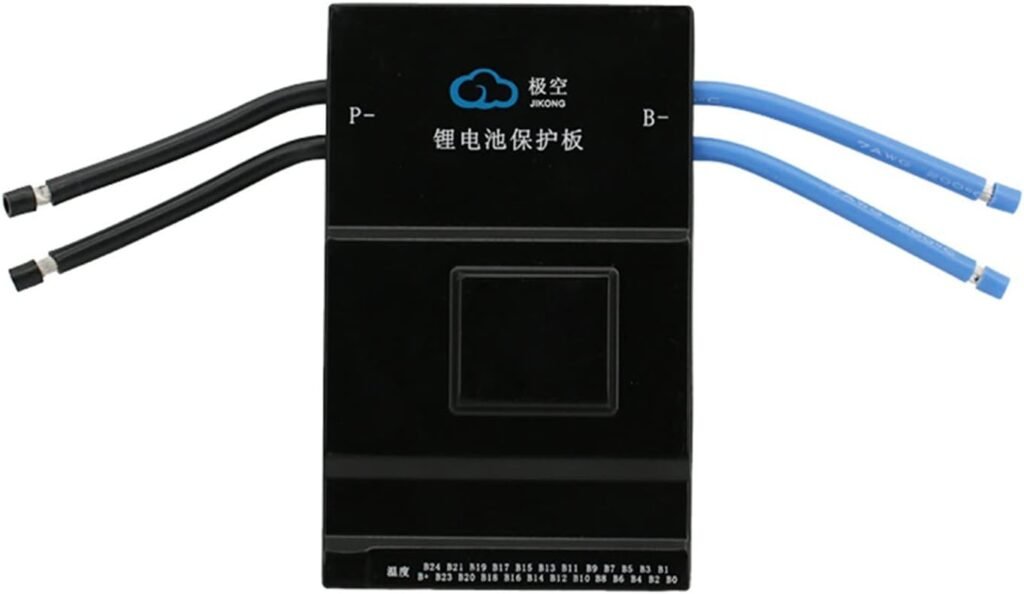
Smart Monitoring with the JK BMS App
Modern battery systems benefit greatly from smart monitoring, and JK has invested in its own dedicated app. Rather than guessing what is happening inside our pack, we can check its status in real time.
Real-Time Cell and Pack Data on Our Phone
The built-in Bluetooth connectivity lets us pair our smartphone with the BMS and see:
- Individual cell voltages
- Pack voltage
- Charge/discharge current
- State of charge (approximate, depending on model and configuration)
- Temperature readings
- Protection status and alarms
Having this level of detail allows us to spot issues early. If we see one cell drifting out of line or temperatures creeping up, we can act before something becomes a problem.
Configurable Settings and Fine-Tuning
One of the biggest advantages of the JK app is the level of customization. We are not locked into the factory defaults; we can tune the BMS for our specific cells and use case.
Typical adjustable settings include:
- Over-charge voltage per cell
- Over-discharge voltage per cell
- Charge and discharge current limits
- Balancing start voltage and aggressiveness
- Temperature thresholds for charging and discharging
- Various delay times for triggering protections
By tailoring these settings, we can extend the life of premium cells, protect budget cells more conservatively, and match everything to our charger and load characteristics.
Series Configurations: 8S to 24S Flexibility
The B2A24S20 variant supports multiple series counts in one board, which gives us flexibility if we upgrade or repurpose our pack later.
Supported Series Counts and Typical Uses
Here is a simplified look at where some of these series configurations might make sense for us:
| Series Count | Typical Chemistry | Approx. Nominal Voltage | Example Uses |
|---|---|---|---|
| 8S | LiFePO4 | ~25.6 V | Small solar storage, mid-power inverters, e-bikes |
| 12S | Li-ion | ~44.4 V | E-bikes, e-scooters, light mobility devices |
| 13S | Li-ion | ~48.1 V | 48 V-based systems with Li-ion |
| 14S | Li-ion | ~51.8 V | 52 V e-bikes, DIY power walls |
| 16S | LiFePO4 | ~51.2 V | 48 V-class inverters, RV storage, home backup |
| 17S | LiFePO4 | ~54.4 V | Custom high-voltage LiFePO4 setups |
| 20S | Li-ion | ~74 V | High-power e-motor projects (advanced users) |
| 24S | LiFePO4/Li-ion | ~76.8 V LiFePO4 / ~88.8 V Li-ion | Large off-grid banks, high-voltage systems |
This wide range means we can grow our system over time without needing a completely new BMS every time we change voltage levels, as long as we keep within the supported series range and rated current.
Flexibility When Rebuilding or Expanding Packs
If we start with, for example, a 16S LiFePO4 pack and later decide to expand our system to 24S for a higher-voltage inverter, we can reuse the same BMS model (assuming it is correctly configured and wired). That kind of flexibility can save both money and time.
We just need to ensure that:
- Our wiring harness is correct for the new series count.
- We reprogram the BMS parameters appropriately.
- Our charger and load are compatible with the new pack voltage.
Practical Use Cases for the JK B2A24S20 BMS
The product description mentions that this BMS is widely used, and we can see why. Its high current rating, broad series support, and active balancing make it suitable for many custom projects.
Off-Grid Solar and Home Energy Storage
For off-grid cabins, home backup systems, or solar storage, a 16S or 24S LiFePO4 bank is a popular setup. The JK BMS can sit at the center of such a system and provide:
- Full cell protection for expensive LiFePO4 cells
- Active balancing to preserve capacity over thousands of cycles
- Real-time monitoring of our power bank health via the app
Pairing this BMS with an inverter and solar charge controller gives us a flexible DIY storage solution that rivals many commercial battery units.
RVs, Campervans, and Marine Systems
Many of us are replacing legacy lead-acid batteries in RVs, campervans, and boats with LiFePO4 packs due to their lighter weight and longer life. A 12V or 24V equivalent often uses 4S or 8S LiFePO4, but higher-voltage systems such as 48V (16S LiFePO4) are also becoming more common for efficient inverters.
The JK BMS:
- Can handle larger packs for high-power inverters, air conditioners, and off-grid appliances.
- Protects against over-discharge, which is particularly important when we do not always see what is running in a vehicle.
- Helps us monitor from a smartphone, making troubleshooting and fine-tuning easier when we are on the road or on the water.
E-Bikes, E-Scooters, and Mobility Builds
For advanced e-bike or e-scooter projects where we are running 48V, 52V, 60V, or even higher, this BMS offers:
- Reliable over-current protection for powerful motors.
- Active balancing to keep the pack healthy even under frequent partial charges and discharges.
- Cell-level data so we can identify weak cells before they cause cutouts under load.
We do need to be mindful of the physical size and wiring complexity for smaller vehicles, but for large packs and high-current builds, the JK BMS is a serious contender.
DIY Power Walls and Backup Systems
For those of us building a DIY “power wall” from new or reclaimed cells, a smart BMS like this is almost mandatory:
- It can manage large strings of cells safely.
- The app makes it easier to commission and monitor a pack with many parallel groups.
- The 2A active balancing is especially helpful if we are mixing cells that may not be perfectly matched, though careful cell grouping is still essential.
Installation Considerations and Wiring
A capable BMS also brings some complexity. When we work with up to 24 series cells and 200A currents, our wiring and installation must be done carefully and correctly.
Ensuring the Correct Match for Our Pack
The product details remind us to check parameters carefully before purchase. That advice is worth repeating in our planning:
- Confirm our pack’s series count (S): 8S, 12S, 16S, 24S, etc.
- Match the cell chemistry: LiFePO4 vs standard Li-ion, and configure settings accordingly.
- Check our maximum continuous current needs; 200A gives plenty of headroom, but our wiring and connectors must also be rated for it.
- Ensure our charger voltage matches the full-charge voltage of our chosen cell count and chemistry.
Choosing the correct protection board is not just about chemistry and voltage. It also includes considering our specific usage pattern, ambient conditions, and potential fault scenarios.
Wiring the Balance Leads and Main Connections
The most delicate part of BMS installation is wiring the balance leads to each cell tap point. We want to be patient and methodical here:
- Double-check the manufacturer’s wiring diagram for this exact model.
- Connect the main negative and positive leads according to the instructions.
- Wire each balance lead to the correct cell junction, in the correct order.
- Secure wires so they are not under strain, rubbing, or at risk of shorting.
After wiring, we usually verify:
- Cell voltages at the BMS terminals using a multimeter.
- That the app reads the correct number of cells and reasonable voltages.
- That no cell is reported with zero or impossible voltage, which could indicate a wiring error.
Using the JK BMS App Day to Day
Once our pack is built and wired, the BMS app becomes our window into what is happening inside the battery. We do not need to guess if everything is working; we can see it.
Monitoring Health and Performance Over Time
On a daily basis, we might use the app to:
- Check pack state of charge before heading out in an RV or using heavy loads.
- Watch cell balance during or after a full charge.
- Monitor current draw when starting large loads like inverters or motors.
- Inspect temperature readings during fast charging or high discharge events.
Over time, we can start to notice patterns, such as:
- One cell group that is always slightly lower, which might need attention.
- Higher currents than we expected, which might suggest upgrading cabling or fuses.
- Elevated temperatures in a specific environment, indicating we should improve ventilation.
Adjusting Settings as Our System Evolves
Our first configuration might not be perfect. As we add solar panels, change inverters, or alter our usage patterns, we may want to tweak:
- Charge voltage slightly lower to extend cell life.
- Over-discharge cutoff higher to preserve capacity over more cycles.
- Balancing start voltage so balancing occurs earlier or later in the charge curve.
- Charge/discharge current limits to match new equipment.
Having these adjustments available in an app means we do not have to replace hardware or manually reprogram with a computer every time our system evolves.
Safety and Proper Use: Why Design Matters
The product notes emphasize that correct selection and application of the protection board are vital to battery longevity. From our perspective, this goes well beyond just matching voltages and currents.
Choosing the Right BMS Model for Safety
We should always think about:
- Peak currents during motor startup or inverter surge.
- Ambient temperature ranges where our battery will operate.
- The possibility of accidental short circuits or reversed polarity during installation.
The JK B2A24S20 model with 200A support is clearly aimed at serious, high-power applications. That power comes with responsibility. We need to ensure:
- We use cables, lugs, and busbars rated for the planned current.
- Fuses or breakers are installed appropriately in the system.
- We follow best practices for strain relief, insulation, and mechanical mounting.
Good Practices for Long Battery Life
Even with an advanced BMS, we still play the key role in deciding how hard our pack works. Some general habits help extend life:
- Avoid charging right to the absolute maximum voltage unless we truly need that last bit of capacity.
- Keep the pack away from extremes of heat and cold.
- Keep the pack in a balanced state by letting the BMS complete balancing cycles periodically.
- Do not run the pack to full empty under heavy load routinely; staying within the mid-range more often helps longevity.
The JK BMS gives us tools and protections, but our charging and usage strategy has a big impact on how long and how well our battery system serves us.
Pros and Cons of the JK BMS B2A24S20
To decide whether this BMS is the right match for us, it helps to weigh its strengths and potential drawbacks in a straightforward way.
Advantages That Stand Out
- Active 2A balancing: Faster and more efficient balancing than basic passive systems, especially useful for large packs.
- High current capacity (200A): Suitable for demanding loads like large inverters, powerful e-motors, and high-current charging.
- Smart app integration: Easy real-time monitoring and configuration via Bluetooth and the JK app.
- Wide series support: From 8S up to 24S, which gives flexibility for many different voltages and future system changes.
- Comprehensive protections: Over-charge, over-discharge, over-current, short circuit, and low-temperature charge cutoff all included.
- Designed for both LiFePO4 and Li-ion: Makes it more universal for different chemistries, as long as settings are configured correctly.
These advantages make the JK B2A24S20 especially appealing for those of us building serious DIY packs or upgrading to a robust, feature-rich BMS.
Potential Drawbacks and Considerations
- Installation complexity: Large series count and high current mean wiring must be done carefully; not the best choice for those wanting a plug-and-play solution.
- Requires app familiarity: We need to be comfortable using the JK app and understanding basic battery parameters to get the most from it.
- Physical size: High-current BMS units tend to be bigger, which could be a challenge in very compact builds.
- Learning curve: The flexibility and many settings can feel overwhelming at first if we are new to BMS configuration.
For many of us, these are acceptable trade-offs for the capability we gain, but we should be honest about our comfort level and skills before committing to such a system.
Who Is This BMS Best Suited For?
Not every project needs a 200A, 24S-capable active balancing BMS. Knowing where this JK model fits best helps us avoid under- or over-buying.
Ideal Users and Projects
We find this BMS particularly well-suited to:
- DIY enthusiasts building substantial LiFePO4 or Li-ion packs for off-grid power.
- RV, campervan, and marine builders working with 48V or higher systems and large inverters.
- Advanced e-bike and e-scooter builders running high-voltage, high-current setups.
- Hobbyists creating DIY power walls or stationary energy storage that demand long life and detailed monitoring.
- Anyone who wants to invest in higher-end cells and protect that investment with smart active balancing.
If we value getting cell-level data, customizing protection thresholds, and squeezing the most life and performance from our pack, this BMS is a strong candidate.
Users Who Might Want Simpler Options
On the other hand, a simpler, lower-current BMS might make more sense if:
- Our pack is small and low power (for example, a modest 12V system for lights only).
- We prefer plug-and-play installation without much configuration.
- We do not care about cell-level monitoring or app-based management.
- Our project is purely experimental, and we are keeping costs as low as possible.
In those cases, a more basic BMS may be adequate, and the advanced features of the JK B2A24S20 could be more than we really need.
Our Overall Impressions and Final Thoughts
Looking at the JK BMS Battery Protection Module JK BMS B2A24S20, we see a product clearly aimed at users who want both safety and control. It is not a simple “fit and forget” board, but rather a central brain for larger, more serious battery systems.
The headline features—2A active balancing, 8S–24S support, 200A current capability, and a robust app—come together to create a BMS that can grow with our projects. Whether we are building an off-grid solar bank, a high-power mobility solution, or a home backup system, this module gives us the tools to manage and protect our batteries with confidence.
We do need to approach it with respect: careful wiring, thoughtful configuration, and an understanding of lithium battery safety principles. When we do, this BMS can help us reach that high usage efficiency and long pack life the product promises.
If we are ready to handle a more advanced system and want to get serious about monitoring and extending the life of our LiFePO4 or Li-ion pack, the JK BMS B2A24S20 is a strong and capable option worth considering for our next build or upgrade.
Disclosure: As an Amazon Associate, I earn from qualifying purchases.