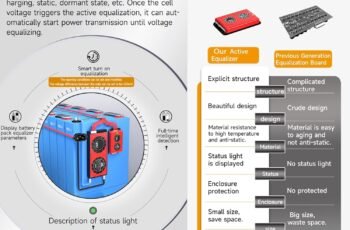
Have we ever wished our DIY battery projects could feel just a little more professional, safer, and easier to manage in real time?
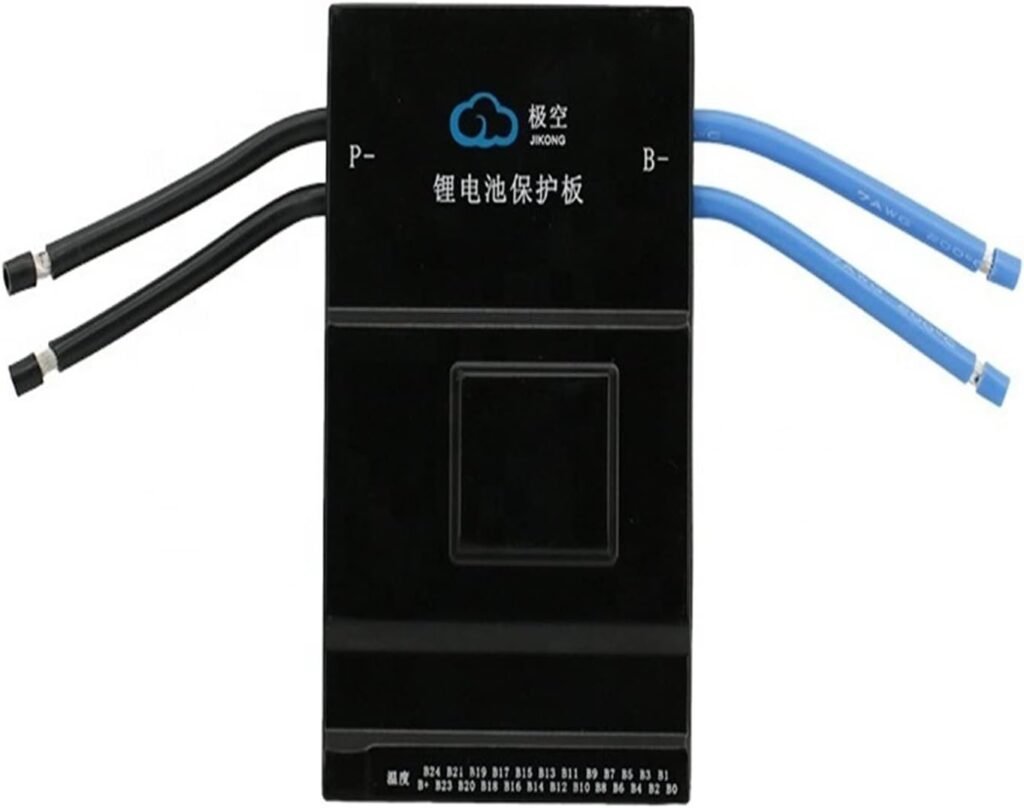

What Is the JK BMS Battery Equalizer B2A24S20?
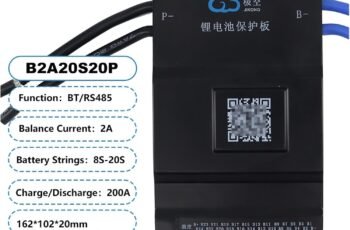
This JK BMS Battery Equalizer B2A24S20 with 2A balance current is a smart battery management system designed for multi-cell LiFePO₄ and Li‑ion packs. It is built for serious DIYers and small-scale energy systems where we want both strong protection and advanced monitoring.
This specific model (B2A24S20P with CAN) supports multiple series configurations from 8S up to 24S and can work with high-current systems up to around 200A and even higher in some setups. That makes it suitable for solar power banks, RV systems, off‑grid cabins, and backup storage.
Why Would We Choose This JK BMS Over a Basic BMS?
When we compare this JK BMS to a cheaper, basic protection board, the difference is in intelligence and control. Instead of just cutting power on faults, this unit can actively balance cells, report detailed battery data, and let us adjust behavior through a dedicated app.
We might pick this JK BMS if we care about:
- Getting maximum usable capacity from our cells
- Extending battery life
- Monitoring everything from our phone
- Fine‑tuning limits instead of being stuck with factory defaults
Key Features at a Glance
To get a quick feel for what we are dealing with, here is a breakdown of the core functions and capabilities of the JK BMS Battery Equalizer B2A24S20P:
| Feature Category | Details |
|---|---|
| Supported Chemistries | LiFePO₄, Li‑ion |
| Series Cell Count | 8S, 12S, 13S, 14S, 16S, 17S, 20S, 24S |
| Typical System Voltages | ~12V (4S, via family), 24V (8S), 48V (16S), 72V (24S) |
| Max Current Range | Around 100A–200A+ depending on specific variant and wiring |
| Balancing Type | Active balancing |
| Balancing Current | 0.6A–2A active balance current (up to 2A typical) |
| Communication | Bluetooth (BT) for app, CAN on this specific “with CAN” model |
| Protection Functions | Over‑charge, over‑discharge, over‑current, short circuit, low‑temperature charge cutoff |
| App | JK own development app for detailed settings and live monitoring |
| Typical Use Cases | DIY powerwalls, solar storage, RV/boat systems, backup power, high‑current DIY packs |
This table gives us the high-level picture: it is more than just a fuse and switch. It is a full electronic supervisor for our battery bank.

Our Experience with the JK Own Development App
One of the standout aspects of this JK BMS is the dedicated JK mobile app. Many BMS units rely on generic or clunky apps, but here we get a purpose‑built companion that actually unlocks the BMS’s full potential.
We can pair our phone via Bluetooth and see live data such as:
- Per‑cell voltage readings
- Pack voltage and current
- Remaining capacity and SOC (depending on setup)
- Temperature readings
- Charge and discharge status
The app also gives us access to a range of settings. Instead of accepting factory‑locked thresholds, we can adjust limits to match our cells and use case. This is incredibly helpful when we want to tune the system more precisely than an off‑the‑shelf power station would allow.
Ease of Use of the App
We find the app relatively straightforward once we understand the basic terms. There may be a bit of a learning curve if we are completely new to BMS configuration, but the layout tends to be logical: status screens, parameter settings, and logs are usually separated clearly.
Because it is JK’s own app rather than a white‑label tool, it tends to integrate cleanly with the hardware. The refresh rate for live data is generally good enough for real-time monitoring, and we do not feel like we are constantly waiting for numbers to update.
Active Balancing: What It Is and Why It Matters
Balancing is one of the most critical jobs of any multi-cell BMS. Over time, small differences between cells cause some to charge faster or discharge deeper. Without balancing, these differences grow and eventually reduce usable capacity and increase stress on the pack.
This JK BMS uses active balancing, not just passive.
Active Balancing vs Passive Balancing
With passive balancing, a BMS shunts excess energy from higher‑voltage cells as heat through resistors. It is simple but slow and wastes energy constantly when balancing is active.
With active balancing, the BMS can redistribute energy from higher‑voltage cells to lower‑voltage ones. Instead of burning off the excess, it transfers it, which:
- Improves efficiency
- Balances faster, especially at higher currents
- Helps keep the pack more uniform, maximizing capacity
On this JK model, we have up to around 2A active balance current, which is fairly strong for a DIY‑oriented BMS. JK claims up to 99% usage efficiency from this approach, meaning we get more of what we paid for out of our cells.
How 2A Balancing Helps in Real Projects
In real-world packs, especially 16S or 24S, cells drift over cycles or if they were not perfectly matched from the start. A 2A active balance current helps pull the outliers back in line more rapidly.
We see the benefits when:
- Top‑charging a large pack: cells reach a uniform top voltage sooner.
- Recovering from imbalanced packs: instead of needing a bench power supply and hours of manual balancing, the BMS does most of the work.
- Running mixed loads: uneven loading over time gets corrected in the background.
Over months and years, better balancing contributes significantly to longer battery life and more consistent performance.
Comprehensive Protection Functions
Protection is the primary function of any BMS. The JK B2A24S20 includes multiple layers of protection to stop harmful conditions from damaging our pack.
We get:
- Over‑charge protection – prevents individual cells from going above safe voltage
- Over‑discharge protection – stops cells from being drained too low
- Over‑current protection – protects against drawing too much current
- Short‑circuit protection – reacts quickly if we accidentally short the pack
- Low‑temperature charging cutoff – blocks charging below a safe temperature
These protections are essential both for safety and longevity. Over‑charging or over‑discharging even a few times can permanently harm cells. High current and shorts pose fire and shock risks.
Being Able to Adjust Limits
A strong benefit with this BMS is that we can often tune many of these protections within defined ranges using the app. That means we can:
- Set a slightly lower charge voltage to extend life for LiFePO₄
- Tighten the discharge limits to add extra safety margin
- Adjust current limits to match our wiring and fuses
By customizing these points to our battery chemistry and configuration, we reduce stress on our cells while still getting the performance we need.
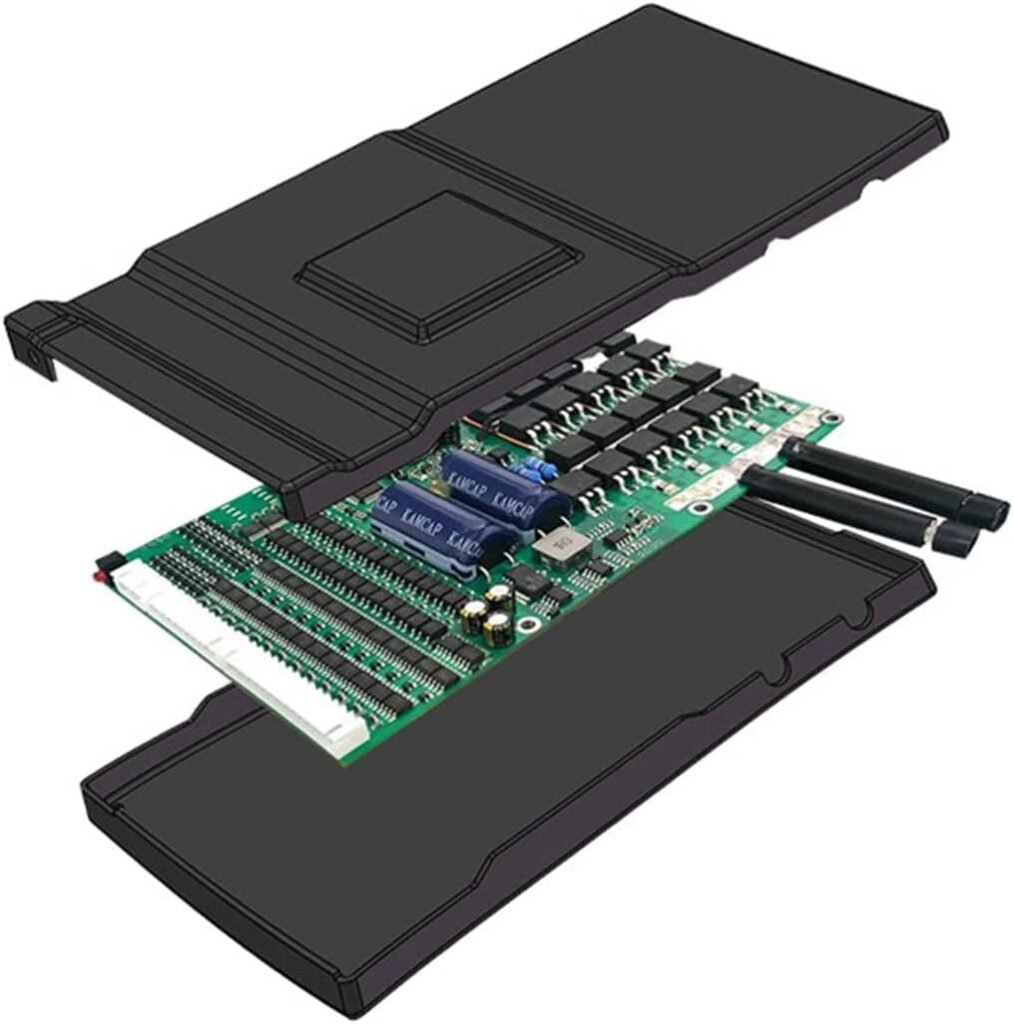
Supported Battery Types and System Configurations
The JK BMS B2A24S20 supports both LiFePO₄ and Li‑ion chemistries. That gives us flexibility to build different kinds of packs while using a single BMS brand and interface.
The supported series configurations typically include:
- 8S
- 12S
- 13S
- 14S
- 16S
- 17S
- 20S
- 24S
This covers common setups:
- 24V systems (8S LiFePO₄ or 7S/8S Li‑ion range)
- 48V systems (16S LiFePO₄)
- 72V systems (24S LiFePO₄)
The product family also mentions configurations such as 4S (12V), but for this specific B2A24S20, we should confirm the series options in the documentation or listing. In practice, this model is ideal for 24V, 48V, and 72V DIY builds.
Current Handling and DIY System Design
The listing mentions compatibility with 100A–350A max current LiFePO₄ systems. That does not mean we can just push 350A continuously through every wiring choice, but it tells us where this BMS family is targeted.
For many off‑grid and mobile setups, typical continuous currents might be:
- 100A–150A for 24V systems (2.4–3.6kW)
- 100A–200A for 48V systems (4.8–9.6kW)
With careful cabling, bus bars, and fusing, the JK BMS can fit into these power ranges. We still need to respect the exact specs of our specific model, but the device is clearly aimed at more than tiny portable projects.
Real‑Time Monitoring and Data Visibility
One of the best feelings in a DIY battery project is seeing all the internal data live instead of guessing what is happening inside a metal box. With this JK BMS, we have transparent access to:
- Per‑cell voltages
- Pack voltage and current
- Battery temperature(s)
- Charging/discharging status
- Event logs (depending on version and app)
We can sit in our RV, cabin, or workshop and check the battery health from the phone in our pocket. If we notice one cell lagging, we know we might need to watch it in the long term. If currents are close to the limit, we can adjust loads or settings.
Why Real-Time Information Improves Safety
When we cannot see what is happening inside a pack, issues tend to surprise us. With this BMS, we get early warning signs:
- Rising cell imbalance
- Repeated over‑current events
- Temperatures creeping up under load
By catching patterns early, we can take preventive steps—maybe adding ventilation, reducing loads, or re‑arranging parallel strings—before something goes seriously wrong.
CAN and Bluetooth Communication: More Than Just a Phone Gadget
The “B2A24S20P with CAN” notation is a meaningful detail. Bluetooth lets us use the app easily, but CAN communication opens the door to integrating the BMS with other smart devices and controllers.
We can connect the BMS to:
- A compatible inverter/charger that reads battery status over CAN
- A custom energy management system based on a microcontroller or single‑board computer
- Home automation or monitoring platforms that support CAN interfaces
This type of integration is what nudges a DIY system closer to a professional energy storage solution.
Practical Benefits of CAN in a DIY Setup
If we tie the BMS into an inverter via CAN, the inverter can:
- Adjust charging current and voltage based on BMS feedback
- Stop charging/discharging when the BMS reports a fault
- Show detailed battery status on the inverter’s display
This tight integration prevents the inverter from blindly pushing current into a nearly full or cold battery, reducing stress and risk. It also centralizes information, so we are not juggling separate displays for every component.
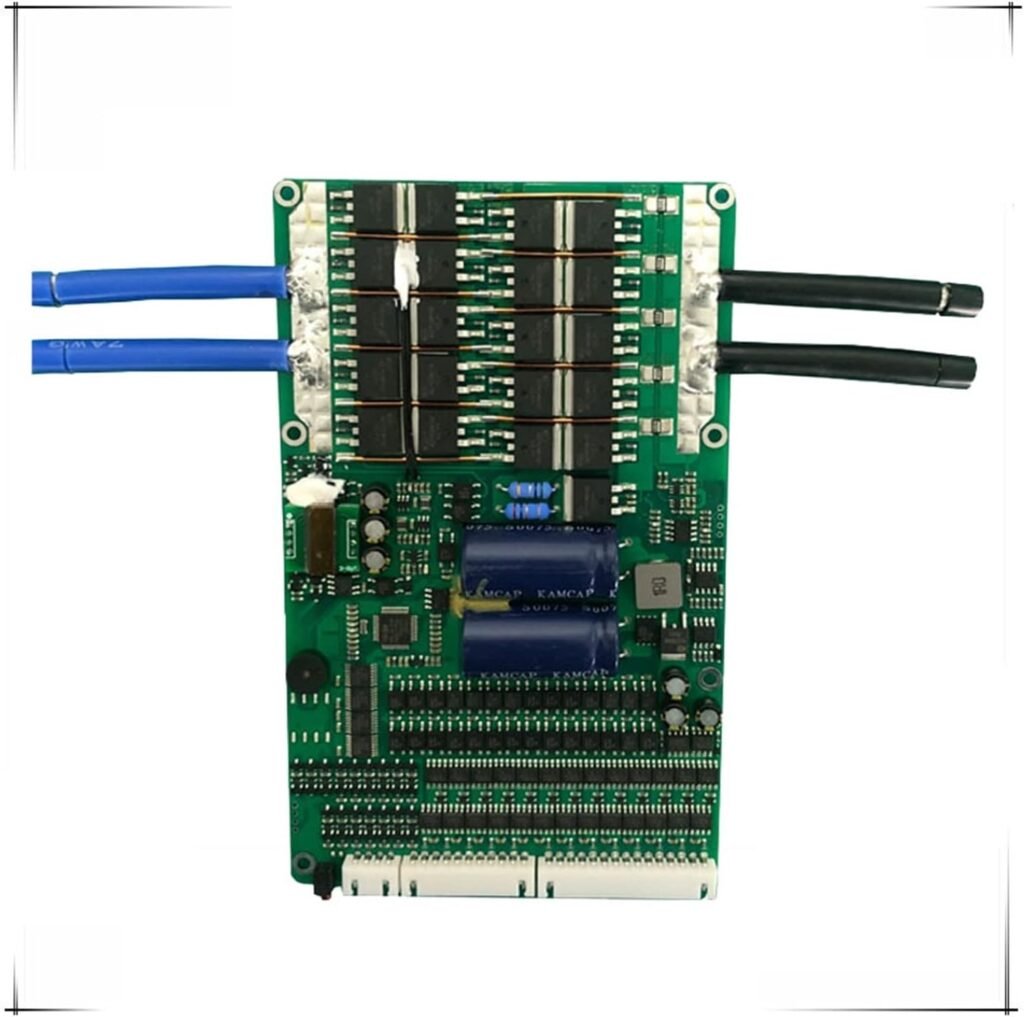
Installation Experience and Wiring Considerations
Installing a smart BMS like this is not a plug‑and‑play experience for total beginners, but for those of us comfortable with DC wiring, it is manageable with patience and planning.
We typically need to:
- Mount the BMS securely in a well‑ventilated area, away from moisture.
- Connect the main positive and negative leads according to the wiring diagram.
- Run balance leads from each cell terminal to the correct BMS pins.
- Connect temperature sensors to the battery where appropriate.
- Attach Bluetooth module and CAN interface (if they are external components).
The most critical part is getting the cell sense wiring correct. Reversing order or wiring to the wrong terminals can damage the BMS. We should double‑ and triple‑check with a multimeter and the manual before powering it up.
Tips We Would Share for a Cleaner Install
Over time, we have found a few habits that make installation smoother and safer:
- Label each balance lead with the corresponding cell number.
- Bundle and secure wires so they are not under tension or rubbing against sharp edges.
- Use appropriately sized lugs and bus bars for currents we expect.
- Keep the BMS in a location where we can physically access it later, not buried permanently.
All of this reduces the chances of intermittent connections, shorts, or confusion later when we want to troubleshoot or upgrade.
Daily Use: How It Feels to Live with This JK BMS
Once everything is wired, configured, and checked, we mostly forget the BMS is there—until we want data. On a day‑to‑day basis, the JK BMS quietly manages the cells, balances them, and cuts off risky operations.
We might notice:
- The app quickly shows us pack status in the morning when solar begins charging.
- Cells remain well balanced over time without manual intervention.
- Protective cutoffs happen smoothly during extreme events, preventing damage.
Instead of being a black box, our battery becomes a transparent system we can understand and trust.
Interactions with Other System Components
In a real system, our BMS is working alongside:
- Solar charge controllers or MPPT units
- Inverters or inverter/chargers
- DC loads like fridges, pumps, lights, or inverters
The JK BMS mostly acts as a referee, allowing current to flow when safe and stopping it when limits are exceeded. With CAN integration, that referee role becomes even more coordinated, as other components can change behavior before a hard cutoff.
Safety Considerations and Best Practices
Even with all its protections, a BMS is one tool among many for battery safety. We still need good wiring, proper fusing, and sound mechanical design. The JK BMS helps significantly, but it cannot fix dangerous hardware mistakes.
We should always:
- Use fuses or breakers near the battery’s positive terminal.
- Size cables for both current and run length.
- Keep everything secured and protected from accidental contact.
- Provide some ventilation or spacing for heat dissipation.
The product details themselves emphasize: choosing the correct protection board and applying it properly is vital for battery longevity. We fully agree and would add that it is also vital for our personal safety.
Using the BMS’s Features to Enhance Safety
We can enhance safety by configuring the BMS thoughtfully:
- Set conservative charge and discharge voltage limits.
- Enable low‑temperature charge protection if we operate in cold environments.
- Reduce maximum current limits if our cables or connectors are marginal.
This way, the BMS acts as a backup to our hardware design, not as the first and only line of defense.
Performance and Reliability Over Time
What we care about most in a BMS is not the spec sheet alone, but how it behaves after months and years of use. While long‑term experience can vary by installation, JK BMS units have become popular among DIY communities because they strike a balance between cost and serious features.
We typically see:
- Stable operation without frequent random cutoffs
- Consistent active balancing performance
- Reasonable thermal behavior when installed correctly
As with any electronics, performance depends on respecting ratings and providing good mounting and ventilation. Treating a BMS as a rugged industrial contactor and overspec’ing loads beyond its design will inevitably shorten its life.
Monitoring Long‑Term Cell Health
Because this BMS makes it easy to watch cell voltages over time, we can track trends:
- Cells that consistently lag in voltage under load
- Cells that reach top‑of‑charge earlier than others
- Packs that stay balanced well vs those that drift
Armed with this information, we can replace weak cells selectively rather than junking the entire pack, saving cost and reducing waste.
Strengths of the JK BMS B2A24S20P
We see several strong points that make this product appealing for many of us building serious DIY systems:
-
Active balancing with up to ~2A
This is a major advantage for larger packs, helping maintain uniformity and extracting more usable capacity. -
Own dedicated app with Bluetooth
The ability to monitor and configure from a phone is a huge convenience compared to “blind” BMS boards. -
CAN communication
The CAN interface adds the possibility of integrating with inverters and custom controllers, moving our system toward professional-level behavior. -
Wide support for series counts
From 8S to 24S, we can build 24V, 48V, and 72V packs without changing our BMS brand and toolset. -
Comprehensive protection features
Over‑charge, over‑discharge, over‑current, short‑circuit, and low‑temperature charge protection give us a solid safety net. -
Suitable for high‑current systems
Supporting up to the 100A–200A+ range (and more in some configurations) makes it a fit for real power applications, not just small gadgets.
Potential Limitations and Who Might Not Need This BMS
No product is perfect or ideal for every situation. We see a few considerations:
-
Complexity for beginners
If we are completely new to DC systems, this BMS might feel overwhelming. A simpler “set and forget” device or pre‑built power station could be more comfortable initially. -
Requires careful installation
Miswiring balance leads or power connections can be unforgiving. We need to be patient and methodical. -
Overkill for very small projects
For tiny 1S–4S packs or ultra‑low‑power applications, this BMS would be more than we need, both in size and cost. -
Dependence on the app
While the app is a strength, it also means we rely on a mobile device and JK’s ongoing app support. Some may prefer a BMS with a dedicated physical screen or more standalone operation.
For many DIY solar, RV, and home‑storage builders, though, these are acceptable tradeoffs when weighed against the control and insight the BMS provides.
Who Is This JK BMS Best Suited For?
We find this BMS particularly well suited to:
- DIY powerwall builders using LiFePO₄ or Li‑ion cells in the 24V–72V range who want real-time monitoring and strong balancing.
- Off‑grid cabin or shed setups where a robust, configurable BMS is central to a renewable energy system.
- RV, van, or boat owners building high‑capacity custom battery banks with serious inverters.
- Technical enthusiasts who enjoy fine‑tuning parameters, integrating via CAN, and building semi‑professional systems on a DIY budget.
If we fit into any of these categories and we are comfortable doing careful wiring and configuration, the JK BMS B2A24S20P with CAN is a strong candidate.
Practical Example: Using It in a 48V LiFePO₄ System
To make things more concrete, let us imagine we are building a 48V LiFePO₄ bank for a small off‑grid workshop.
We might:
- Build a 16S pack of LiFePO₄ cells totaling around 10–15kWh.
- Connect this JK BMS B2A24S20P to those 16 cells.
- Use a 5kW 48V inverter/charger that supports CAN integration.
- Add a solar charge controller feeding into the battery.
The BMS would:
- Monitor each cell’s voltage and ensure they stay within a safe range.
- Actively balance cells at up to around 2A, maintaining long‑term uniformity.
- Communicate via CAN with the inverter, allowing coordinated charge/discharge behavior.
- Provide Bluetooth data that we can see on the JK app while standing in the workshop.
Over time, we would probably appreciate how rarely we need to touch the hardware: the BMS quietly keeps everything in line while we focus on using the power for tools, lights, and equipment.
Practical Example: 24V System for an RV or Camper
For an RV or camper, we might choose a 24V (8S) LiFePO₄ setup to keep cable currents lower while still feeding a sizeable inverter.
In that case, the JK BMS B2A24S20P would:
- Protect the battery against over‑discharge when we run lights, fridge, and fans overnight.
- Prevent charging at low temperatures if the pack is in a cold compartment.
- Balance cells after repeated partial cycles under solar and alternator charging.
- Let us quickly check pack status on our phone from inside the RV.
This kind of use case especially benefits from active balancing and temperature protection, because mobile environments tend to see more varied temperatures and irregular charging patterns.
Summary of Pros and Cons
To help us weigh the decision more clearly, here is a concise comparison:
| Aspect | Pros | Cons/Considerations |
|---|---|---|
| Balancing | Active, up to ~2A, highly efficient, helps maintain capacity | More complex circuitry than simple passive boards |
| Monitoring | Detailed real‑time data via JK app, Bluetooth connectivity | Requires compatible smartphone and app availability |
| Configuration | Adjustable parameters (voltage, current, temperature limits) | Can be intimidating for first‑time users |
| Communication | CAN support allows integration with inverters and controllers | Requires compatible devices and some integration knowledge |
| Protection | Comprehensive: over‑charge, over‑discharge, over‑current, short‑circuit, low‑temp | Still needs proper external fuses and wiring |
| Supported Systems | Works with 8S–24S, suitable for 24V, 48V, 72V LiFePO₄ and Li‑ion setups | Not designed for tiny hobby packs or ultra‑low‑power builds |
| Value | Strong features for DIY and semi‑pro systems at a reasonable cost | Overkill if we only need minimal protection on a very small pack |
This table captures why many of us in the DIY space find JK BMS units so appealing when building serious energy storage systems.
Our Overall Verdict on the JK BMS Battery Equalizer B2A24S20P
When we look at the JK BMS Battery Equalizer JK BMS B2A24S20 with 2A balance current and CAN, we see a capable, modern battery management solution for advanced DIYers and small installations.
We appreciate:
- The strong active balancing that helps keep our cells healthy and useful for as long as possible.
- The JK own development app that puts live data and configurable settings in our hands.
- The full set of protection features that make us feel more secure about pushing substantial power through our packs.
- The CAN interface, which nudges our projects toward integrated, professional‑grade energy systems.
We do need to bring some electrical understanding and patience to the table to get the best from it. This is not just a board we toss into a toolbox project. It is a central, sophisticated component of our power system that rewards careful installation and thoughtful configuration.
If we are building or upgrading a LiFePO₄ or Li‑ion battery bank in the 24V–72V range and we want better balancing, more insight, and smarter control than a generic BMS can offer, this JK BMS B2A24S20P with CAN stands out as a strong, future‑ready choice for our projects.
Disclosure: As an Amazon Associate, I earn from qualifying purchases.