Have we ever wished we could truly trust our battery pack, see everything it’s doing on our phone, and know it’s being protected and balanced properly for years to come?

What Is the JK BMS Battery Equalizer and Who Is It For?
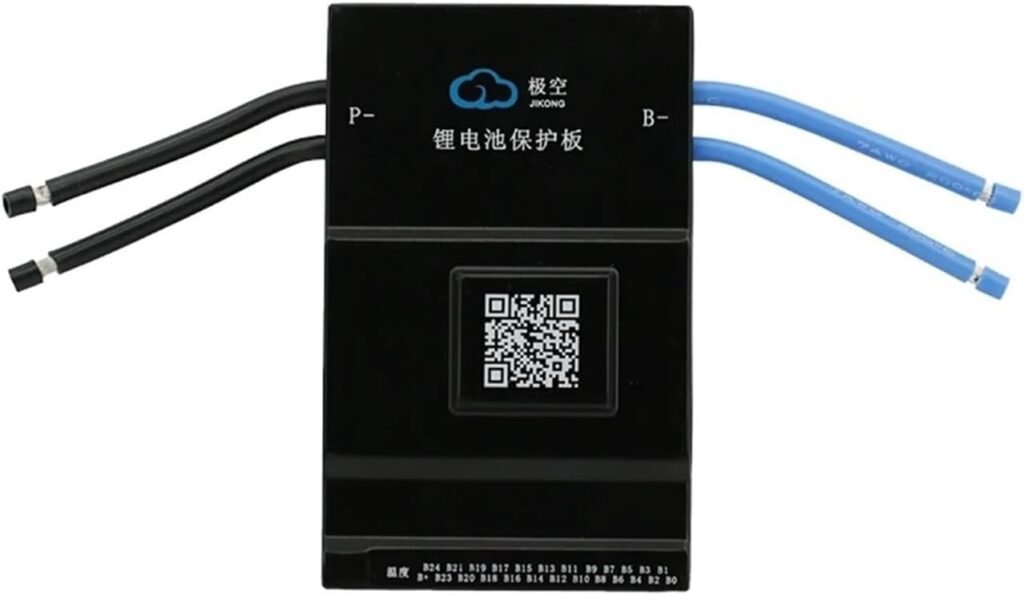
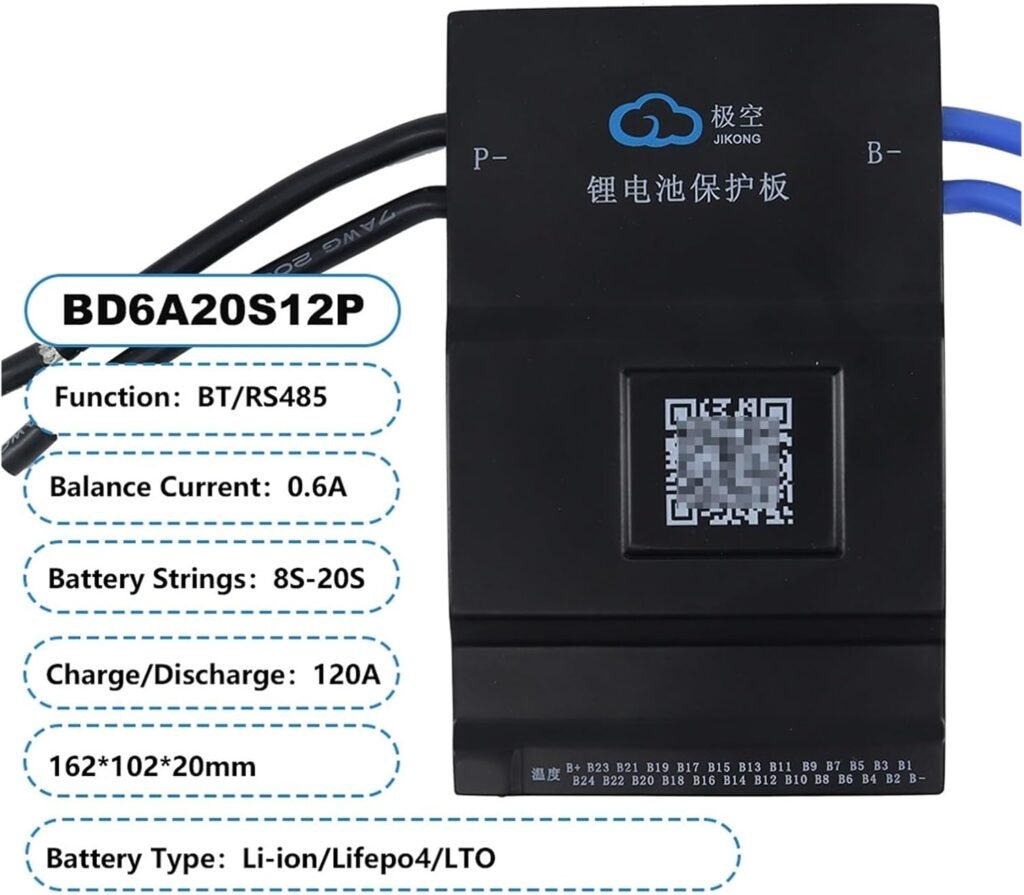
When we look at the JK BMS Battery Equalizer Jk Smart BMS Balance BT 8s 10s 16s 20s 21s 24s (BD6A20S12P variant), we are clearly looking at a serious protection and management system for lithium battery packs. This is not just a basic protection board; it is a smart, active balancing BMS with Bluetooth and an app.
We find this product especially suited to us if we are working with DIY battery projects, solar and off‑grid systems, RV and van conversions, backup power, or small energy storage systems where we use Li-ion, LiFePO4, or LTO cells. It is designed for people who want real data, adjustable settings, and reliable protection rather than a simple “black box” BMS.
Key Features of the JK Smart BMS
This JK BMS packs in many features that we usually only see in higher-end, more expensive systems. It combines active balancing, Bluetooth monitoring, and full protection functions for multi-cell battery configurations.
We like that the manufacturer has clearly tried to make this a “set it up once and manage it from our phone” type of solution. Let’s break down its major feature categories in a structured way so we can quickly see if it fits our project.
Main Specs and Capabilities at a Glance
To make everything a bit easier to compare, here is a quick table of what this BMS is offering us:
| Feature Category | Details |
|---|---|
| Supported Chemistries | Li-ion, LiFePO4, LTO |
| Supported Series (S) | 8S, 10S, 16S, 20S, 21S, 24S (depending on variant) |
| Voltage Systems | 12V (4S), 24V (8S), 48V (16S), 72V (24S) |
| Current Ratings | 60A, 80A, 100A, 120A, 150A, 200A, and up to 600A (depending on version) |
| Balance Type | Active balancing |
| Balance Current | About 0.6–2A active balance current |
| Communication | Bluetooth (BT) with dedicated JK app |
| Protections | Overcharge, over-discharge, over-current, short circuit, low-temperature charge shutoff |
| Typical Use Cases | DIY battery packs, solar storage, RVs, boats, backup power, inverters, off-grid systems |
This overview helps us see that we are not dealing with a low-power, hobby-only device. With current ratings going up to hundreds of amps and support for up to 24 series cells, this BMS can handle fairly serious power systems.
Our Experience With the JK Own Development App
One of the standout promises of this BMS is its dedicated JK app. Unlike many generic BMS products that use a third-party or poorly translated app, this one is developed by JK specifically for their BMS.
We appreciate this because it usually means better integration, more accurate data, and more complete settings control. It turns our phone into a window into the battery pack’s internal behavior.
Bluetooth Monitoring and Control
The BMS connects via Bluetooth to the app, which lets us view real-time battery data. That includes pack voltage, cell-level voltages, temperatures, current, and state parameters that help us keep track of the battery’s health.
We like how this can replace a lot of separate gauges and meters we might otherwise buy. Instead of wiring up multiple displays, we just open the app and see what our pack is doing at a glance.
Configuring BMS Settings From Our Phone
One of the best parts of a smart BMS like this is that we can modify key protection and charge/discharge parameters directly from the app. That often includes:
- Overcharge and over-discharge voltage thresholds
- Charge and discharge current limits
- Temperature protection thresholds
- Balancing settings and trigger points
We find this incredibly convenient because it lets us fine-tune the BMS to match the specific chemistry and recommendations of our cells instead of being stuck with generic values.

Active Balancing: How JK Smart Balance Works
The JK Smart BMS uses active balancing, which is a step up from the basic passive balancing found in low-cost BMS boards. Active balancing is especially appealing when we invest in larger, higher-capacity packs and want to keep them healthy for a long time.
We care about this because uneven cell voltages tend to get worse as packs age and cycle, and a strong balancing system can significantly help maintain performance.
What Makes Active Balancing Different?
With passive balancing, extra energy is simply burned off as heat through resistors when a cell goes over a certain voltage. Active balancing, by contrast, moves excess charge from higher-voltage cells to lower-voltage ones, improving overall efficiency.
The JK BMS states a balancing efficiency of around 99%, which is impressive. Instead of wasting energy, we are re-distributing it, which results in:
- More uniform cell voltages
- Better capacity utilization from the entire pack
- Reduced stress on individual cells
We think of active balancing like a “charge shuttle” moving energy where it is needed, rather than a “brake” that just dumps energy.
Balance Current and Its Real-World Impact
The active balance current for this JK BMS is specified around 0.6–2A, depending on model and conditions. That might not sound like a huge number, but it is significant for balancing.
We notice its impact when cells start to drift apart after many cycles. A 1–2A active balance current can correct imbalances relatively quickly, even under occasional moderate use, so our pack spends more time in a well-balanced state.
Protection Functions: Keeping Our Batteries Safe
A BMS is fundamentally a protection device, and the JK BMS offers a full set of safeguards. These are critical not just for the safety of the cells, but also for our peace of mind, especially if we mount our battery in a vehicle, small home, or workshop.
We see protection features as non-negotiable when dealing with high-energy lithium-based batteries, and this BMS checks all the essential boxes.
Overcharge and Over-Discharge Protection
Overcharging and deep over-discharging are two of the fastest ways to degrade or destroy a battery pack. The JK BMS monitors cell voltages and shuts off charging or discharging when limits are exceeded.
We like having the ability (through the app) to adjust these thresholds for different chemistries, such as:
- LiFePO4, which typically uses lower full-charge voltages
- Li-ion, which often has higher per-cell full voltages
- LTO, which has its own specific voltage ranges
These protections help us avoid the silent damage that builds up over time from repeatedly pushing cells too far.
Over-Current and Short-Circuit Protection
In addition to voltage-based protection, this BMS guards against over-current and short circuits. If our load or inverter pulls too much current, or if there is a wiring fault, the BMS can disconnect to prevent catastrophic failure.
We find this particularly important when we are driving high loads such as:
- Inverters
- High-current DC motors
- Heavy DC loads like air compressors or pumps
These protections act as a backup safety system beyond the fuses and breakers we should already be using in our system.
Low-Temperature Charging Shutoff
For lithium batteries, charging at low temperatures can be damaging and even dangerous, especially for LiFePO4 cells. The JK BMS includes low-temperature charging shutdown, which stops charging when the pack is too cold.
We value this especially in colder climates, where our battery might be stored in a garage, RV, or outdoor enclosure. It helps us avoid that risk of charging when cells are below safe temperature thresholds.
Supported Battery Chemistries and System Voltages
Versatility is one of the major strengths of this BMS family. We can configure it to work with different cell chemistries and several series counts, which gives us flexibility as we build or upgrade our projects.
We appreciate not having to buy a new BMS each time we change battery type or pack size, as long as we stay within the supported range.
Li-ion, LiFePO4, and LTO Support
The JK BMS is compatible with:
- Li-ion (NMC/NCA type) packs
- LiFePO4 (LFP) packs
- LTO (Lithium Titanate) packs
Each chemistry has its own voltage range and charging behavior, and through the app we can usually select appropriate parameters or a preset matching each type. This makes the BMS more adaptable to different energy storage strategies.
We like this because it means we can standardize on one BMS platform even if we experiment with different cell types in our workshop or system.
System Voltages from 12V Up to 72V
Supported configuration examples include:
- 12V / 4S systems
- 24V / 8S systems
- 48V / 16S systems
- 72V / 24S systems
Depending on the exact JK BMS variant we choose, we can build anything from a compact 12V LiFePO4 pack for a small camper to a larger 48V or 72V bank for an off-grid solar system.
We enjoy having this range of options because it allows us to start small and later expand into higher-voltage configurations without switching brands.
Current Ratings and Power Handling
Another defining factor of any BMS is how much current it can handle. This JK family includes models rated at 60A, 80A, 100A, 120A, 150A, 200A, and up to 600A depending on version.
We need to pick the correct current rating to match our maximum continuous load and charging current, plus a safety margin.
Matching BMS Current to Our System
When selecting a current rating, we consider use cases like:
- A 12V 100A system for RV loads and small inverter use
- A 48V 150–200A setup for larger inverters or power tools
- Higher-current models up to 600A for very demanding setups
We find it helpful to size the BMS so that our typical continuous current is comfortably below the BMS rating, leaving headroom for peaks and temporary overloads. This can also help to increase the longevity and reliability of the BMS itself.
Real-World Considerations for High Current
At higher currents, wiring, busbars, and connectors must be properly sized. Even if the BMS is rated for 200A or more, we still need to:
- Use appropriately thick cables
- Secure all mechanical connections well
- Provide adequate ventilation or cooling if necessary
We see the BMS as one part of a total system that must be built correctly from end to end.
Where We Can Use the JK Smart BMS
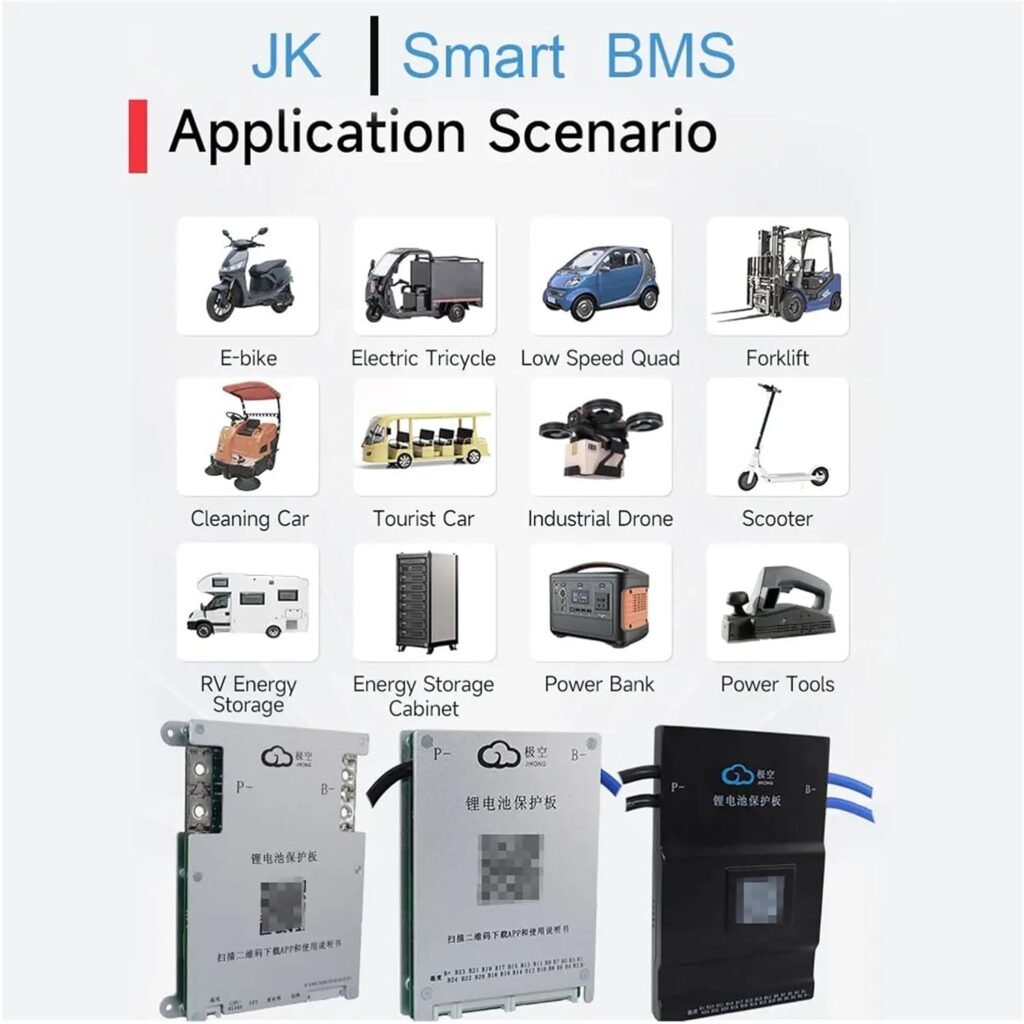
The JK Smart BMS is clearly aimed at DIY energy storage and custom battery builds, but its use cases go well beyond that. If we are building any multi-cell lithium pack, there is a good chance this BMS may be suitable.
We appreciate that it supports a broad range of system voltages and chemistries, which opens up a lot of practical scenarios.
DIY Solar and Off-Grid Systems
For many of us, the obvious fit is in solar battery banks for cabins, small homes, sheds, or off-grid setups. With series options up to 24S and currents up to several hundred amps, it can support:
- Solar-charged battery banks with inverters
- Hybrid grid-tied backup systems (on the DC side)
- Small to medium off-grid power systems
We like that we can keep close track of the battery’s state via Bluetooth without installing a separate battery monitor.
RVs, Vans, Boats, and Mobile Applications
In RVs, vans, and boats, lithium packs must be both safe and flexible. We might have generators, alternators, shore power, and solar all feeding the same system.
We find the JK BMS useful in:
- Camper van conversions using LiFePO4 batteries
- Boat house banks needing reliable protection and monitoring
- RVs that mix solar and alternator charging
The active balancing helps maintain pack health over long trips, and the low-temperature charge shutoff is important when we park in colder places.
Backup Power and General DIY Projects
We can also use this BMS in:
- Home backup power boxes
- Portable power stations (DIY style)
- Workshop battery banks to run tools or equipment
We like this versatility because we can create multiple battery packs for different purposes using a similar BMS platform and app interface.
Installation and Setup Considerations
While the product brings a lot of functionality, it also demands that we pay attention during installation. This is not a plug-and-play gadget; it is more like a critical component we must integrate carefully into our system.
We recommend we be comfortable with wiring, understand series cell configurations, and follow safety guidelines while working with high-energy packs.
Wiring the Series Cells
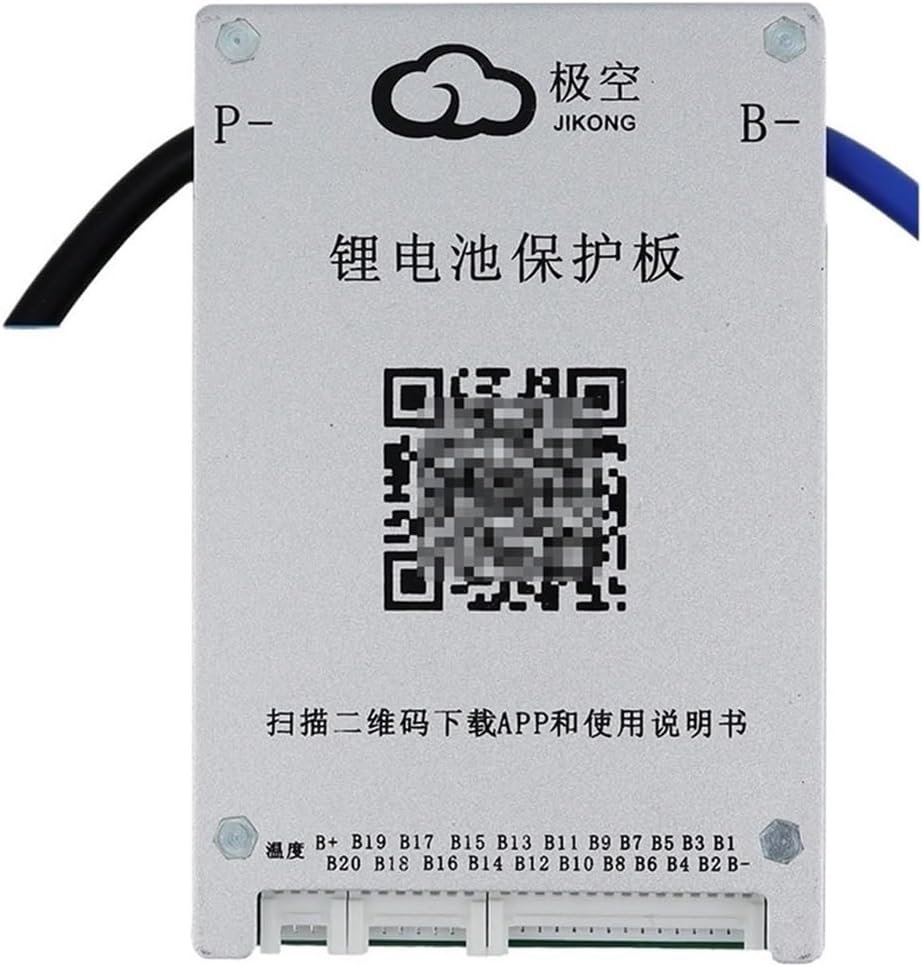
The BMS requires us to connect sense wires to each cell (or parallel cell group) in the battery pack. In a 16S configuration, for example, there will be 17 connection points (pack negative plus each cell step up to pack positive).
We must:
- Ensure each sense wire is connected to the correct terminal
- Double-check polarity to avoid damaging the BMS
- Use proper strain relief so wires do not loosen or break over time
We take our time during this stage because mistakes can lead to BMS damage or incorrect readings.
Mounting the BMS and Managing Heat
The JK BMS is a powerful device that may handle high currents, so we want to give it a secure mounting location with some airflow.
We consider:
- Mounting it on a non-conductive surface
- Allowing space around the unit
- Keeping it away from direct sources of heat or moisture
These steps help keep both the electronics and our battery system more reliable over the long term.
Initial Configuration via the App
After physical installation, we connect via the JK app and:
- Select or verify the correct cell count (S) and chemistry
- Set up charge and discharge voltage thresholds
- Confirm temperature sensor assignments and limits
- Review default balancing behavior and adjust if needed
We find this initial setup stage crucial to ensure the BMS is actually protecting our pack according to cell specs, not just generic factory defaults.
Real-Time Monitoring: What Data We Can See
One of our favorite aspects of this JK BMS is the depth of real-time data it provides. Instead of guessing or relying only on voltage, we can examine what each cell is doing individually.
We see this as extremely valuable for troubleshooting and for understanding our pack’s true health.
Cell-Level Voltages and Balancing Status
From the app, we can typically see:
- The voltage of each cell in the series string
- The overall pack voltage
- Whether active balancing is currently running on any cell
We like this visibility because it lets us spot problems such as:
- A weak cell that drifts lower than others under load
- An overachieving cell that charges slightly higher than the rest
- General pack imbalance that might signal aging or damage
With this knowledge, we can act early rather than waiting for something to fail.
Current, Power, and Temperature
The BMS also offers data such as:
- Charge and discharge current
- Calculated power (W) in many cases
- Battery temperature(s) via probes
We find monitoring temperature especially important for LiFePO4 or any pack that lives in a variable environment. Seeing how quickly the pack warms under heavy loads can help us adjust usage patterns or add cooling if needed.
Advantages We Gain by Using the JK Smart BMS
We think it helps to summarize the main benefits this product offers us as battery builders and users. It brings several strengths that stand out relative to basic BMS boards.
We see these advantages as a cluster of improved efficiency, safety, and visibility into our system.
Higher Efficiency Through Active Balancing
The active balancing system with up to 0.6–2A balance current and around 99% efficiency allows:
- Better usage of the full capacity of the pack
- Reduced energy waste as heat
- More consistent performance across the cells
We value this particularly for larger battery banks where small imbalances can otherwise lead to gradual capacity loss.
Extended Battery Life
By keeping cells in tighter voltage alignment, protecting them from overcharge and deep discharge, and avoiding low-temperature charging, we greatly improve our odds of longer battery lifespan.
We look at it this way: a BMS like this helps protect our investment in high-quality cells. We are not just protecting against catastrophic failure, but also guarding against the slow wear and damage that shortens life.
Flexible Use Across Multiple Projects
Because the JK BMS supports various chemistries and a wide range of S counts and currents, we might be able to standardize on this one BMS family for multiple packs.
We appreciate that we can:
- Use one model for a 24V LiFePO4 pack in a camper
- Use another higher-current model for a 48V solar bank
- Keep a similar app interface and configuration style
This reduces our learning curve and simplifies maintenance and monitoring when we manage more than one system.
Potential Limitations and Things to Keep in Mind
No product is perfect, and we want to be honest about potential limitations or considerations we should keep in mind before committing to a BMS like this.
We find that being realistic about constraints helps us design our systems more safely and cost-effectively.
Complexity for Beginners
The JK Smart BMS is more advanced and configurable than a basic plug-and-play BMS. That means:
- More settings to understand
- More wires to manage
- A bit more learning curve for newcomers
If we are completely new to battery building, we should be ready to invest time in reading documentation and understanding how series packs and BMS systems work. We might also benefit from looking up user guides or community tutorials specifically related to JK BMS units.
Bluetooth and App Dependence
While the Bluetooth app is a big strength, we should be aware of:
- Relying on a smartphone for most advanced settings
- Potential app updates that change interface or behavior
- The need to keep the app and firmware reasonably up to date
We do not necessarily need to have the app open all the time, but we want to be sure we are comfortable managing our system via a phone or tablet.
Proper Sizing Is Essential
Because this BMS comes in many current ratings, we must choose the right size for our application. Using a unit that is undersized for our loads could lead to:
- Unwanted shutoffs from over-current
- Overheating and long-term reliability issues
We prefer to over-spec by a reasonable margin so we are not constantly pushing the BMS to its limit.
How the JK BMS Compares to Basic BMS Boards
Many of us might have used simple BMS boards that just provide basic over/under voltage protection and maybe passive balancing. Compared to those, this JK unit is more like a small battery management system platform than a minimal safety circuit.
We consider whether the extra cost and complexity are justified for our particular use case.
Feature Comparison Summary
Here is how we might compare this JK BMS to a typical basic board:
| Aspect | Basic Low-Cost BMS | JK Smart BMS Battery Equalizer |
|---|---|---|
| Balancing Type | Usually passive, low current | Active balancing, 0.6–2A, ~99% efficiency |
| Monitoring | Little or no live data | Full app-based monitoring, cell-level info |
| Configuration | Fixed settings or limited adjustments | Configurable via dedicated app |
| Protections | Basic volt/overcurrent | Full set including low-temp charge shutoff |
| Supported Chemistries | Often one preset | Li-ion, LiFePO4, LTO (configurable) |
| Use Cases | Small simple packs | DIY solar, RV, larger off-grid, higher currents |
We see clearly that the JK BMS is aimed at more serious and flexible systems where we want visibility and control, not just bare-minimum safety.
When Is This BMS Worth It?
We feel it makes the most sense when:
- Our battery pack is relatively large or expensive
- We care about long lifespan and efficiency
- We want to monitor and adjust our system frequently
- We use our pack in demanding or safety-critical environments
If our project is small and very basic, a simpler BMS might be enough, but when we value data and control, a smart BMS like this becomes much more attractive.
Tips for Getting the Most Out of the JK Smart BMS
To truly benefit from what this BMS offers, we can follow a few best practices in both hardware and software setup.
We think of these as steps to turn the BMS from a safety net into an active part of our power management strategy.
Match Settings to Our Cell Manufacturer’s Specs
Instead of relying on generic presets, we take the time to:
- Look up recommended charge and discharge voltages
- Check maximum continuous and peak current ratings
- Note safe temperature ranges for charging and discharging
Then we align the BMS parameters with those manufacturer guidelines. This helps us squeeze the best performance and longevity from our cells without unnecessary risk.
Regularly Check Cell Balance and Temperature
Even with active balancing, we occasionally open the app to:
- Confirm that cell voltages are reasonably matched
- Look for any one cell that drifts regularly
- Observe how the pack warms up under heavy use
We see these checks as an early warning system. If something starts to drift, we can investigate before it becomes a bigger issue.
Use Proper Fusing and System Design
The BMS is just one part of a safe system. We also:
- Add fuses or circuit breakers appropriate to pack voltage and current
- Use proper cable sizes and secure all terminals
- Never bypass or ignore protective components
We like to treat high-power DC systems with the same respect as high-voltage AC systems, because they can be just as dangerous if built carelessly.
Situations Where This JK BMS Fits Perfectly
To help clarify whether this product is right for us, it can help to think about some specific situations where it shines. We picture ourselves in these use cases to see if it matches our needs.
We find that this mental exercise often simplifies our choice.
Building a 48V LiFePO4 Bank for Solar Storage
If we are building a 48V 16S LiFePO4 battery to pair with a solar charge controller and inverter, the JK BMS gives us:
- Active balancing to keep 16 cells in alignment
- Bluetooth data to check state of the bank from indoors
- Adjustable voltage and temperature settings for LFP chemistry
We can see this as an excellent match for a cabin or small off-grid home that needs reliable daily cycling.
Upgrading an RV From Lead-Acid to Lithium
When we replace lead-acid with 12V or 24V LiFePO4 packs in an RV, we want:
- Reliable protection against over-discharge while boondocking
- Clear cell-level visibility to catch any problematic cell early
- Low-temperature charge shutdown during cold weather trips
Here, the JK BMS serves as our core safety and monitoring system, making the upgrade safer and more manageable over the long term.
DIY Portable Power Station
If we are building a homemade power box with a battery pack, inverter, and perhaps solar input, we can use the JK BMS to:
- Manage the internal battery pack
- Provide accurate monitoring of cell health
- Handle moderate to high discharge currents from the inverter
We see it as a way to approach the functionality of commercial power stations, but with more customization and often at a lower cost, as long as we are comfortable with DIY work.
Longevity and Reliability Expectations
A strong BMS can help our battery pack last longer, but we also want the BMS itself to be reliable. While real-world lifetime depends on many factors, this unit’s feature set suggests that it is designed for frequent and continuous use.
We treat the BMS as a long-term infrastructure component of our system, not a disposable accessory.
Reducing Stress on Cells
By enforcing reasonable:
- Voltage limits
- Current limits
- Temperature thresholds
the BMS reduces stress on the cells, which in turn reduces the rate of capacity loss and degradation. Active balancing keeps cells closer together in state of charge, which also contributes to more uniform aging.
We often think of this as an insurance policy for the thousands of cycles we hope to get from our cells.
Monitoring Over Time
Long-term reliability is also about catching issues early. Over months and years, we can periodically review:
- Trends in cell voltage differences
- Shifts in capacity as measured by charge/discharge data
- Changes in how often balancing is triggered
We see this ongoing observation as a way to learn the “behavior” of our battery and react if something starts to go off pattern.
Our Overall Impression and Final Thoughts
We see the JK BMS Battery Equalizer Jk Smart BMS Balance BT 8s 10s 16s 20s 21s 24s as a powerful and flexible battery management solution for serious DIYers and small system builders. By combining active balancing, Bluetooth monitoring, configurable protection, and support for various chemistries and voltages, it moves well beyond the role of a basic protection board.
We appreciate the JK-own app development, which gives us a more integrated and polished way to configure and monitor our system. The active balancing with up to 0.6–2A balance current and around 99% efficiency stands out as one of the key benefits, especially for larger or more expensive packs.
We also recognize that this BMS is not a beginner toy; it requires careful installation, correct sizing, and thoughtful configuration. If we are willing to invest that effort, we gain more control, more data, and better long-term protection for our batteries.
For our DIY solar banks, RV lithium upgrades, off-grid projects, or custom energy storage, this JK Smart BMS offers a compelling balance of sophistication, flexibility, and safety. If we want to truly understand and manage what our battery is doing—and help it provide reliable power for years—it is a strong contender that deserves serious consideration.
Disclosure: As an Amazon Associate, I earn from qualifying purchases.