Have we ever wished our battery packs could just take care of themselves, stay balanced, and keep us updated in real time without constant tinkering?

What Is the NURII JK BMS Battery Protection Module?
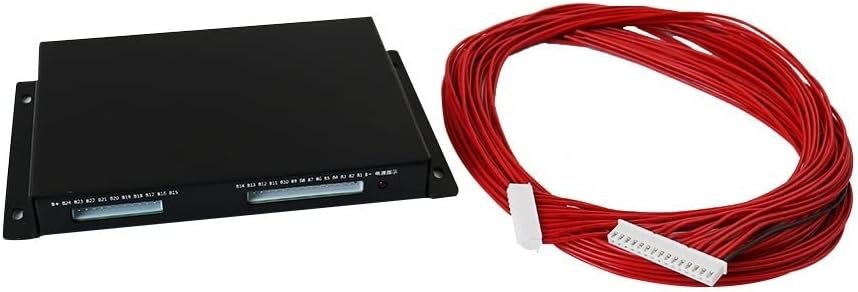
When we first look at the NURII JK BMS Battery Protection Module JK Balancer 8S–24S (B10A24S, JK), we are really looking at a smart, active balancing battery management system designed for multi-cell Li-ion and LiFePO4 battery packs. It is built to protect, monitor, and maximize the performance of our battery bank.
This particular version is aimed at users who need reliable active balancing for packs ranging from 8 cells up to 24 cells in series, with equalization currents up to 10A. It sits at the heart of our battery pack and makes a big difference in longevity and safety.
Who Is This BMS For?
We can think of this module as a great fit for anyone building or managing custom battery packs. That may be for home energy storage, solar systems, DIY powerwalls, RVs, boats, e-bikes, or even lab and hobby projects.
It is not just for professionals. As long as we are comfortable wiring multi-cell packs, following electrical safety rules, and using an app to adjust settings, we can benefit from this system. It does reward careful planning and setup, though.
Key Features at a Glance
To get a quick sense of what we are working with, we can break down the main features in a simple table. These are high-level points that define what this BMS actually does for our batteries.
| Feature Category | Description |
|---|---|
| Cell Support | Supports configurations from 8S up to 24S battery packs |
| Balancing Type | Smart active equalizer / balancer |
| Balancing Current | Up to 10A (depending on version; this model is B10A24S) |
| Supported Chemistries | Li-ion and LiFePO4 |
| Protections | Over-charge, over-discharge, over-current, short circuit, low-temperature charge cutoff |
| Communication | Bluetooth connection with dedicated JK mobile app |
| Efficiency | Balancing efficiency rated up to around 99% usage efficiency of the battery pack |
| Application Scope | Home storage, solar, RV, marine, DIY packs, and more |
This summary already hints that we are dealing with more than a simple protection board. It is a fairly advanced active BMS with app control and robust protection logic built in.

Understanding Smart Active Balancing
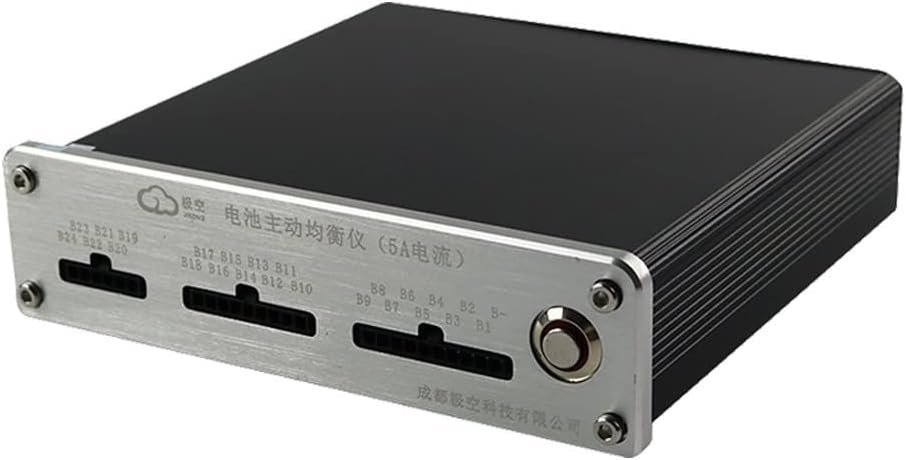
Active balancing is really the standout feature of this JK BMS. Instead of just bleeding off excess energy as heat (like many passive BMS systems), this BMS actively moves energy from higher-voltage cells to lower-voltage cells.
We can think of it as a small energy traffic controller inside our pack, constantly transferring charge around to keep everything as equal as possible and reduce wasted capacity.
How Active Balancing Works in Practice
With active balancing, when some cells get fuller or higher in voltage than others, the BMS shifts that extra energy toward cells that are lagging behind. The process continues while we charge or discharge, helping our whole pack behave like a single unified battery rather than a bunch of mismatched cells.
Over time, this matters because as cells age and drift slightly apart, a pack without good balancing wastes capacity. We end up hitting the top or bottom limits based on the weakest or strongest cell rather than the pack as a whole. This BMS tries to fix that problem before it becomes a major issue.
Why Balancing Efficiency Matters (Up to 99%)
The product description claims up to 99% battery usage efficiency. In simple terms, that means the balancer is designed so that nearly all of our cell capacity can be used, assuming the pack is otherwise healthy and properly sized.
In a poorly balanced system, we might think we have a large capacity pack, but the BMS shuts things down early to protect one or two problematic cells. By keeping cells aligned, this JK BMS helps us reach closer to the true potential of the pack we paid for.
Better balance also reduces stress on individual cells. When no cell is constantly overcharged or over-discharged relative to the others, we extend the overall life of the battery bank. For a solar battery or off-grid storage system, that can translate into years of extra service.
Supported Battery Types: Li-ion and LiFePO4
This model supports both Li-ion and LiFePO4 chemistries, which gives us a lot of flexibility. Each chemistry has its own characteristics and uses, so having a BMS that can handle both is a real advantage.
We should make sure to set the BMS correctly for our chemistry. LiFePO4 has different charge voltage ranges and cutoff thresholds compared with typical Li-ion packs, and using correct settings is crucial for safety and performance.
When We Might Choose LiFePO4 vs Li-ion
LiFePO4 is often the choice for home storage, RVs, and boats due to its stability, long cycle life, and relatively flat discharge curve. Li-ion packs might be more common in e-bikes, scooters, and tools where energy density is critical.
This BMS being compatible with both allows us to reuse it across different projects or upgrade pack chemistries without needing entirely new management hardware.
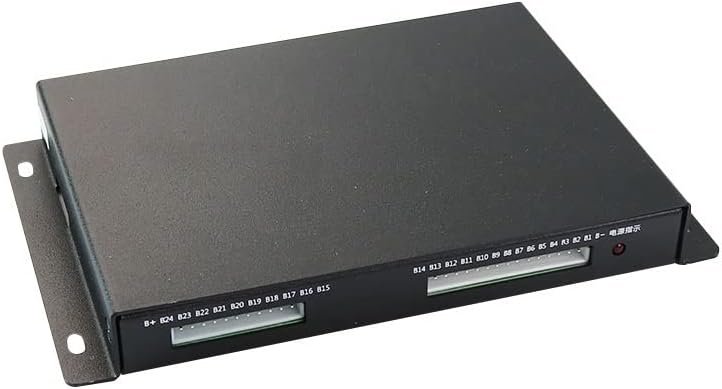
Cell Configuration: 8S to 24S Flexibility
One of the strong points of this JK BMS is its wide range of supported series configurations: 8S, 13S, 14S, 16S, 17S, 21S, 24S, and others in between 8 and 24 cells.
This means we can use the same type of board for many different system voltages, for example:
- 8S LiFePO4 ≈ 24 V nominal
- 16S LiFePO4 ≈ 48 V nominal
- 24S LiFePO4 ≈ 76.8 V nominal
For Li-ion, the nominal voltages will be slightly higher, but the same idea applies. This flexibility simplifies sourcing and allows us to standardize on one style of BMS across several projects.
We do need to read the wiring documentation carefully, because each cell count configuration has its own way to connect the balance leads and main outputs. Getting that wrong can damage the BMS or the pack, so step-by-step double-checking is essential.
Protection Functions: Keeping Our Pack Safe
Protection features are at the core of any BMS, and here the JK module covers the key areas we want to see. These safeguards exist to protect both our batteries and our downstream equipment.
The main protection functions include:
- Over-charge protection
- Over-discharge protection
- Over-current protection
- Short circuit protection
- Low-temperature charging cutoff
Let us walk through each in everyday terms.
Over-Charge and Over-Discharge Protection
Over-charging cells can permanently damage them or, in the worst cases, create serious safety hazards. Over-discharging can also degrade cells, reducing capacity and cycle life. This BMS monitors the voltage of each cell and makes sure none exceed the safe upper or lower thresholds.
If a cell goes beyond the set voltage, the BMS will cut charging or discharging accordingly. That way, even if our charger or load is not perfectly tuned, the BMS acts as the final safety gate.
Over-Current and Short Circuit Protection
If we pull too much current or accidentally create a short, the currents can spike extremely high. Components can burn, cables can melt, and cells can be irreversibly damaged.
The BMS constantly monitors current and, if it detects an abnormal surge or short, it will open the circuit. In practice, this means a quick protective shutdown rather than catastrophic failure. We still need to size our cables and fuses correctly, but having a smart layer of current protection in the BMS is a big help.
Low-Temperature Charging Cutoff
Lithium batteries do not like being charged at low temperatures, especially below freezing. Charging when too cold can cause plating and long-term damage, which silently reduces capacity.
By including a low-temperature charging cutoff, this BMS monitors the temperature and prevents charging if the pack is outside safe limits. For anyone using batteries in colder climates or unheated spaces, this is more than a nice extra; it is protection for our investment.
JK Proprietary App and Bluetooth Connectivity
A modern BMS really shines when it offers transparent monitoring, and this JK module provides that through its own dedicated mobile app. With built-in Bluetooth communication, we can see the real-time status of our battery pack on a phone or tablet.
That may sound like a small convenience, but when we are managing large or remote systems, it is incredibly valuable to confirm at a glance that everything is behaving normally.
Real-Time Data at Our Fingertips
The app generally provides views like:
- Individual cell voltages
- Pack voltage and current
- State of charge (SOC) estimation
- Temperature readings
- Balancing status and logs (depending on firmware)
Instead of guessing or using a multimeter on each cell, we can verify that all cells are within acceptable ranges. If we notice a cell drifting consistently, we have early warning before something becomes critical.
Customizing BMS Settings Through the App
Beyond monitoring, the app allows us to adjust various protection thresholds and behavior settings. We can tune cutoffs, current limits, and sometimes even balance parameters.
This makes the BMS feel less like a fixed black box and more like a configurable control unit. As our system evolves or we change use cases (for example, from daily cycling to backup-only), we can adapt the settings accordingly.
We should always change settings cautiously and keep records, though. Misconfigured thresholds can undermine protection, so we want to strike a balance between performance and safety.
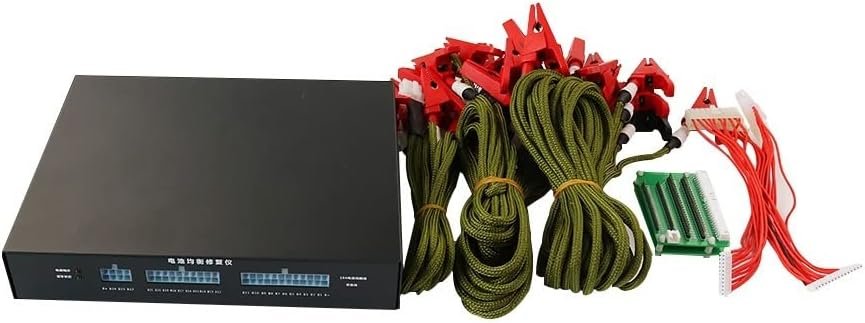
Practical Use Cases for the JK BMS
Because of its flexibility, this BMS fits into many real-world scenarios. Let us think through several practical examples where this module can shine.
Home Energy Storage and Solar Systems
For home solar systems using LiFePO4 or Li-ion packs, we want high cycle life, solid protection, and good visibility. This BMS provides all three, along with active balancing that becomes more valuable over years of daily cycling.
We can pair it with an inverter/charger and integrate it into an off-grid or hybrid setup. The app then acts as our quick reference tool anytime we want to verify pack conditions.
RV and Van Conversions
In RVs and camper vans, space and safety are crucial. A robust BMS helps us avoid surprises in the middle of a trip. With Bluetooth monitoring, we can quickly check battery status from a phone while inside the vehicle.
Low-temperature charge cutoff is especially useful if our vehicle experiences cold nights. Protecting our pack when parked or stored is critical, and automated cutoff gives peace of mind.
Boats and Marine Applications
Marine environments can be harsh, with vibration, humidity, and sometimes limited access to the battery compartment. Having a smart BMS that autonomously protects and balances our pack reduces maintenance demands.
We can sit at the helm or cabin and check the app instead of crawling into tight spaces with a meter. That convenience alone can make a real difference over time.
DIY Powerwalls and Hobby Projects
For those of us building experimental projects, test benches, or DIY powerwalls, this BMS offers a strong combination of control and adaptability. Its support for 8S–24S means we can experiment with different configurations using a consistent management system.
We still need to respect proper wiring and safety guidelines, but having an advanced BMS with active balancing allows us to push our designs while still protecting our cells.
Installation Considerations and Need for Care
While this module brings many features, we need to be honest: installing and configuring a multi-cell BMS is not plug-and-play for everyone. It demands careful attention to wiring diagrams and a methodical approach.
We are working with potentially high voltages and substantial energy. Miswiring or rushing can lead to damaged cells, damaged hardware, or even personal injury.
Wiring the BMS Correctly
The typical installation requires:
- Connecting the main positive and negative terminals of the pack
- Running balance leads from each cell tap to the appropriate BMS terminals
- Connecting temperature sensors, if included
- Integrating input/output to chargers and loads through the correct BMS channels
We must never guess the order of balance wires. Following the provided diagram and verifying cell polarity and sequence is non-negotiable. Many failures happen because one balance lead is connected in the wrong position, causing local over-voltage at the BMS pins.
A good practice is to check:
- Cell voltages individually before connection.
- Combined pack voltage to confirm the expected sum.
- Wiring continuity and polarity with a meter before finally plugging into the BMS.
Choosing the Correct Board Variant
The manufacturer specifically reminds us to carefully check product parameters before purchase. That includes:
- Maximum series count (S)
- Maximum continuous current capacity
- Supported chemistry (LiFePO4 vs Li-ion)
- Size and layout of the board
Choosing an undersized BMS for a high-current system can lead to overheating, nuisance trip-offs, or even component failure. On the flip side, oversized boards may be more robust but also more expensive and physically larger.
We should match the board capability with:
- Our intended peak and continuous discharge current
- Our charger rating
- Our number of cells and nominal system voltage
Safety and Unique Design Focus
The product description stresses “USE SAFETY” and “UNIQUE DESIGN,” which suggests emphasis on user protection and optimized circuit layout. While marketing phrases do not always tell the whole story, the combination of robust protection features and active balancing indicates a thoughtfully designed system.
We still have to bring our own safe habits: appropriate enclosure, correct fusing, proper cable sizing, and ventilation. The BMS is a key part of the puzzle, but system-level safety comes from all the parts working together properly.
Safety Tips When Working With This BMS
To keep our setup as safe as possible, a few practical principles help:
- Always disconnect chargers and loads before making changes to wiring.
- Use insulated tools when working near battery terminals.
- Fuse the main positive line near the battery to protect wiring.
- Keep the BMS in an environment within its rated temperature range.
- Avoid moisture and conductive debris near the board.
These habits, combined with the built-in protections of the JK BMS, significantly reduce the risk of unpleasant surprises.
Everyday User Experience
Living with this BMS day to day is mostly about forgetting that it is there, in a good way. Once installed and configured correctly, it tends to run quietly in the background, keeping our pack in check.
We interact with it through the app whenever we want more detail or need to adjust settings. Otherwise, it simply monitors and corrects imbalances as we charge and discharge.
App Interaction and Monitoring Routine
In regular use, we might develop a simple routine:
- Check overall pack voltage and SOC before heavy use.
- Occasionally confirm that cell voltages are within a few millivolts of each other.
- Watch for any cells consistently lagging that might indicate a developing problem.
- Review protection log or history if the pack ever stops unexpectedly.
Having quick visual access encourages us to stay informed about pack health, and small trends become visible long before they would in a purely analog or passive setup.
Performance: Active Balancing Currents and Real-World Gains
The B10A24S variant indicates a balancing current capacity up to 10A. That is a substantial equalization current compared with many basic BMS units that only bleed a fraction of an amp through resistors.
High balancing current matters especially for large or mismatched packs where cells may drift more significantly. With a strong active balancer, those imbalances can be corrected quickly rather than slowly over many cycles.
What That Means for Our Battery Lifespan
Over many charge and discharge cycles, even small imbalances accumulate. Without a capable balancer, we might end up underutilizing our capacity or stressing particular cells. That increases the risk of early failure in part of the pack, which then drags down the whole system.
By maintaining tighter voltage alignment, we reduce the need to push any cell close to absolute limits. Over time, that translates into more usable cycles and a better return on the money we spent on batteries.
Pros and Cons of the NURII JK BMS Module
To keep our thinking organized, it helps to summarize what stands out positively and where we may need to be cautious. No product is perfect, and understanding trade-offs helps us decide if it is right for our application.
Advantages
- Active balancing with high equalization current: Provides serious balancing performance and high efficiency.
- Support for 8S to 24S configurations: Lets us cover many pack voltages with a single platform.
- Li-ion and LiFePO4 compatibility: Gives us flexibility in chemistry choice.
- Comprehensive protection features: Includes over-charge, over-discharge, over-current, short circuit, and low-temperature charge cutoff.
- Bluetooth app with real-time monitoring: Makes it easy to see what is happening inside the pack.
- Fine-tunable behavior: App-based settings provide control for more advanced users.
Potential Drawbacks
- Installation complexity: Multi-cell, multi-series BMS wiring requires care and experience. It is not ideal for complete beginners without guidance.
- Reliance on the app for full functionality: To get the most out of it, we need to be comfortable with the mobile interface and keep firmware/app updated if necessary.
- System integration needed: We still need external fuses, enclosures, and proper wiring practices; the BMS does not replace good system design.
Understanding these points helps us decide if we are ready for a more advanced BMS or if we would prefer something simpler for a first project.
Comparing Active Balancing vs Passive Balancing
Many more basic BMS boards use passive balancing, where extra energy from higher cells is simply burned off as heat through resistors. It is simple and cheap but wastes energy and usually runs at low currents.
Active balancing, as used here, differs in several significant ways:
| Aspect | Passive Balancing | Active Balancing (Like This JK BMS) |
|---|---|---|
| Method | Bleeds energy as heat from high cells | Transfers energy from high cells to low cells |
| Efficiency | Lower, energy wasted as heat | Higher, much of energy is reused |
| Balancing Current | Typically low (tens to hundreds of mA) | Higher, up to amps range (here up to 10A) |
| Impact on Capacity | More capacity lost to heat | Better use of available pack capacity |
| Complexity | Simple circuitry | More complex and intelligent circuitry |
If we are building small packs, passive may be fine. For larger energy storage projects, active balancing gives us better long-term performance and less waste, which is where this JK BMS becomes more compelling.
Importance of Choosing the Right Series Count and Version
Because this product line includes variants like 8S, 13S, 14S, 16S, 17S, 21S, and 24S, we need to be absolutely sure we match our pack configuration correctly. The incorrect BMS will either not work or work in a dangerous way.
We want to be certain about:
- Our exact number of cells in series.
- The nominal and maximum voltages.
- The recommended BMS configuration for that count.
If we plan to expand our system in the future (for example, start with 16S and later move to 24S), it may be worth selecting a BMS variant that can accommodate our future plan. That said, we should never mismatch the series count at the time of wiring; the board configuration must match the existing physical pack wiring.
Long-Term Reliability and Maintenance
A BMS is only as useful as its long-term stability. Even though this is an electronic device with no moving parts, it still faces thermal stress, potential environmental exposure, and continuous electrical load.
We can improve its longevity with some commonsense practices:
- Mounting it in a dry, clean, and reasonably cool area.
- Avoiding direct contact with metal surfaces that could cause shorts.
- Ensuring adequate airflow if the board is in a confined box.
- Inspecting connectors and wiring periodically for corrosion or loosening.
Because the BMS is constantly measuring and switching, it will naturally generate some heat. Designing our enclosure and system layout to dissipate that heat will help keep it working smoothly for years.
Our Overall Impressions
Looking at the feature set and intended use, we see the NURII JK BMS Battery Protection Module JK Balancer 8S–24S (B10A24S, JK) as a strong option for serious DIYers and system builders who want advanced battery management, not just minimal protection.
Its active balancing, significant equalization current, flexible series support, and dedicated app control set it apart from basic boards. It demands some responsibility and understanding from us as users, but it rewards that with improved efficiency, extended battery life, and much better visibility.
If we already put time and money into a substantial Li-ion or LiFePO4 pack, pairing it with a capable BMS like this one makes a lot of sense. We are effectively protecting our investment, gaining insight into pack health, and getting closer to the performance we expect from our battery system.
Should We Choose This BMS for Our Project?
To decide, we can ask ourselves a few simple questions:
- Are we working with 8–24 cells in series, and do we want the ability to handle higher series counts?
- Do we value real-time monitoring and the ability to adjust protection thresholds through an app?
- Are we comfortable following detailed wiring instructions or willing to learn?
- Is our project large enough that active balancing and efficiency materially matter to us?
If the answer is yes to most of these, this JK BMS fits well. It is not the lightest-weight, simplest solution, but it offers a much more advanced level of battery care.
For smaller or very simple packs, some may choose something more basic. But for substantial systems where pack health, efficiency, and lifespan are priorities, investing in a smart, active BMS like this is often a smart long-term choice.
In the end, our batteries are only as good as the management they receive. With the NURII JK Active Balance BMS, we put a capable guardian in charge of our pack, helping ensure that our stored energy stays safe, efficient, and ready for whatever we ask of it.
Disclosure: As an Amazon Associate, I earn from qualifying purchases.