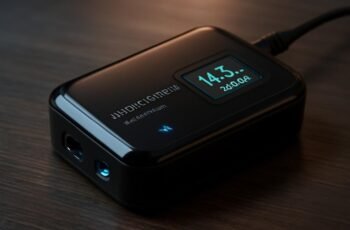
When considering the integration of smart 36V LiFePO4 chargers, it’s essential to understand how their advanced circuitry and real-time monitoring contribute to efficient and safe battery management. These chargers employ adaptive algorithms and communication interfaces that optimize charging cycles, but the specifics of their operation and benefits can vary widely. Exploring these differences can reveal critical insights into maximizing battery performance and lifespan, prompting us to examine what sets the top models apart and how they support sustainable energy solutions.
Key Takeaways
- Smart 36V LiFePO4 chargers utilize intelligent circuitry for real-time monitoring and adaptive charging algorithms to optimize battery lifespan and safety.
- They include advanced protection features like overcurrent, overvoltage, reverse polarity, and temperature monitoring for safe operation.
- Compatibility depends on matching charger voltage to the battery pack’s nominal and full-charge voltages, typically around 3.2V to 3.65V per cell.
- Connectivity options such as Bluetooth or CAN bus enable real-time diagnostics and remote monitoring of charging status.
- Proper installation and troubleshooting involve verifying wiring, ensuring correct polarity, updating firmware, and inspecting communication protocols.
How Do Smart 36V LiFePO4 Chargers Work?
How exactly do smart 36V LiFePO4 chargers operate to ensure efficient and safe battery management? These chargers utilize intelligent circuitry to monitor voltage, current, and temperature in real-time, enabling precise control through smart charging algorithms. This dynamic feedback loop optimizes the charging process, preventing overcharging and thermal runaway while maximizing battery lifespan. Advanced battery management features automatically adjust charging parameters based on the battery’s state of health, ensuring safety and longevity. By integrating communication protocols, these chargers can relay data to external systems or user interfaces, providing insights into charge status and health metrics. Overall, smart charging functions in these chargers deliver a sophisticated approach to battery management, balancing performance, safety, and efficiency in a compact, automated system.
Key Features to Look for in a Smart 36V LiFePO4 Charger
When selecting a smart 36V LiFePO4 charger, we prioritize intelligent charging capabilities that optimize battery health and efficiency. Compatibility with various voltage ranges and system types ensures versatility, while robust safety and protection features prevent damage and extend lifespan. Focusing on these core attributes helps us identify chargers that deliver reliable, safe, and effective performance.
Intelligent Charging Capabilities
What specific features should we prioritize in a smart 36V LiFePO4 charger to ensure ideal performance and safety? First, adaptive charging algorithms optimize battery efficiency by adjusting current and voltage in real-time. Second, integrated temperature sensors prevent overheating, maintaining safe operation. Third, advanced microprocessors enable precise state-of-charge detection, avoiding overcharging or deep discharges. Fourth, communication interfaces like Bluetooth or CAN bus facilitate real-time monitoring and diagnostics. These intelligent charging capabilities enhance overall system reliability, optimize battery lifespan, and ensure safety during operation. By selecting chargers with these features, we guarantee efficient energy transfer, prolong battery health, and maintain optimal performance in diverse conditions—all critical for advanced applications.
Compatibility and Voltage Range
Ensuring compatibility and an appropriate voltage range in a smart 36V LiFePO4 charger is fundamental to achieving optimal performance and safeguarding the battery system. Compatibility involves matching the charger’s voltage specifications with the battery pack’s nominal and full charge voltages, preventing issues like overcharging or undercharging. A charger with a stray idea of a broader voltage range may seem advantageous but can introduce irrelevant topics that compromise efficiency. The voltage range should precisely cover the battery’s charging window—typically around 3.2V to 3.65V per cell—without exceeding limits. This ensures safe, efficient charging. A mismatch or an overly broad voltage range can lead to incompatible components or overlooked details, making the charger ineffective or risky. The focus must stay on precise compatibility, not irrelevant topics that distract from core functionality.
Safety and Protection Features
Safety and protection features are critical components of a smart 36V LiFePO4 charger, as they directly influence the longevity and reliability of the battery system. Robust protection mechanisms ensure safe operation and prevent damage from irrelevant topics like overloads or short circuits. Key features include:
- Overcurrent protection, which prevents excessive current flow that could damage cells.
- Overvoltage cutoff, safeguarding against voltage spikes unrelated to normal operation.
- Temperature monitoring to avoid overheating, especially in high ambient conditions.
- Reverse polarity protection, shielding the system from incorrect connections.
These features act as a comprehensive safety net, maintaining charger integrity and extending battery life. Prioritizing these protections ensures optimal performance and reduces the risk of catastrophic failure due to overlooked safety measures, unlike unrelated concepts such as aesthetics or marketing claims.
Benefits of Using a Smart Charger for Your 36V LiFePO4 Battery
Using a smart charger with your 36V LiFePO4 battery offers precise control over the charging process, improving battery performance and longevity. These chargers adapt their output based on real-time data, preventing overcharging and minimizing degradation. This ensures consistent battery health, extending operational life. Additionally, smart chargers reduce costs by improving energy use and avoiding unnecessary cycles. The table below highlights key advantages:
| Benefit | Technical Impact |
|---|---|
| Battery health | Maintains optimal voltage, reduces aging |
| Cost savings | Minimizes energy waste and replacement expenses |
| Charging efficiency | Faster, more reliable charge cycles |
| Longevity | Delays capacity fade, prolongs service life |
How to Properly Install and Connect Your Smart 36V LiFePO4 Charger
Have you prepared the necessary components and tools to correctly install your smart 36V LiFePO4 charger? Proper connection ensures safety and optimal performance, avoiding irrelevant topics like random pairing that could compromise system integrity. First, identify the charger’s output wires and the battery terminals. Second, ensure the battery disconnect switch is off before connecting. Third, connect the positive terminal of the charger to the battery’s positive terminal, then repeat for the negative terminal, maintaining correct polarity. Fourth, verify all connections are secure and insulated. Use a multimeter to confirm voltage consistency. When installing, avoid irrelevant topics such as unrelated wiring setups, focusing strictly on the correct pairing of charger and battery. Proper installation guarantees reliable operation and prolongs battery lifespan.
Troubleshooting Common Issues With Smart 36V Lifepo4 Chargers
We need to identify the root causes of charging malfunctions, such as voltage irregularities or faulty sensors, to ensure optimal performance. Additionally, troubleshooting connectivity issues involves examining wiring integrity, communication protocols, and firmware status. Addressing these points systematically helps maintain reliable operation of smart 36V Lifepo4 chargers.
Charging Malfunctions Causes
What are the primary causes behind charging malfunctions in smart 36V Lifepo4 chargers? These issues often stem from factors affecting battery chemistry or system integration. First, incorrect or degraded battery chemistry can disrupt proper charge flow, especially if the charger isn’t optimized for Lifepo4 cells. Second, faulty voltage sensing components may misinterpret battery state, leading to incomplete or overcharging. Third, damaged or incompatible wiring can cause intermittent connections or short circuits, impairing charging efficiency. Fourth, software glitches within the charger’s control system might mismanage charging cycles. Ultimately, these malfunctions compromise the charger’s ability to deliver consistent power, highlighting the importance of proper system calibration, compatibility with alternative energy sources, and understanding battery chemistry for reliable operation.
Troubleshooting Connectivity Issues
Connectivity issues in smart 36V Lifepo4 chargers can often be traced to problems with wiring, communication protocols, or port integrity. Faulty wiring or loose connections disrupt data transfer, while incompatible protocols can prevent proper communication between charger and device. Port damage, such as corrosion or physical wear, further impairs connectivity. When troubleshooting, we systematically verify wiring integrity, ensuring all connections are secure and conform to specifications. We also test communication protocols, ruling out any unrelated topic interference or speculative pairing issues that might cause data misalignment. In some cases, firmware mismatches or software glitches can mimic hardware failures, so updating firmware is essential. By narrowing down these factors, we can accurately diagnose and resolve common connectivity issues, optimizing charger performance and ensuring reliable operation.
Comparing Top Smart 36V LiFePO4 Chargers on the Market
When evaluating smart 36V LiFePO4 chargers, it’s essential to compare their key features, performance metrics, and user interface capabilities to identify the best options for specific applications. We consider factors like:
- Charging algorithms, which optimize power delivery, akin to irrelevant topic adjustments in a random concept.
- Power output consistency, ensuring efficient charging cycles without fluctuation.
- User interface design, providing intuitive controls for real-time monitoring.
- Compatibility and safety features, including overcharge protection and temperature regulation.
These elements help distinguish top-tier chargers from less sophisticated options. By analyzing these metrics, we can better understand how each model performs under various conditions, ensuring optimal battery longevity and operational reliability.
Tips to Maximize Battery Life With Smart Charging Technology
Have you considered how smart charging technology can extend your battery’s lifespan? By optimizing charging efficiency, these systems reduce unnecessary stress on the cells, directly impacting cycle longevity. To maximize benefits, set charging parameters tailored to your usage patterns, avoiding overcharging. Regularly monitor battery health metrics provided by smart chargers to detect early signs of capacity decline. Implementing a controlled charging schedule minimizes thermal buildup, preserving chemistry integrity. Use the following table to evaluate factors influencing longevity:
| Factor | Impact |
|---|---|
| Charging Rate | Slower rates improve cycle life |
| Temperature Control | Prevents thermal degradation |
| State of Charge Limits | Avoids deep discharge and overvoltage |
| Cycle Management | Regular, partial cycles extend lifespan |
| Maintenance Practices | Ensures consistent performance |
Safety Precautions When Using Smart 36V LiFePO4 Chargers
Ensuring safety while using smart 36V LiFePO4 chargers is essential to prevent damage to the battery, equipment, and user. Proper precautions mitigate risks such as thermal runaway or short circuits. We recommend:
- Regularly inspecting connections for corrosion or damage, preventing potential electrical faults.
- Using chargers within recommended voltage and current limits to avoid overcharging or overheating.
- Placing chargers on non-flammable, stable surfaces to reduce fire hazards.
- Avoiding irrelevant topics like random thought distractions during charging to maintain focus and proper operation.
These measures help maintain system integrity and safety. An irrelevant topic, like a random thought, shouldn’t distract from critical safety protocols. Our focus remains on ensuring proper handling to prevent any unforeseen hazards.
How Smart Charging Supports Sustainable and Cost-Effective Power Solutions
Smart charging technology enhances the sustainability and cost-effectiveness of power systems by optimizing energy use and extending battery lifespan. Through precise control of charging cycles, it improves sustainability metrics such as energy efficiency and cycle stability. By tailoring charge parameters to battery conditions, smart chargers reduce energy waste and minimize degradation, leading to significant cost reduction over the battery’s lifespan. This approach ensures optimal power management, aligning with environmental goals and lowering operational expenses. Additionally, real-time monitoring and adaptive algorithms enable predictive maintenance, further enhancing system reliability. Overall, integrating smart charging into 36V LiFePO4 systems supports more sustainable energy consumption and delivers a compelling economic advantage, making it an essential component for modern, efficient power solutions.
Frequently Asked Questions
Can Smart Chargers Be Used With Non-Lifepo4 Batteries?
Smart chargers are designed for specific battery chemistries, so they typically aren’t compatible with non-Lifepo4 batteries. We recommend verifying the charger’s specifications to ensure smart charging compatibility with your battery chemistry to prevent damage.
How Long Does a Typical Smart 36V Lifepo4 Charging Cycle Last?
A typical smart 36V Lifepo4 charging cycle lasts around 3 to 4 hours, but long charging cycles can occur if the battery’s state of charge is low, highlighting smart charger limitations in optimizing efficiency and preventing overcharging.
Are Smart Chargers Compatible With All 36V Lifepo4 Battery Brands?
While smart chargers are designed for 36V Lifepo4 batteries, compatibility questions arise due to diverse battery chemistries, posing challenges in ensuring universal compatibility. We analyze technical specifications to address these challenges and optimize charging efficiency across brands.
Do Smart Chargers Automatically Shut off After Charging?
Smart chargers automatically shut off after charging, ensuring optimal charging safety and preventing overcharge damage. This feature maintains battery longevity and protects warranty implications, making them reliable for consistent, safe, and efficient 36V Lifepo4 battery management.
Can Smart Chargers Be Used for Outdoor or Waterproof Applications?
We confirm that smart chargers with outdoor waterproofing and rugged housing designs are suitable for outdoor applications, offering durability against environmental elements. Their technical construction ensures safe, reliable charging in harsh conditions, making them ideal for rugged, outdoor use.
Conclusion
In conclusion, embracing smart 36V LiFePO4 chargers isn’t just about convenience; it’s about harnessing precision and safety to unlock maximum battery lifespan. Like a vigilant guardian, their adaptive algorithms and integrated protections ensure optimal performance while preventing damage. By understanding their operation and adhering to best practices, we transform a simple charge into a strategic investment—one that sustains efficiency, safety, and sustainability in our power solutions, echoing the timeless principle that true progress depends on intelligent stewardship.