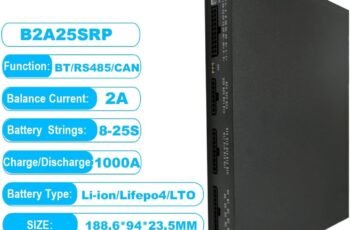
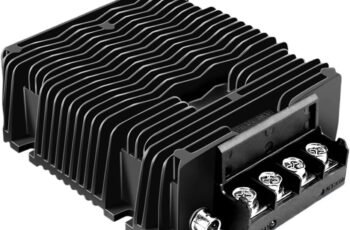
Are we looking for a smarter way to keep our battery packs healthy and balanced?
When we invest in a serious battery pack—whether for solar storage, DIY powerwalls, RV systems, or high‑current projects—one of our biggest worries is long‑term health and safety. The Whole Group Active Balancer 3S-10S 1A Battery Management System (BMS) with 30A–500A support promises to keep our pack equalized, protected, and running efficiently. Let’s go through what this unit offers, how it really works, and what we should know before using it in our project.

What This BMS and Active Balancer Actually Is
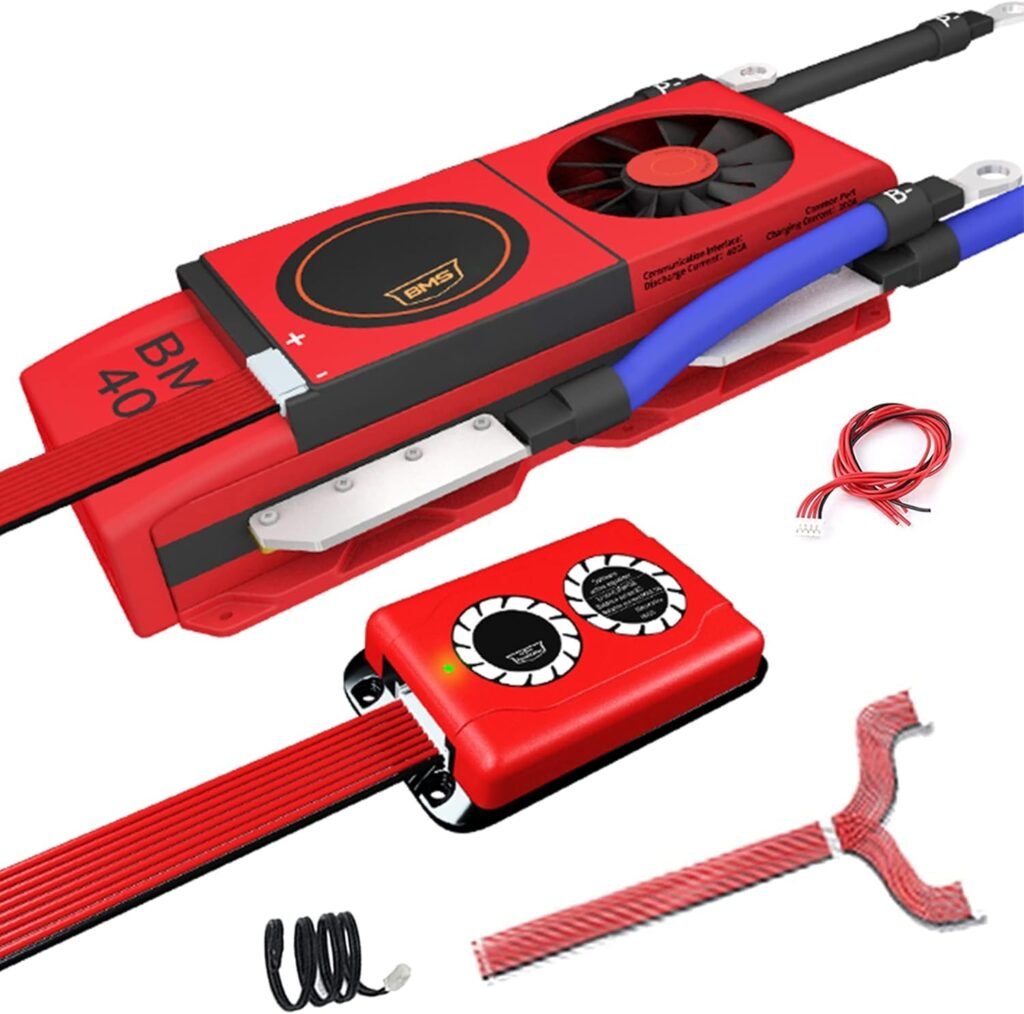
This product is a combo: an Active Balancer plus a BMS Board, designed for 3S–10S lithium battery packs. We can think of it as the brain and nerve system of our battery, helping cells share energy and stay within safe limits.
The unique thing here is that it uses active balancing, not just passive bleeding. That means instead of wasting extra energy as heat, it transfers energy from higher‑voltage cells to lower‑voltage ones. This is more efficient and better for long‑term pack consistency.
Key Technical Specs at a Glance
We often need to see basic specs clearly before deciding if a product fits our build. Here’s a quick summary of the central details we can expect from this unit:
| Feature | Details |
|---|---|
| Product Name | Whole Group Active Balancer 3S-10S 1A BMS |
| Cell Count Supported | 3S to 10S (3 to 10 cells in series) |
| Cell Chemistry | NCM (3.7V), LiFePO₄ (3.2V), LTO (2.2V) |
| Operating Voltage Range | Approx. 12V–36V pack range (depending on chemistry and cell count) |
| Balancing Type | Active energy transfer equalization |
| Balancing Current | Up to about 1A (per active balancing description) |
| Supported Pack Current | For packs rated around 30A–500A (BMS fits into higher current builds) |
| Protection Functions | Overcharge, over‑discharge, overcurrent, short circuit |
| Physical Design | Dustproof, shockproof, antistatic, up to ~80°C shell resistance |
| Display | LED indicator lights (green status indicators) |
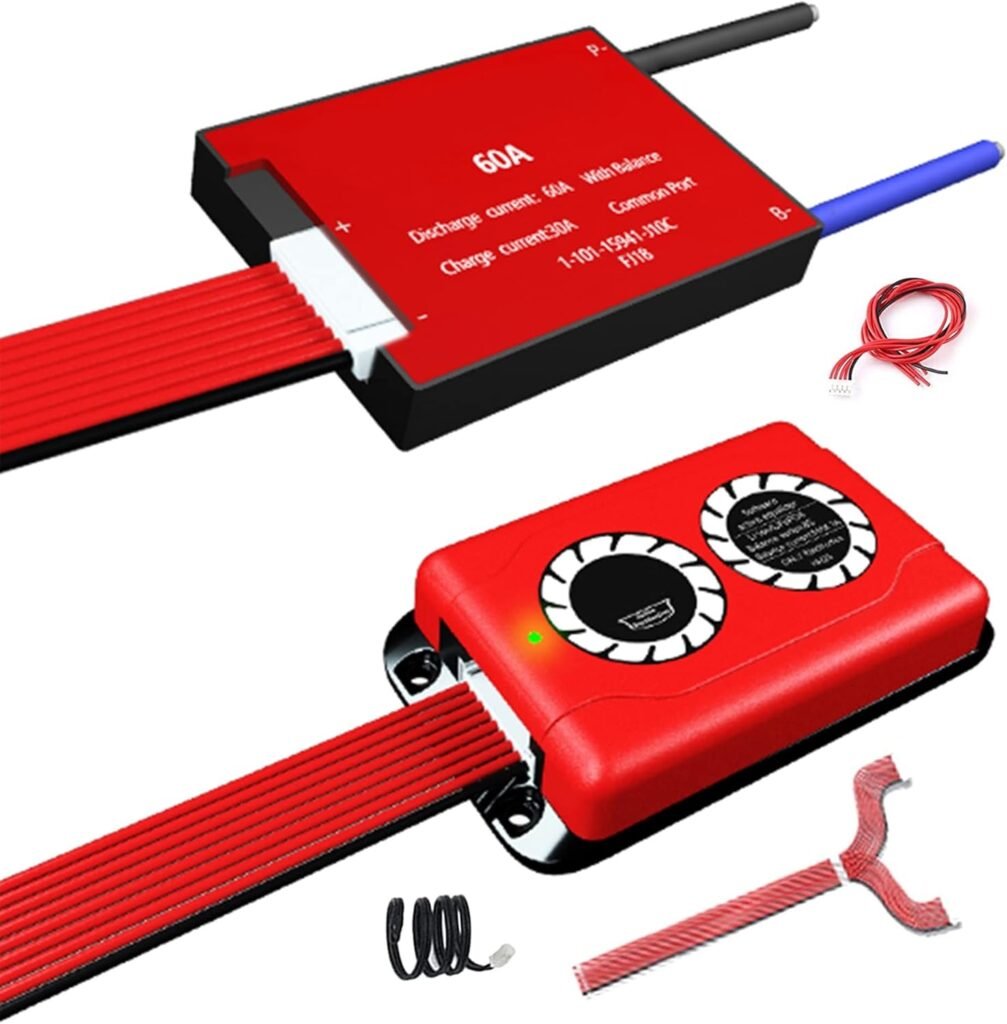
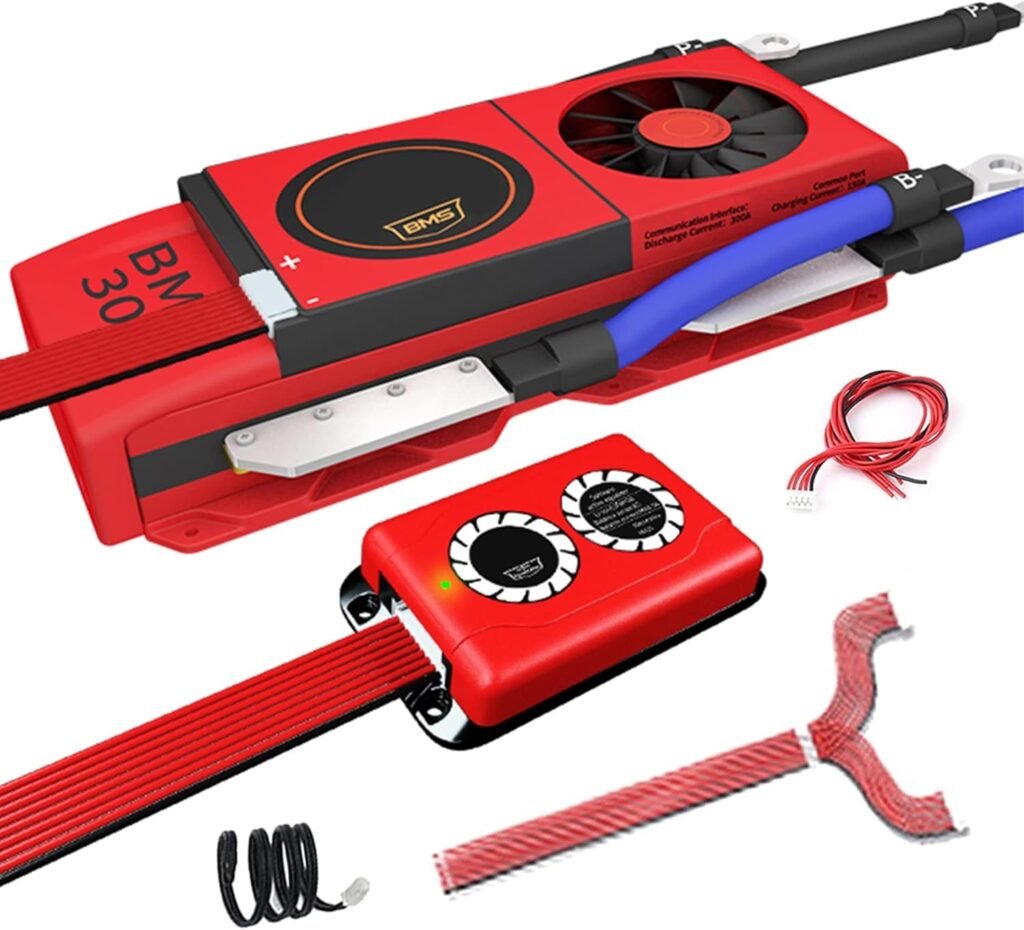
| Included Accessories | Active Balancer, BMS board, sampling wire, balance wire, manual |
| Communication | No “smart” comms (no Bluetooth, no CAN, no UART app) |
This table gives us a handy reference point. From here, we can decide if this BMS and balancer fits our battery chemistry and power level.

Supported Battery Types and Chemistries
This system is surprisingly flexible because it supports three major lithium chemistries. That can be a big advantage when we work on different builds.
Using It With NCM (3.7V) Lithium Packs
For high‑energy density builds—like many lithium‑ion 18650/21700 packs—we often see NCM or similar chemistries rated at 3.7V per cell. This BMS is compatible with that type.
With NCM, our nominal pack voltages look roughly like this:
- 3S: 11.1V nominal (12.6V full)
- 4S: 14.8V nominal (16.8V full)
- 6S: 22.2V nominal (25.2V full)
- 10S: 37.0V nominal (42.0V full)
The BMS uses overcharge and over‑discharge protection suited to that chemistry, and the active balancer moves energy between these cells to keep voltage differences minimized.
Using It With LiFePO₄ (3.2V) Packs
The product variation we’re talking about specifically mentions LiFeP, which we can reasonably read as LiFePO₄. This chemistry is common in solar systems, RVs, and energy storage because it’s stable, long‑lasting, and safer than many alternatives.
Typical LiFePO₄ voltages here:
- 4S: 12.8V nominal (around 14.6V full)
- 8S: 25.6V nominal (around 29.2V full)
- 10S: 32V nominal (around 36.5–36.8V full)
With LiFePO₄, maintaining tight cell voltage spread is important because the voltage plateau is very flat. The active balancer really helps reduce drift over hundreds of cycles, especially in 4S and 8S configurations for 12V and 24V systems.
Using It With LTO (2.2V) Packs
LTO (Lithium Titanate) is less common in hobby projects but loved where extreme cycle life and cold‑weather performance matter. This BMS supports LTO packs too, which is useful when we want something robust and long‑lasting.
Our LTO pack will have lower per‑cell voltage, so we must double‑check the manual for the proper configuration and ensure the setpoints match the chemistry. The active balancing principle remains the same: shifting charge between higher and lower cells.
How the Active Balancer Works and Why It Matters
Instead of burning off extra voltage through resistors (passive balancing), this board uses energy transfer. That means it:
- Senses cell voltage differences
- Moves energy from higher‑voltage cells to lower‑voltage cells
- Keeps the whole string more level over time
Why Active Equalization Is Better for Larger Packs
When we build large packs—say 8S or 10S for solar storage or high‑current inverters—cells never age identically. Small differences in internal resistance or capacity cause some cells to charge a bit faster and others slower. Over time, gaps widen.
With a 1A equalizing current, this active balancer can meaningfully rebalance cells even in sizeable packs, especially during longer charge phases. That helps:
- Extend pack lifespan
- Reduce risk of one cell overcharging
- Keep usable capacity higher, because the weakest cell won’t prematurely hit its voltage limits
For serious projects, that’s far more efficient than simple bleed resistors.
Protection Features: How This BMS Keeps Our Pack Safe
We can think of the BMS portion as a guardrail system. It doesn’t just balance; it also stops dangerous conditions from damaging our pack.
Overcharge Protection
If any cell goes above its safe limit (depending on chemistry), the BMS will respond. This might involve cutting off charge or otherwise preventing further voltage rise.
For us, that means:
- Less risk of swelling or thermal issues
- Better long‑term health for each cell
- More peace of mind if a charger is not perfectly tuned
Over‑Discharge Protection
Discharging lithium cells too deeply is one of the fastest ways to shorten their life. The BMS monitors cell voltages and stops discharge when one or more cells drop below a set threshold.
This helps:
- Prevent cell damage from deep discharge
- Keep the weakest cell from falling dangerously low
- Maintain overall pack integrity over many cycles
Overcurrent and Short‑Circuit Protection
With battery packs rated up to 30A–500A, we’re often dealing with large currents that can cause real damage if something goes wrong. The BMS includes:
- Overcurrent protection, which trips when current exceeds a safe preset level
- Short‑circuit protection, to rapidly cut off catastrophic current spikes
We still need proper fusing and wiring, but this BMS adds another protective layer between our cells and a dangerous event.
Physical Design and Build Quality
This unit is meant for real‑world environments, not just a bench test. The description points to a design that handles dust, vibration, static, and moderate heat.
Compact, Dustproof, Shockproof, Antistatic Construction
The board and shell are designed to resist dust and shocks, which is important if we mount it in an RV, boat, vehicle, or workshop environment. Antistatic protection also matters when we’re handling electronics around lithium cells.
A solid mechanical build reduces the chance of cracked solder joints or corrosion over time. For DIY energy storage systems, that’s not just a quality‑of‑life perk—it’s a reliability factor.
Heat Resistance and Aluminum Heat Dissipation
The shell is rated to withstand temperatures up to 80°C, and the BMS includes an aluminum sheet for heat dissipation. In balancing and high‑current protection scenarios, components can warm up. That aluminum helps draw heat away from critical parts.
We still shouldn’t mount the unit in a sealed, unventilated enclosure that bakes under the sun, but with proper airflow and reasonable ambient temperatures, this BMS is built to handle real‑world thermal loads.
LED Indicators and What They Tell Us
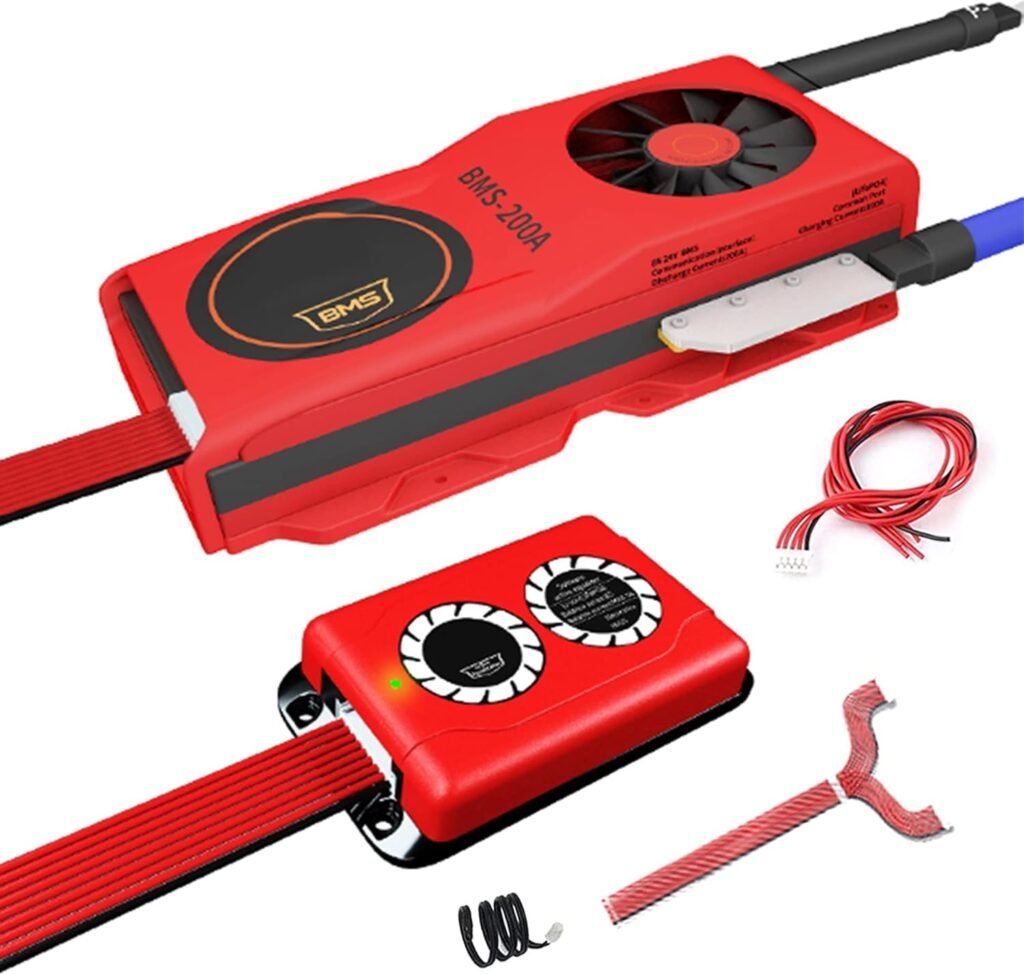
The unit includes a LED display with a green light indicating different states:
- Solid or normal green – balancing active / normal status
- Green light “from” (i.e., flashing or in a different pattern) – undervoltage or error state
The wording is slightly awkward, but the idea is simple: the LED gives a visual cue whether the system is balancing and whether something is wrong. We should check the included manual to match LED behavior with specific conditions (balancing, fault, undervoltage, etc.).
For quick at‑a‑glance checks while working on our setup, this is more convenient than having to probe every cell with a multimeter all the time.
What Comes in the Box
One strong point of this product is that we’re not left hunting for matching cables. We get a complete mini‑kit ready to integrate into our pack.
Included Components
We should expect to find:
- Active Balancer board x1 – the module that moves energy between cells
- BMS board x1 – the protection and control board
- Sampling wire x1 – for cell voltage sensing
- Matching balance wire x1 – connects the cells in series to the boards
- Instruction manual x1 – wiring diagrams, configuration, and installation guidance
This is basically everything we need from an electronics side, other than the battery cells, main cables, fuses, and other system hardware.
Why the Manual Matters a Lot
With any 3S–10S BMS, wiring order and polarity are critical. The manual walks us through:
- Which wire goes to which cell
- How to connect the pack positive and negative
- How to avoid shorting or reverse‑polarity mistakes
We should absolutely read the manual carefully before connecting anything. Even a high‑quality BMS can’t save us from wiring errors.
Installation and Wiring Considerations
Installing a BMS and active balancer is not difficult, but it demands attention and patience. We’re dealing with high currents and potentially high stored energy.
Basic Wiring Workflow
The general process usually goes something like this (we still confirm with the manual):
-
Ensure pack is not fully charged
We want cells at a moderate, similar voltage before connecting the BMS—often around mid‑state‑of‑charge. -
Connect the balance/sampling wire harness
- First to the B‑ or most negative cell terminal (as specified)
- Then to each cell junction in order (B1, B2, B3, etc.)
- Double‑check cell order and polarity as we go
-
Connect the main positive and negative leads
The pack positive and negative lines connect to the BMS’s main terminals or pads. For high‑current systems, we ensure that cable gauge and crimping quality match our current requirements. -
Secure the boards and cables
Mount the BMS and active balancer on a stable, insulated surface. Use zip ties, brackets, or 3D‑printed mounts to keep wires from moving or rubbing. -
Power up and test
After checking all connections with a multimeter, we power the pack, watch the LED behavior, and measure cell voltages to confirm balanced operation and proper protections.
Safety Tips During Installation
When wiring this kind of system, we want to:
- Wear eye protection, especially with high‑capacity packs
- Use insulated tools when working near live terminals
- Add a main fuse close to pack positive
- Avoid working alone when we’re dealing with very high currents
The BMS helps protect the cells, but our wiring quality, fusing, and layout are equally important for safety.
Real‑World Use Cases and Scenarios
This BMS and balancer combo fits a wide range of advanced DIY and professional applications where we need balanced, protected packs from 3S up to 10S.
Solar and Off‑Grid Energy Storage
For LiFePO₄ 4S or 8S packs, this unit fits nicely in off‑grid solar storage systems where:
- We want reliable cell balancing over thousands of cycles
- Packs may see irregular charge/discharge patterns
- High current flows to inverters (easily 100A+ depending on build)
Active balancing reduces the imbalance that can creep in when certain strings run slightly hotter or see more current during partial shading or asymmetrical loads.
RV, Vanlife, and Marine Power Systems
In mobile setups (RVs, vans, boats), vibration and temperature swings are common. The dustproof and shockproof design, plus the 80°C shell resistance, make this BMS suitable for:
- 12V LiFePO₄ house batteries (4S)
- 24V packs (8S) in larger or heavier setups
- Systems where space is tight and reliability is crucial
Active equalization helps us avoid frequent manual rebalancing or cell-level maintenance.
High‑Current Hobby and DIY Projects
For those of us building high‑current packs—for inverters, large DC loads, or experimental EV projects—this BMS is designed to integrate into packs rated between 30A and 500A.
We still need to confirm the exact current handling of the main board and choose proper contactors, fuses, and busbars for the full system. But from a cell‑management perspective, this unit is aligned with serious current levels.
Strengths and Advantages of This Product
This unit brings together several advantages that stand out in its category, especially when we compare it to simple, cheap BMS boards without active balancing.
Active Balancing Instead of Passive Bleeding
Most low‑cost BMS boards only bleed. That means:
- Extra voltage is turned into heat on resistors
- Balancing is slow and often inadequate for larger packs
- We lose some stored energy in the process
This product’s energy transfer balancing is much more efficient and actually useful for larger capacity banks. Over time, this helps keep pack capacity and cell health at a better level.
Support for Multiple Chemistries
If we build both NCM and LiFePO₄ packs (or even LTO experiments), having one balancing and protection platform that can work with all three helps streamline our setup and spare parts. We just configure and connect according to the appropriate battery type.
Robust Protection and Physical Durability
Overcharge, over‑discharge, overcurrent, and short‑circuit protection—combined with dustproof, shockproof, antistatic design and heat‑resistant construction—make this a serious piece of hardware for real‑world use.
We’re not just getting a balancing toy; we’re getting a proper battery management layer.
Limitations and Things to Keep in Mind
No product is perfect, and there are some important trade‑offs to consider with this BMS and balancer.
No Smart Communication or App
This unit does not support Bluetooth, CAN bus, Wi‑Fi, or app‑based monitoring. If we want:
- Real‑time cell voltage graphs
- Logging and remote monitoring
- Integration with a smart inverter over CAN
Then we may prefer a BMS with smart communication features. Here, we’re trading that for a simpler, presumably more affordable board focused on core balancing and protection.
Not a Drop‑In Replacement for All Systems
Because this is an electronics module, not a complete battery pack, we still must:
- Design proper cable routing and fusing
- Provide mechanical protection and mounting
- Ensure compatibility with chargers, inverters, and loads
It’s not a plug‑and‑play brick; it’s a core component of a system we engineer ourselves.
Need to Respect Current and Wiring Limits
While the product description mentions 30A–500A as a pack range, the actual continuous and peak current capability of the BMS board depends on its design, traces, and MOSFETs. We should check:
- The manual for continuous / peak current ratings
- The recommended wire gauge and connector specs
- Whether we need external contactors or relays for very high currents
We want to avoid assuming that a small board can directly switch 500A without additional system design.
Practical Tips for Getting the Most Out of This BMS
If we decide to use this BMS and balancer, a few practices will help us get better performance and longevity from both the pack and the electronics.
Start With Well‑Matched Cells
Active balancing is powerful, but we still gain a lot by:
- Matching cells in capacity and internal resistance as closely as possible
- Top‑balancing or bottom‑balancing them before assembling the pack
- Avoiding mixing old and new cells in the same string
The better our initial match, the less work the balancer has to do over time.
Give It Time to Balance During Charging
Active balancing works best when:
- The pack spends enough time near the top or middle of charge
- Voltage differences can be gradually corrected by the 1A balancing current
If we always slam the pack with high charge rates and immediately discharge it, the balancer has less opportunity. Occasional slower, full charges help maintain consistent cell voltage levels.
Monitor Cell Voltages During the First Cycles
Even without smart communication, we can:
- Measure individual cell voltages with a multimeter
- Check that the BMS is keeping cells within safe ranges
- Confirm that no cell is drifting out of line unexpectedly
By watching the first few cycles carefully, we can catch wiring mistakes or defective cells early, before they cause serious issues.
Who This Product Is Best For
Different users have different needs and expectations. This BMS and active balancer is ideal for particular types of builders and systems.
Great Fit For
- DIY solar and off‑grid energy storage where cell balancing and safety are critical, but app‑based monitoring is optional.
- RV and marine installations that want robust LiFePO₄ management and reliable equalization.
- High‑current hobbyists and builders working with 3S–10S packs that need active balancing and protection in a compact form.
Less Ideal For
- Users who want an integrated smart BMS with Bluetooth, apps, and real‑time data out of the box.
- Beginners who are uncomfortable with wiring multi‑cell lithium packs and interpreting manuals without step‑by‑step hand‑holding.
- Systems requiring deep integration with inverters or chargers over CAN / RS485 / Modbus.
Summary: Why We Might Choose the Whole Group Active Balancer 3S‑10S 1A BMS
When we step back and look at everything together, this Whole Group Active Balancer 3S‑10S 1A Battery Management System stands out because it brings:
- Active, energy‑transfer balancing that preserves energy and maintains cell consistency
- Flexible support for NCM, LiFePO₄, and LTO cells across 3S–10S configurations
- Strong protective features for overcharge, over‑discharge, overcurrent, and short circuits
- Physically robust construction, with dustproof, shockproof, antistatic design and up to 80°C shell resistance
- A complete accessory bundle, including sampling and balance cables plus instructions
We do give up smart communication and app monitoring, and we need to be comfortable wiring and integrating it ourselves. But if our priority is long‑term pack health, efficient balancing, and robust protection without unnecessary frills, this product offers a compelling combination.
For lithium builders who care deeply about keeping cells equalized and safe—from 3S up to 10S packs in the 12V–36V range—this BMS and active balancer combo can be a strong, practical choice in our toolbox.
Disclosure: As an Amazon Associate, I earn from qualifying purchases.