Have we ever wished managing our lithium battery pack felt less like guesswork and more like using a smart, modern tool that actually understands our system?

What Is the JK BMS Smart BMS 8S Lifepo4 200A?
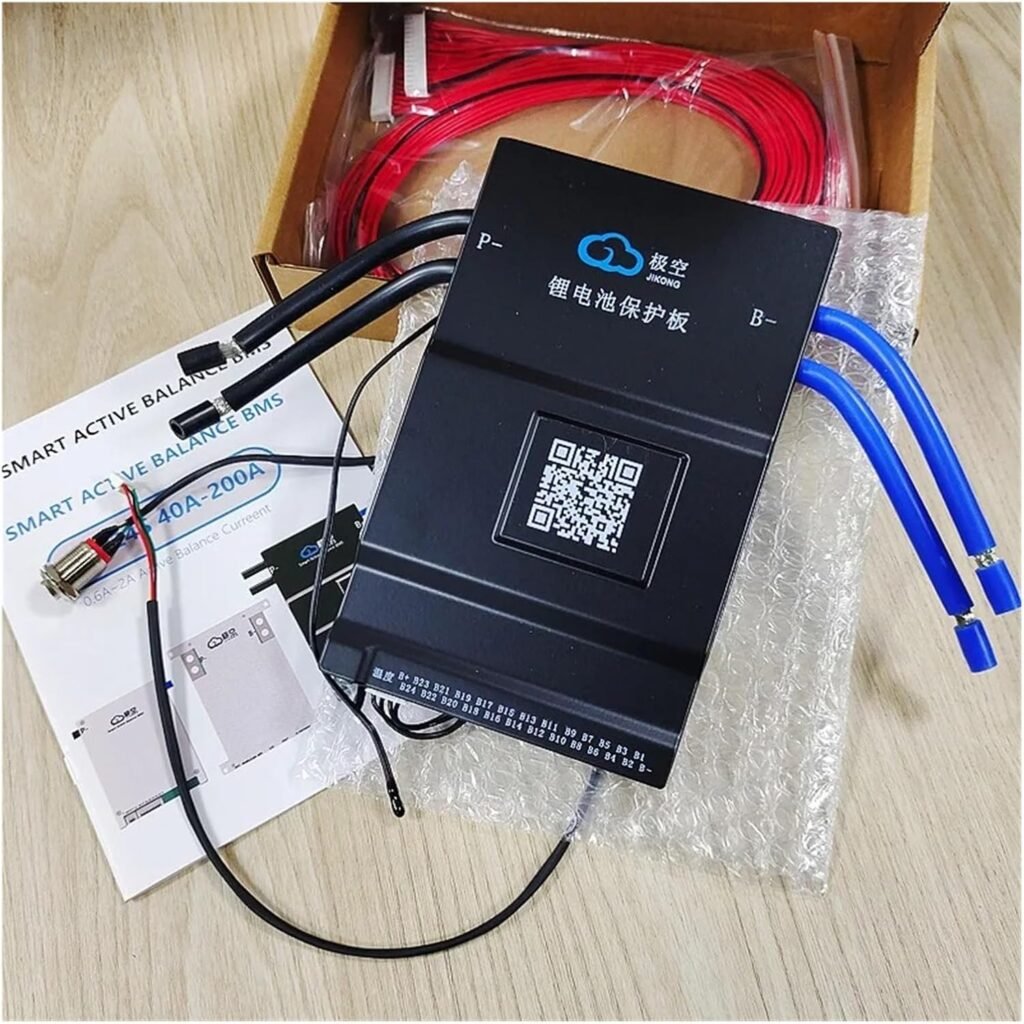
This product is a smart Battery Management System designed for LiFePO₄ and other lithium battery setups, aimed at DIY users and serious hobbyists. We are looking at a BMS that combines powerful protection, an advanced active balancer, Bluetooth, an app, RS485 communication, and a heating function in a single package.
Instead of treating a battery pack as a black box, this BMS gives us insight and direct control. It is built not only to protect the cells, but also to optimize performance and extend the life of our entire battery system.
Who Is This Smart BMS Really For?
This BMS is clearly aimed at users building or upgrading custom lithium battery packs. We are the ideal users if we work on off-grid solar systems, campervan or RV power banks, small home backup power, or DIY energy storage.
If we want a simple off-the-shelf plug-and-play battery with no configuration, this might feel advanced. But if we enjoy tuning our system, monitoring data, and care about cell longevity, the JK BMS Smart BMS 8S Lifepo4 200A fits right into that mindset.

Key Features at a Glance
To make things clearer, we can break down the core features of the “JK BMS Smart BMS 8S Lifepo4 200A BT Heating Function RS485 Lithium Battery Balance Plate BMS 20S 12V 24V with Blancer” into a quick table:
| Feature | What It Means for Us |
|---|---|
| JK Own Development App | Dedicated smartphone app with deep settings and real‑time monitoring via Bluetooth |
| Bluetooth (BT) Communication | Wireless connection to view status, set parameters, and troubleshoot |
| Active Balancing (0.6–2A active DC) | Actively redistributes charge between cells for better consistency and longer life |
| High Current Support (100A–350A) | Suitable for medium to high current systems, including inverters and high-demand loads |
| Multi-System Support (4S–24S) | Can support 12V (4S), 24V (8S), 48V (16S), and 72V (24S) setups depending on model |
| Overcharge / Over-discharge Protection | Keeps cells within safe voltage limits |
| Over-current & Short Circuit Protection | Protects wiring and cells from damage due to excessive current |
| Low Temperature Charge Cutoff | Prevents charging when it is too cold, protecting LiFePO₄ cells |
| Heating Function | Helps bring batteries to a safe charging temperature in cold environments (with suitable heaters) |
| RS485 Communication | Allows integration with external monitoring or control systems |
| Intelligent Design for Safety | Emphasis on correct matching of BMS to battery system for longevity and safety |
Each of these features plays a distinct role in how our battery pack performs day to day. Together, they create a BMS that is not just a simple protection board, but more of a control center for our battery bank.
Our Experience with the JK Own Development App
Having a dedicated app for a BMS changes how we interact with our system. Instead of relying solely on a multimeter or guesswork, we can see what is happening in real time from our phone.
Real-Time Monitoring on Our Phone
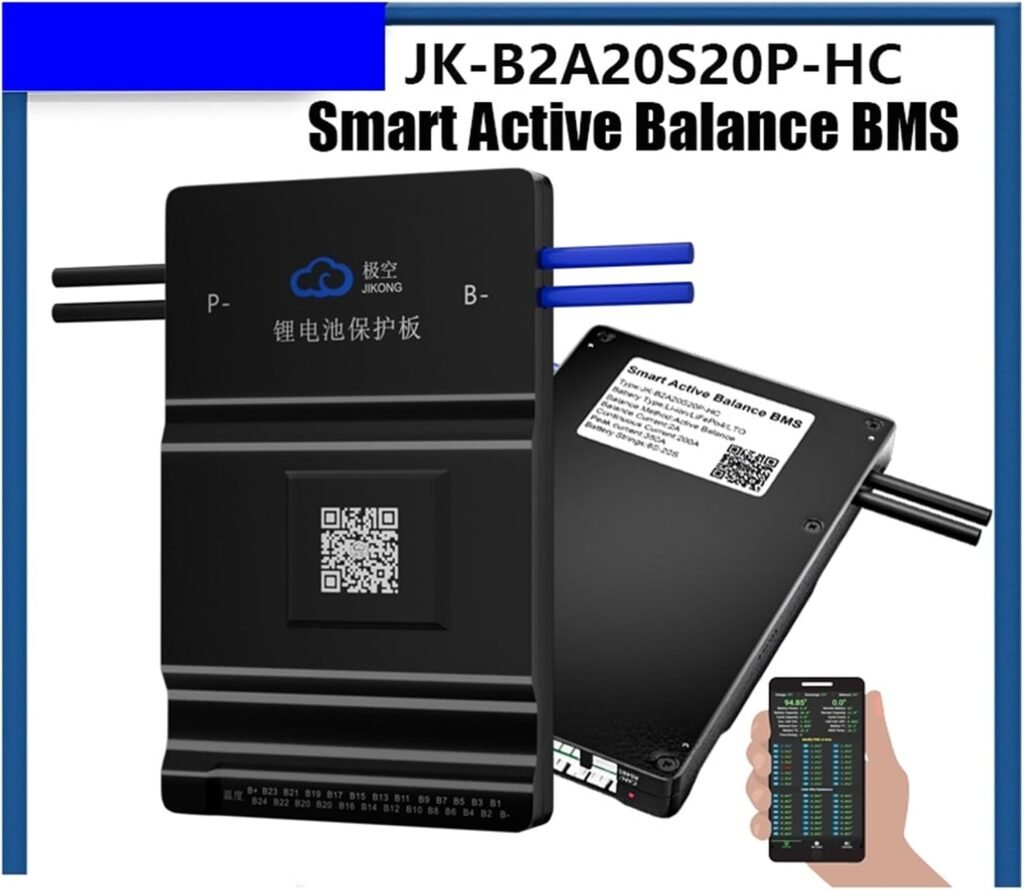
With Bluetooth communication, the JK BMS sends key metrics directly to the app. We can see pack voltage, individual cell voltages, current in and out, state of charge, temperature readings, and alarm statuses.
This matters because we can quickly catch issues like:
- One cell drifting out of balance
- Overcurrent periods when we power a large appliance
- Temperature creeping too high in a sealed compartment
We get to react before small anomalies become serious problems.
Deep Configuration Options Through the App
The app is not just a dashboard. The JK Own Development App allows us to set many BMS parameters directly:
- Charge and discharge voltage thresholds
- Overcurrent limits
- Temperature protection thresholds
- Balancing behavior and start points
This level of control is where the product stands out. Instead of being locked into factory defaults that may not suit our specific cells or climate, we can tailor the BMS to the particular chemistry, capacity, and environment of our pack.
Why Active Balancing Matters So Much
Cell balancing is one of the most overlooked aspects of battery life. Without proper balancing, a few weak cells can drag the entire pack down. The JK BMS uses intelligent active balancing, which differs from the simpler passive methods in many basic BMS boards.
Active Balancing vs Passive Balancing
With passive balancing, surplus energy from higher-voltage cells is bled off as heat using resistors. Active balancing, which the JK BMS provides in the 0.6–2A range, moves energy from stronger cells to weaker ones rather than simply wasting it.
Active balancing offers several advantages for us:
- More efficient, as energy is re-used instead of burned off
- Faster correction of cell imbalances
- Less heat generated during balancing
- Better long-term consistency among cells
Over time, this helps maintain pack health, avoid premature capacity loss, and reduce the frequency of deep rebalancing sessions.
Extending Battery Service Life
By compensating voltage differences between cells with up to around 2A of balancing current, this BMS keeps cells closer together under charge and discharge cycles. This reduces the stress on the weakest cells and delays the point where they reach cutoff conditions.
The manufacturer claims a consumption efficiency up to 99% during the balancing processes, which aligns with the idea that most energy is reallocated instead of wasted. For us, that translates into:
- More usable capacity from the same pack
- Longer intervals between top-balancing procedures
- Increased overall cycle life
For expensive LiFePO₄ packs, even a modest increase in life and usable capacity can justify the cost of a better BMS.
Protection Features That Safeguard Our Investment
A good BMS must protect the battery silently in the background while we use our system. The JK Smart BMS integrates a complete set of protections designed for lithium chemistry.
Overcharge and Over-Discharge Protection
Lithium cells are highly sensitive to going beyond their safe voltage limits. The JK BMS cuts off charging when the pack reaches the configured voltage and prevents discharging when cells drop too low.
This double-layered guardrail means:
- We are less likely to damage cells by overcharging
- We avoid deep discharge that reduces cycle life or causes permanent capacity loss
We can configure these thresholds in the app according to our specific cell manufacturer’s recommendations.
Over-Current and Short Circuit Protection
High-current lithium packs can deliver enormous energy quickly, which is both useful and potentially dangerous. The JK BMS monitors discharge and charge currents and disconnects the pack if current exceeds chosen limits or if a short circuit is detected.
In practical terms, we get:
- Protection for cables and connectors against overheating
- Reduced risk of fire or catastrophic failure from wiring mistakes
- Better control when connecting large inverters or motors
For DIY builders, this is security against wiring errors and unexpected load behavior.
Low Temperature Charge Cutoff
Charging LiFePO₄ at low temperatures can permanently damage cells. The JK BMS includes low temperature charge cutoff to prevent charging when sensors detect that conditions are too cold.
We benefit especially if:
- Our batteries are installed in unheated garages, vehicles, or outdoor enclosures
- We operate in winter climates
- Our system charges from solar where automatic control is essential
This protection works seamlessly and offers peace of mind that we are not harming the pack when temperatures drop.
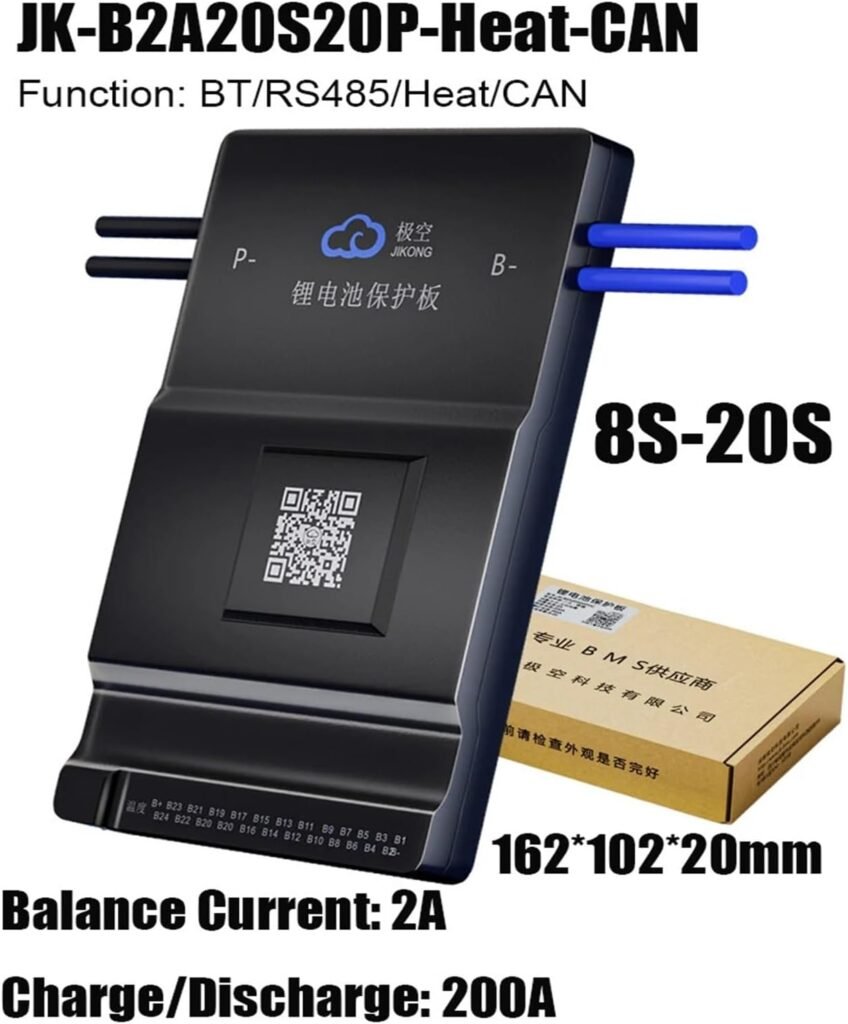
The Heating Function for Cold Climates
Beyond simply cutting off charging when it is too cold, this BMS supports a heating function. That means it can drive compatible heating elements to bring the battery to a safe temperature, then allow charging.
How the Heating Support Helps Us
We may live or travel in areas where batteries spend hours or days below the allowed charging temperature. Without heating, we would have to:
- Keep batteries indoors
- Insulate them heavily
- Accept that solar or charging is not available in the coldest periods
With a heating function under BMS control, we can:
- Automatically warm the pack before charging starts
- Use solar power during winter without human intervention
- Keep batteries in appropriate enclosures while still maintaining safety
Of course, we need to add the physical heating pads or elements ourselves, but the control logic is in the BMS.
Wide Application for 12V, 24V, 48V, and 72V Systems
One of the strong advantages of this JK BMS line is its flexibility across multiple system voltages and configurations. It is not locked to a single specific battery pack layout.
Supported Battery System Configurations
According to the product details, this series supports:
- 12V systems with 4S LiFePO₄ (4 cells in series)
- 24V systems with 8S
- 48V systems with 16S
- 72V systems with 24S
Depending on the specific model we choose (8S, 16S, 20S, etc.), we can adapt the BMS to our project. For example:
- A 12V deep-cycle battery for RVs or boats
- A 24V system for small off-grid cabins
- A 48V home energy storage pack for inverters
- A 72V system for high-voltage projects like large e-mobility or specialized equipment
This versatility makes it appealing when we plan to scale up or customize.
Current Range from 100A to 350A
The JK BMS series described here can handle maximum life currents in the 100A–350A range depending on the selected version. This is important for our application sizing:
- Around 100A–150A: enough for modest inverters or typical RV systems
- 200A–250A: suitable for larger inverters and higher peak loads
- 300A–350A: for high-demand systems with heavy appliances or motors
By choosing the appropriate current-rated model, we avoid overloading the BMS while ensuring it does not limit our usable system capacity.
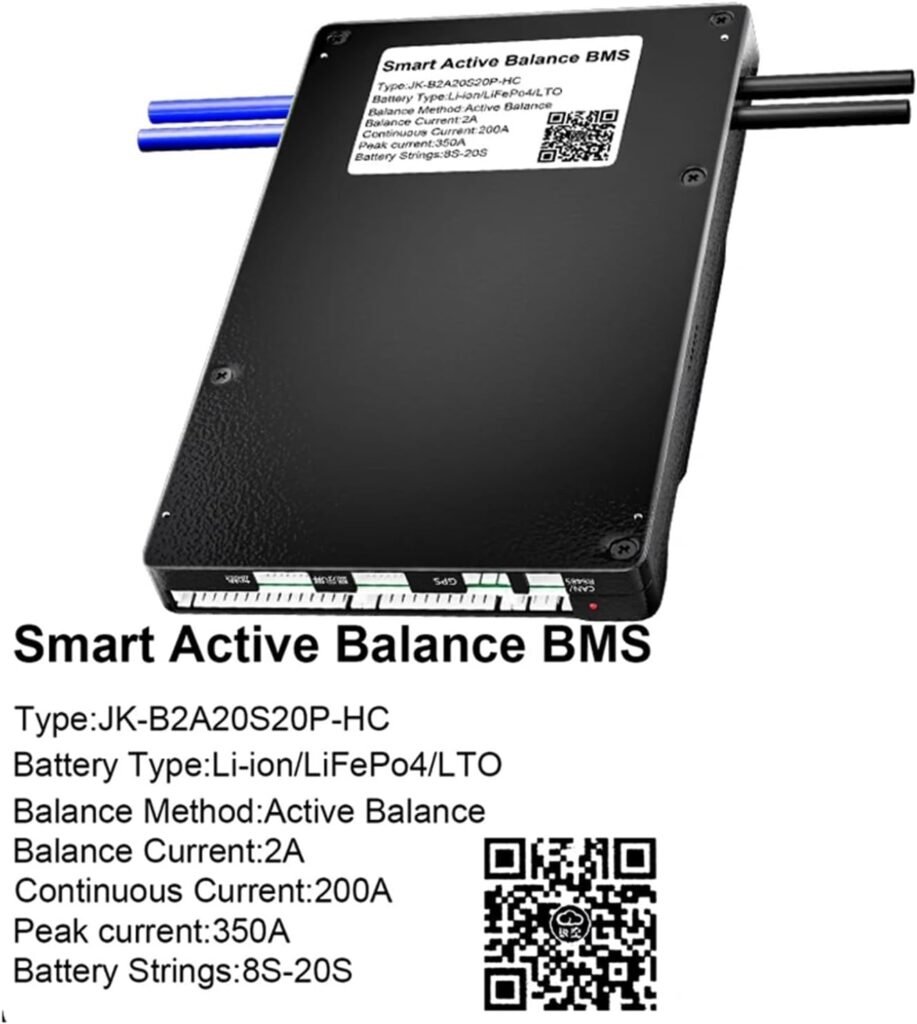
RS485 Communication and System Integration
For many of us, the ability to connect our BMS into a larger monitoring or control system is a significant plus. RS485 is a robust industrial communication standard, and the JK BMS includes this port for external integration.
Why RS485 Matters for Advanced Users
RS485 allows us to:
- Connect to third-party monitoring screens or home energy management systems
- Interface with custom controllers such as PLCs or microcontrollers
- Integrate our battery data into a centralized dashboard for solar, inverter, and loads
This is especially valuable in off-grid homes, workshops, or more sophisticated mobile installations. Instead of relying just on the phone app, we can bring the battery’s data into our broader system.
Potential Use Cases for RS485
We could, for example:
- Feed real-time battery data into a home automation system
- Build a custom display panel showing voltage, SOC, and alarms
- Log data over time for diagnosing system performance and designing upgrades
While this requires some technical knowledge, it offers a path to professional-style setups using a DIY-friendly BMS.
Safety and Design Considerations
The manufacturer emphasizes that choosing the right protective plate and applying it properly are critical to battery longevity and safety. That message aligns with real-world experience: even the best BMS cannot compensate for incorrect design choices.
Matching the BMS to Our Battery Pack
We need to consider:
- Number of series cells (4S, 8S, 16S, 20S, 24S, etc.)
- Maximum continuous and peak current draw
- Cell chemistry (LiFePO₄ vs other lithium variants)
- Environment (temperature range, enclosure, ventilation)
By choosing the correct JK BMS configuration and current rating, we help ensure:
- Balanced thermal behavior
- Adequate protection margins
- Reduced stress on contactors, fuses, and cabling
The design aims to provide a safe and reliable backbone for our battery system, but it still depends on correct installation.
The Unique Safety-Focused Design
This BMS brings together various safety features in a thoughtful layout:
- Multi-point temperature sensing (depending on model)
- Well-defined cutoffs for voltage and current
- Integrated active balancer for cell-level consistency
- Low temperature logic and heating control
Together, these elements form a comprehensive protective barrier around our battery pack. For serious DIY projects, this can be the difference between a tidy, long-lasting system and one that suffers from repeated issues or failure.
Installation and Setup Experience
Installation difficulty will depend heavily on our familiarity with DC systems and safety practices. This is not a plug-and-play product for beginners, but it is approachable with some patience and attention.
Wiring the BMS into Our Pack
We typically need to:
- Mount the BMS securely and allow for ventilation.
- Connect the main positive and negative leads according to the wiring diagram.
- Attach the balance leads to each cell in the correct order.
- Connect temperature sensors to appropriate locations within the pack.
- Add optional RS485 and heating elements if we plan to use those features.
Following the manufacturer’s instructions precisely is essential to avoid mis-wiring, which could trigger protection or even damaging faults.
Configuring Parameters Through the App
Once the hardware is in place, we use the JK app:
- Pair our phone with the BMS via Bluetooth.
- Check that all cell voltages read correctly.
- Adjust charging and discharging thresholds to match our cell specifications.
- Set balancing thresholds and temperature cutoffs.
The interface is more advanced than basic BMS products, but that added complexity gives us the control we need to tailor the system properly.
Everyday Use and Performance
After installation and setup, the best BMS is one that quietly does its job while giving us information when we want it. During everyday use, the JK Smart BMS acts as the silent manager of our pack.
Monitoring Everyday Behavior
With the app, we can:
- Watch current draw when appliances switch on
- Track how quickly our pack charges from solar or shore power
- See if any cell tends to drift toward higher or lower voltage under load
Over time, this familiarity with our battery’s behavior helps us make better decisions about upgrades, usage patterns, and maintenance.
Balancing and Efficiency During Real Operation
During standard charging, the active balancer subtly moves charge between cells in the background. We may notice:
- More uniform cell voltages at the end of charge
- Fewer high or low outlier cells after heavy discharge
- Less need to manually correct imbalances
This stability is especially valuable when we use large parallel packs, where variations can otherwise become magnified.
Advantages of the JK BMS Smart BMS 8S Lifepo4 200A
Summarizing the highlights can help us decide whether this BMS aligns with our needs and priorities.
Key Strengths That Stand Out
We see several clear advantages:
- Comprehensive feature set: Active balancing, Bluetooth, an advanced app, RS485, and heating support in one unit.
- High configurability: We can adjust many parameters to match our specific cells and use-case.
- Efficient active balancing: Up to around 0.6–2A active DC balancing, reportedly up to 99% efficiency in energy use.
- Wide system compatibility: From 12V to 72V and 100A to 350A, covering many DIY projects.
- Strong safety orientation: Full range of protections, low temperature charging control, and support for heating.
For anyone serious about building a robust lithium system, these strengths make the product compelling.
Who Benefits the Most
From our perspective, the people who gain the most are:
- DIY solar builders seeking to monitor and optimize their storage.
- RV, campervan, and boat owners upgrading from lead-acid to LiFePO₄.
- Hobbyists and tinkerers wanting greater insight into their packs.
- Small off-grid cabins or workshops needing reliable, monitored storage.
If we simply want a sealed, pre-packaged battery, a ready-made drop-in lithium battery might make more sense. But if we want customization and visibility, this BMS is designed for us.
Potential Limitations and Considerations
No product is perfect, and we should consider where the JK Smart BMS may not be ideal, depending on our expectations and skills.
Not the Simplest Option for Absolute Beginners
The depth of settings and wiring requirements means:
- We should have some understanding of DC safety and lithium battery basics.
- Misconfiguration could lead to suboptimal performance or protection.
- Reading the documentation thoroughly is not optional.
If we are entirely new to lithium systems, it may help to start with simpler setups or seek guidance from more experienced users before taking this on.
Installation Space and Layout
Depending on the specific current rating and model:
- The unit may be physically larger and heavier than very basic BMS boards.
- We need to allocate sufficient space for cabling, ventilation, and access.
In cramped spaces such as compact vans or small equipment boxes, we should plan the layout carefully in advance.
Our Overall Impression and Verdict
After considering the features, protections, and real-world use implications, we can summarize our overall viewpoint on the “JK BMS Smart BMS 8S Lifepo4 200A BT Heating Function RS485 Lithium Battery Balance Plate BMS 20S 12V 24V with Blancer”.
What We Appreciate Most
We are particularly impressed by:
- The active balancing technology with relatively high balancing current, which directly impacts battery life.
- The rich, configurable app that allows us to tune the system for our exact cells and climate.
- The added tools for cold weather, such as low temperature charge cutoff and heating support.
- The integration options through RS485, which open the door to professional-level monitoring.
This is the kind of BMS that feels like a control hub rather than a basic safety net.
Is It the Right Choice for Our System?
If we are:
- Building or upgrading a lithium battery pack ourselves
- Comfortable with wiring and configuration
- Interested in maximizing performance, visibility, and longevity
then this JK Smart BMS is a strong candidate. It may be more advanced than necessary for the simplest systems, but for serious DIY energy storage or vehicle builds, that extra sophistication is exactly what many of us want.
In short, this BMS meets our expectations for a modern, smart, and safety-focused battery manager, and it stands out as a powerful option for those of us who want control and insight into our lithium battery systems.
Disclosure: As an Amazon Associate, I earn from qualifying purchases.