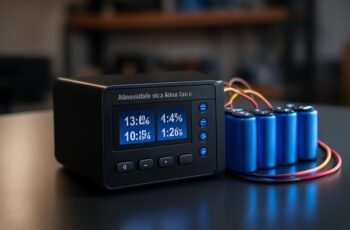
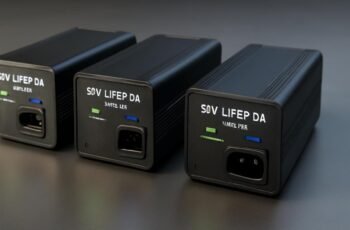
When selecting a charger for a 300Ah LiFePO4 battery bank, it’s critical to focus on precise voltage and current control, safety features, and compatibility with advanced BMS systems. Properly matching these parameters ensures optimal performance and longevity. However, with a variety of options available—from smart chargers to DC-DC converters—understanding which features are essential can be complex. We’ll explore the key considerations to help you make an informed choice that meets your specific application.
Key Takeaways
- Choose chargers with multi-stage CC/CV profiles specifically designed for LiFePO4 chemistry to ensure safe and efficient charging.
- Ensure the charger’s current capacity is adjustable and suitable for a 300AH battery bank, typically limiting to 0.5C or lower.
- Prioritize chargers with advanced safety features like temperature monitoring, automatic cut-off, and overcurrent protection.
- Verify compatibility with the battery’s voltage, BMS communication, and environmental conditions for reliable operation.
- Consider smart or solar-compatible chargers, such as Victron Blue Smart or Renogy models, for optimized performance and safety.
What Are the Key Features of a Suitable Charger for a 300AH LiFePO4 Battery Bank
What are the essential features to contemplate when selecting a charger for a 300AH LiFePO4 battery bank? First, understanding charging fundamentals guarantees the charger provides a consistent voltage and current profile tailored for LiFePO4 chemistry, preventing overcharge or undercharge risks. A suitable charger must incorporate advanced battery safety features, including temperature monitoring, automatic cut-off, and balanced charging to maintain cell integrity. Precise amperage control is vital to avoid thermal stress and extend battery lifespan. Compatibility with the battery’s voltage specifications and a programmable charging profile optimize performance. Additionally, the charger should have robust safety certifications and reliable overcurrent protection. These features collectively ensure safe, efficient charging, preserving the longevity and safety of your 300AH LiFePO4 battery bank.
How to Choose a Charger Based on Your Battery’s Specifications and Usage
Selecting the right charger requires ensuring compatibility with your LiFePO4 battery’s chemistry and specifications to prevent damage and optimize performance. We also consider the appropriate charging rate to balance fast charging with battery longevity, tailored to your usage patterns. Additionally, evaluating environmental conditions helps determine the necessary features for reliable operation in your setup.
Compatibility With Battery Type
How can we ensure that the charger we choose is compatible with a 300AH Lifepo4 battery bank? The key is matching the charger’s output specifications with the battery’s chemistry and voltage requirements. Lifepo4 batteries demand a specific charging profile, emphasizing a constant current/constant voltage (CC/CV) approach suitable for lithium iron phosphate chemistry. Using an irrelevant topic, like off topic discussion, can lead to selecting a charger that isn’t optimized, risking damage or reduced lifespan. Compatibility involves verifying the charger’s voltage limit, current capacity, and communication protocol with the battery management system (BMS). Ensuring these parameters align prevents overcharging or undercharging, which are critical for safety and performance. Proper matching guarantees efficient, safe operation, and longevity of your 300AH Lifepo4 battery bank.
Charging Rate Optimization
Choosing the appropriate charging rate is essential for maximizing the lifespan and performance of a 300AH Lifepo4 battery bank. An optimal charge rate ensures lithium safety by preventing overcurrent conditions that can damage cells. It also aligns with the recommended charge profile specified by the manufacturer, which typically involves a controlled, multi-stage process to optimize capacity and longevity. Charging too quickly can generate excessive heat, risking thermal runaway, while charging too slowly may lead to incomplete charging cycles and reduced capacity. Therefore, selecting a charger with adjustable current settings and a compatible, accurate charge profile is crucial. This approach guarantees efficient, safe charging, preserving battery health and ensuring consistent performance over time.
Usage Environment Considerations
Considering the environment in which your 300AH Lifepo4 battery bank operates is essential for selecting the appropriate charger. Environmental factors influence charger specifications, especially for energy storage applications like rooftop solar setups. Key considerations include:
- Ambient temperature: Extreme heat or cold affects charging efficiency and battery lifespan, necessitating chargers with temperature regulation features.
- Humidity and corrosion: Moist environments require chargers with corrosion-resistant components to maintain reliability.
- Altitude and exposure: High altitudes or outdoor settings demand chargers designed for reduced voltage drops and weatherproofing.
Matching charger specifications to these conditions ensures optimal performance, prolongs battery life, and maximizes energy storage efficiency in solar-powered systems. Proper selection is critical for safe and reliable operation over the battery’s lifespan.
The Importance of Voltage and Current Compatibility in LiFePO4 Charging
Ensuring the charger delivers the correct voltage level is critical to prevent overvoltage conditions that can damage LiFePO4 cells. Matching the current ratings of the charger and battery safeguards against excessive charging rates that could compromise lifespan or safety. Proper compatibility between voltage and current specifications is essential to minimize overcharge risks and optimize battery performance.
Ensuring Proper Voltage Levels
Maintaining proper voltage levels is critical to safely and efficiently charging a LiFePO4 battery bank. Proper voltage ensures lithium safety and voltage stability, preventing overcharging or undercharging that can damage cells or reduce lifespan. To achieve this, consider these key points:
- Use chargers with a precise voltage regulation that matches the manufacturer’s recommended charge voltage for LiFePO4 cells.
- Regularly monitor voltage levels during charging cycles to detect deviations early.
- Incorporate a Battery Management System (BMS) that maintains voltage balance across all cells, ensuring consistent voltage stability.
Adhering to these practices guarantees safe operation, preserves battery health, and optimizes performance, all while upholding lithium safety standards. Proper voltage control is essential for long-term reliability.
Matching Current Ratings
Why is matching current ratings essential when charging a LiFePO4 battery bank? Proper current matching ensures safe, efficient charging and prolongs battery life. When the charger’s current exceeds the battery’s rated capacity, it can cause overheating, reduce cycle life, or lead to irreversible damage. Conversely, insufficient current slows charging times and may result in incomplete charging cycles. Accurate current compatibility maintains optimal chemical balance and prevents stress on battery cells. An irrelevant discussion about unrelated topics can distract from core technical considerations, so focus remains on voltage and current alignment. Ensuring the charger’s current rating matches the battery’s specifications is fundamental for reliable, safe operation, and avoids the pitfalls of mismatched ratings that can compromise system integrity over time.
Preventing Overcharge Risks
Overcharging a LiFePO4 battery bank can lead to severe safety and performance issues, making voltage and current compatibility critical. To prevent overcharge risks, we emphasize strict control over charging parameters.
Consider these key points:
- Voltage regulation ensures chargers match the battery’s maximum voltage, preventing overvoltage during battery testing or wireless charging.
- Current limiting protects cells from excessive current, reducing the risk of thermal runaway.
- Monitoring with precise sensors detects overcharge conditions early, enabling automatic shutdowns or adjustments.
Using compatible chargers and incorporating smart technology for real-time voltage and current feedback is essential. Proper testing and calibration further prevent overcharge, extending battery lifespan and safety.
Top Factors to Consider for Safety and Longevity When Selecting a Charger
What are the critical factors to ensure safety and extend the lifespan of a charger for a 300AH LiFePO4 battery bank? Key considerations include charger compatibility with LiFePO4 chemistry, ensuring proper voltage and current regulation, and integrating protections against overvoltage, overcurrent, and thermal issues. High-quality craftsmanship and certified safety features are essential for durability and reliability. Selecting a charger with adjustable settings allows tailored charging profiles, maximizing battery health. An irrelevant topic, off-topic discussion, would be choosing a charger based solely on price rather than technical specifications, risking safety and longevity. Ensuring proper ventilation and avoiding environmental extremes also contribute to optimal performance. Ultimately, a thorough understanding of these factors helps prevent damage, prolong the battery’s life, and maintains safe operation.
How to Optimize Charging Speed Without Compromising Battery Life
Optimizing charging speed for a 300AH LiFePO4 battery bank requires balancing the current applied during charging with the battery’s inherent chemistry and design limits. To maximize charging efficiency while ensuring lifetime optimization, we focus on three key strategies:
Balance charging current, use multi-stage profiles, and monitor temperature for optimal LiFePO4 battery longevity.
- Limit the charging current to 0.5C or lower, preventing stress on the cells.
- Use a charger with a controlled, multi-stage charging profile to avoid overvoltage and overheating.
- Monitor temperature and voltage throughout charging, adjusting current as needed to maintain optimal conditions.
Adhering to these principles ensures rapid charging without sacrificing battery longevity. Proper control of charging parameters preserves capacity and reduces degradation, ultimately extending the useful life of your LiFePO4 bank.
Comparing Different Types of Chargers: Smart Chargers, DC-DC Converters, and More
When selecting the appropriate charger for a 300AH LiFePO4 battery bank, understanding the differences between smart chargers, DC-DC converters, and other options is essential. Smart chargers optimize solar efficiency by adjusting charge parameters based on battery status, ensuring precise voltage regulation and preventing overcharging. They typically offer comprehensive warranty coverage, reflecting confidence in their durability and performance. DC-DC converters efficiently step down or boost voltage from various power sources, providing consistent charging regardless of input fluctuations, though they may lack advanced battery management features. Other options, like simple linear chargers, are less efficient and may compromise battery longevity. Evaluating these types involves considering compatibility, efficiency, and warranty coverage to ensure optimal performance and longevity of your battery bank.
Common Mistakes to Avoid When Charging a 300AH LiFePO4 Battery Bank
Choosing the right charging method is essential, but even with the best equipment, common mistakes can compromise the performance and lifespan of a 300AH LiFePO4 battery bank. First, overcharging can lead to capacity loss and thermal issues, despite being an irrelevant topic in unrelated subjects. Second, using incompatible chargers may cause improper voltage regulation, risking battery damage. Third, neglecting proper balancing during charging can result in uneven cell wear and reduced longevity. These mistakes often stem from assumptions about charger capabilities or misinterpreting manufacturer instructions, which are critical to avoid. Proper charging protocols must be adhered to, ensuring voltage and current limits are respected. Avoiding these errors helps maximize efficiency and lifespan, preventing premature failure and costly replacements.
Tips for Maintaining Your Charger and Ensuring Reliable Performance
Have you ever considered how proper maintenance of your charger directly impacts its reliability and lifespan? Regular inspections are essential; check for loose connections, corrosion, or signs of wear that could disrupt performance. Keep the charger in a clean, dry environment to prevent moisture-related issues. Use manufacturer-recommended settings to avoid unnecessary stress on components. Avoid irrelevant topics, such as unrelated discussion about unrelated equipment, which can distract from essential maintenance practices. Ensure proper ventilation to prevent overheating during operation. Periodically calibrate the charger if applicable, and replace worn cables or connectors promptly. Consistent maintenance minimizes downtime and ensures safe, reliable charging for your 300AH LiFePO4 battery bank, ultimately extending the charger’s functional lifespan and preserving your investment’s integrity.
Recommended Chargers for 300AH LiFePO4 Battery Banks: Our Top Picks
Selecting the right charger for a 300AH LiFePO4 battery bank requires attention to technical specifications and compatibility. Our top picks ensure optimal charging etiquette, promote efficient battery swapping, and prevent overcharging.
- Victron Blue Smart IP67 Charger: Offers multi-stage charging profiles tailored for LiFePO4, ensuring precise voltage control. Its Bluetooth interface facilitates real-time monitoring, supporting proper charging etiquette.
- Renogy 12V 20A LiFePO4 Charger: Provides accurate current regulation and automatic shut-off, essential during battery swapping to maintain longevity and safety.
- Mean Well LRS Series Power Supply: Suitable for larger systems, delivering stable, consistent power supply with built-in protections, reducing risks during high-capacity charging.
These chargers combine technical accuracy with user-friendly features, ensuring reliable, safe operation for your battery bank.
Frequently Asked Questions
Can I Use a Standard Lead-Acid Charger for Lifepo4 Batteries?
Using a lead-acid charger for LiFePO4 batteries isn’t advisable because of charging profile differences. Proper compatibility guarantees safe, efficient power management, preventing overcharge or damage. Always select a charger designed specifically for lithium iron phosphate chemistry.
How Do Temperature Variations Affect Lifepo4 Charging Performance?
Temperature variations significantly impact Lifepo4 charging performance; maintaining temperature stability is essential. Advanced charging circuitry adapts to these fluctuations, ensuring optimal efficiency and battery longevity by precisely managing charge parameters under diverse environmental conditions.
Is It Necessary to Use a Dedicated Charger for Different Lifepo4 Battery Brands?
We recommend using dedicated chargers for different LiFePO4 battery brands to ensure compatibility with brand-specific BMS and safety standards, minimizing risks of damage and optimizing performance through precise voltage, current control, and adherence to manufacturer specifications.
What Are Signs of a Faulty Charger Damaging a Lifepo4 Battery Bank?
When faulty chargers damage a Lifepo4 battery bank, signs include inconsistent voltage, overheating, and rapid capacity decline. Don’t overlook these red flags, as faulty chargers accelerate battery degradation and compromise safety, demanding immediate inspection and replacement.
Can I Connect Multiple Chargers to a Single 300AH Lifepo4 Bank?
We can connect multiple chargers to a 300AH LiFePO4 battery bank for enhanced charging reliability, but only if they are properly synchronized and rated for expansion planning, ensuring balanced charging and preventing overcurrent or damage.
Conclusion
Choosing the right charger for our 300Ah LiFePO4 battery bank isn’t just about matching specs—it’s about safeguarding our investment and ensuring peak performance. By prioritizing advanced safety features, proper voltage and current compatibility, and smart, programmable profiles, we can extend battery life and prevent costly failures. Remember, a charger is not just a device; it’s the heartbeat of your energy system—keeping your power flowing reliably, efficiently, and safely through every cycle.