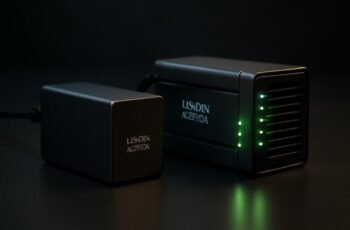
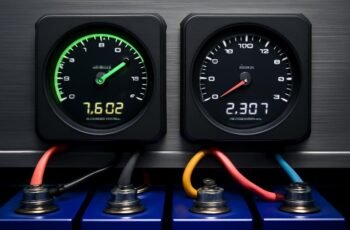
When selecting a LiFePO4 charger, understanding the fundamental differences between digital and analogue designs can substantially impact your battery management strategy. Digital chargers utilize microcontrollers for precise control and real-time monitoring, offering advanced features that enhance safety and longevity. Conversely, analogue chargers rely on simple circuitry, providing a cost-effective but less adaptable solution. Exploring these distinctions reveals which option aligns best with your specific application and long-term needs.
Key Takeaways
- Digital chargers offer precise control, real-time monitoring, and advanced safety features, enhancing battery health and lifespan.
- Analogue chargers are simpler, more durable, and cost-effective, suitable for basic and less sensitive applications.
- Digital systems enable faster, more efficient charging with adaptive algorithms, while analogue chargers use fixed settings.
- Digital chargers typically have higher upfront costs and maintenance needs due to complex circuitry.
- Choose digital or analogue based on application complexity, monitoring needs, and budget considerations.
How Do Digital and Analogue LiFePO4 Chargers Differ in Design?
How do digital and analogue LiFePO4 chargers differ in design? Digital charging systems incorporate microcontrollers and digital signal processors, enabling precise control of charging parameters, real-time monitoring, and advanced communication protocols. These components facilitate adaptive algorithms that optimize charge cycles and prevent overcharging, making digital chargers highly accurate. Conversely, analogue power-based chargers rely on passive electronic components like resistors, capacitors, and operational amplifiers, which provide straightforward, steady current and voltage regulation. Their design emphasizes simplicity and reliability but lacks the nuanced control of digital systems. While digital chargers excel in delivering fine-tuned, customizable charging profiles, analogue power systems offer durability with minimal complexity. Each design approach reflects different priorities: precision and flexibility versus robustness and simplicity.
What Features Should You Expect From a Digital Lifepo4 Charger?
What features distinguish a digital LiFePO4 charger from its analogue counterparts? Digital chargers leverage advanced digital optimization, enabling precise control over charging parameters such as voltage, current, and timing. This results in enhanced charge accuracy and efficiency, minimizing overcharge risks and extending battery lifespan. They often include real-time display interfaces, providing detailed data on voltage, current, temperature, and charge cycles, facilitating better monitoring and diagnostics. In contrast, analogue chargers rely on simple circuitry, offering durability but limited control and fewer features. Digital chargers also incorporate automatic safety protocols, such as temperature regulation and voltage cutoff, ensuring safer operation. While analogue durability remains valuable, digital features significantly improve charging precision, operational safety, and user convenience, aligning with modern battery management needs.
How Reliable Are Analogue LiFePO4 Chargers for Long-Term Use?
Are analogue LiFePO4 chargers dependable for long-term use? Analogue reliability depends on consistent component quality and robust construction, but it often lacks the precision of digital features. While analogue chargers can perform reliably over extended periods, their limited ability to adapt to battery conditions may lead to less than ideal charging cycles, potentially affecting long-term battery health. The absence of digital features means fewer safeguards, making them more susceptible to human error or environmental factors. However, these chargers are typically simpler, which reduces points of failure. Overall, analogue LiFePO4 chargers can be dependable if well-maintained, but they generally don’t offer the same long-term stability, adaptability, or monitoring capabilities as digital counterparts, which are designed for enhanced reliability over extensive use.
Which Charging Speed and Efficiency Is Better: Digital or Analogue?
When comparing digital and analogue LiFePO4 chargers, charging speed and efficiency become key factors influencing overall performance. Digital chargers typically optimize charging algorithms, resulting in faster charging times and higher efficiency. Analogue chargers often rely on fixed voltage and current settings, which can limit their charging speed and reduce efficiency, especially under variable conditions.
| Feature | Digital Charger | Analogue Charger |
|---|---|---|
| Charging Speed | Faster due to adaptive algorithms | Slower, fixed parameters |
| Efficiency | Higher, optimized for conditions | Lower, less adaptable |
| Performance Consistency | Consistent across cycles | Variable, less precise |
| Power Management | Enhanced, real-time adjustments | Basic, static settings |
How Easy Is It to Use Each Type of LiFePO4 Charger?
When comparing digital and analogue LiFePO4 chargers, user interface simplicity and setup procedures are critical factors. Digital chargers typically feature advanced displays and configurable settings, which can streamline operation but may require initial learning. Conversely, analogue chargers tend to have straightforward controls, making them easier to set up and operate with minimal technical knowledge.
User Interface Simplicity
How intuitive is it to operate each type of LiFePO4 charger, given their user interfaces? Digital interfaces generally offer enhanced clarity and real-time data, simplifying operation through menus and touch controls. Conversely, analogue durability favors straightforward, tactile controls, which remain reliable over time but lack detailed feedback.
- Digital chargers feature LCD screens displaying voltage, current, and status, streamlining monitoring.
- Analogue chargers rely on physical dials and indicator lights, requiring manual adjustments.
- Digital interfaces facilitate quick setup with pre-programmed charging profiles, reducing user error.
- Analogue durability ensures consistent operation in harsh environments, but user interaction is more manual.
Setup and Configuration
Digital chargers simplify setup through pre-configured profiles and intuitive menus, enabling users to select appropriate parameters with minimal effort. This digital workflow streamlines configuration by allowing quick adjustments via LCD screens or mobile apps, reducing setup time and minimizing human error. In contrast, analogue chargers rely on manual controls, such as potentiometers and switches, which demand careful calibration and technical knowledge. While analogue durability ensures long-term reliability in harsh environments, it complicates setup and adjustment. Digital chargers offer precise, repeatable configurations, but may require initial programming. Overall, digital setup is more accessible for most users, providing faster, straightforward configuration, whereas analogue chargers excel in rugged conditions but demand more technical skill for setup and calibration.
What Are the Cost Differences Between Digital and Analogue Chargers?
The cost differences between digital and analogue LiFePO4 chargers primarily stem from their underlying technology and feature sets. Digital chargers incorporate advanced microprocessors, enhancing design tradeoffs for precise power regulation, often increasing manufacturing costs. Conversely, analogue chargers rely on simpler circuitry, resulting in lower initial costs but reduced functionality. Specifically:
- Digital chargers typically have higher upfront costs due to complex circuitry and integrated microcontrollers.
- Analogue chargers are cheaper but lack the refined power regulation and adaptive algorithms found in digital models.
- Digital chargers often include additional features like programmable settings, increasing component costs.
- Maintenance and repair expenses tend to be higher for digital units, reflecting their sophisticated electronics.
These cost differences reflect the technological complexity and feature depth, influencing overall investment and operational expenses.
Which Charger Type Offers Better Battery Health Monitoring?
When evaluating battery health monitoring capabilities, digital chargers generally outperform their analogue counterparts due to their advanced processing and data analysis features. Digital chargers continuously assess parameters such as voltage, current, and temperature, enabling precise tracking of battery health. They incorporate microprocessors that analyze this data in real-time, providing detailed insights and early detection of potential issues. This enhanced monitoring improves charging efficiency by preventing overcharging or undercharging, thereby preserving battery longevity. In contrast, analogue chargers rely on basic, manual controls and simple indicators, offering limited feedback and less accurate health assessments. Ultimately, digital chargers deliver a more comprehensive view of battery health, ensuring optimal performance and extending the lifespan of LiFePO4 batteries through superior monitoring capabilities.
How Do You Decide Which Charger Suits Your LiFePO4 Battery Needs?
Selecting the right charger for your LiFePO4 battery hinges on understanding your specific power requirements, usage patterns, and the battery’s characteristics. Digital charging offers precise control, real-time monitoring, and enhanced charging profiles, making it suitable for sensitive applications. Analog efficiency, however, can be advantageous in simpler setups requiring minimal intervention. To decide, consider these factors:
- Charging control: Do you need advanced digital control or basic analogue operation?
- Monitoring capabilities: Is battery health monitoring essential for your application?
- Charging speed: Will faster charging impact your usage cycle?
- Compatibility: Ensure the charger’s specifications match your battery’s voltage and capacity.
Balancing digital charging’s precision against analogue efficiency will guide you toward the best choice for your LiFePO4 needs.
Frequently Asked Questions
Can Digital Chargers Adapt to Different Battery Chemistries?
Digital chargers can adapt to different battery chemistries through programmable settings and digital charging algorithms, whereas analogue calibration is limited. This flexibility ensures precise charging tailored to each chemistry, optimizing battery life and safety efficiently.
Do Analogue Chargers Require Calibration Over Time?
Analogue chargers generally don’t require calibration, but analogue calibration can drift over time, affecting accuracy. Calibration frequency depends on usage and environment; regular checks ensure optimal performance, especially for precise Lifepo4 battery management and longevity.
Are Digital Chargers More Environmentally Friendly Than Analogue Ones?
Like comparing a sleek, modern spaceship to an old steam locomotive, digital chargers are generally more eco-friendly, offering better efficiency metrics and precise control, making them a smarter choice for environmentally conscious applications.
How Do Temperature Sensors Differ Between Digital and Analogue Chargers?
We find digital chargers utilize advanced temperature sensors with strategic placement and sensing methods, ensuring battery chemistry compatibility, and firmware upgradeability, unlike analogue chargers, which often have simpler, less adaptable temperature sensing, affecting overall safety and performance.
Can Either Charger Type Be Upgraded With New Firmware?
Yes, both digital and analogue chargers can be upgraded with new firmware, enabling better battery chemistry adaptation. This process enhances performance, guarantees compatibility with evolving battery technologies, and prolongs charger lifespan through precise, technical updates.
Conclusion
In conclusion, digital LiFePO4 chargers, with their real-time monitoring and adaptive profiles, can extend battery lifespans by up to 50% compared to analogue models. While they come at a higher initial cost, their precision and safety features justify the investment for sensitive applications. Ultimately, selecting the right charger depends on your specific needs—whether budget-friendly simplicity or advanced health management. Making an informed choice guarantees peak performance and longevity for your LiFePO4 batteries.