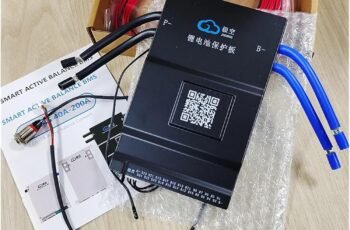
Have we ever wished our lithium battery packs could just take care of themselves, stay balanced, and last longer without constant tinkering?
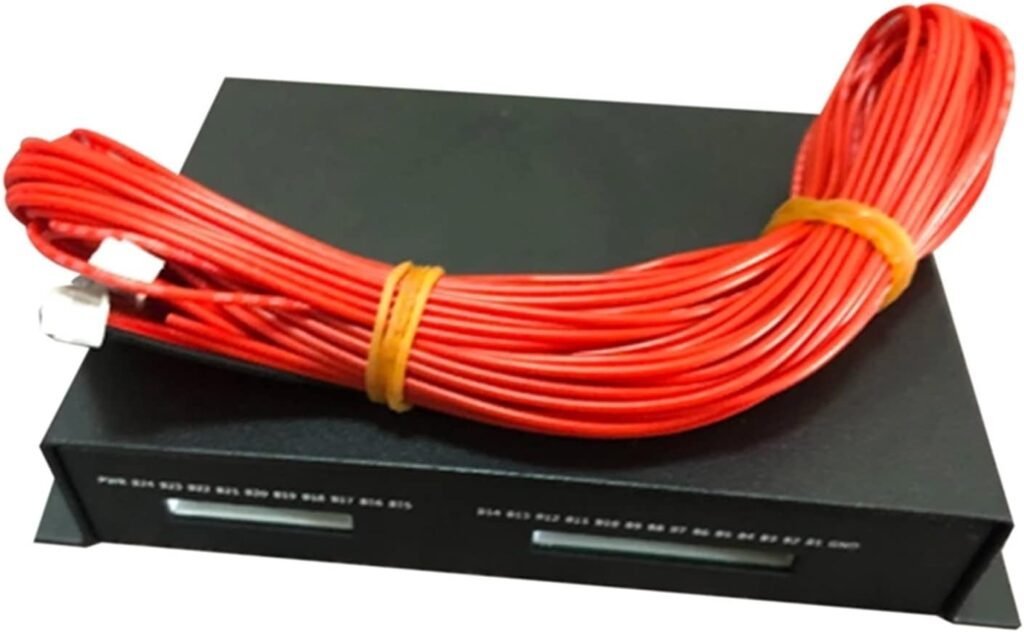

What Is the JK Battery Equalizer Lithium Battery Active Equalizer?
The JK Battery Equalizer Lithium Battery Active Equalizer JK Balance BT 2S – 24S BMS Li-Ion Lifepo4 LTO (Colour: 2A) is essentially a smart brain and guardian for our battery packs. It is designed to manage, protect, and actively balance lithium battery cells in real time, so our system runs efficiently and safely.
Instead of being just a simple protection board, this JK BMS combines active equalization, Bluetooth connectivity, and broad compatibility with common lithium chemistries. For DIY energy storage, off-grid systems, e-bikes, carts, and other custom packs, it gives us more control and visibility than many generic BMS units.
Key Features at a Glance
We often want a clear snapshot of what a product offers before we commit. With this JK BMS equalizer, we get a set of features that focus on efficiency, protection, and usability.
Here is a quick breakdown of its main points:
| Feature | Description |
|---|---|
| Supported Cell Count | 2S to 24S (2–24 cells in series) |
| Supported Chemistries | Li-ion, LiFePO4, LTO |
| Balancing Type | Active equalization |
| Active Balance Current | Approx. 0.6–2A |
| Max System Voltages (Common Setups) | 12V (4S), 24V (8S), 48V (16S), 72V (24S) |
| Supported Current Range | Around 100A–350A (depends on model and system design) |
| App Connectivity | JK own app via Bluetooth |
| Protections | Overcharge, over-discharge, over-current, short circuit, low-temperature charge cutoff |
| Intended Use | DIY battery packs, powerwall projects, off-grid, solar storage, EV conversions, etc. |
This overview helps us see whether this BMS/equalizer fits our particular use case, system size, and battery chemistry.
JK Own Development App and Bluetooth Connectivity
Having a good BMS is great, but having insights in our pocket on a smartphone is even better. The JK team has built its own dedicated app that communicates with the BMS over Bluetooth.
Real-Time Monitoring on Our Phone
With the JK app, we are able to see real-time data from the battery pack without plugging in a computer or using separate hardware. This makes it easier to check the system casually or when troubleshooting.
Typical parameters we can monitor include:
- Individual cell voltages
- Pack voltage
- Current flow (charge and discharge)
- Remaining capacity (depending on configuration)
- Temperature readings
- Status of protections and alarms
By seeing the cell-level data on a phone, we catch imbalance early and track how the pack behaves under load and during charging.
Advanced BMS Settings Through the App
The app is not just for monitoring; we also adjust many BMS settings directly through it. This gives us flexibility for different chemistries and custom packs.
We typically can adjust:
- Overcharge and over-discharge voltage thresholds
- Charge and discharge current limits
- Balance start voltage or differential thresholds
- Temperature protection points (like low-temperature charge cutoff)
This kind of configurability is especially useful for DIY systems where default values from generic BMS units may not fit our exact cells or usage patterns.
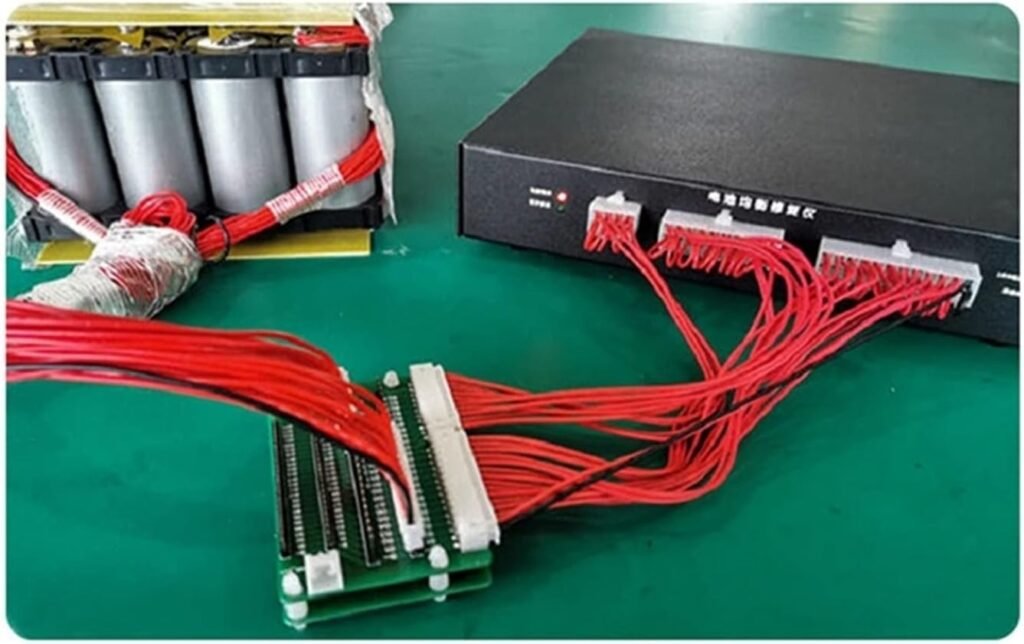

Active Balancing: The Core Advantage
Many lower-cost BMS units use passive balancing, which wastes excess energy from higher-voltage cells as heat. JK’s active balance technology is what sets this product apart.
How Active Equalization Works
With active balancing, the system does not just burn off extra energy. Instead, it transfers charge from higher-voltage cells to lower-voltage cells. This is more efficient and more gentle on the battery pack as a whole.
The JK BMS equalizer:
- Detects voltage differences between cells
- Uses a dedicated circuit to move current between cells
- Works continuously (within its current rating) during operation
This leads to a more uniform state of charge (SoC) across all cells and reduces the workload on any one cell that might otherwise become a bottleneck.
0.6–2A Active Balance Current
An important detail is the balance current range of around 0.6–2A. Many cheap BMS units only have passive balancing at 30–100mA. That is fine for small packs, but too slow for larger capacity batteries or packs frequently cycled.
With up to about 2A of active balancing current:
- The BMS can correct imbalances faster
- The system recovers from partial mismatches between cells more effectively
- We can maintain balance even on larger capacity cells (e.g., 100Ah or more)
This higher balancing current is especially helpful if we fast charge or draw high currents, as cells tend to drift more quickly under those conditions.
Efficiency and Long-Term Battery Health
JK claims active compensation can raise battery consumption efficiency up to around 99%, which primarily refers to better utilization of overall capacity. When all cells stay aligned, we use more of the pack’s nominal capacity instead of being limited by the weakest cell.
Over the long term, this means:
- Less stress on individual cells
- Reduced risk of early capacity loss on edge cells
- Potentially longer pack lifespan
For those of us building expensive battery banks, especially LiFePO4 systems for off-grid or home backup, improved longevity is a big selling point.
Protection and Safety Features
A BMS has one job above all others: protect our battery pack from damage. JK BMS integrates a standard set of protections, but with some extra attention given to temperature and current range.
Overcharge and Over-Discharge Protection
We know that overcharging or deeply discharging lithium cells can dramatically shorten their lifespan and, in worst cases, cause safety issues. The JK BMS includes:
- Overcharge protection: cuts charging when any cell exceeds the set voltage limit
- Over-discharge protection: prevents further discharge when cells fall below the safe threshold
Using the app, we adjust these limits to match Li-ion, LiFePO4, or LTO voltage profiles. This customization gives us more control and helps us stay within the manufacturer’s recommended range for our specific cells.
Over-Current and Short Circuit Protection
High currents can overheat cells, cables, and connectors. The JK BMS monitors the current and steps in when it detects dangerous conditions.
It provides:
- Over-current protection for both charge and discharge
- Short circuit protection, cutting power in the event of a direct short
This layer of protection helps prevent wiring mistakes or unexpected faults from turning into catastrophic failures.
Low-Temperature Charge Cutoff
Charging lithium cells when they are too cold is particularly harmful, especially for Li-ion and LiFePO4 chemistries. The JK BMS includes low-temperature charge cutoff, which stops charging when the measured temperature is below a configurable threshold.
This feature is particularly relevant for:
- Outdoor battery systems in cold climates
- Garage or shed installations without active heating
- Mobile systems like vans, RVs, boats, and off-grid cabins
We still might need additional insulation or heating for extreme conditions, but this protection gives a valuable extra safeguard against accidental cold-weather charging.
Compatibility with Li-Ion, LiFePO4, and LTO Cells
One of the strengths of this JK BMS is its broad compatibility with multiple lithium chemistries. Many of us experiment with different cell types or want to future-proof our system.
Li-Ion Support
For traditional Li-ion or NMC/NCA cells:
- Typical full-charge voltage: about 4.2V per cell
- Typical minimum voltage: around 3.0V (or slightly lower, depending on manufacturer)
The JK BMS lets us set up appropriate thresholds via the app, so we align with our specific cells’ data sheets. That makes it suitable for e-bike, e-scooter, or power tool battery pack projects where Li-ion cells are commonly used.
LiFePO4 (LFP) Compatibility
LiFePO4 has become the go-to for many DIY energy storage and solar enthusiasts because of its long cycle life and safety profile. This BMS offers clear compatibility with LiFePO4:
- Typical full-charge voltage: about 3.65V per cell
- Typical minimum voltage: around 2.5–2.8V per cell
We tune the BMS to those values, and the active balancing plus robust protections help maintain these often large capacity cells (e.g., 100Ah, 280Ah, or more). The higher 0.6–2A balance current is especially helpful in correcting drift across those large capacities.
LTO (Lithium Titanate) Support
LTO cells are less common but have unique benefits, such as wider temperature tolerance and extremely long life. Their voltage profile is quite different:
- Typical full-charge voltage: about 2.7–2.8V per cell
- Typical minimum voltage: around 1.9–2.0V per cell
The flexibility of the JK BMS allows us to set these specific voltages. For anyone experimenting with LTO-based systems, having a BMS that explicitly supports this chemistry is a major advantage.
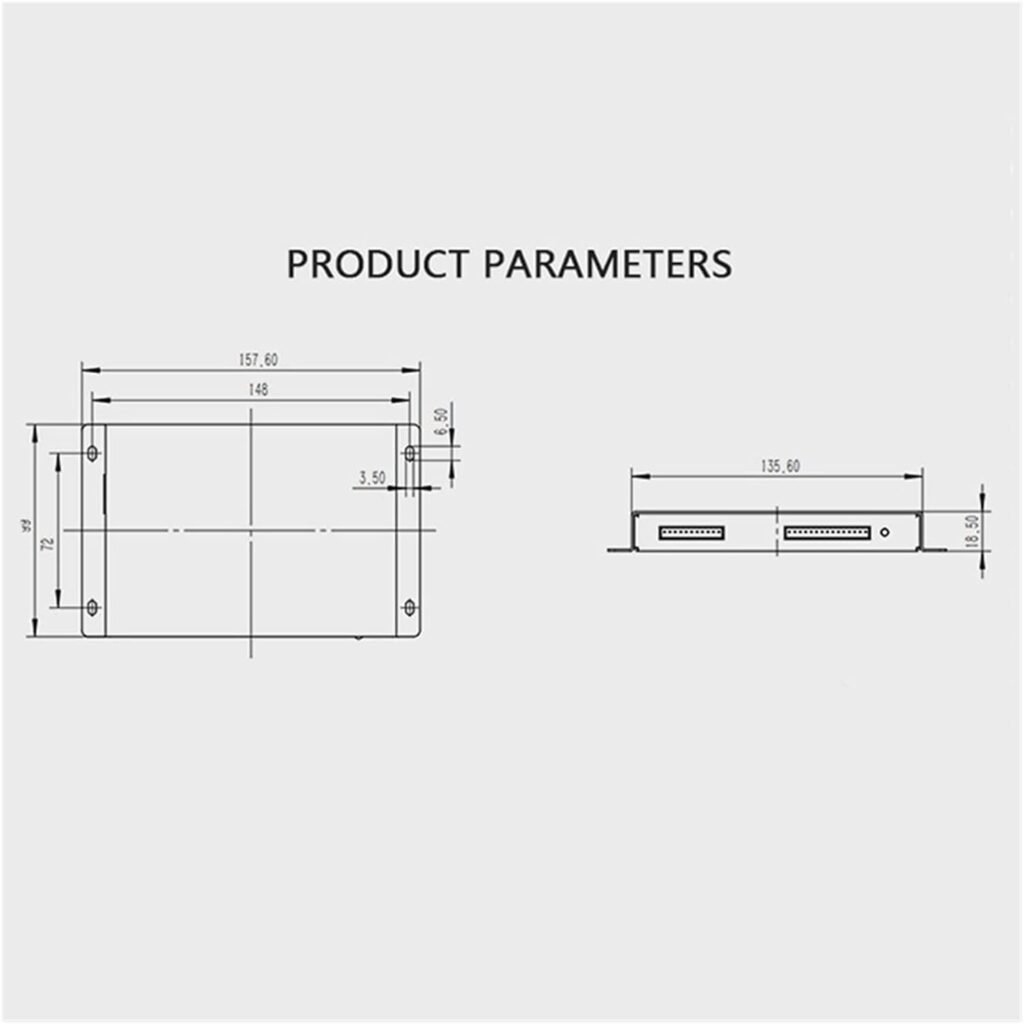
Supported Pack Sizes: From 2S to 24S
The JK equalizer is designed for 2 to 24 cells in series (2S–24S). That range gives us a lot of room when designing different systems.
Common Voltage Configurations
Within that 2S–24S range, we see some typical setups:
- 12V nominal: usually 4S LiFePO4 (4 × 3.2V) or 3S Li-ion (3 × 3.7V)
- 24V nominal: typically 8S LiFePO4 or 7S Li-ion
- 48V nominal: often 16S LiFePO4 or 13S Li-ion
- 72V nominal: usually 24S LiFePO4 or 20S Li-ion
The product details highlight support for:
- 12V / 4S
- 24V / 8S
- 48V / 16S
- 72V / 24S
Those are standard for many solar storage and light EV setups.
Scaling for Larger Systems
Because this unit supports up to 24S in one BMS, we can handle higher-voltage systems without stacking multiple smaller BMS boards. That reduces complexity, wiring, and potential points of failure.
For even larger projects, some installers use multiple packs and BMS units in parallel, each managing its own series string. While that requires additional system planning, the JK BMS’s flexibility makes it easier to standardize on one model across different pack sizes.
Current Handling: 100A–350A (Model Dependent)
When we build high-power battery packs, current rating is as important as voltage support. The product details indicate compatibility with 100A–350A maximum current lithium battery systems, particularly LiFePO4.
Understanding Current Requirements
Our required current depends heavily on the application:
- Small solar backup systems may only require 50–100A peak
- Larger off-grid homes might push 150–300A or more
- Electric carts, scooters, or light vehicles can see demanding surge currents
By having a BMS capable of around 100–350A, we gain flexibility. However, it is important to confirm the exact model’s rating and ensure our wiring, busbars, and connectors match those currents safely.
Matching the BMS with Our System
We should pair this JK BMS equalizer with:
- An appropriately sized inverter or motor controller
- Adequate wiring gauge and fusing
- Solid busbar or terminal connections
The BMS is one part of the protection chain; our overall system design must support the same current rating to keep everything running cool and safe.
Why Active Balancing Matters in DIY Systems
In our own builds, we might be tempted to save money with a simple, cheap BMS. However, cell imbalance often becomes a hidden problem over time.
The Problem with Cell Drift
Even cells from the same batch can differ slightly in:
- Capacity
- Internal resistance
- Self-discharge rate
Over hundreds of cycles, these minor differences accumulate. One cell may start hitting full or empty sooner than the others, limiting our usable capacity and putting that cell under extra stress.
How the JK Equalizer Helps
Active balancing at up to 2A gives this JK unit a significant advantage:
- It helps maintain tight cell voltage alignment
- It reduces the time the pack spends in an imbalanced state
- It can often correct issues that passive balancing would need much longer to fix
For DIY energy storage, where we might have big 100–300Ah cells, this faster active balancing is frequently the difference between a pack that runs smoothly and one that constantly triggers protection limits.
Real-World Use Cases
This JK BMS equalizer is not just for one niche. It supports a wide variety of lithium-based projects. Let us walk through some typical scenarios where this product fits nicely.
Off-Grid Solar and Home Battery Banks
For home energy storage or cabin systems, we often run:
- 12V, 24V, 48V, or 72V nominal packs
- LiFePO4 cells in the 100–280Ah range
The JK BMS with active balancing and mobile app support makes it easier to:
- Keep track of cell health
- Optimize depth of discharge for longer life
- Receive early warnings if something starts to drift out of range
We can combine it with solar charge controllers and inverters, building a complete DIY powerwall-style system.
RVs, Vans, Boats, and Mobile Power
In mobile setups, space and weight are limited, so lithium battery packs give significant advantages. With this BMS, we can:
- Protect the pack against extreme temperatures during travel
- Monitor battery health from a smartphone while on the road
- Ensure safe, efficient use for fridges, inverters, and other onboard loads
The low-temperature charge cutoff is especially beneficial if our vehicle faces cold nights or winter storage.
Light Electric Vehicles and Carts
For electric scooters, go-karts, golf carts, light motorcycles, or DIY EV projects, voltage and current demands can be quite high. With up to 24S support and high current capacity, the JK BMS:
- Handles high peak loads (within specified limits)
- Maintains balance during frequent charge/discharge cycles
- Provides protection in case of short circuits or controller issues
Having the app gives us quick insight into pack status without needing a separate display or data logger.
Experimental and Hobby Projects
For those of us who enjoy experimenting with LTO cells, custom voltage levels, or unusual pack configurations, the JK BMS is a powerful platform:
- Broad cell count range (2S–24S)
- Flexible firmware settings
- Active balancing to protect valuable cells
It is a strong option when we want a more serious and sophisticated BMS than generic low-cost boards.
Installation Considerations
Although the product promises many benefits, we still need to wire and configure it correctly. Miswiring a BMS can cause immediate damage, so careful planning is essential.
Wiring the Sense Leads
For a multi-cell pack, the BMS connects to each cell via sense wires. We should:
- Follow the official JK wiring diagram step by step
- Double-check polarity and sequence for every cell connection
- Avoid crossing or mixing up sense wires, as that can damage the BMS
We may find it helpful to label each wire and cell terminal before connecting the BMS, especially on larger packs.
Main Power Connections and Fusing
The BMS also connects in series with the pack’s main positive or negative bus (depending on design). For safety:
- Use appropriately sized cable (based on current rating and distance)
- Install fuses or breakers to protect both the pack and wiring
- Ensure all connections are properly crimped or bolted, with minimal resistance
A solid mechanical installation is as important as a correct electrical installation.
App Setup and Configuration
Once wired, we pair the BMS with the JK app:
- Power the pack and BMS.
- Open the JK app on our phone and look for the BMS in the Bluetooth devices list.
- Connect and verify cell count, total voltage, and individual cell readings.
- Adjust chemistry-specific parameters: cell full voltage, minimum voltage, and so on.
We should validate that the displayed values match what we expect from a multimeter, especially on first setup.
Strengths and Benefits of the JK Battery Equalizer
To weigh whether this product fits our project, it helps to highlight its key advantages.
Strong Active Balancing Performance
The standout feature is the 0.6–2A active balancing current, which is significantly higher than typical passive balancing circuits. For large packs, that means:
- Faster correction of cell drift
- Less wasted energy
- Better utilization of total pack capacity
This directly influences longevity and reliability.
Broad Chemistry and Voltage Support
By handling Li-ion, LiFePO4, and LTO across 2–24 cells in series, the JK BMS covers many applications. We are not locked into a single chemistry, and we can adapt the same BMS type to different project sizes.
Robust Protection Set
With:
- Overcharge
- Over-discharge
- Over-current
- Short circuit
- Low-temperature charge cutoff
We get a comprehensive safety net, especially when paired with good wiring and external fuses or breakers.
User-Friendly JK App
The dedicated app simplifies both monitoring and configuration. Instead of hardware jumpers or cryptic desktop tools, we use a phone to:
- See cell voltages
- Check error codes
- Adjust thresholds and behaviors
This is particularly convenient for installations that are not easily accessible physically.
Potential Limitations and Things to Keep in Mind
No product is perfect, and we should be aware of some considerations when choosing this BMS.
Learning Curve for New Users
Because this BMS is feature-rich, new users might find the settings a bit overwhelming at first. We need to:
- Understand our battery chemistry’s recommended voltages
- Be comfortable reading wiring diagrams
- Take the time to test and verify our configuration
For anyone completely new to DIY battery packs, there is a learning curve, but the flexibility is worth it once we understand the fundamentals.
Quality of Installation Matters
Even the best BMS cannot compensate for:
- Poor cable connections
- Undersized wiring
- Inadequate ventilation
We need to treat the BMS as part of a complete system design, not as a magic fix for every possible mistake. Planning and proper hardware selection remain crucial.
Model and Current Rating Confirmation
Because product listings sometimes group multiple variants, we should verify:
- Exact maximum current rating of the specific model we are buying
- Whether additional accessories (like external contactors) are needed for very high current applications
Matching our load demands with the correct BMS version will ensure reliability and safety.
Practical Tips for Getting the Most Out of This BMS
Once we have the JK BMS installed, a few simple habits can help us keep the system in top condition.
Regularly Check the App
Instead of ignoring the pack until something goes wrong, we can:
- Periodically open the app to review cell voltages
- Look for any cells that consistently lag behind others
- Watch for growing differences in voltage under load
Catching issues early often means simpler fixes, like re-checking a connection or identifying a weak cell before it fails completely.
Keep Some Headroom in Voltage Settings
Running cells hard at their absolute maximum and minimum voltages might give a bit more capacity but will shorten their lifespan. With the JK BMS, we can set slightly more conservative limits.
For example, for LiFePO4:
- Set full-charge cutoff a bit below 3.65V per cell
- Set low cutoff above the absolute minimum, maybe around 2.8V
This practice, combined with active balancing, can significantly extend cycle life.
Monitor Temperatures and Environmental Conditions
Even with protection in place, we should:
- Avoid installing packs in sealed, unventilated spaces with no airflow
- Keep the BMS and battery away from direct radiant heat sources
- Pay attention to cold-weather charging limits
By respecting these boundaries, we reduce the risk of thermal stress and allow the BMS to operate within its design envelope.
Comparison with Simple Passive BMS Units
Many of us might already own or have seen basic inexpensive BMS boards. Understanding how this JK unit compares helps justify the investment.
Passive vs Active Balancing
Passive BMS:
- Bleeds off extra energy from higher cells as heat
- Often has low balance currents (e.g., 30–100mA)
- Works slowly and can struggle with large capacity cells
JK Active BMS:
- Moves energy from higher cells to lower ones
- Offers 0.6–2A balance current
- Corrects imbalance much faster and with less wasted energy
For modest packs, passive might be enough, but as pack size and cost go up, active balancing becomes far more attractive.
Monitoring and Configuration
Basic BMS:
- Often lacks Bluetooth or app support
- May have fixed settings that cannot be fine-tuned
- Provides little visibility into individual cell voltages
JK BMS:
- Offers cell-level data on our phone
- Allows us to set precise voltage and current thresholds
- Gives more detailed error and protection information
Having that visibility is crucial when we want to trust a system for long-term daily use.
Who Is This Product Best Suited For?
We might be wondering whether this JK Battery Equalizer is the right match for our specific needs. Let us narrow it down.
Ideal Users
This BMS is particularly well suited for:
- DIY enthusiasts building medium to large lithium packs
- Off-grid homeowners or cabin owners assembling LiFePO4 banks
- RV and boat owners wanting a robust, app-enabled battery manager
- Hobbyists building light EVs or experimental LTO packs
If we value detailed monitoring, flexible settings, and strong active balancing, this product aligns well with those priorities.
Less Ideal Situations
On the other hand, it might be more than we need if:
- We are using a very small pack for simple, low-power tasks
- We prefer a plug-and-play, fully integrated commercial battery with built-in BMS and no tinkering
- We have no interest in adjusting settings or checking data via an app
In those cases, a simpler BMS or a pre-built battery might be more practical.
Our Overall Impression and Verdict
After going through the details, strengths, and considerations, we can form a clear view of the JK Battery Equalizer Lithium Battery Active Equalizer JK Balance BT 2S – 24S BMS Li-Ion Lifepo4 LTO (Colour: 2A).
This unit stands out for:
- Active balancing with up to about 2A, which is a major benefit for larger packs.
- A dedicated JK app with Bluetooth that makes monitoring and configuration straightforward.
- Comprehensive protections for voltage, current, and temperature.
- Flexible support for multiple chemistries and cell counts, from 2S to 24S.
We do need to approach installation thoughtfully, follow wiring diagrams carefully, and invest time in learning the app settings. For those of us willing to do that, the payoff is a smarter, more efficient, and better-protected battery system.
In our view, this JK BMS equalizer is a compelling choice for serious DIY builders and small-scale energy system designers who want their lithium packs to be both intelligent and long-lasting, rather than just functional.
Disclosure: As an Amazon Associate, I earn from qualifying purchases.