Have we ever wished our lithium battery packs could manage themselves more intelligently, last longer, and give us real-time insights without constant tinkering?

What Is the NURII JK BMS Battery Protection Module?
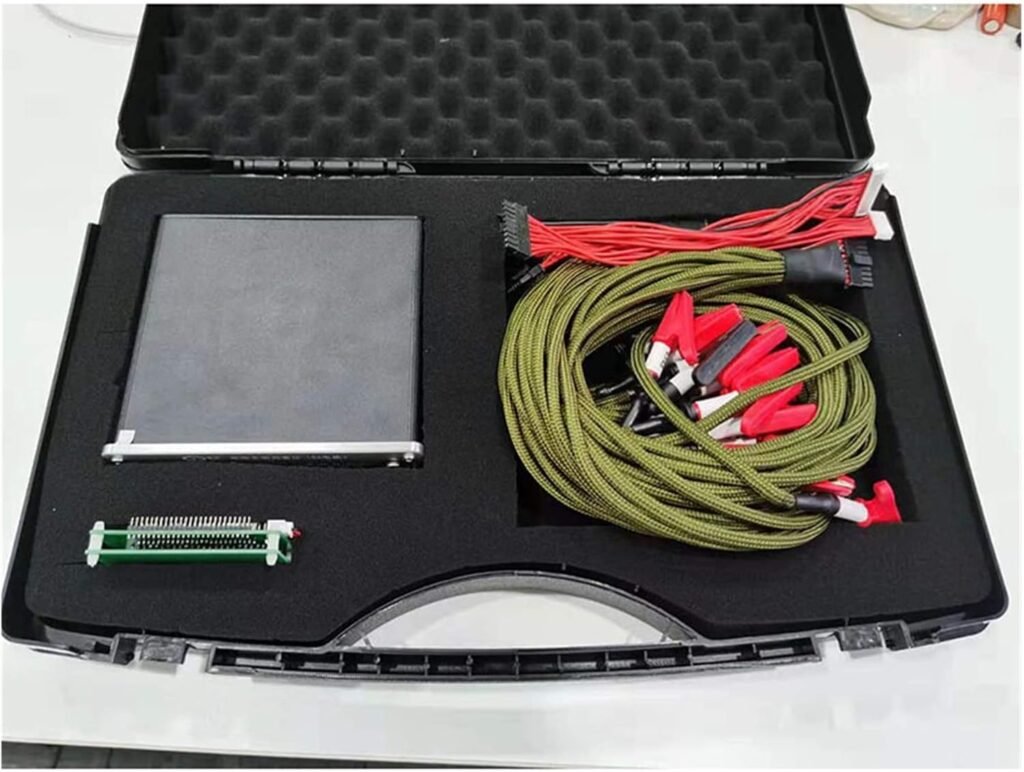
The NURII JK BMS Battery Protection Module is a smart battery management system designed for multi-cell lithium battery packs. We use it to safeguard our batteries and keep them balanced, efficient, and healthy over the long term.
This model supports 2S to 24S configurations and works with popular chemistries like Li-ion, LiFePO4, and LTO. With active balancing, Bluetooth connectivity, and a dedicated app, it goes far beyond a basic protection board.
Key Features at a Glance
Before we get into the deep details, it helps to see the core features in one place. This module is built not only to protect but also to optimize how our battery pack operates.
It combines smart protections with advanced active cell balancing and wireless monitoring, giving us both safety and control.
| Feature Category | Details |
|---|---|
| Product Name | NURII JK BMS Battery Protection Module (5A variant) |
| Supported Chemistries | Li-ion, LiFePO4, LTO |
| Cell Count (Series) | 2S to 24S |
| Balancing Type | Active balance (high-efficiency equalization) |
| Balancing Current | 1A / 2A / 5A / 10A variants (this listing: 5A) |
| Efficiency | Up to ~99% utilization via smart active balancing |
| Protections | Over-charge, over-discharge, over-current, short circuit, low-temperature charge cutoff |
| Communication | Bluetooth, app control and monitoring |
| Platform | JK-developed mobile app |
| Primary Use Cases | DIY battery packs, solar storage, e-bikes, small ESS, backup power, hobby projects |
Build Quality and Design
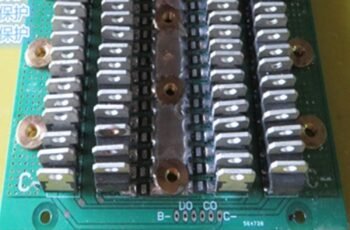
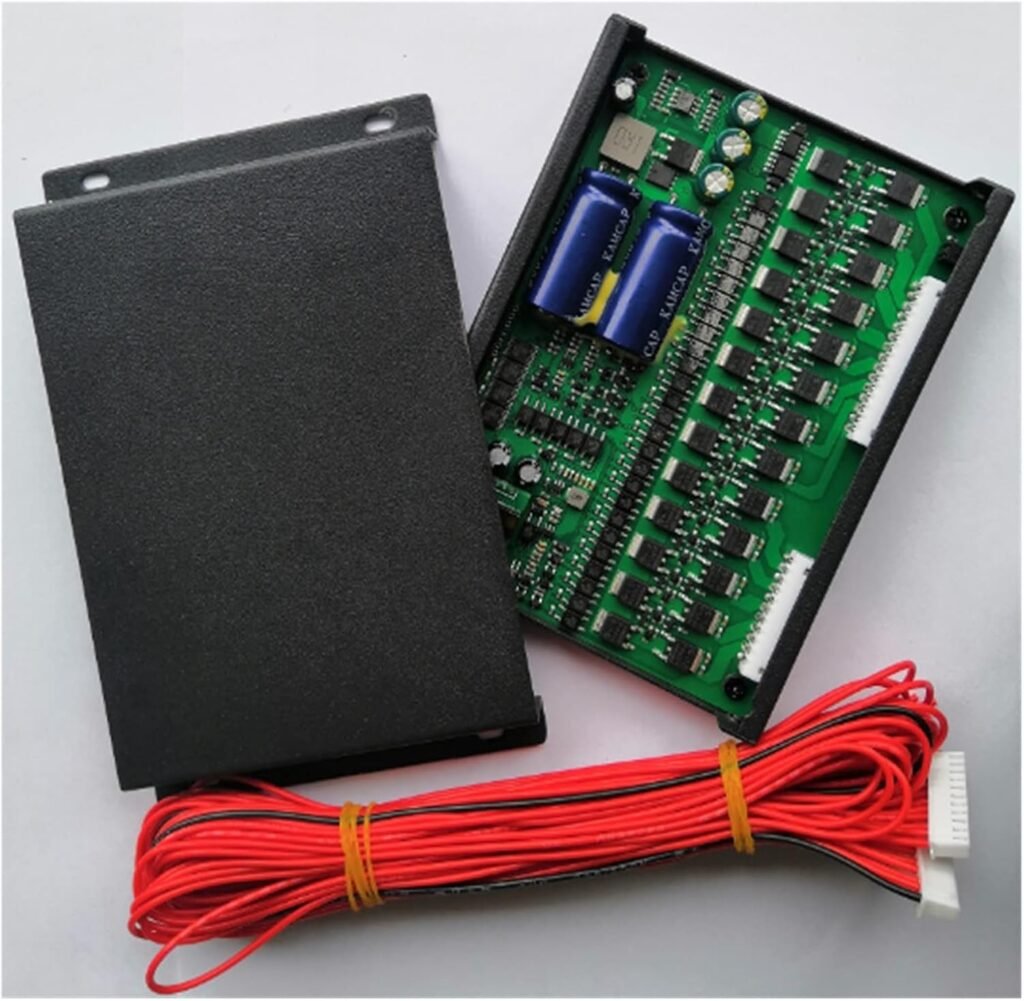
The first thing we usually notice about a BMS is the PCB layout and component quality. This module generally presents a clean design, with clearly marked terminals and neat component placement.
We appreciate that the board is purpose-built, with protection circuits and balancing components laid out in a way that supports efficient heat dissipation and reliability.
Physical Construction and Layout
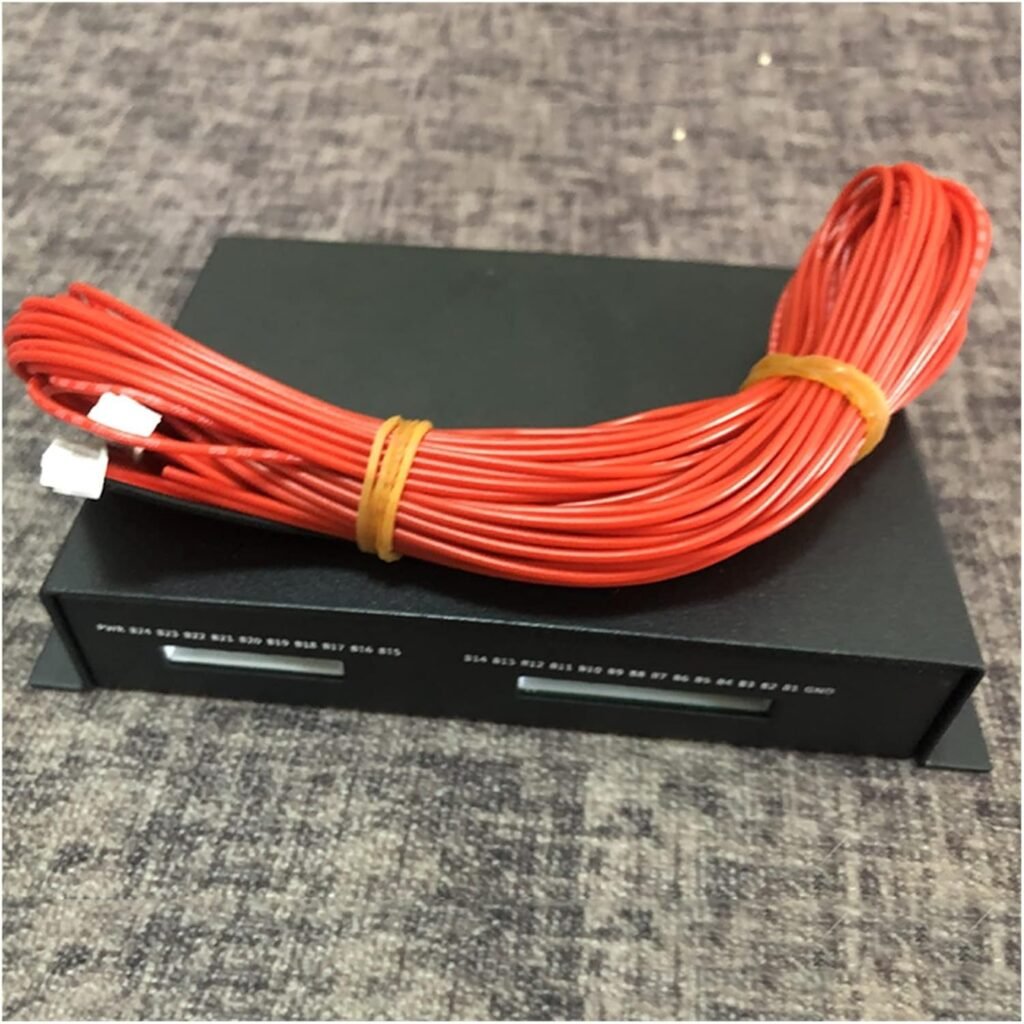
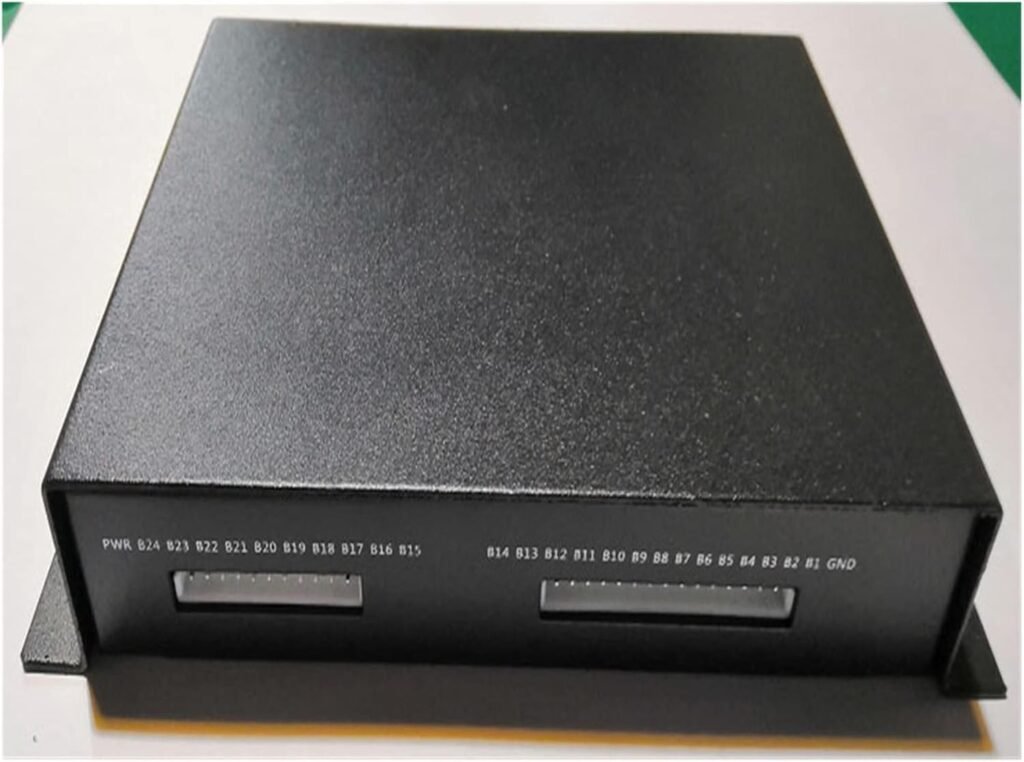
The module typically comes as a compact PCB with labeled pads or terminals for each series cell connection and the main pack input/output.
We find it straightforward to follow the labels for B+, B-, and the balance leads, which is critical for avoiding wiring mistakes.
Variant Options: 1A, 2A, 5A, 10A
The NURII JK BMS family offers multiple balancing current options, and we are focusing on the 5A variant.
This 5A active balancer version strikes a good balance between power and safety for medium-sized packs, offering more aggressive balancing than 1A or 2A but remaining manageable in DIY setups.

Supported Battery Chemistries and Configurations
Flexibility in chemistry and configuration is one of the main reasons we might choose a more advanced BMS.
The NURII JK BMS supports several commonly used lithium chemistries and a wide range of series cell counts, from small packs to larger systems.
Compatible Battery Types
We can use this BMS with:
-
Li-ion (NMC, NCA, etc.)
Great for e-bikes, power tools, and general high-energy-density packs. -
LiFePO4 (LFP)
Ideal for energy storage systems, RV batteries, solar banks, and backup power due to its safety and cycle life. -
LTO (Lithium Titanate)
Less common but prized for ultra-long cycle life and fast charge capability in specific use cases.
Because each chemistry has different nominal and maximum voltages, we need to configure the BMS correctly through the app for the chemistry we are using.
Series Configurations: 2S to 24S
One of the strengths of this module family is how widely it can scale:
- Small packs: 2S–4S for compact portable power.
- Medium packs: 8S–16S for e-bikes, scooters, DIY power banks.
- Larger systems: up to 24S for solar storage, inverters, and more serious energy systems.
We just match the cell count in our physical wiring to the configuration we set inside the JK app.
Active Balancing: What It Does and Why It Matters
Traditional BMS units often rely on passive balancing, which bleeds excess energy from higher-voltage cells as heat. That works, but it wastes energy and equalizes slowly.
The NURII JK BMS uses active balancing, which is one of the standout features that sets it apart.
How Active Balancing Works Here
Active balancing moves energy from higher-voltage cells to lower-voltage cells instead of just burning off the excess. This makes the process faster, more efficient, and less wasteful.
With the 5A variant, we have a relatively strong balancing current, which is especially helpful when:
- Our cells are mismatched or aging unevenly.
- We frequently charge to full and discharge deeply.
- We need our pack ready as quickly and efficiently as possible.
Benefits of Up to 99% Utilization
The manufacturer claims up to 99% battery usage efficiency through smart active balancing. While real-world results depend on pack quality, environment, and use, active balancing can significantly:
- Reduce capacity loss due to imbalance.
- Extend overall pack lifespan.
- Improve performance under high load or near-empty conditions.
We end up with more usable capacity from the same battery, especially over long-term use.
Protection Features: Keeping Our Pack Safe
We rely on a BMS not only to balance cells, but to act as a safety gatekeeper. NURII’s JK BMS includes a broad set of protections that we consider essential.
These protections help shield both our cells and our connected devices from damage or unsafe conditions.
Over-Charge and Over-Discharge Protection
Each lithium chemistry has strict voltage limits. Exceeding them is a common cause of cell damage or failure.
This BMS monitors each cell group and:
- Cuts off charging when cell voltages exceed the configured high limit.
- Cuts off discharging when cell voltages fall below the low limit.
By enforcing those thresholds consistently, we dramatically reduce the risk of over-stressing our cells and degrading capacity prematurely.
Over-Current and Short-Circuit Protection
When we pull more current than our pack or wiring can safely deliver, or if a sudden short occurs, things can go wrong very quickly.
The NURII JK BMS monitors current and:
- Shuts down output when current exceeds configured safe thresholds.
- Detects short circuits, then rapidly disconnects the pack to avoid damage or hazards.
We still need appropriate fuses, wiring, and hardware, but this layer of electronic protection adds a critical safety backstop.
Low-Temperature Charging Cutoff
Charging lithium cells at low temperatures can cause plating and irreversible damage. Not all BMS boards implement this protection, but this one does.
With low-temperature charging cutoff, the BMS will:
- Prevent charging when the pack temperature is below a safe limit.
- Resume charging only once temperatures rise above that threshold.
This is particularly valuable for packs used in cold climates, unheated garages, sheds, or outdoor enclosures.
The JK Mobile App and Bluetooth Connectivity
One of the more modern aspects of this product is its Bluetooth connectivity and the JK-developed mobile app. Instead of guessing what is going on inside the pack, we can see it clearly on our phone.
This kind of real-time visibility can be a game-changer when we troubleshoot, fine-tune, or monitor long-term performance.
Real-Time Monitoring
Through the app, we typically gain access to:
- Individual cell voltages
- Pack voltage and total capacity estimates
- Charge and discharge current
- Temperature readings (depending on sensor setup)
- Balance status and activity
We can pull out our phone and check on the battery without needing a multimeter or external monitors.
Configuration and Fine-Tuning
Beyond passive monitoring, we often get control over a range of BMS settings, such as:
- Over-charge and over-discharge thresholds
- Balancing start voltage and conditions
- Over-current thresholds and delays
- Temperature limits for charge and discharge
This allows us to tune the BMS to match our specific battery chemistry, pack design, and desired safety margins.
Installation and Setup Experience
While this is not a plug-and-play device like a simple battery charger, it is approachable for anyone comfortable with wiring and basic electronics.
We do need to follow wiring diagrams closely and take our time to get the connections correct.
Wiring the Battery Pack
The basic steps usually look like this:
- Identify cell groups: For example, in a 4S pack, we have four series cell groups.
- Connect main terminals: B+ and B- to the positive and negative ends of the entire series pack.
- Connect balance leads: Each balance wire goes to the correct junction between cells as labeled.
- Double-check wiring: Verify continuity, voltages, and polarity before powering up.
Incorrect wiring is a common source of problems and can damage the BMS or cells, so we always verify twice.
Configuring Through the App
Once wired, we typically:
- Power up the pack and the BMS.
- Open the JK app and pair via Bluetooth.
- Confirm our number of series cells (S-count).
- Set the correct chemistry and voltage limits.
- Check that all cell voltages read correctly.
This initial configuration is crucial. Incorrect settings can either limit performance or compromise safety.
Performance in Real-World Use
On paper, many BMS units look similar, but performance in actual use tells us how well they are engineered. This NURII JK BMS stands out especially for active balancing and diagnostic data.
We find it particularly suitable for enthusiasts, DIYers, and small-scale energy storage users.
Balancing Speed and Stability
Thanks to the 5A active balancer, cells typically equalize faster than with conventional passive BMS boards.
This is especially noticeable when:
- We combine cells that were not perfectly matched.
- The pack has undergone deep cycling and become slightly imbalanced.
- We have high-capacity cells where a small voltage difference can mean a large capacity difference.
More aggressive balancing means the pack spends more time at an optimal state, which in turn protects capacity and efficiency over time.
Temperature and Reliability
Active balancers can generate heat, but because energy is being transferred rather than just dissipated, overall thermal stress can still be manageable.
We find that:
- Proper mounting with airflow or basic heatsinking is beneficial.
- The board is generally reliable when wired and configured correctly.
- Keeping within its specified current and environment ratings goes a long way toward longevity.
We always treat this as a critical system component and avoid pushing it beyond rated specs.
Safety Considerations and Best Practices
No matter how smart our BMS is, safe battery building starts with us. The BMS is a protective system, not a cure-all for risky wiring or poor cell quality.
We like to follow several best practices when using modules like this.
Choosing the Correct Variant
Since this product line comes in multiple current ratings (1A, 2A, 5A, 10A), we should:
- Match the balancing current to our pack size and application.
- Make sure the total pack current (charge/discharge) is appropriate for the BMS rating.
- Confirm that our cell count (S number) and chemistry fall within its specifications.
Choosing a variant beyond what we need can complicate our build; choosing something underpowered can cause slow balancing or stress the BMS.
Wiring and Protection Hardware
We also want to:
- Use appropriately sized wires for our current levels.
- Include fuses or breakers on the main pack leads.
- Keep balance leads neatly bundled and protected from abrasion.
- Label everything so future maintenance and troubleshooting become easier.
A tidy and labeled installation is not just attractive; it is safer and easier to debug.
Who Is This BMS Best Suited For?
The NURII JK BMS is not just for professionals; it can work well for advanced hobbyists and DIY builders too.
We should consider our skills and needs when deciding whether it is the best match for us.
Ideal Use Cases
This BMS shines in scenarios like:
-
DIY solar energy storage systems
Where active balancing and detailed monitoring help protect large packs. -
Off-grid cabins, RVs, and campers
Where reliable LiFePO4 or Li-ion packs are central to daily use. -
E-bikes, scooters, and light EVs
Where active balancing supports consistent performance and better range over time. -
Backup power banks and UPS-style systems
Where we want dependable, monitored storage ready for emergencies.
Users Who Will Benefit Most
We find this product especially suitable for:
- Enthusiasts comfortable with reading wiring diagrams and using the app.
- Makers who want insight into cell-level behavior rather than a black-box solution.
- Users who care about getting the full lifespan out of their battery investment.
If we are completely new to battery building, we will want to study, plan, and perhaps start with smaller, lower-risk projects before using a system like this at scale.
Advantages of the NURII JK BMS
Summarizing its strengths helps clarify where it stands in the crowded BMS landscape.
We see several key advantages:
Advanced Active Balancing
The 5A active balance capability, combined with intelligent control, is a major step above many low-cost boards.
It improves:
- Capacity utilization
- Cycle life
- Pack consistency under real-world conditions
Comprehensive Protection Suite
With over-charge, over-discharge, over-current, short-circuit, and low-temperature charging protection, it covers the main risk categories we worry about.
We still add external protections, but having all these baked in is reassuring.
JK App and Bluetooth Insight
Being able to see our pack’s status in real time and adjust settings is a huge upgrade over older BMS designs.
We waste less time guessing when something goes wrong and can perform smarter maintenance and tuning.
Potential Drawbacks and Limitations
Even strong products come with trade-offs, and we should be realistic about them before committing.
This BMS is not perfect for every scenario, and some aspects may be challenging for certain users.
Complexity for Beginners
Compared to a simple, fixed-parameter BMS, this system requires:
- Careful configuration through the app.
- Precise wiring and validation of cell voltages.
- A basic understanding of lithium battery behavior.
If we are completely new to this, there is a learning curve. We may need to invest time in learning and safety reading before trying it on a large pack.
Dependency on the App
Much of the configuration and deeper monitoring depends on the JK app and Bluetooth connection.
If we prefer fully standalone solutions without apps, or if we work in environments where phone access is limited, this design may feel less convenient.
Comparing NURII JK BMS to Simpler BMS Boards
Many budget BMS boards offer basic over/under-voltage protection and simple passive balancing. They are cheap and easy to source.
Comparing this NURII JK BMS to those simpler solutions helps us figure out whether the extra features are worth it.
Where Simple Boards Fall Short
Basic BMS units often:
- Have very low balancing currents (sometimes only tens of milliamps).
- Provide no user-configurable settings.
- Offer no visibility into individual cell health.
Those limitations may be acceptable for small throwaway packs but less ideal for large, expensive battery banks.
Why We Might Choose the NURII JK BMS
We would choose this system if:
- We care about cell-level data and pack tuning.
- We use sizable or costly packs where maximize lifespan is important.
- We want efficient, reasonably fast balancing with high current capability.
For serious DIY projects and long-term storage, the benefits usually outweigh the extra setup effort.
Practical Tips for Getting the Most Out of This BMS
To fully benefit from what this module offers, we like to follow a few practical habits and strategies.
These tips help us avoid common pitfalls and maximize performance and safety.
Start With Well-Matched Cells
Even with strong active balancing, starting with reasonably matched cells is important. We make sure to:
- Use cells from the same batch and similar cycles when possible.
- Measure internal resistance and capacity if we have the tools.
- Avoid mixing old and new cells in the same series string.
The BMS can correct imbalance, but it cannot turn a worn-out cell into a new one.
Regularly Check the App
We get the most value from the real-time data when we use it. We can:
- Check voltages and temperatures during initial cycling.
- Watch how balancing behaves at full charge and after discharge.
- Note any cells that consistently lag or lead, signaling future problems.
Early detection of trends often prevents surprises later.
Use Cases Across Different Battery Chemistries
Because this BMS supports Li-ion, LiFePO4, and LTO, we can use it in a range of applications. We just need to configure it carefully for each chemistry.
Each type has its own strengths, and this BMS can help us unlock them safely.
Li-ion Packs
For Li-ion (such as NMC), benefits include:
- High energy density for compact packs.
- Strongly enforced voltage limits protecting safety and capacity.
- Active balancing that mitigates drift over many cycles.
Typical uses: e-bikes, portable tools, compact power stations.
LiFePO4 Packs
For LiFePO4, we get:
- Longer cycle life and inherently safer chemistry.
- Excellent synergy with solar and off-grid storage.
- Active balancing that helps offset slight differences over thousands of cycles.
Typical uses: home storage, RV, marine, off-grid cabins.
LTO Packs
For LTO, while niche, we enjoy:
- Very long cycle life and rapid charge/discharge abilities.
- BMS protection guarding against over/under-voltage, which can still be harmful even for robust chemistries.
- Visibility into how such long-lived cells behave over time.
Typical uses: special-purpose systems where longevity is key.
Understanding the “Use Safety” Emphasis
The manufacturer stresses “USE SAFETY” and mentions that choosing the correct protection board and applying it properly is vital.
We agree, and interpret this as guidance rather than marketing fluff.
Matching the Board to Our Project
We always make sure we:
- Confirm the max current rating suits our application.
- Validate that our pack’s series count matches the supported range.
- Double-check that our chemistry is supported and configured properly.
If our use case pushes the limits (high power EVs, very large storage banks), we may need additional system-level protections and engineering.
Respecting the Limits
Even with advanced balancing and protections:
- We avoid overloading or overheating the BMS.
- We keep wiring short and appropriately sized.
- We treat the system as part of a broader safety design, including mechanical protection, fusing, and ventilation.
Safety is an integrated approach, and this BMS is a core component within that approach.
Long-Term Ownership and Maintenance
Thinking long-term helps justify our investment in an advanced BMS. We expect it to enhance the service life of our battery pack, not just keep it from failing catastrophically.
The features of this NURII JK BMS align well with that expectation.
Monitoring Degradation Over Time
Over months and years, we can watch:
- How much cell voltage drift occurs between full charges.
- Which cells become weaker or higher resistance.
- Whether our defined protections are being frequently triggered.
Such insights can guide decisions like when to recondition, reconfigure, or replace parts of the pack.
Adapting Settings as the Pack Ages
We may find that:
- Slightly lowering maximum charge voltage extends life further.
- Adjusting balance thresholds improves efficiency.
- Tweaking current limits reduces heat and stress during extreme conditions.
The configurable nature of the BMS gives us the flexibility to adapt to these changes instead of being locked into fixed behavior.
Final Thoughts: Is the NURII JK BMS a Good Choice for Us?
If we are building or upgrading a multi-cell lithium battery pack and want advanced control, strong active balancing, and robust protective features, the NURII JK BMS Battery Protection Module (5A) is a compelling option.
We benefit from:
- Intelligent active balancing that pushes pack efficiency toward its potential.
- Comprehensive safety features that reduce risk during both charging and discharging.
- A Bluetooth-enabled app that keeps us informed and in control of how our pack behaves.
We do need to be ready for a bit more complexity than basic boards, especially during initial setup and configuration. However, for serious DIY projects, off-grid power systems, and applications where battery health truly matters, this BMS gives us the tools to manage our pack with confidence and insight rather than guesswork.
Disclosure: As an Amazon Associate, I earn from qualifying purchases.