Have we ever wished our LiFePO4 or lithium battery bank could stay perfectly balanced without constant tinkering?

What Is the JK BMS Battery Equalizer 2–24S 5A?
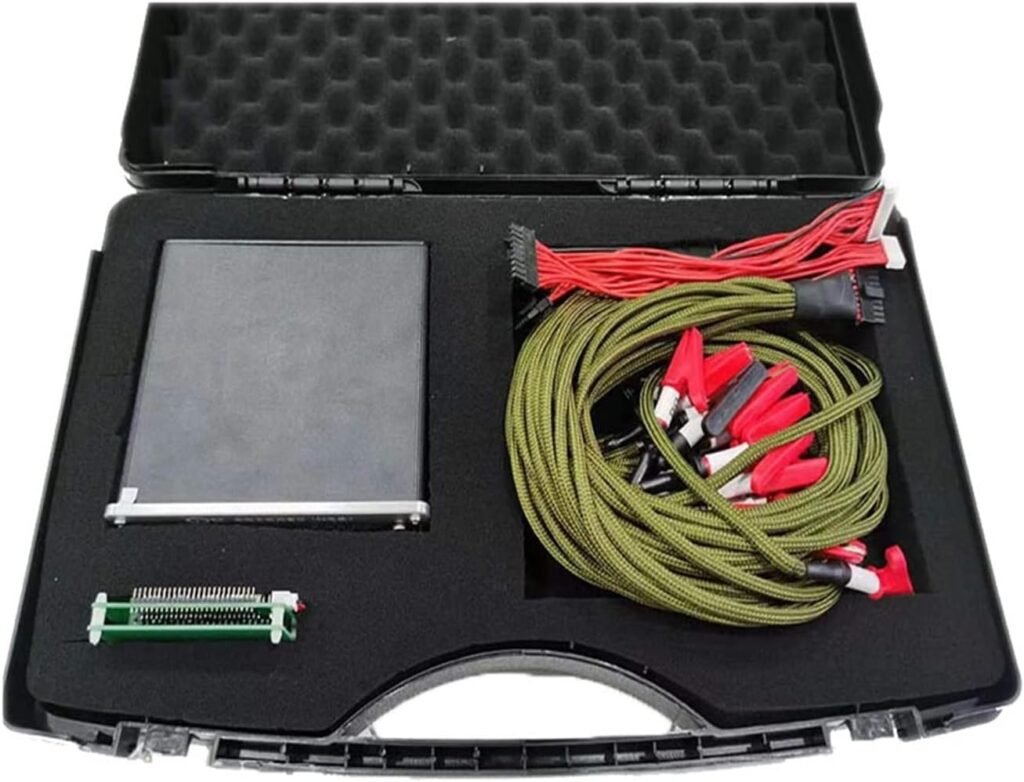
When we first meet a name like “JK BMS Battery Equalizer 2-24S BMS Active High Performance Battery Differential Pressure Compensation Repair Instrument Li-ion Discharge Instrument 5A Current,” it can feel a bit overwhelming. Underneath that long title, though, this is a smart, active battery management system designed for serious DIY and off-grid users.
At its core, this JK BMS is a battery protection and active balancing unit for lithium-based battery packs, especially LiFePO4. It supports 2 to 24 series cells and offers up to 5A of active balancing current, which is significantly stronger than most typical BMS units, making it ideal for larger banks or demanding applications.
Key Product Highlights in Simple Terms
Before we go deeper into the experience of using it, we can summarize a few standout features. This unit is all about keeping cells healthy, extending battery life, and giving us real-time visibility through a smartphone app. For many of us building off-grid power systems, RV banks, or backup systems, those three things alone are game changing.
Design and Build Quality
We tend to judge hardware first by how solid and thoughtfully laid out it feels, and the JK BMS Battery Equalizer does a good job here. It has a robust, functional design that looks purpose-built for DIY power setups rather than for casual gadget users.
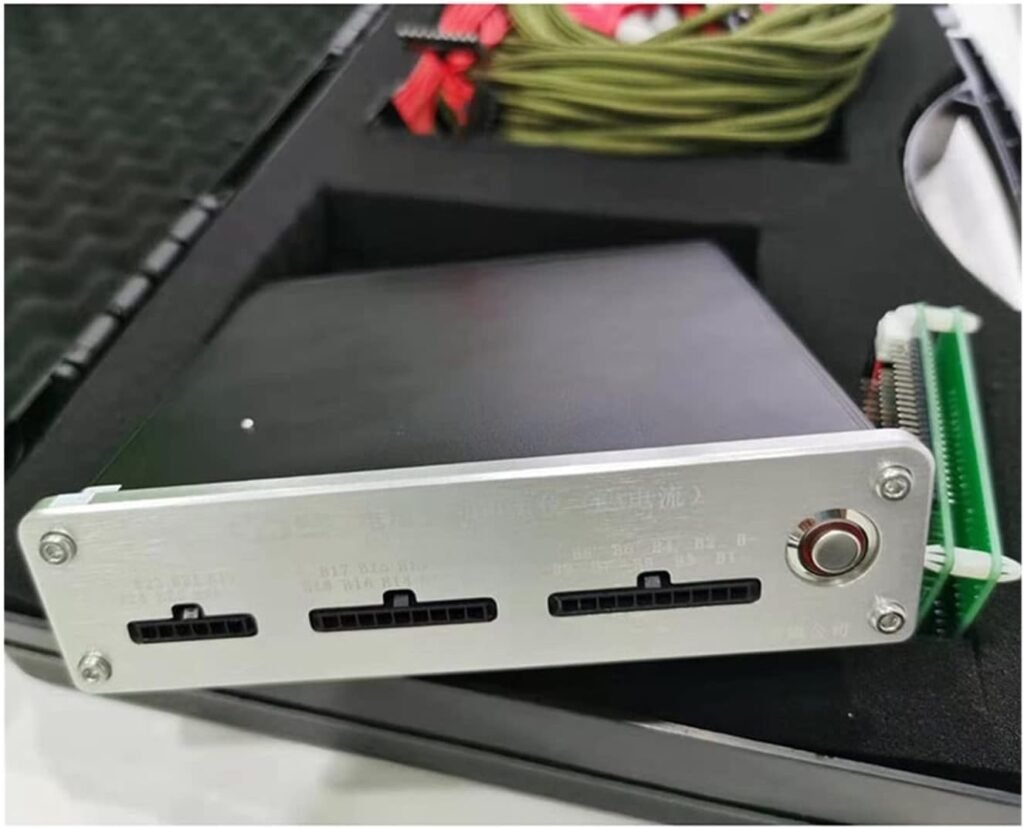
The layout of terminals and connectors is fairly straightforward once we understand series cell connections. Wire labeling usually matches the documentation, and the active balancing circuitry is clearly designed with high current in mind. The compact but sturdy housing makes it easier to mount inside battery compartments, inverter cabinets, or dedicated power panels.
Physical Construction and Layout
The materials feel durable enough for stationary and mobile applications, such as off-grid cabins, RVs, vans, and marine setups. We still need to protect it from excessive moisture, dust, and vibration, but as an internal BMS/equalizer mounted in a clean, dry place, it does its job well.
Wiring harnesses for the balance leads can look intimidating because of the cell count (up to 24S), but this is standard for serious battery builds. Once we label everything and triple-check cell order, the layout begins to feel logical and repeatable.
Supported Battery Types and Configurations
What immediately attracts many of us to this JK BMS is how flexible it is. Instead of buying a different BMS for each system, we can cover a wide range with this single model.
This particular unit supports multiple system voltages commonly used in DIY energy projects and professional installations. That makes it a versatile tool whether we are upgrading an existing bank or planning to expand in the future.
Supported Voltages and Cell Counts
The manufacturer highlights compatibility with:
- 12V systems (typically 4S LiFePO4)
- 24V systems (typically 8S LiFePO4)
- 48V systems (typically 16S LiFePO4)
- 72V systems (typically 24S LiFePO4)
Within that range, we can configure it from 2 to 24 cells in series. Here is a simple breakdown:
| System Nominal Voltage | Typical LiFePO4 Cell Count | Configuration Range | Notes |
|---|---|---|---|
| 12V | 4S | 2S–4S | Small off-grid, RV, backup |
| 24V | 8S | 5S–8S | Mid-size solar and inverters |
| 48V | 16S | 9S–16S | Whole-home, larger inverters |
| 72V | 24S | 17S–24S | High-voltage, specialty builds |
Because it uses adjustable parameters (through the app), we can tailor protection settings for LiFePO4, some Li-ion chemistries, and custom pack voltages, as long as we understand the proper voltage limits for our cells.

Current Ratings and Performance Capabilities
In addition to cell count, another critical factor is current. This JK BMS series supports high discharge currents, typically in the range of 100A to 350A, depending on the specific configuration and model variant.
This level of current capability makes it suitable for real-world loads like inverters, high-power DC systems, and large banks used for whole-house or workshop applications.
How the 5A Active Balancing Fits In
The standout spec is the active balancing current, rated at up to 5A in this model. This is dramatically higher than the 50–100mA or low hundreds of mA we see in many basic BMS units.
Higher active balancing current matters because:
- It corrects cell imbalances much more quickly.
- It helps maintain balance even when packs are cycled heavily.
- It is especially helpful in larger capacity banks where small imbalances can grow over time.
What the manufacturer’s details also mention is a typical active balance current in the 0.6–2A range under normal conditions, with maximum capability up to around 5A. In practice, this means the system can respond aggressively when needed but usually operates more moderately for long-term health.
JK Smart Active Balancing in Real Use
Passive balancing simply bleeds excess energy as heat from higher-voltage cells to match the lower ones. Active balancing, by contrast, moves energy from high cells to low cells. The JK BMS uses this active balancing approach to keep pack voltages aligned more efficiently.
This is where the “differential pressure compensation” and “repair instrument” wording comes into play. It essentially tries to minimize the “pressure difference” (voltage difference) between cells by redistributing energy.
Benefits of Active Balancing for Our Battery Bank
When we operate lithium packs regularly, slight differences in capacity, temperature, or internal resistance can cause cells to drift out of sync. If we ignore that, we end up with:
- Reduced usable capacity
- Uneven wear and tear
- Early cutoff due to one weak cell hitting limits first
With the JK Active Balance system:
- We can regain up to 99% effective utilization of capacity, according to the product claims.
- We extend the service life of our battery by avoiding chronic over-discharge or overcharge on individual cells.
- We reduce the frequency of manual intervention or reconditioning.
For DIY builders, this means we can spend more time using our power system and less time worrying about micro-managing it.
Protection Features and Safety Functions
No matter how smart a BMS is, we ultimately care about whether it protects our investment in cells. The JK BMS Battery Equalizer includes a comprehensive set of protections tailored to lithium chemistries.
It constantly monitors individual cell voltages, pack current, and temperature. By enforcing safe operating ranges, it helps prevent catastrophic failure and extends cycle life.
Protection Features at a Glance
To simplify what it covers, we can summarize the key safety functions:
| Protection Type | What It Prevents | Why It Matters |
|---|---|---|
| Overcharge Protection | Cells exceeding safe max voltage | Reduces risk of swelling, degradation, or fire |
| Over-discharge Protection | Cells dropping below safe min voltage | Prevents permanent capacity loss or cell damage |
| Over-current Protection | Excessive discharge or charge current | Protects wiring, BMS, cells, and connected devices |
| Short Circuit Protection | Sudden very high current conditions | Minimizes risk of catastrophic failures |
| Low-Temperature Charge Cut | Charging below safe temperature threshold | Protects LiFePO4/Li-ion from cold-weather charging damage |
These safeguards are particularly valuable in unattended or remote systems, such as off-grid cabins or backup banks that might not be monitored daily.
App Integration and Real-Time Monitoring
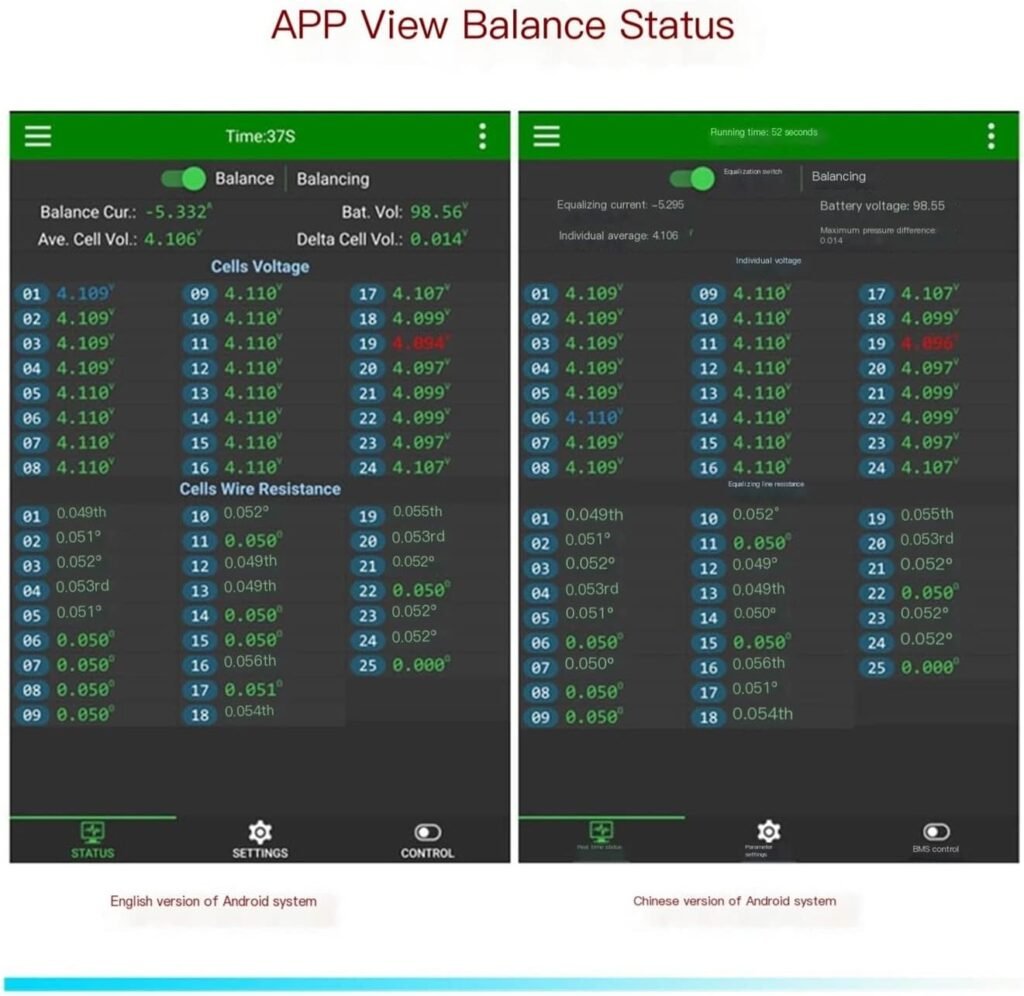
One of the most appealing aspects for many of us is the dedicated JK BMS app. Instead of relying solely on LED indicators or basic gauges, we can see detailed cell-level information on our phone.
Using Bluetooth communication, the JK BMS streams real-time data directly to the app. This turns our smartphone into a powerful diagnostic and configuration tool.
What We Can See and Adjust in the App
Through the JK Own Development App, we typically gain access to:
- Individual cell voltages (all series cells in the pack)
- Pack voltage and current
- State of charge estimation (SOC)
- Temperature readings (ambient or probe-based)
- Historical charts and logs (depending on app version)
- Active balancing status and which cells are being balanced
On the configuration side, we can often tune:
- High and low cell voltage limits
- Overcharge and over-discharge thresholds
- Charge and discharge current limits
- Temperature limits for charging and discharging
- Equalization start/stop criteria
Having this control in an intuitive mobile interface lets us customize settings for different chemistries, environments, and use cases. It also makes troubleshooting far more approachable, even for those of us who are not electrical engineers.
Real-World Use Cases and Applications
This JK BMS is particularly popular among DIY power builders and enthusiasts working on custom packs. Because it supports such a wide range of voltages and high currents, we can use it in many energy projects.
We can look at a few of the most common situations where this BMS stands out and why it fits those needs.
Off-Grid Solar and Home Energy Storage
For off-grid solar setups, particularly 24V, 48V, and even 72V systems, we need a reliable BMS that can handle high current inverters and deep daily cycling.
This JK BMS offers:
- Strong active balancing to keep large banks in check.
- High current capability for heavy loads.
- App-based monitoring so we can check status from inside the house.
If we pair it with a solar charge controller and an inverter of the appropriate rating, we can build a robust and flexible home energy storage solution that rivals more expensive commercial systems, while maintaining more control and transparency.
RV, Van, and Marine Banks
In mobile applications, space and reliability are crucial. Many of us want to upgrade from lead-acid to LiFePO4 packs in our RVs, vans, or boats.
The JK BMS Battery Equalizer is suitable here because:
- The 12V/24V configurations are commonly used in mobile applications.
- The wide current range supports inverters, fridges, pumps, and electronics.
- The low-temperature charge cutoff protects cells when parked in cold weather.
With the Bluetooth app, we are able to sit inside, check our pack status, see if cells are balanced, and confirm that the BMS is actively protecting our bank during charging and discharging.
Workshop Power Walls and DIY Builds
For those of us building custom “power walls” from smaller cells or reclaimed packs, keeping everything balanced and monitored is both a safety and a performance priority.
The JK BMS supports:
- Configurable 2–24S packs for custom setups.
- Active balancing to manage cells that may not be perfectly matched.
- Detailed data logging (depending on app features) for tracking performance over time.
This makes it a good candidate for experimental or high-capacity builds, as long as we follow correct wiring practices and observe safety guidelines.
Installation Experience: What We Should Expect
Installing a BMS of this complexity is more demanding than plugging in a pre-built battery. We should be comfortable working with DC wiring, understanding series connections, and following diagrams carefully.
If we approach the process methodically, though, the JK BMS is manageable even for dedicated DIYers.
Basic Installation Steps
While we should always follow the official wiring diagrams for our exact model, the general process looks something like this:
-
Plan our pack layout
- Decide the number of cells in series (2–24S).
- Determine where to mount the BMS relative to the cells and main bus bars.
-
Connect balance leads
- Wire each balance lead to the appropriate cell tap (from the first negative to each subsequent cell positive).
- Double-check order and polarity; mistakes here can damage the BMS.
-
Connect main power lines
- Route the pack positive and negative through the BMS (or per the wiring diagram for series/parallel configurations).
- Use appropriately sized cables and lugs for the expected current (100–350A).
-
Install temperature sensors (if included)
- Attach probes to representative cells or pack surfaces.
- Secure them to avoid movement or disconnection during use.
-
Power up and check with the app
- Connect via Bluetooth to the JK BMS app.
- Confirm cell voltages, pack voltage, and that all readings are realistic.
-
Set protection and balancing parameters
- Input the correct high/low voltage thresholds for our chemistry.
- Adjust current and temperature limits if needed.
If we are not fully comfortable with DC systems, enlisting the help of a professional or experienced builder can save us from costly mistakes.
Daily Use and User Experience
Once installed and configured, the JK BMS tends to blend into the background while we monitor and adjust via the app as needed. The daily experience is shaped mostly by how well it keeps our pack balanced and how often we interact with the settings.
Many users appreciate how the active balancing quietly maintains cell uniformity in the background. It is particularly reassuring after heavy charge and discharge cycles to open the app and see that cells remain tightly grouped.
Monitoring Patterns Over Time
Over weeks and months, we often start to notice patterns in:
- How quickly cells re-balance after big discharges
- How temperature impacts balance and pack behavior
- Whether certain cells consistently lag or lead
The JK system helps us identify potential weak cells long before they become severe problems. With that information, we can decide whether to re-group, replace, or further test suspicious cells.
This level of insight is something many basic BMS units simply do not offer.
Performance: Battery Life, Efficiency, and Capacity
From a performance standpoint, the JK BMS Battery Equalizer is designed to maximize capacity use and extend lifespan. Instead of letting cell imbalances reduce the usable window, it works continuously to pull cells back into alignment.
The manufacturer’s claim that it can raise effective usage up to 99% is ambitious, but the core idea is sound: when cells share the load evenly, we can safely use almost the full designed capacity of the pack, within recommended voltage limits.
How Active Balancing Affects Longevity
We can think of each cell as a runner in a relay race. If one cell is always pushed to its limits first, it will tire and fail faster than the others. Active balancing tries to avoid that by:
- Reducing peak stress on out-of-balance cells
- Ensuring no single cell is repeatedly overcharged or over-discharged
- Keeping the pack as a whole in a “sweet spot” of operation
In practice, that translates to:
- Fewer early failures or weak cells
- More consistent capacity return even after many cycles
- Better overall reliability of our system, especially under heavy loads
Of course, no BMS can fix inherently bad cells or poor pack construction, but the JK BMS does a strong job of maintaining a healthy and balanced environment for well-selected cells.
Safety and Unique Design Considerations
The product description mentions “SAFETY UNIQUE DESIGN,” and this is worth underscoring in practical terms. The safety we get depends on both the hardware design and our correct usage.
Choosing the right “protective plate” (BMS) and applying it properly is absolutely critical to battery longevity and safety. With this JK model, the unique aspects include higher current active balancing, rich data via the app, and multiple levels of protection built in.
Why Proper Sizing and Configuration Matter
We want to match:
- The current rating of the BMS to the maximum continuous and surge currents of our system.
- The cell count supported by the BMS to our pack design.
- The voltage limits in software to our cell chemistry specifications.
Undersizing the BMS for our inverter or loads can result in frequent trips or even damage. Incorrect voltage settings can lead to chronic overcharge or deep discharge. When we take the time to configure things correctly, this JK BMS becomes a powerful, long-term guardian for our battery bank.
Pros and Cons of the JK BMS Battery Equalizer
To help us decide if this model is right for us, it is helpful to weigh what it does very well versus what might not suit every user. This overview doesn’t capture every nuance, but it gives a balanced snapshot.
What We May Really Appreciate
Here are some of the advantages we tend to notice in real use:
-
High active balancing current (up to 5A)
Strong cell balancing, especially for large or heavily cycled packs. -
Wide series support (2–24S)
Flexibility for 12V, 24V, 48V, and 72V systems. -
Bluetooth app with rich data
Real-time cell-level monitoring and configuration on our phone. -
Comprehensive protection suite
Safeguards against overcharge, over-discharge, over-current, short circuit, and low-temperature charging. -
Suitable for high current systems (100–350A)
Works well with serious inverters and long-term off-grid setups.
Potential Drawbacks or Challenges
On the other side, there are some factors we should keep in mind:
-
Installation complexity
Not plug-and-play; requires careful wiring and some electrical knowledge. -
Learning curve for configuration
The depth of settings in the app can be intimidating at first. -
Needs good documentation and attention to detail
Miswiring balance leads or using wrong limits can damage cells or the BMS. -
Primarily for LiFePO4 and similar chemistries
Not universal for all battery types; we must confirm compatibility.
If we embrace the learning curve and respect the power of the system, these “cons” become manageable trade-offs for the high capability we gain.
Comparison With Simpler BMS Options
Sometimes it helps to frame this JK BMS against basic BMS units we may have used previously. Many simple BMS boards have limited balancing currents and no advanced monitoring features.
Compared to those, the JK BMS Battery Equalizer stands in a more advanced category.
Key Differences in Capabilities
Here is a quick side-by-side style comparison:
| Feature | Basic BMS | JK BMS Battery Equalizer 2–24S 5A |
|---|---|---|
| Balancing Type | Passive (low current) | Active (up to 5A) |
| Monitoring | LEDs or basic indicators | Full cell-level data in app |
| Configuration | Fixed or limited adjustments | Extensive, app-based settings |
| Supported System Voltages | Often single (e.g., only 12V) | 12V, 24V, 48V, 72V (2–24S) |
| Protection Features | Basic voltage protections | Voltage, current, temp, short circuit, low-temp charge cut |
| Use Case | Small/simple packs | Medium to large, high-performance systems |
For casual or low-demand applications, a cheap BMS might still do enough. But for serious investments in big LiFePO4 banks, the JK BMS class gives us much better control, insight, and long-term reliability.
Maintenance and Long-Term Ownership
Once we have the system running smoothly, we mainly interact with it for occasional checks and parameter tweaks. There is no regular “maintenance” in the traditional sense, but it is good practice to keep an eye on data and physical condition.
We should periodically check:
- Balance lead connections to ensure they are secure and corrosion-free.
- Main current connections to confirm tight, clean contact.
- Ventilation and mounting to be sure the BMS is not exposed to heat or moisture.
Using Data for Preventive Care
One of the quieter but more powerful aspects of the JK BMS is that the data history it provides can serve as a preventative maintenance tool:
- Consistent imbalance patterns can point to aging cells.
- Sudden changes in internal resistance or temperature behavior can hint at emerging issues.
- Over-current or thermal events are often logged, making root-cause analysis easier.
By periodically reviewing this data in the app, we can catch and address issues long before they turn into failures.
Who This Product Is Best For
This JK BMS Battery Equalizer is not aimed at casual users who just want a plug-and-play battery. It is better suited for those of us who enjoy building and tuning our energy systems.
If we fall into any of these categories, we are likely in its target audience:
- DIY off-grid builders working with 24V/48V/72V LiFePO4 banks
- RV, van, or marine enthusiasts building custom lithium systems
- Hobbyists designing power walls or workshop backup systems
- Technically inclined users who want cell-level insight and control
For those who prefer to simply buy a finished battery with a sealed-in BMS, this might be more capability and responsibility than we want. But for those of us who like to understand and control every aspect of our battery bank, it fits wonderfully.
Practical Tips Before We Buy and Install
To get the most from the JK BMS Battery Equalizer 2–24S 5A, it helps to go in with a short checklist of preparation steps. That way, we avoid surprises and make the installation as smooth as possible.
We can use this brief set of tips as a starting guide.
Preparation Checklist
-
Clarify our system specs
- What voltage (12V/24V/48V/72V) are we targeting?
- What is our maximum continuous load and surge current?
-
Confirm cell chemistry and limits
- Are we using LiFePO4 or another Li-ion chemistry?
- What are the safe min/max voltages recommended by our cell manufacturer?
-
Plan wiring and mounting
- Decide where to mount the BMS for easy access and good cable routing.
- Ensure we have appropriately sized cables, lugs, and fusing.
-
Study the wiring diagram thoroughly
- Understand each balance lead connection before touching the pack.
- Mark or label leads and cells to avoid mistakes.
-
Install in a safe environment
- Work in a clean, well-ventilated area away from flammables.
- Use proper tools, and consider eye and hand protection.
By approaching the project with this level of preparation, we give ourselves the best chance to enjoy the full power of the JK BMS without unnecessary stress.
Final Thoughts: Is the JK BMS Battery Equalizer 2–24S 5A Worth It?
When we step back and look at everything this unit offers, the JK BMS Battery Equalizer 2–24S 5A stands out as a strong choice for serious lithium battery systems. It does more than just “protect” our pack; it actively manages and optimizes it.
We gain:
- High-performance active balancing for long-term health and capacity.
- A wide range of supported voltages and currents for many projects.
- Rich, real-time monitoring and configuration via the JK app.
- Comprehensive safety features aligned with modern lithium chemistries.
In return, we accept a bit more complexity during installation and configuration. For many of us building substantial off-grid or mobile power systems, that trade-off is completely worthwhile.
If we are the kind of user who wants to understand, customize, and truly own our power system, the JK BMS Battery Equalizer 2–24S 5A can become a central and trusted component in our setup, helping our battery investment last longer and perform closer to its full potential.
Disclosure: As an Amazon Associate, I earn from qualifying purchases.