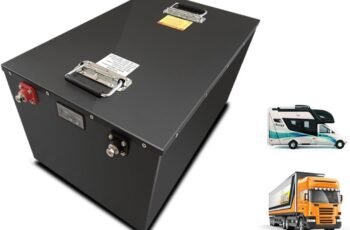
Have you been searching for a smart battery management system that actually keeps up with your DIY power projects instead of holding them back?

What Is the Smart BMS Active Balance (JK-B1A20S15P) Really About?
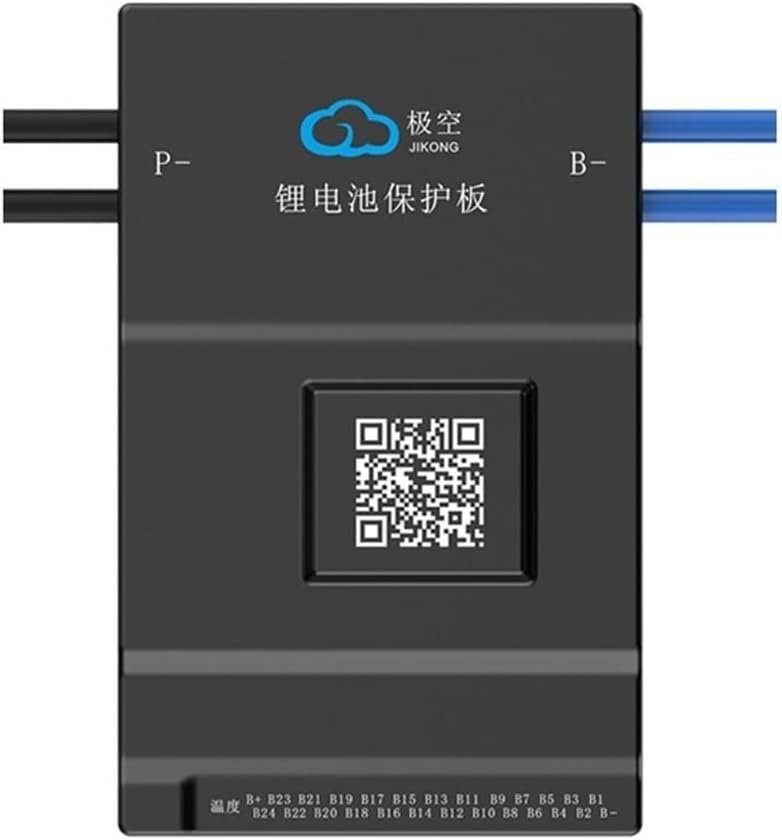
You are looking at a battery management system built for serious DIYers and small-scale professionals who want reliability and efficiency from their lithium battery packs. The Smart BMS Active Balance 8S 10S 12S 16S 17S 20S 24S, 60A 100A 150A 200A Lifepo4 Li-Ion Lto Battery (JK-B1A20S15P) is designed to help you get more usable capacity, better safety, and much longer life out of your cells.
Instead of just “protecting” your battery like a basic BMS, this model actively works to keep all cells balanced, stable, and in sync. If you are serious about getting the most from your LiFePO4, Li-ion, or LTO packs, this BMS gives you advanced tools in a package you can configure right from your phone.
Key Features of the JK Smart BMS Active Balance
This BMS is packed with features that matter when you want a dependable system: active balancing, wide compatibility, strong current ratings, and a dedicated mobile app. You are not just getting overcharge protection; you are getting real control and visibility into how your battery behaves.
With a variety of series options (from 8S up to 24S) and multiple current ratings (60A to 200A), you can choose the version that matches your 12V, 24V, 48V, or 72V setups. It is built to handle demanding DIY systems, from off‑grid solar banks to inverter power walls and mobile power builds.
Active Balancing: Why It Matters for Your Battery
Active balancing is one of the standout features of this BMS and a huge upgrade over the passive balancing you often see in cheaper boards. Instead of simply burning off excess energy as heat, this BMS transfers energy from higher-voltage cells to lower-voltage ones.
That means you are not wasting capacity, and your weaker cells do not get stressed as much. Over time, this can make a big difference in how evenly your pack ages and how much usable energy you get each charge cycle.
How JK Active Balance Works
With JK’s active balance design, the BMS constantly compares the voltage of each cell and redistributes energy to keep them close to each other. The balancing current is in the 0.6–2A range, which is significantly stronger than many typical BMS units.
You end up with a pack that charges more evenly, discharges more consistently, and avoids the “one bad cell pulls everything down” problem. For larger battery systems, this active balancing becomes even more valuable because even small imbalances can add up over time.
99% Battery Usage Efficiency
The manufacturer claims up to 99% battery usage efficiency thanks to the active balancing function. While real-world results depend on your wiring, cells, and settings, you can reasonably expect much better utilization compared to passive balancing designs.
This means you do not have to constantly “top balance” your pack manually or worry that you are leaving a lot of stored energy on the table. Your cells can stay closer in voltage, and your pack’s actual usable amp-hours can better match what you paid for.
Supported Battery Chemistries and Configurations
You are not locked into a single chemistry with this BMS. It supports LiFePO4, standard Li-ion (such as NMC), and LTO cells in different series arrangements. That makes it a flexible choice if you build different battery banks or want to reuse the BMS in new projects.
Here is a clearer view of what this BMS is built to support and where it fits into typical DIY systems:
| Feature | Details |
|---|---|
| Supported Chemistries | LiFePO4, Li-ion, LTO |
| Series Configurations | 8S, 10S, 12S, 16S, 17S, 20S, 24S |
| Typical System Voltages | ~12V (4S equivalent), 24V (8S), 48V (16S), 72V (24S) |
| Current Ratings (Models) | 60A, 100A, 150A, 200A |
| Balancing Type | Active balancing (0.6–2A balance current) |
| Communication | Bluetooth (via JK smartphone app) |
| Core Protections | Over-charge, over-discharge, over-current, short circuit, low-temp |
This range lets you choose exactly the layout you need, and also gives you room to expand or scale later. You can start with a 24V or 48V system and eventually move up to 72V or larger banks without changing platform completely.
Current Ratings: 60A, 100A, 150A, 200A Options
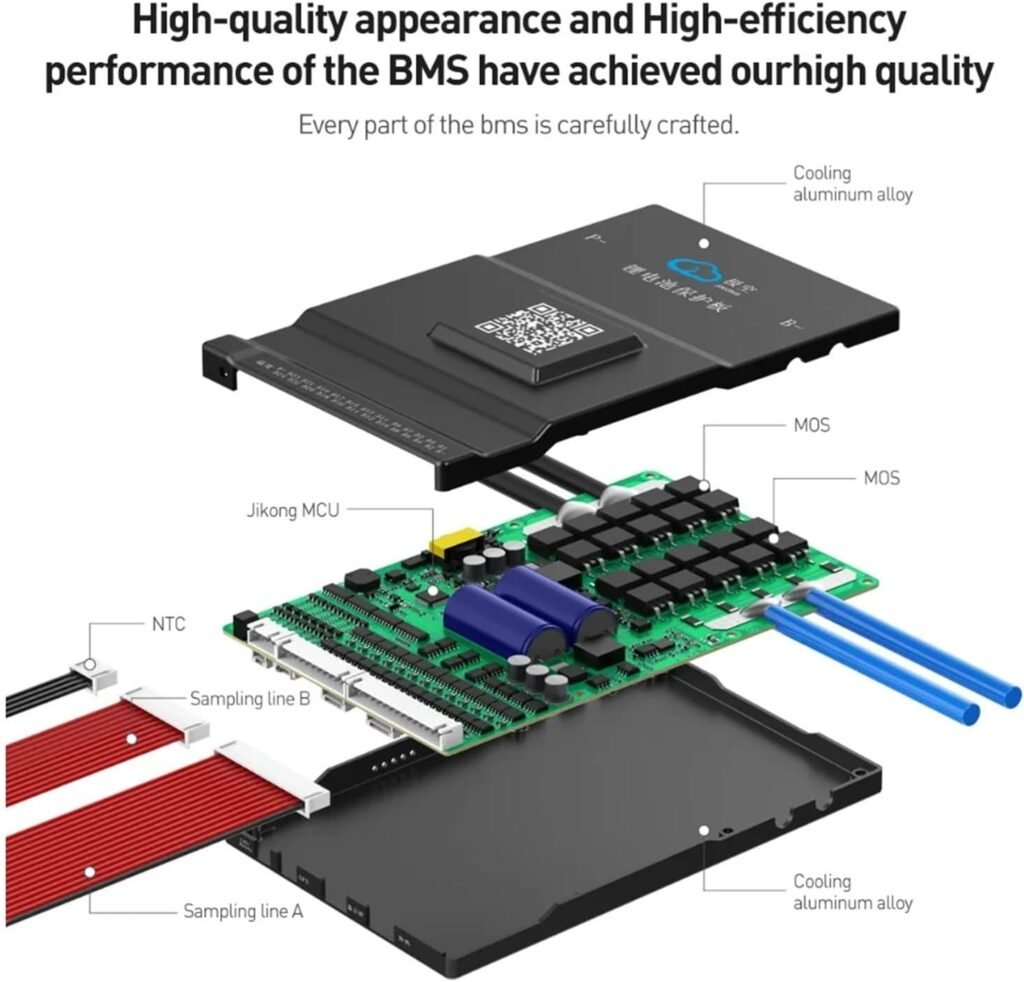
One of the benefits of this JK series is that you can match the BMS’s current rating to your specific use case. You are not forced to overpay for a 200A unit if you only need 60A, or risk under-sizing a BMS in a heavy load system.
For example, a 60A or 100A version may be ideal for smaller solar banks, RV battery systems, or light inverters. The 150A or 200A versions are better suited for larger inverters, high‑power tools, or systems with higher surge demands.
Matching Current Rating to Your System
You want to size the BMS to handle your maximum continuous load plus some safety margin. If your inverter draws 80A continuously at peak, it is risky to pair it with a 60A BMS. Instead, a 100A or 150A BMS gives you breathing room and longer component life.
Your wiring, fuses, and contactors should all be sized around the same current level, so the BMS is just one part of a well-designed system. The upside with JK’s lineup is that you can pick the current rating that actually fits your wiring and real-world loads.
JK’s Own Mobile App and Bluetooth Communication
A major advantage of this BMS is that you can access and configure it through JK’s dedicated app, instead of being stuck with guesswork or cryptic LED codes. The BMS connects via Bluetooth so you can check your battery from your phone in real time.
This lets you monitor things like cell voltages, pack voltage, current, temperatures, state of charge, and error flags. For troubleshooting and tuning, that visibility is extremely useful, especially when you are first commissioning a new battery bank.
Real-Time Status on Your Phone
With the app, you can see detailed information about your pack right away. You can verify that all cells are balanced, that charge and discharge limits are working correctly, and that there are no temperature anomalies.
This helps you catch wiring mistakes, bad cells, or incorrect settings early, before they turn into expensive problems. For ongoing use, you can also track trends in your pack’s performance and aging over time, simply by watching how the readings change.
BMS Settings and Customization in the App
Beyond monitoring, you can use the app to tune many BMS parameters. Depending on the model and firmware, you can customize charge and discharge cutoffs, temperature thresholds, balancing behavior, and other protection settings.
This means you can set up safe and chemistry-appropriate parameters for LiFePO4 vs Li-ion vs LTO, instead of being stuck with generic defaults. If you like to optimize every detail of your system, you will appreciate having these controls in your hand instead of buried inside some inaccessible menu.
Protection Features and Safety Functions
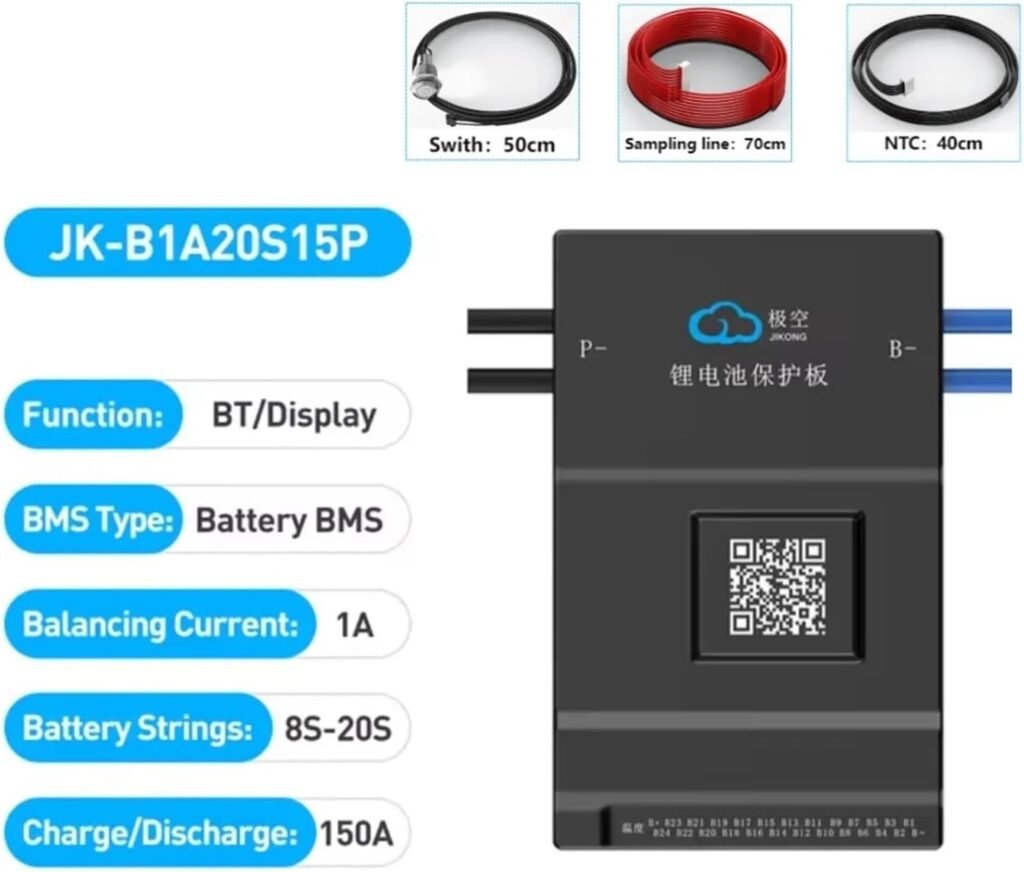
Protection is the core job of any BMS, and this JK model gives you a wide set of safety features. These are designed to stop your battery from operating outside safe limits and prevent damage to both cells and equipment.
By actively managing charge and discharge, the BMS acts as an intelligent gatekeeper. You get the benefits of lithium batteries without leaving yourself exposed to the hazards of overcharging, shorts, or low-temperature abuse.
Over-Charge and Over-Discharge Protection
Your battery cells have a safe voltage range, and running outside that range can shorten their life or even create hazards. This BMS cuts off charging once a cell reaches its configured maximum, and stops discharge when cells fall to the safe lower limit.
You no longer need to worry that an overzealous charger or a heavy load will accidentally push your battery too far. If your system is wired correctly and the BMS is configured for your chemistry, this protection runs automatically in the background.
Over-Current and Short Circuit Protection
High currents and short circuits can be catastrophic for a battery pack. The JK BMS monitors the current flowing through the system and will cut off if it detects a current spike beyond the selected threshold.
This gives you a layer of protection if something downstream fails, a cable is damaged, or a device malfunctions. It is not a substitute for proper fuses and breakers, but it does add another smart control point that can shut down the pack in milliseconds.
Low-Temperature Charging Cutoff
If you use LiFePO4 or many Li-ion chemistries, you know that charging at very low temperatures can damage the cells permanently. This BMS includes a low-temperature charging cutoff feature that prevents charge when the cell temperature is too low.
This is especially important for you if your battery bank lives in an RV, cabin, garage, or outdoor enclosure where winter temperatures can drop below freezing. With this feature enabled, your cells will not be charged in conditions that could harm them.
Unique Design Focused on Long-Term Reliability
The design of this BMS emphasizes not just protection but longevity. If you choose the correct model and configure it correctly, you can give your battery pack a much longer, more stable life.
You are not just buying a part; you are committing to a set of tools that will manage your cells for years. That is why the correct matching of chemistry, series count, and current rating matters. This model is built for that kind of targeted, correct application.
Why the Right Protection Board Matters
Choosing the wrong BMS can lead to under-protection, over-stress, or wasted investment. A BMS that is too small may overheat or trip constantly. A BMS that is too generic may not match your chemistry well, trimming life off your cells.
This JK BMS line is designed to be picked carefully based on your actual system: 12V/4S, 24V/8S, 48V/16S, 72V/24S, and more. When you match it properly, you get safety and performance, instead of compromise.
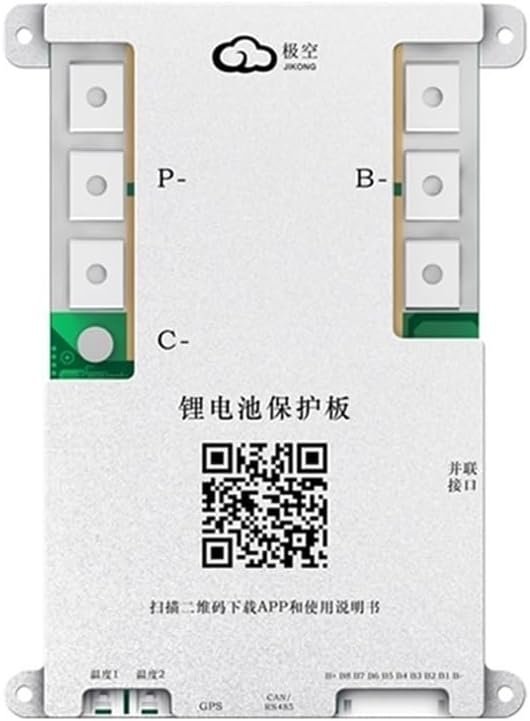
Wide Range of Models for Different System Sizes
One of the strengths of this product family is the broad lineup. Whether you are building a compact 12V bank or a sizable 72V system, the range of supported configurations lets you stay within the same ecosystem.
You can use the same general app, the same balancing logic, and similar wiring practices across multiple projects. That makes your learning and troubleshooting transfer more easily from one build to another.
Common Use Cases for the JK Smart BMS
You can use this BMS in a variety of DIY and prosumer setups. Here are some examples where it fits in naturally:
- Off‑grid solar battery banks
- Home backup power walls
- RV, camper, and van conversion battery systems
- Boat and marine house batteries
- Small workshop or shed power systems
- DIY energy storage for inverters and hybrid systems
In each of these cases, the ability to monitor and adjust your battery from a phone, plus active balancing, gives you more confidence that your pack is operating safely and efficiently.
Installation Experience and Wiring Considerations
You should expect some wiring complexity with a feature-rich BMS like this, especially when dealing with 16S, 20S, or 24S systems. You are connecting multiple balance leads, main positive and negative cables, temperature sensors, and sometimes control lines.
If you already have experience with BMS installations, you will recognize the typical arrangement: main pack connections and a harness of small-gauge wires that go to each cell or parallel cell group. The active balancing circuitry rides on top of that wiring.
What You Need to Prepare Before Installation
Before installing, you want to be sure you have:
- Correct battery layout (8S–24S, depending on model)
- Clearly labeled cell or cell-group terminals
- Appropriate cable sizes for your chosen current rating
- Proper fusing or breakers on main lines
- A plan for mounting the BMS in a cool, protected location
If you prepare your cells and layout first, connecting the BMS and verifying each cell voltage in the app will be much smoother. Trying to adjust both the physical layout and the BMS at the same time can create avoidable confusion.
Balancing Wire Connections
The balancing harness is one of the most important parts of the installation. Each small wire needs to go to the correct cell or cell group in sequence. If you mis-wire, you can damage the BMS or get very incorrect readings.
You will want to carefully follow the provided wiring diagram, start with the pack completely off, and double-check voltages with a multimeter before connecting. Once connected, you can use the app to confirm that each cell voltage appears in the correct order and value range.
Day-to-Day Use and Monitoring
Once installed and configured, daily use becomes fairly straightforward. The BMS watches over your battery quietly and steps in only when conditions are outside safe limits. You will likely interact with it mainly through the app.
You can check at a glance if your cells are balanced, how much current is flowing, and whether the system is charging or discharging. During normal operation, you should not need to constantly adjust settings unless you change your loads or charging profile.
How the Battery Feels in Real Use
From your point of view, the main difference you will notice compared to a basic BMS is that your pack seems to stay in a healthier voltage range longer. You get fewer early cutoffs due to one cell hitting high or low limits before the rest.
Over time, you will also see that your pack’s capacity does not sag as quickly, because active balancing and correct protections help your cells age more uniformly. You are essentially giving your pack better “care” each cycle.
Performance: Efficiency and Cell Life
Performance with this BMS is not about making your cells magically more powerful; it is about making sure you get as close as possible to the capacity you already paid for. By keeping cells balanced and protected, you waste less energy and stress your cells less.
In long-term use, that translates directly into better cycle life. You can think of the BMS as constantly nudging your pack to stay inside the sweet spot of its operating range.
Active Balancing vs Passive Balancing Over Time
With passive balancing, extra cell energy is simply dissipated as heat at the top of charge, which can be slow and inefficient. With active balancing, the JK BMS uses a higher balance current and transfers energy between cells, which not only works faster but also preserves energy.
You will particularly appreciate this if you have a large battery bank and a high-current charger or powerful solar array. The faster balancing current helps stabilize the pack more quickly after heavy charging or discharging events.
Pros and Cons of the JK-B1A20S15P Smart BMS
To give you a balanced view, it helps to summarize what you are likely to appreciate about this BMS and where you need to be mindful. No product is perfect, but this one is aimed at users who value advanced control and flexibility.
Here is a quick comparison-style breakdown for you:
| Aspect | What You Will Like | What You Should Watch Out For |
|---|---|---|
| Active Balancing | Strong 0.6–2A active balancing keeps cells aligned efficiently | More complex circuitry than simple passive BMS units |
| App & Bluetooth | Easy monitoring and configuration from your phone | You depend on the app and BT stability |
| Safety Features | Full protections: over/under voltage, current, short, low-temp charge | Still requires correct setup and external fusing |
| Flexibility | Works with LiFePO4, Li-ion, LTO in 8S–24S configurations | You must pick correct model and series count |
| Current Options | Multiple ratings (60A–200A) for different system sizes | Oversizing without need can cost more than necessary |
| DIY Suitability | Great for custom power walls, RVs, solar, and backup systems | Not ideal if you want a fully plug‑and‑play solution |
This makes it clear that you get a high level of power and control if you are comfortable with a bit of extra learning and careful configuration.
Who This Smart BMS Is Best For
You will get the most from this product if you are building or upgrading a DIY energy system and want serious control over how your battery behaves. If you care about cell health, balancing, and detailed monitoring, you are the target user.
On the other hand, if you want a pre-packaged plug‑and‑play battery where everything is hidden, this BMS might feel like more customization than you want. It is best suited for people who enjoy tuning a system and understanding how their battery works.
Ideal Use Profiles
You are likely an ideal match for this BMS if:
- You build your own LiFePO4 or Li-ion banks from individual cells
- You have (or plan to have) an inverter-based power system for home or mobile use
- You want to monitor cell-level data and adjust settings yourself
- You plan to keep your battery bank for many years and want to protect that investment
If any of that sounds like you, this BMS offers the kind of advanced functions that will reward you in both performance and peace of mind.
Tips for Getting the Most Out of Your JK Smart BMS
To really benefit from this BMS, you want to set it up thoughtfully rather than treating it like a black box. A little time spent up front on configuration and testing can pay off for the entire life of your pack.
You do not need to be an engineer to do this, but you do need to read the instructions carefully, trust your multimeter, and use the app to confirm that everything lines up.
Configure Chemistry-Appropriate Settings
One of your first tasks after installation is to set proper voltage limits and temperature thresholds for your specific chemistry:
- For LiFePO4, you will use lower maximum cell voltage and more conservative lower limits.
- For Li-ion (NMC, etc.), your nominal and max voltages will be higher.
- For LTO, your entire operating range shifts significantly.
Setting these values correctly in the app ensures that you are not overcharging or deeply over-discharging your cells. If needed, cross-check the recommended voltage window from your cell manufacturer or reputable datasheets.
Verify Balancing and Protection Before Full Use
Before you fully rely on the system, it is smart to run some basic tests:
- Watch cell voltages during a full charge and see where balancing begins.
- Confirm that charge cutoffs occur at the expected pack and cell voltages.
- Apply a known load and verify discharge cutoffs trigger at your configured limit.
- Check that temperature sensors respond in the app when you warm or cool them gently.
By doing these tests early, you verify that the BMS wiring, settings, and app readings are all in sync. Once you are confident, you can connect your full loads and chargers with more peace of mind.
Longevity and Maintenance Considerations
Your BMS is central to your pack’s long-term health. Although it does not require constant hands-on work, it is smart to check in regularly through the app and keep an eye on a few key metrics.
You want to think about your BMS as a long-term partner to your cells, not just a one-time hardware add-on. The better you treat your entire system, the longer it will serve you reliably.
Periodic Checks You Should Perform
Every so often, take a few minutes to check:
- Cell voltage spread at the top and bottom of charge
- Maximum and minimum cell temperatures under load
- Any logged fault events or repeated warnings
- Pack internal resistance or signs of growing imbalance over time
If you notice certain cells drifting in voltage more than others, you can intervene early: re-balance, test individual cells, or retighten busbar connections. The BMS gives you visibility so you do not have to guess.
Overall Value for DIY and Small-Scale Systems
In terms of value, you are getting a professional-level feature set—active balancing, app-based configuration, advanced protections—for a cost that is typically much lower than integrated commercial battery systems.
When you build your own pack, you save money per kWh of storage and get flexibility that off‑the‑shelf batteries rarely offer. A capable BMS like this one is what makes that approach safe and practical.
Why This BMS Stands Out in Its Category
You will find many BMS units that claim high amp ratings but lack robust active balancing or a good app. You will also find some with basic Bluetooth readouts but very little practical control.
This JK Smart BMS line stands out because it blends strong balancing, rich configuration, and broad chemistry support in one ecosystem. That combination makes it particularly attractive if you want both power and insight into your battery.
Final Thoughts: Should You Choose the JK Smart BMS Active Balance?
If you want a BMS that treats your battery like an asset worth protecting, the Smart BMS Active Balance 8S 10S 12S 16S 17S 20S 24S, 60A 100A 150A 200A Lifepo4 Li-Ion Lto Battery (JK-B1A20S15P) gives you that toolkit. You get advanced active balancing, flexible series and current options, robust safety features, and a dedicated app for precise control.
You will need to invest a bit of effort in correct selection, wiring, and configuration, but in exchange you gain a system that can push your battery usage toward that 99% efficiency target and extend the life of your cells significantly. If you are serious about your DIY energy system and want long-term performance rather than a quick, basic solution, this BMS is well worth your attention.
Disclosure: As an Amazon Associate, I earn from qualifying purchases.