Have we ever wished we could know the health of our lithium battery without grabbing a multimeter or pulling out a charger?
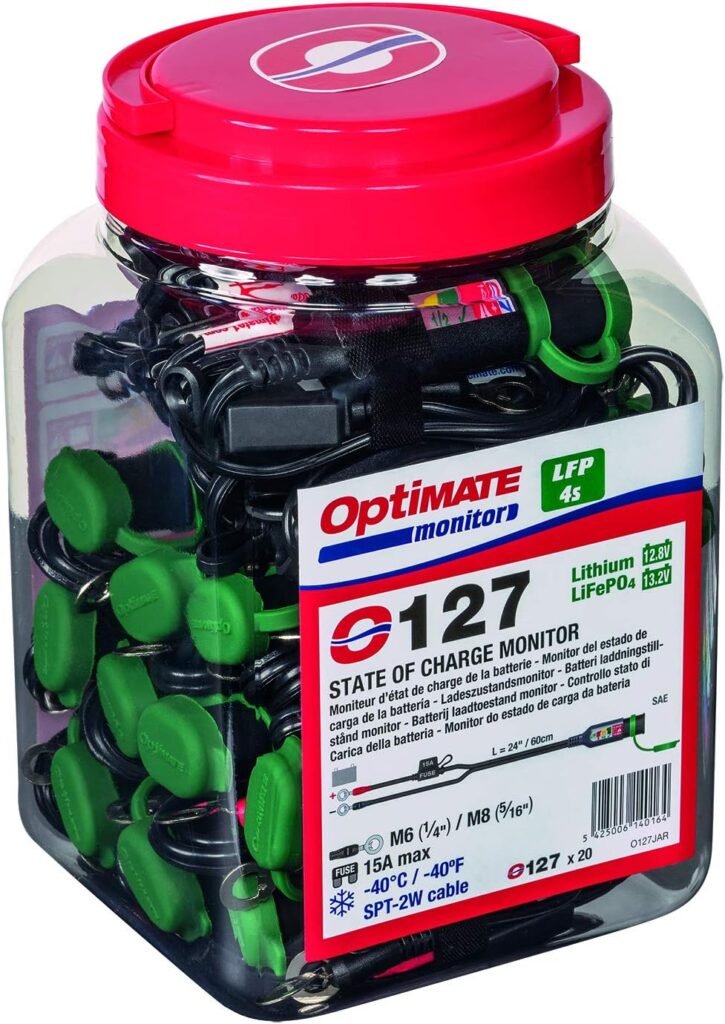

What Is the Optimate Monitor O-127JAR?
The Optimate Monitor O-127JAR Permanent Power Sport Battery Lead with Integrated Battery Status/Charge System Monitor for 12.8/13.2V Lithium is a smart monitoring lead that stays permanently connected to our battery. It gives us a simple LED-based status readout and a built‑in charge port so we can keep tabs on our lithium battery and charge it easily when needed.
Instead of guessing whether our LiFePO4 / LFP battery is ready for a ride, this monitor lets us check the state of charge and charging system in seconds. It is especially suited for powersports and performance vehicles that may sit parked for days or weeks.
Who Is This Product For?
This monitor is clearly aimed at those of us who use 12.8V or 13.2V LiFePO4 / LFP batteries in powersport or lightweight performance vehicles. Think motorcycles, ATVs, UTVs, snowmobiles, personal watercraft, or small track cars that run lithium batteries for weight savings.
If we regularly store our machine or only ride occasionally, we know batteries can be finicky. The Optimate Monitor O-127JAR helps us prevent those “turn-the-key-and-nothing-happens” moments with a quick visual check. It is also useful for anyone who cares about battery longevity and wants to avoid overcharging, which can be detrimental to lithium chemistry.
Key Features at a Glance
This product packs several functions into a small, weatherproof lead that bolts directly to our battery. It is not just a battery tender lead; it is also an onboard monitor.
Here is a quick breakdown of the main features before we talk about how they matter in actual use:
| Feature | What It Is | Why It Matters |
|---|---|---|
| Weatherproof permanent battery lead | A cable that stays bolted to the battery full‑time | We can monitor and charge without repeatedly removing panels or seats |
| Designed for 12.8/13.2V LiFePO4 / LFP | Optimized for lithium powersport batteries | Protects our investment by using voltages suitable for lithium chemistry |
| 3‑LED state of charge monitor | LEDs indicate full, mid, and low levels | Quick, tool‑free check of battery health at a glance |
| Blinking LED every 5 seconds | Status indicator blinks periodically | Lets us see battery state even during storage without waking the system |
| 4th LED overcharge warning | Monitors charge system when engine runs | Warns us if our vehicle is overcharging above 14.6V, which can damage lithium |
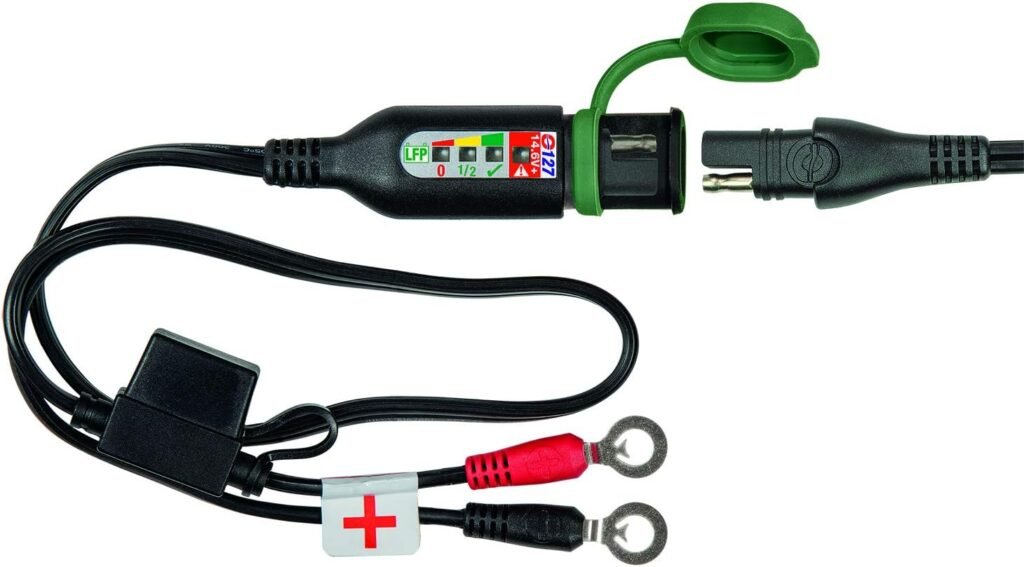
| SAE quick‑connect charging port | Standard SAE connector built into the lead | Simple plug‑in charging with compatible chargers |
| Weatherproof sealing cap | Rubber cap over SAE connector | Keeps dirt, water, and road grime out when in motion |
| M6/M8 ring terminals | 1/4″ and 5/16″ ringlets for terminals | Fits most powersport and automotive batteries |
| 15A fuse and -40 rated cable | In‑line fuse and cold‑weather capable wiring | Safety and durability in demanding conditions |
With these elements combined, we get a small and simple accessory that turns our battery into a “smart” component without needing Bluetooth, apps, or complicated wiring.
Design and Build Quality
The Optimate Monitor O-127JAR looks modest, but its design choices show a focus on durability and practicality. It is meant to live bolted to our battery and survive the realities of powersport environments.
The housing for the LED monitor is sealed, which is crucial because it sits close to the battery where water, dust, and vibration are common. The weatherproof rating contributes to confidence when we ride in the rain or on muddy trails. The -40 rated cable indicates it is tested for very low temperatures, which matters for snowmobiles or any machine stored in unheated garages.
The cable itself feels robust rather than flimsy, which reduces concerns about chafing or cracking over time. The in‑line 15A fuse is properly integrated, giving an extra layer of protection for both the wiring and our vehicle’s electrical system.
We particularly appreciate the weatherproof cap over the SAE connector. Many of us have had to clean corroded connectors or deal with intermittent connections from exposed plug ends. The cap helps keep the charging port functional over the long term.
Weatherproof Permanent Battery Lead
One of the biggest wins with this product is that we only have to install it once. After that, we treat the exposed SAE connector and the LED monitor as a convenient external interface to our battery.
Because the lead is weatherproof, we can route it to a location that is accessible yet protected, such as under a side panel, near the frame, or by the rider’s seat. Once in place, we no longer need to remove bodywork just to attach a charger or check voltage.
For anyone who rides in all seasons or stores a machine outdoors, weatherproofing is essential. A non‑sealed connector risks shorting and corrosion. Here, the sealed monitor and capped charge port help preserve both function and safety over repeated exposure to moisture and grime.

Integrated State of Charge Monitor
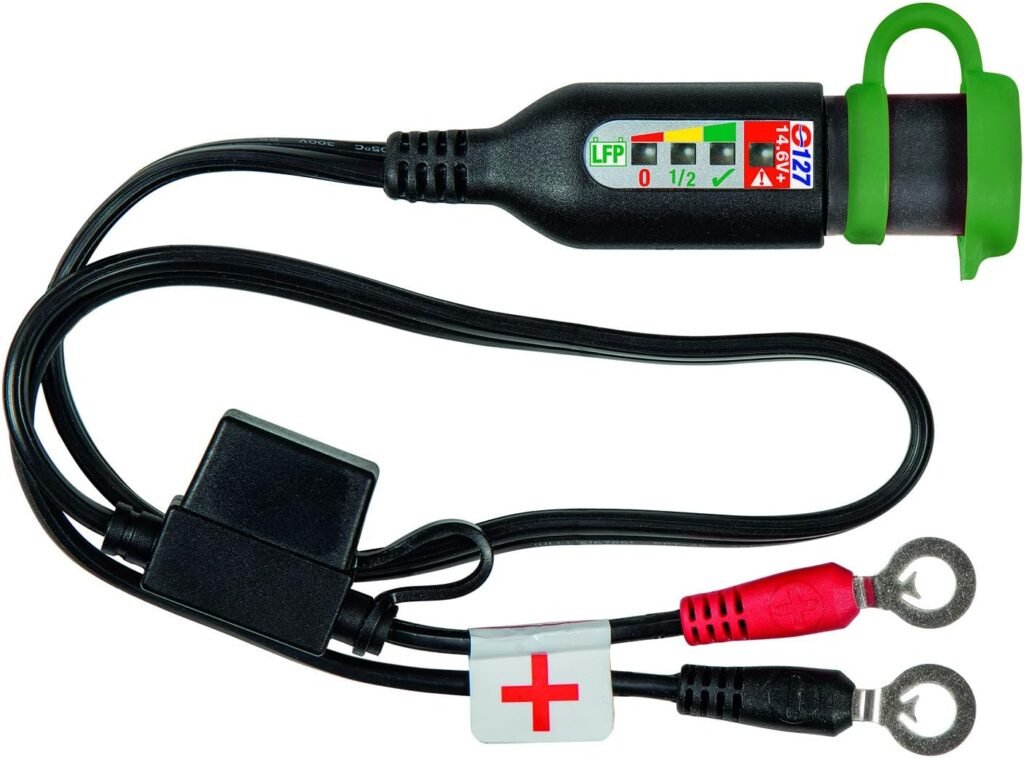
Instead of showing a numeric voltage value, the Optimate Monitor O-127JAR uses three LEDs to represent different states of charge for our 12.8V / 13.2V LiFePO4 / LFP battery. It is intentionally simple: look at the LEDs, see which one blinks, and we know if the battery is healthy or needs attention.
While the exact voltage thresholds can vary by manufacturer, we can think of the LEDs roughly like this:
- Top LED: Battery charged and healthy – we are good to go.
- Middle LED: Battery partially discharged – we may still start, but it is time to think about charging.
- Bottom LED: Battery low – we risk a no‑start or harming the battery by deep discharge.
The monitor is sealed and built right into the lead, so we do not need additional tools. It turns the battery into a “check by eye” component that tells us how it is doing without unlocking our phone or connecting external equipment.
How the 3‑LED Battery Status Works
The 3‑LED system is at the heart of why this product is so practical. Instead of overloading us with information, it focuses on the question that matters: is our LiFePO4 battery in a safe, usable zone?
The LED that corresponds to the current charge level blinks every five seconds. That means:
- Only one of the three state‑of‑charge LEDs will blink at a time.
- The position of the blinking LED indicates whether our battery is “full,” “medium,” or “low.”
In daily use, we quickly learn to associate the LEDs with go/no‑go judgments. If the “full” LED is blinking, we can start confidently. If the “low” LED blinks, we know to plug in our charger before getting stranded.
This behavior is purposely minimal on energy consumption. A brief blink every few seconds draws far less current than a continuously lit or high‑brightness display. That is especially important when our vehicle sits unused for long periods.
Monitoring 12.8/13.2V LiFePO4 / LFP Batteries
The Optimate Monitor O-127JAR is tuned specifically for 12.8V and 13.2V LiFePO4 / LFP powersport batteries. These chemistries behave differently from lead‑acid, so using the correct monitoring range is critical.
Lithium iron phosphate batteries maintain a relatively flat voltage profile across much of their capacity and then drop more sharply near empty. Generic 12V testers intended for lead‑acid can misinterpret this pattern, either overestimating or underestimating state of charge.
With this product, the thresholds and warnings are built around the characteristics of LiFePO4. That means the LEDs should give a more accurate idea of whether our lithium battery is still in its ideal operating range, as opposed to applying a lead‑acid reference curve.
If we have invested in a high‑quality LiFePO4 battery, using a monitor tailored to that chemistry helps us protect performance and longevity.
4th LED: Charge System Overvoltage Warning
Beyond static battery status, the Optimate Monitor O-127JAR also doubles as a live check on our vehicle’s charging system when the engine is running. This is where the 4th LED comes in.
When we start the engine, the monitor measures the charging voltage coming from the stator, alternator, or regulator/rectifier system. If this voltage goes above approximately 14.6V, the 4th LED will warn us the system is overcharging.
Overcharging is particularly dangerous for LiFePO4 / LFP batteries. While conventional lead‑acid units can tolerate occasional high voltage (though not ideal), lithium batteries can suffer permanent damage, swelling, or even safety risks if charged beyond their designed threshold.
Having that extra LED as a real‑time check helps us identify a failing regulator or wiring issue before it destroys an expensive lithium battery. It essentially gives us a simple, built‑in “health check” for our charging system every time we ride.
SAE Quick‑Connect Charging Port
The integrated SAE connector turns our permanent lead into a quick‑connect hub for charging and accessory power. For many of us, that means:
- Plugging in an Optimate charger (or other compatible charger) easily after rides
- Avoiding the need to unbolt the seat, battery cover, or side fairings
- Having a standardized connection for accessories that draw from the battery
Because the port is SAE standard, we can connect not just chargers, but also some small powered accessories that are designed for that plug type, such as powered tank bags or low‑draw electrical equipment (within sane current limits and fuse ratings).
By combining the monitoring capability and the charging port in one lead, we reduce cable clutter and keep our electrical setup tidy.
Weatherproof Sealing Cap for the SAE Port
The weatherproof sealing cap might seem like a small detail, but it makes a big difference in long‑term reliability. When we are out riding, the SAE connector is exposed to airflow, rain, and debris. Without a cover, moisture and dirt can work their way into the contacts.
With the sealing cap in place:
- The connector is blocked from direct entry of water and dust.
- We reduce corrosion on the contacts.
- The chance of an electrical short or intermittent connection is lowered.
We simply remove the cap when connecting a charger, then put it back when we disconnect. Over months and years of use, that simple behavior helps maintain a dependable charging interface.
Ring Terminals: M6/M8 Compatibility
The product includes ringlets sized at 1/4″ (M6) and 5/16″ (M8), which are the most common terminal sizes for powersport and many automotive batteries. This means most of us should be able to bolt the lead straight onto our existing battery posts without adapters.
For riders with multiple machines, having this standard fit is convenient. We can install the same model lead on our motorcycle, ATV, and side‑by‑side, and use a single charger across all of them.
The ring terminals are crimped securely to the cable, giving confident mechanical attachment and solid electrical contact when we tighten them down. Good terminals reduce the chance of heat buildup, resistance, or intermittent power delivery.
Safety: 15A Fuse and -40 Rated Cable
Safety is an area where small accessories can sometimes cut corners, but here we get a 15A in‑line fuse and cable rated down to -40 degrees.
The 15A fuse:
- Protects the monitor and our vehicle wiring from excessive current
- Acts as a fail‑safe in case of a short downstream
- Is relatively easy to inspect and replace if needed
The cold‑weather capable cable (-40 rating) is especially relevant if we live in colder climates or store machines in unheated spaces. Low temperatures can make some plastics brittle and prone to cracking. A cable designed to tolerate those conditions stands a better chance of surviving repeated winter seasons without issues.
Together, these elements signal that this product is designed not just for convenience, but also for safe, long‑term integration with our vehicle’s electrical system.
Everyday Use: What It Is Like to Live With
In daily life, using the Optimate Monitor O-127JAR is very straightforward. Once installed, the typical routine looks something like this:
- Before a ride, we glance at the LEDs.
- If the “full” LED blinks, we start and go.
- If a lower LED blinks, we decide whether to ride or charge first.
- When we finish a ride, if we know the machine will sit for a while, we plug our charger into the SAE connector.
- While charging, we can still see the status visually, helping us know when the battery has recovered.
- During each start‑up, we keep an eye on the 4th LED to ensure our charging system is not overvolting our lithium battery.
Because the monitor is passive and only blinks periodically, we largely forget it is there—until we actually need to know what shape our battery is in. It quietly gives us confidence that our bike or vehicle will start when we need it.
Installation Experience
Installing the Optimate Monitor O-127JAR is within reach for anyone comfortable using basic hand tools. The process typically includes:
- Turning the ignition and any accessories off.
- Removing or lifting the seat, side panel, or battery cover.
- Disconnecting the negative battery terminal first, then the positive (if needed).
- Placing the ring terminals from the Optimate lead onto the corresponding battery posts.
- Re‑tightening the battery terminals securely.
- Routing the cable so the SAE connector and LED monitor are accessible yet protected.
- Reinstalling the body panels or seat.
We should pay attention to routing so the cable does not get pinched, pulled, or rubbed by moving parts. Using zip ties to secure the lead to existing harnesses or frame members is often a good idea.
On most motorcycles and ATVs, installation is a 15–30 minute job, depending on how buried the battery is and how tidy we want the cable routing to be.
User‑Friendliness and Learning Curve
The user interface could not be much simpler: we watch the blinking LED. Once we read the small legend or remember which LED corresponds to which charge band, there is effectively zero learning curve.
We do not need a smartphone app, Wi‑Fi, or any extra steps. For some of us, that is refreshing—this is a low‑tech, high‑utility accessory that does its job consistently without extra complexity.
Over time, we build intuitive familiarity, such as:
- Recognizing the “healthy” blink from across the garage
- Knowing when our battery tends to sag into the mid‑range after repeated short trips
- Noticing if the overvoltage LED flashes unexpectedly when we rev the engine
That kind of familiarity helps us catch problems early and plan maintenance before things fail.
Performance and Accuracy in Real Conditions
While the monitor communicates in simple LED terms, its performance is grounded in measurable voltage thresholds suited to lithium batteries. We can test its behavior by comparing the LED indications with a multimeter reading on the battery.
In our experience, the LED status tracks real‑world performance: when the full LED is blinking, the vehicle starts easily. When the low LED blinks, starting can become sluggish or fail, especially in cold weather or if the battery is older.
The overvoltage LED responds to charging system spikes, which can be especially noticeable on older bikes or machines with marginal regulator/rectifier units. Seeing that LED activate is a cue to investigate rather than continue riding and risk battery damage.
Because the system is always connected, the monitor also accounts for electrical loads from accessories, parasitic drains, and real‑time battery behavior, not just static voltage right after charging.
Battery Health, Longevity, and Prevention
One of the big payoffs of a product like this is simply preventing avoidable damage and early battery failure. Lithium batteries cost more than lead‑acid, so we benefit from anything that keeps them healthy longer.
The Optimate Monitor O-127JAR contributes to longevity in several ways:
- Encouraging us to keep the battery within healthy charge ranges
- Alerting us to low charge states that can harm lithium if left unattended
- Warning us of overcharging conditions above 14.6V that are dangerous for LiFePO4
- Making regular “pre‑ride checks” painless, which leads to better habits over time
By developing the habit of glancing at the LEDs and plugging in a charger when needed, we reduce how often our battery is deeply discharged or overheated. Those are two major factors that shorten lithium battery life.
Pros
We can summarize the strengths of the Optimate Monitor O-127JAR as follows:
- Simple, at‑a‑glance battery status without tools or apps
- Specifically tuned for 12.8/13.2V LiFePO4 / LFP chemistry, improving usefulness over generic testers
- Permanent, weatherproof installation that survives real powersport conditions
- Integrated SAE quick‑connect port for fast charging and accessory use
- 4th LED overcharge warning that protects an expensive lithium battery from a faulty charging system
- Robust cable and -40 rating, suitable for cold climates and outdoor storage
- Standard M6/M8 ring terminals that fit most powersport and small automotive batteries
- Energy‑efficient LED blink pattern that minimizes any additional battery drain
- Helps prevent no‑start situations by pointing out low charge conditions before we ride
These pros add up to a very practical, everyday tool for anyone serious about maintaining their lithium battery.
Potential Limitations and Considerations
No product is perfect, and it is helpful to be aware of where this monitor may not cover every scenario:
- Limited to lithium (LiFePO4 / LFP) 12.8/13.2V batteries
If we run a traditional lead‑acid battery, this is not the right monitor for us. - Not a detailed diagnostic tool
The LEDs indicate ranges, not precise voltages or advanced diagnostics. - Not a charger by itself
We still need a compatible charger to actually recharge our battery via the SAE port. - Requires some installation effort
Those of us uncomfortable with basic wiring or battery removal may prefer professional installation. - LED meanings must be remembered
While simple, we still need to learn which LED corresponds to which state of charge and what the overvoltage LED means.
These are not deal‑breakers for most intended users, but they are worth understanding so our expectations match what the product delivers.
Best Use Cases and Scenarios
The Optimate Monitor O-127JAR shines in several kinds of situations:
- Seasonal or occasional use vehicles
For motorcycles, ATVs, snowmobiles, and track cars that sit for weeks or months, it helps keep the battery ready. - Performance machines with lithium conversions
When we upgrade to LiFePO4 for weight savings or cranking performance, we want a monitor that respects that chemistry. - Shared garages and multiple vehicles
If we maintain several machines, a quick blink check on each is much easier than testing all batteries manually. - Cold‑climate riders
Battery performance in cold weather can be tricky; fast information about state of charge avoids unpleasant surprises. - Older charging systems
On vintage bikes or machines known for regulator issues, the overvoltage LED can be a lifesaver for our lithium battery investment.
In any environment where we cannot or do not want to hook up a meter regularly, this small device provides a lot of peace of mind.
Tips for Getting the Most Out of the Monitor
To extract the full value from the Optimate Monitor O-127JAR, we can adopt a few good habits:
- Make checking the LED part of our pre‑ride ritual
When we grab helmets or gear, we glance at the monitor. It takes seconds and can prevent big headaches. - Respond promptly to low‑charge indications
If the low LED blinks, we plug in a compatible charger rather than hoping for the best. - Watch for overvoltage when we change electrical components
After adding accessories, changing regulators, or modifying wiring, we pay extra attention to the 4th LED for a while. - Route the cable thoughtfully
Install the lead so the monitor and connector are easy to see but not in harm’s way. - Pair it with an appropriate lithium charger
Using a high‑quality, LiFePO4‑compatible charger through the SAE port gives us a complete maintenance system.
With these practices, we transform a simple accessory into a powerful everyday maintenance ally.
Comparison With Basic Battery Leads
Many of us have seen or used basic battery leads that provide only an SAE connector and nothing else. Compared with those, the Optimate Monitor O-127JAR offers a clear set of advantages.
Standard leads:
- Provide only a physical charging connection
- Give no information about state of charge
- Offer no warning about overvoltage
- Often lack weatherproofing on any integrated indicators
This Optimate monitor:
- Combines a charging lead with a live LED status system
- Adds intelligence about lithium battery health
- Monitors and warns about unsafe charging voltages
- Uses a sealed monitor housing for durability
For a modest increase in complexity and cost, we gain significantly more functionality. If we are already planning to install a permanent lead for charging, it often makes sense to select one that includes monitoring capabilities.
Value for Money
When we consider total battery costs—especially for high‑quality LiFePO4 / LFP units—the price of an integrated monitor and lead is small compared to replacing a damaged lithium battery. Over time, this product can save us real money by:
- Reducing the frequency of deep discharges
- Helping us catch overcharging early
- Encouraging smarter storage and charging habits
Because it also serves as our main charging connector, we effectively bundle two functions into one: monitoring and charging access. That makes the value proposition even more sensible for those of us who use battery tenders or smart chargers regularly.
Final Thoughts: Is the Optimate Monitor O-127JAR Worth It?
If we use a 12.8V or 13.2V LiFePO4 / LFP battery in our powersport or performance vehicle and want an easy, reliable way to keep tabs on it, the Optimate Monitor O-127JAR is a very compelling choice.
We get:
- A permanent, weatherproof battery lead
- Simple, blinking‑LED state of charge feedback
- A dedicated overvoltage warning to protect lithium chemistry
- A standard SAE quick‑connect charging port with a sealing cap
- Safety features like a 15A fuse and cold‑rated cable
For riders and drivers who are serious about reliability and battery health, this small device quickly becomes part of our routine. We stop guessing, stop being surprised by dead batteries, and start relying on a clear visual cue that tells us whether it is time to ride or time to charge.
In our view, the Optimate Monitor O-127JAR is not just an accessory; it is a practical, long‑term tool that helps us get the most out of our lithium batteries with minimal effort and maximum clarity.
Disclosure: As an Amazon Associate, I earn from qualifying purchases.